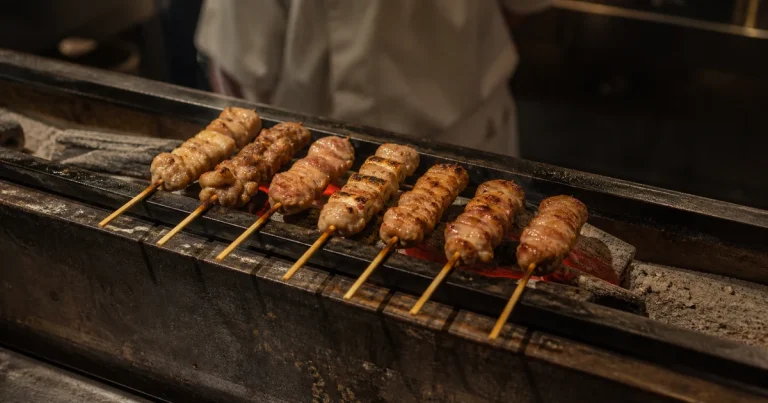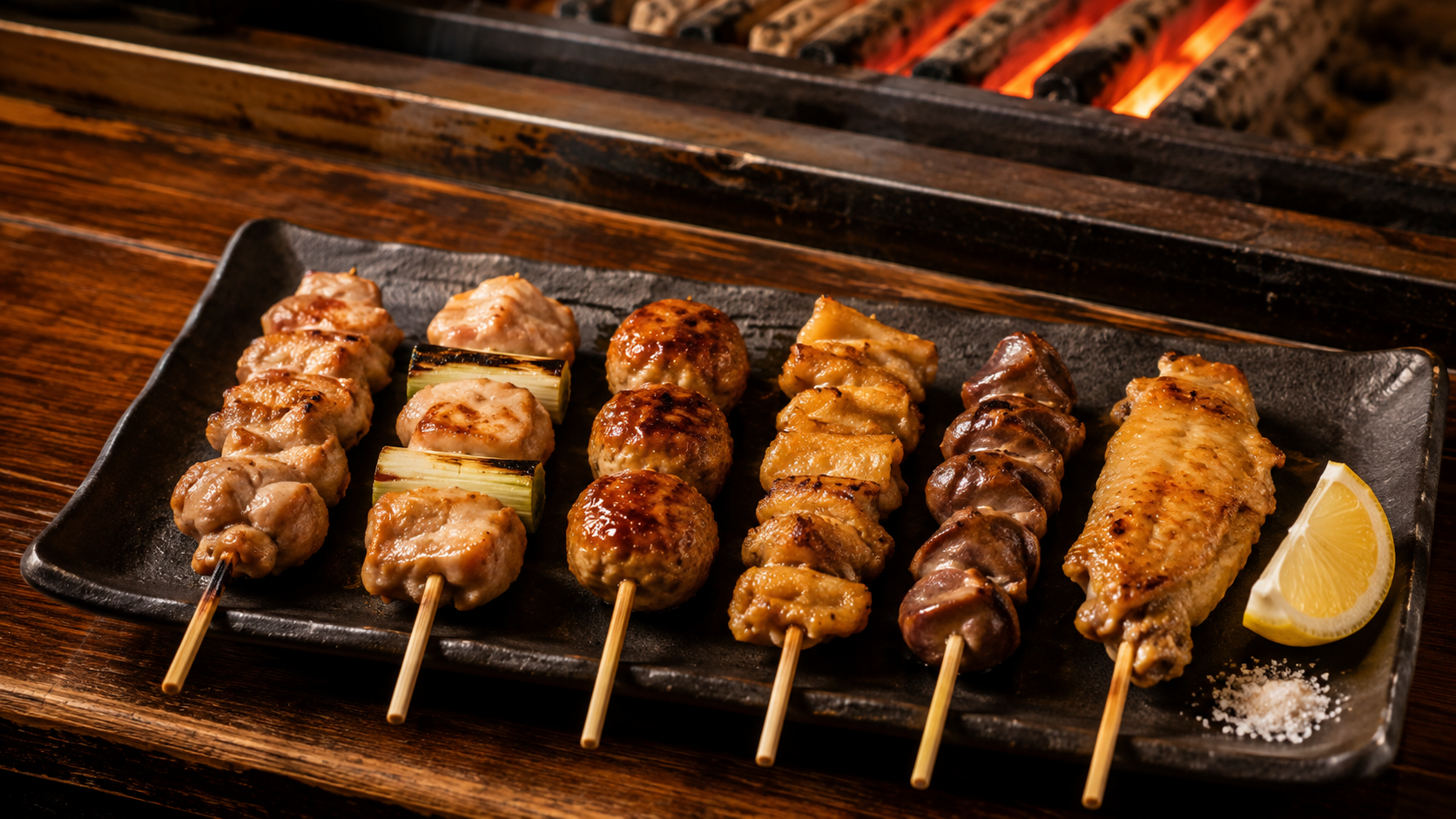
A specialist yakitori menu may list thigh, neck, skin, cartilage, heart, liver, gizzard, and other chicken parts under their Japanese names. Each offers a different balance of tenderness, fat, flavor, and texture.
This guide explains the most common yakitori cuts so you can order with confidence. If you are new to the dish itself, start with our broader guide to what yakitori is, including its history, seasonings, and basic dining etiquette.
How to Read a Yakitori Menu
Yakitori literally refers to grilled chicken, although some casual menus also place pork, vegetables, or other skewers in the same section. A more general term for skewered and grilled food is kushiyaki. At a dedicated yakitori restaurant, however, the main attraction is usually the many parts of the chicken.
Names are not completely standardized. One restaurant may use hatsu for heart while another writes kokoro. Gizzard may appear as sunagimo, sunazuri, or zuri. Rare cuts can also differ slightly between restaurants.
Most skewers are seasoned with either shio (salt) or tare (a savory-sweet glaze). You can ask for one, but many specialists recommend the seasoning they think best suits each cut.
A Chicken Becomes Many Different Skewers
| Menu name | Chicken part | Typical character | Good for beginners? |
|---|---|---|---|
| Momo | Thigh | Juicy, meaty, moderately rich | Yes |
| Mune | Breast | Lean, mild, delicate | Yes |
| Sasami | Tenderloin | Very lean and mild | Yes |
| Negima | Chicken with long onion | Juicy with sweet, charred onion | Yes |
| Tebasaki | Wing | Rich meat with crispable skin | Yes |
| Seseri | Neck meat | Springy, juicy, flavorful | Usually |
| Kawa | Skin | Rich; crisp or pleasantly chewy | If you enjoy fatty foods |
| Bonjiri | Tail | Very rich and fatty | For adventurous beginners |
| Nankotsu | Cartilage | Crunchy, mild | If you like texture |
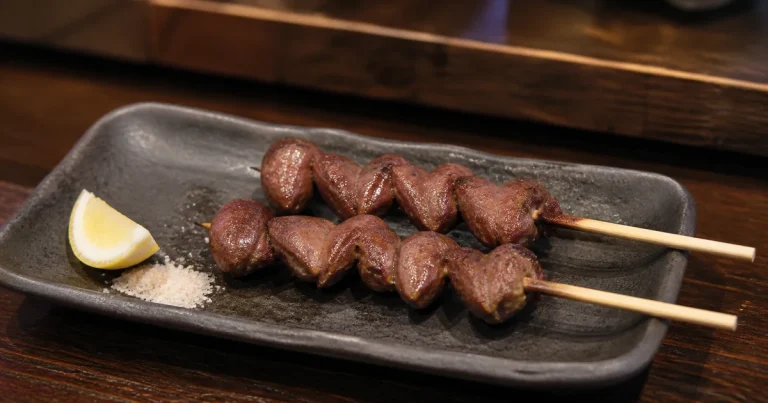
| Hatsu | Heart | Firm, springy, relatively mild | A good first organ skewer |
| Reba | Liver | Dense, creamy, strongly flavored | For liver fans |
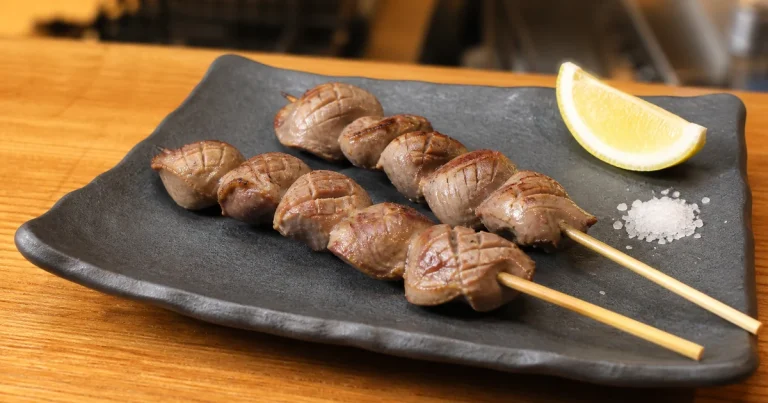
| Sunagimo | Gizzard | Firm, crisp-chewy, clean tasting | A good first organ skewer |
| Tsukune | Minced chicken mixture | Tender, savory, recipe varies | Yes |
Three Decisions Behind Every Yakitori Cut
A cut does not become good yakitori merely because it is placed on a skewer. The chef first decides how to divide it across the grain, how tightly to thread it, and which surfaces should face the charcoal. Pieces on one skewer need similar thickness so they finish together.
- Skewering: lean meat is arranged to avoid exposed thin edges, fatty skin is folded to render evenly, and irregular offal is trimmed so one piece does not remain undercooked while another dries out.
- Heat: the chef moves the skewer between hotter and gentler zones, changing distance and rotation according to fat, water, skin, and muscle structure. Binchotan provides stable heat, but it does not eliminate the need for constant judgment.
- Seasoning: shio makes texture and rendered fat easy to read; tare brings sweetness, fermented depth, gloss, and additional browning. The best choice depends on the cut and the restaurant’s preparation, as explained in our tare versus shio guide.
Meaty, Beginner-Friendly Skewers
Momo: Chicken Thigh
Momo is a reliable first choice. Thigh has enough intramuscular fat to remain juicy and tastes deeper than breast. The cook cuts pieces to an even thickness and threads them without compressing them into a solid block, allowing hot air and radiant heat to reach the edges. Decisive heat browns the outside while careful rotation protects the center. Shio emphasizes chicken flavor; tare creates a glazed, savory-sweet finish.
Mune: Chicken Breast
Mune means breast. It is leaner and lighter than thigh, so exposed thin sections dry quickly. A chef may fold the meat, protect part of it with skin, or serve daki-mi, breast wrapped with skin, to combine moist flesh with rendered crispness. Wasabi, yuzu kosho, shiso, or ume can add aroma without weighing down the delicate meat. Juiciness should come from accurate cutting and heat control—not from leaving poultry below a safe cooking temperature.
Sasami: Chicken Tenderloin
Sasami is the tender strip associated with the inner breast. Mild and low in fat, it suits diners who prefer delicate flavors and may come with a fragrant condiment.
Negima: Chicken and Long Onion
Negima alternates chicken—often thigh—with Japanese long onion called negi. The challenge is that onion and meat do not absorb heat at the same rate. The chef selects thick onion sections, aligns their cut faces toward the heat, and adjusts the skewer so the onion softens and chars as the chicken finishes. Its sweetness and moisture interrupt the richness of the thigh, which is why negima works so well early in an order.
Tebasaki: Chicken Wing
Tebasaki means wing tip, though presentation varies. Meat near the bone is rich, while the skin can become crisp. Bones may remain, so eat with care.
Seseri: Neck Meat
Seseri comes from the neck. Constant movement makes the muscle springy, while fine fat gives it concentrated flavor. The irregular strips must be folded and threaded carefully so small ends do not burn. Rendered fat can create fragrant charcoal smoke, but the chef moves the skewer away from uncontrolled flare-ups; clean aroma is desirable, bitter soot is not. Salt is especially good at revealing seseri’s juicy, elastic bite.
Skin, Fat, and Cartilage
Kawa: Chicken Skin
Kawa is folded or threaded chicken skin. Preparation varies by region and shop: some chefs blanch it first, some scrape or trim excess fat, and others preserve more fat for a chewy center. Tight, even folds prevent loose ends from burning. Repeated turning and patient rendering create crisp edges without leaving the interior greasy. Salt keeps the rendered flavor direct, while tare can be applied in layers for a darker, caramelized surface. Our dedicated guide to kawa yakitori explains the major texture styles.
Bonjiri: Chicken Tail
Bonjiri is the fatty meat around the tail. It is small, juicy, and notably rich. Consider it a “next step” after momo rather than a neutral introduction.
Nankotsu: Chicken Cartilage
Nankotsu means cartilage. It commonly comes from around the breastbone or joints, so its shape varies. Its appeal is a firm crunch and mild flavor.
Organ Skewers
Hatsu or Kokoro: Chicken Heart
Hatsu, also called kokoro, is heart. It has a firm, bouncy bite and is usually milder than liver, making it an accessible first organ skewer.
Reba or Kimo: Chicken Liver
Reba is liver; kimo may also appear. Good preparation begins with removing membranes, vessels, damaged areas, and any green tissue stained by bile. Similar-size pieces are threaded gently because liver tears easily. The chef aims for a smooth, moist texture without a chalky, overcooked exterior, while still cooking poultry liver safely throughout. Sweet-savory tare balances its mineral intensity; pepper, sansho, or a cooked sesame-and-salt seasoning may also be used. Raw or undercooked chicken liver carries foodborne-illness risk.
Sunagimo, Sunazuri, or Zuri: Chicken Gizzard
Sunagimo is gizzard, a muscular part of the digestive system. It is lean, mild, and firm, with a crisp-chewy bite. The tough silver skin is trimmed and the thick muscle is divided or scored so the skewer cooks evenly. Strong heat promotes browning without the prolonged cooking that makes it hard. Salt, lemon, shichimi, or black pepper preserve its clean character. In western Japan, you may see sunazuri or zuri; our full sunagimo guide covers trimming and texture in more detail.
Tsukune: A Yakitori Favorite, but Not a Cut
Tsukune is a seasoned minced-chicken mixture shaped around a skewer or formed into small pieces. Recipes may balance thigh and breast, add chopped cartilage for crunch, or use ginger, shiso, onion, egg, and starch to control aroma and binding. The cook forms it lightly enough to remain tender but firmly enough to turn without breaking. Tare may be brushed in several thin layers so each coat sets before the next. Because tsukune is ground poultry, safe center cooking is essential, and diners with allergies should ask about egg, wheat, soy, or other binders and seasonings.
Tare commonly contains Japanese pantry ingredients such as soy sauce and mirin, although every restaurant has its own recipe.
A Simple First Yakitori Order
If a long menu feels overwhelming, build the order as a progression. This is a flexible tasting strategy rather than a strict rule:
- Begin light: sasami, mune, or sunagimo with shio. These cuts introduce the grill’s salt level and charcoal aroma without coating the palate in fat.
- Move into meat and moderate richness: momo or negima, followed by hatsu or seseri. You gain juiciness, springy texture, and deeper smoke while your palate is still alert.
- Finish rich: kawa, bonjiri, reba, or tare-glazed tsukune. Fat, liver, and caramelized sauce make a satisfying peak; chicken soup, rice, or a vegetable skewer can create a calmer finish.
If you dislike organ meat, substitute tebasaki or nankotsu. If you are drinking slowly, order one or two skewers at a time so they do not cool while waiting. A specialist’s omakase selection may change the order according to the day’s cuts and the chef’s seasoning plan.
Food Safety Note
Chicken and chicken organs should be cooked safely. If you prepare yakitori at home in the United States, FoodSafety.gov lists 165°F (74°C) as the safe minimum internal temperature for all poultry, including ground poultry and giblets. Use a food thermometer rather than judging only by color. Japan’s Ministry of Health also advises avoiding raw or undercooked chicken because of Campylobacter risk.
Choosing Your Next Skewer
What is the best yakitori cut for beginners?
Momo is the easiest all-around choice because it is juicy, familiar, and flavorful. Negima and tsukune are also very approachable.
What is the fattiest yakitori cut?
Bonjiri and kawa are among the richest common choices. Bonjiri is tail meat with abundant fat, while kawa is chicken skin.
Is tsukune a chicken cut?
No. Tsukune is a prepared mixture of minced chicken and seasonings. Its texture and ingredients differ from one restaurant to another.
Are all grilled skewers in Japan yakitori?
Strictly speaking, yakitori centers on chicken. Kushiyaki is the broader term for grilled skewers, including pork, vegetables, and other ingredients. In casual usage, menu categories can overlap.
Should I order shio or tare?
Shio highlights the cut’s natural flavor, while tare adds savory sweetness. There is no universal rule. Follow the restaurant’s recommendation when available, especially at a specialist shop.
Build Your Order from Light to Rich
Learning a few yakitori names transforms the menu from a list of unfamiliar words into a map of flavors and textures. Start with momo, negima, and tsukune, then branch into seseri, hatsu, sunagimo, kawa, or nankotsu. The variety is the point: one chicken can produce skewers that are lean, juicy, crisp, springy, creamy, or deeply rich.
Editorial Sources
- Ministry of Agriculture, Forestry and Fisheries of Japan: Yakitori (Grilled Chicken)
- MAFF: Bibai Yakitori—Our Regional Cuisines
- Tokyo Restaurants Guide: Yakitori Items and Chicken Parts
- FoodSafety.gov: Safe Minimum Internal Temperatures
- Ministry of Health, Labour and Welfare of Japan: Campylobacter Food Poisoning Prevention Q&A