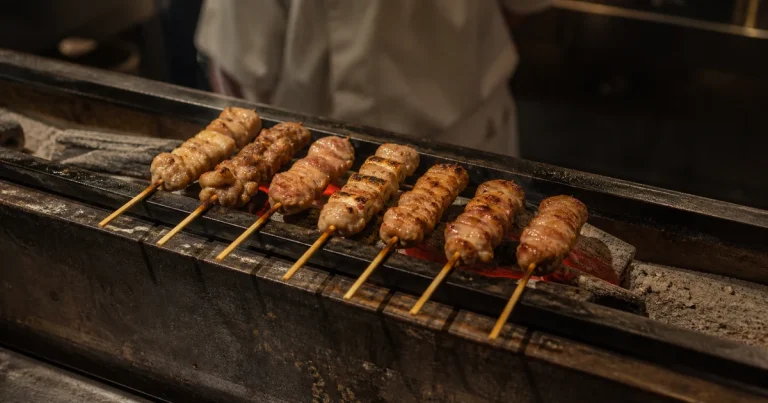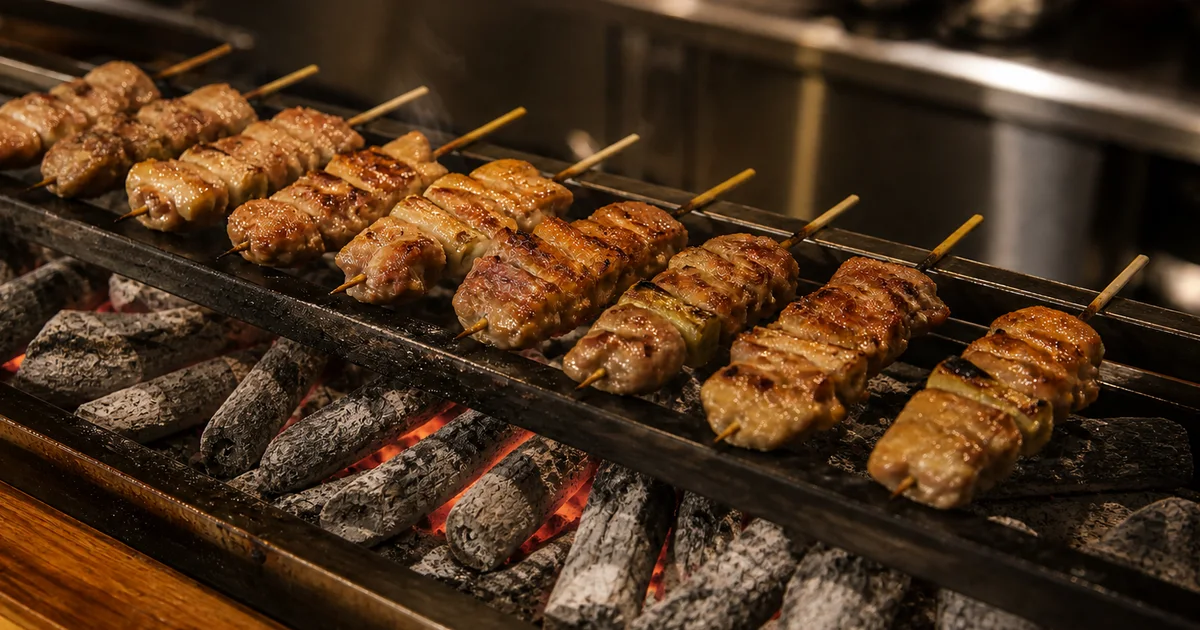
Binchotan is a dense type of Japanese white charcoal traditionally made from hardwood. It is difficult to ignite, but once burning, it produces steady heat for a long time with relatively little smoke or fuel aroma. Yakitori chefs value that controlled, clean-burning heat because it cooks small pieces of chicken quickly without covering their flavor with heavy smokiness.
“White charcoal” does not mean that the charcoal is white all the way through. Its interior remains black; the name comes from the pale ash left on the surface during the final cooling process.
White Charcoal Behaves Differently at the Grill
| Feature | What it means |
|---|---|
| Charcoal type | Japanese white charcoal |
| Traditional material | Dense hardwood; Kishu binchotan is strongly associated with ubame oak |
| Appearance | Hard black charcoal with a gray-white surface |
| Burning character | Hard to light, then stable and long-lasting |
| Why chefs use it | Focused heat, precise control, and little fuel aroma |
| Safety point | It still produces dangerous carbon monoxide |
What Is Binchotan Charcoal?
Binchotan (binchōtan, 備長炭) belongs to the family of white charcoals made through a distinctive high-heat finishing and cooling process. It is unusually hard and dense compared with familiar lump charcoal. Good pieces may make a clear metallic sound when struck together, although sound alone is not a dependable test of origin or quality.
Wakayama Prefecture is regarded as the birthplace of Kishu binchotan, one of the best-known regional forms. It is traditionally made from local ubame oak and other suitable hardwood. The carefully managed woodland is part of the tradition: producers selectively cut branches and trunks so that the trees can regrow rather than simply clearing the forest.
Why Is It Called White Charcoal?
The difference begins near the end of carbonization. According to Wakayama Prefecture, the kiln is opened and air is introduced in a refining stage known as nerashi. The extremely hot charcoal is then removed and covered with subai, a mixture that includes ash and sand, to extinguish it. This leaves the characteristic pale, ash-covered exterior.
Black charcoal is cooled differently: after carbonization, the kiln is sealed and the charcoal cools inside. It is generally softer and easier to light, burns vigorously, and has a shorter useful burning period. White charcoal takes more effort to ignite, but its heat becomes stable and lasts longer.
Binchotan vs. Regular Charcoal
| Characteristic | Binchotan / white charcoal | Typical black or lump charcoal |
|---|---|---|
| Lighting | Slower and more difficult | Usually easier |
| Structure | Very hard and dense | Generally softer and more brittle |
| Heat | Steady and long-lasting once established | Can start strongly but decline sooner |
| Smoke and aroma | Relatively little from the fuel itself | Varies considerably by wood and production |
| Fire management | Suited to gradual, precise adjustment | Often more responsive but less consistent |
These are broad tendencies, not a universal quality ranking. “Regular charcoal” covers many products, and species, piece size, moisture, airflow, and manufacturing all affect performance. Binchotan is not automatically the right fuel for every grill or cook.
Why Do Yakitori Chefs Use Binchotan?
Steady Heat for Small Pieces
Yakitori places bite-size pieces of chicken close to the heat. The outside must brown while the interior remains juicy, so sudden flare-ups or fading heat can make consistent cooking difficult. A stable charcoal bed helps a chef repeat the same result across many orders.
Precise Control Across the Grill
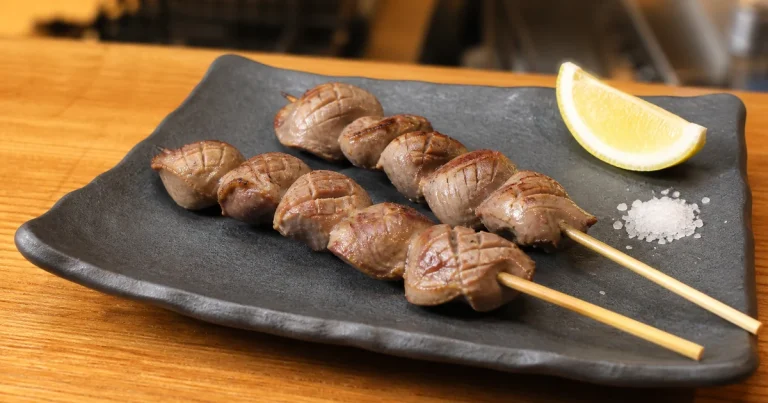
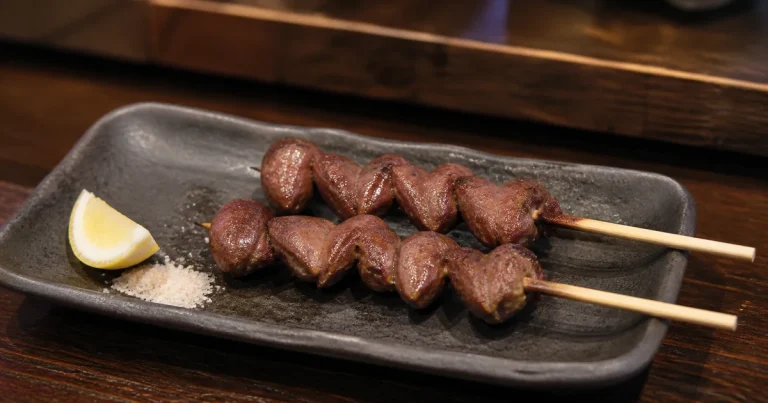
A yakitori chef can arrange the charcoal, change the distance between skewer and heat, and move individual pieces between hotter and cooler areas. That control matters because the items in a guide to yakitori cuts do not cook alike. Lean breast, skin, liver, and thigh require different timing and attention.
Less Interference from the Fuel
Japan’s Ministry of Agriculture, Forestry and Fisheries notes that high-quality bincho charcoal is preferred for strong, dry heat without a heavy smoky taste. The aim is not to make every skewer taste like smoke. It is to preserve the character of chicken, salt, and tare while still creating appetizing browning.
Long Burning During Service
Once properly established, binchotan can maintain usable heat for a long restaurant service. The chef still has to manage airflow, charcoal position, and the skewer constantly. Premium fuel does not replace technique, and it cannot by itself make good yakitori.
Does Binchotan Make Yakitori Taste Smoky?
Usually not in the bold way associated with some barbecue styles. The charcoal itself is valued for burning cleanly, so the chicken, its seasoning, and the browning remain prominent. However, “low smoke” does not mean a completely smokeless grill. Chicken fat and tare can drip onto hot charcoal, producing brief smoke and aroma.
The final flavor therefore comes from several sources: radiant heat, browning on the meat, seasoning, small amounts of smoke from drippings, and the chef’s control. This is one reason a simple-looking skewer such as tsukune can taste quite different from one restaurant to another.
Kishu Binchotan and “Binchotan-Style” Products
Kishu binchotan specifically refers to the established Wakayama tradition and is commonly associated with ubame oak. Binchotan made in other places may use different hardwoods and production standards. Meanwhile, products described as “binchotan-style” may be other white charcoal or manufactured charcoal intended to offer similar burning characteristics.
Shape provides a useful clue but not proof. Traditional hardwood binchotan retains irregular natural branch forms, whereas some compressed products have uniform shapes or visible holes. A label’s stated material, origin, and production method are more meaningful than appearance alone. This distinction does not make every alternative poor; it simply means the names should not be treated as interchangeable.
Is Binchotan Safe to Use Indoors?
No charcoal is safe to burn inside a home, tent, vehicle, or other enclosed space. Binchotan produces carbon monoxide even when there is little visible smoke or smell. Carbon monoxide is colorless and odorless and can cause sudden illness or death.
The U.S. Centers for Disease Control and Prevention says never to burn charcoal indoors. Home cooks should use charcoal only in an appropriate outdoor setup and follow the grill manufacturer’s directions and local fire rules. Restaurants that grill indoors rely on purpose-built professional ventilation and fire-safety systems; a normal kitchen extractor is not a substitute. Allow used charcoal and ash to cool completely before disposal.
Buying and Using Binchotan Responsibly
Is Binchotan Actually White?
No. The charcoal interior is black. Its name comes from the pale ash on the exterior after the hot charcoal is removed from the kiln and extinguished under the traditional covering material.
Is Binchotan Smokeless?
No charcoal grill is literally smokeless. Binchotan releases relatively little smoke and aroma from the fuel when burning correctly, but fat and sauce dripping onto it can still create smoke.
Is Binchotan Used Only for Yakitori?
No. It is also used for foods such as eel and other charcoal-grilled dishes. Yakitori is especially associated with it because compact skewers benefit from strong, stable, closely managed heat.
Do All Yakitori Restaurants Use Binchotan?
No. Restaurants use different grades of charcoal, gas, electric equipment, or combinations of heat sources. Fuel is only one part of quality. Ingredient selection, skewering, seasoning, timing, and attentive grill work also matter. Our guide to ordering yakitori in Japan focuses on choosing and enjoying the skewers rather than judging a restaurant by fuel alone.
Binchotan Rewards Fire Management, Not Branding
Binchotan is a hard, dense Japanese white charcoal whose pale surface comes from its finishing and cooling process. It is slow to ignite but valued for stable, long-lasting heat and relatively little fuel smoke or aroma. Those qualities give yakitori chefs precise control while allowing the flavor of the chicken and seasoning to remain clear. Kishu binchotan is the famous Wakayama tradition, but not every product using “binchotan” language has the same origin or method. Most importantly, low visible smoke never makes charcoal safe indoors: it still produces dangerous carbon monoxide.
Editorial Sources
- Wakayama Prefecture: Kishu Binchotan and the Difference Between White and Black Charcoal
- Wakayama Prefecture: Kishu Binchotan — Wakayama Specialty Product
- Ministry of Agriculture, Forestry and Fisheries: Yakitori
- Japan National Tourism Organization: A Gourmet Guide to Yakitori
- U.S. Centers for Disease Control and Prevention: About Carbon Monoxide