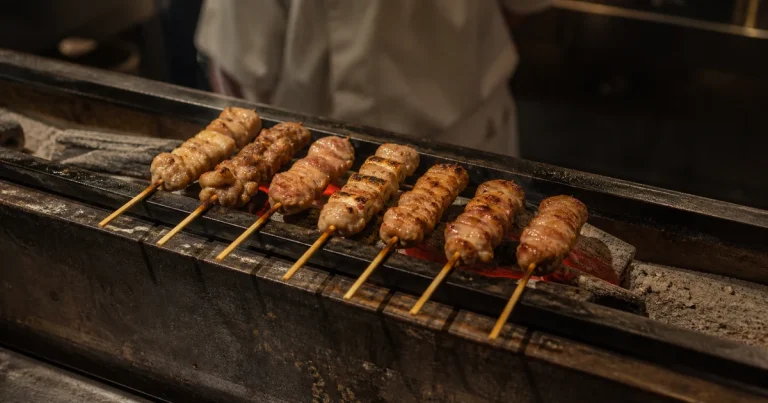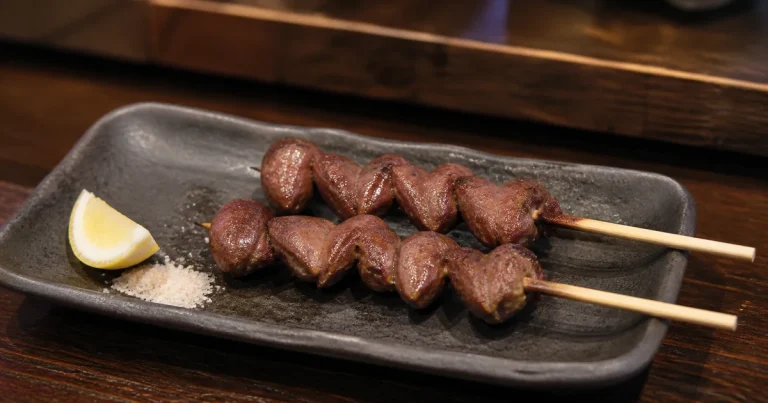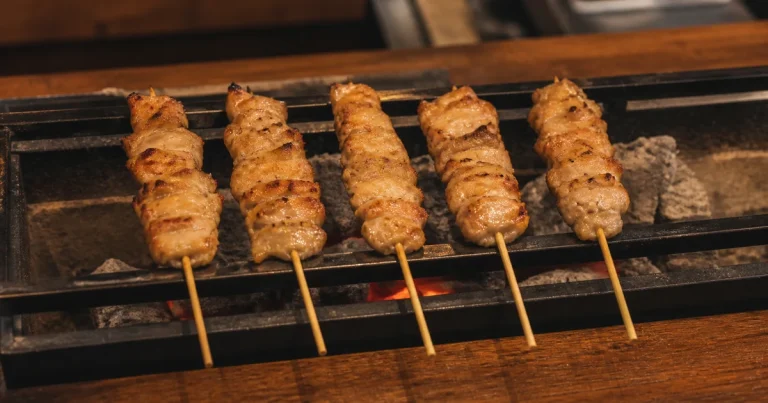
Sunagimo can look almost austere when it reaches the counter: a few compact pieces of chicken gizzard, salt, and a little charcoal color. There is no skin to blister dramatically and no glossy sauce needed to announce its flavor. Yet this is precisely why the skewer is so revealing. Poor trimming leaves a stubborn band that the teeth cannot finish cleanly; careless cutting creates thin tips that dry before the center is ready; a little too much time over the fire turns a lively snap into something closer to hard rubber.
The pleasure of well-made sunagimo yakitori comes from controlled resistance. The first bite should feel firm, then yield with a short, crisp break while the center still holds moisture. Producing that texture is less about adding flavor than removing the right tissue, shaping the muscle intelligently, and recognizing the brief moment when heat has done enough.
Why Chicken Gizzard Feels Unlike Other Yakitori Cuts
Sunagimo (砂肝) is the chicken’s gizzard, or muscular stomach. Because birds do not chew with teeth, this dense organ helps grind food. Japan’s Ministry of Agriculture, Forestry and Fisheries identifies it as the muscular stomach and notes its characteristic firmness. Its compact muscle structure explains why it feels crisper than heart and far less tender than thigh.
It is sometimes grouped casually with “crunchy” yakitori, but gizzard is not cartilage. Nankotsu produces a hard, structural crunch; sunagimo should give a shorter, meatier resistance. It also differs from liver: its flavor is restrained, and its appeal lies more in clean texture than in creamy richness or a pronounced mineral note.
Commercial processing removes the contents and tough internal lining before the gizzard reaches the kitchen. The cook is working with the muscular lobes, but those pieces can still carry firm exterior membrane and connective tissue that must be judged rather than removed indiscriminately.
The First Decision Is How Much Silver Skin to Remove
The pale blue-white material often called ginpi, or silver skin, is easy to see against the darker muscle. A thick strip left in place can remain stubborn even after the meat is cooked. The practical goal is to slide a sharp knife between that firm layer and the edible muscle, keeping the blade shallow and nearly parallel to the board.
This is not a contest to make every piece perfectly red. If the blade dives into the muscle, usable meat disappears with the membrane and the remaining piece becomes unnecessarily thin. Good trimming removes the part that would interrupt the bite while preserving the full curve of the lobe. The exact amount varies with the individual gizzard and the house style; sight and resistance under the blade matter more than a fixed millimeter measurement.
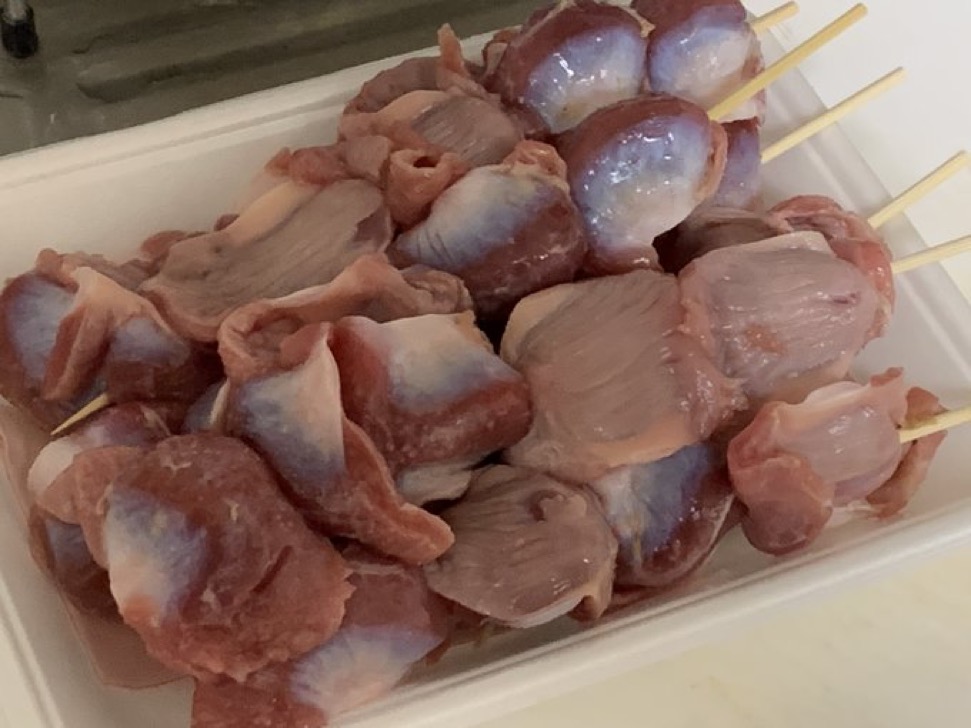
The trimmings do not always have to become waste. Some cooks collect suitable pieces of silver skin and grill them slowly as a separate ginpi skewer. That is a shop-specific use, not a standard item found everywhere, and only properly cleaned, suitable tissue should be used. Its much tougher texture also calls for a different skewer and cooking plan from the main gizzard meat.
Scoring Is Functional Before It Is Decorative
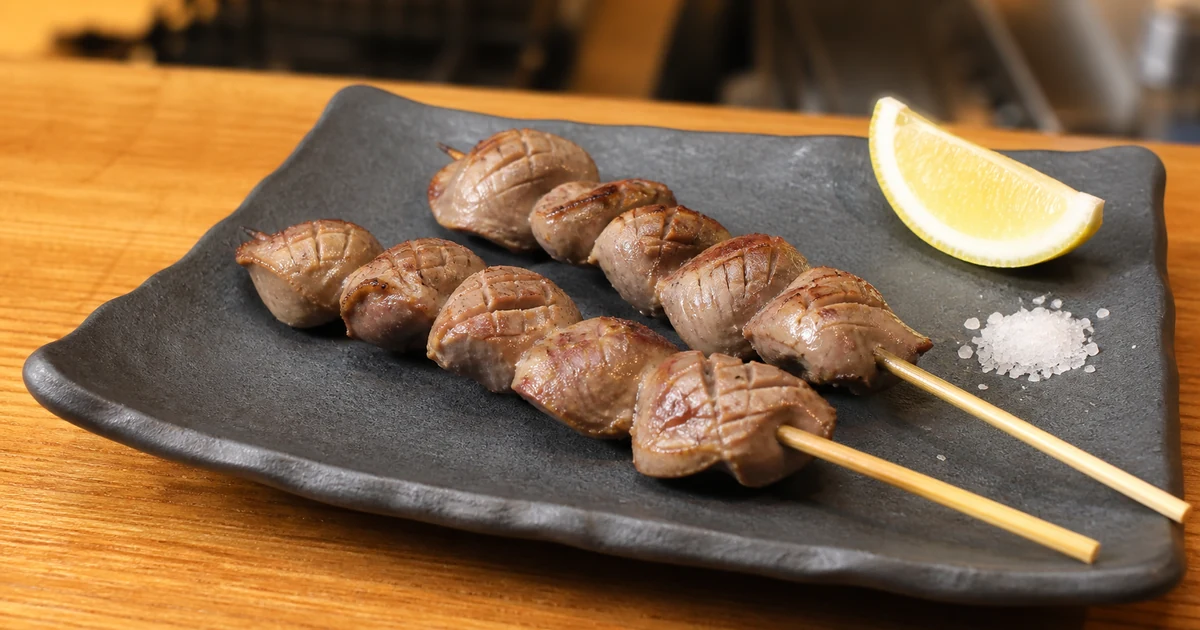
After trimming, a cook may add one or two lengthwise cuts across the thickest raised part. A useful working reference is roughly one-third of the piece’s depth, but that is not a universal formula. The correct depth depends on the size and shape in front of the knife.
The cut does not allow infrared heat to travel magically into the center. Its value is more practical: it reduces the effective thickness at the highest point, creates additional exposed surfaces, and lets the piece open as the muscle tightens. That helps the thicker center cook in step with its edges.
Scoring also changes the eating texture. When the cuts spread, their edges meet the heat directly and develop small browned ridges. Salt can settle in the grooves instead of sitting only on the highest surface. The result can be a more articulated bite—crisp at the opened edges and moist within—rather than one smooth, dense lump.
Deeper is not automatically better. A cut that nearly divides the meat creates fragile tips that dry quickly or catch on the grill. Uneven cuts produce the same problem on a smaller scale: one edge becomes brittle while a thick uncut section still needs time.
Parboiling Is a Method, Not the Definition of Sunagimo
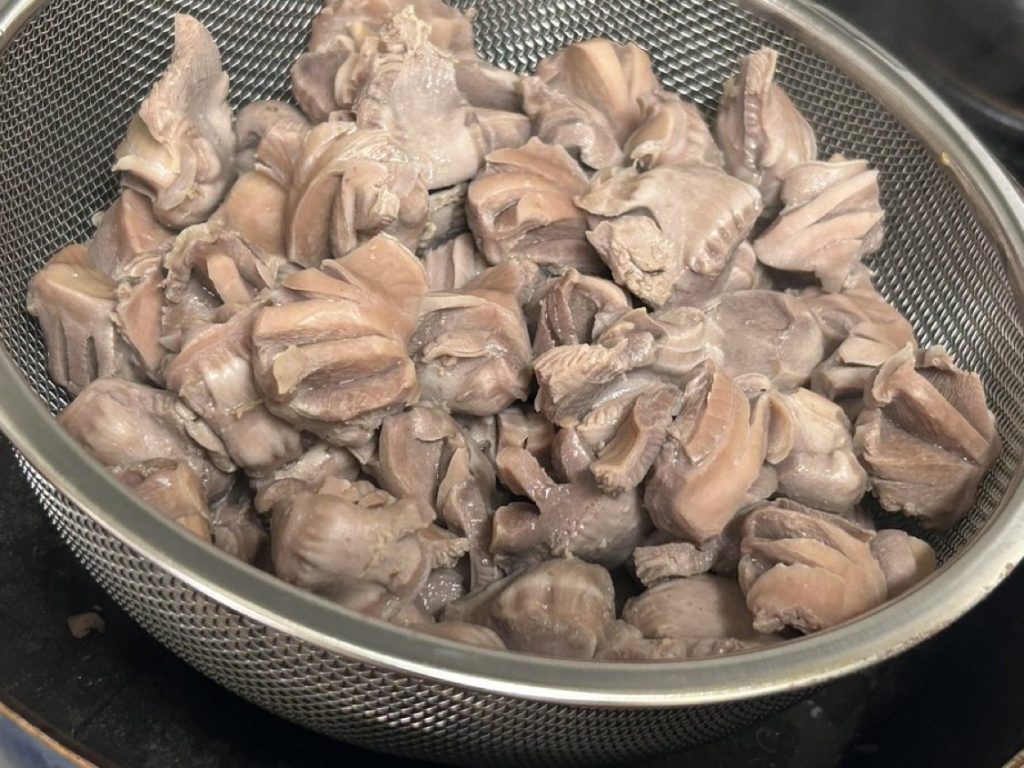
The photograph above documents gizzards after parboiling. Brief preliminary cooking can set the surface and make the scored shape more visible before a later cooking stage. Other shops trim, score, and grill the gizzard from raw. These methods should not be presented as interchangeable without adjusting the final fire: a parboiled piece has already received heat and will respond differently from a raw one.
For that reason, there is no responsible universal instruction such as “parboil for exactly this many seconds.” Piece size, starting temperature, the extent of preliminary cooking, cooling procedure, and the grill all change the remaining work. A restaurant should follow its established food-safety process; a home cook should use a thermometer and applicable official guidance rather than copying a visual cue from a professional kitchen.
A Flat Skewer Gives the Cook Control
A gizzard is made up of rounded, uneven lobes. If those pieces are threaded without attention to direction, their weight sits to one side of the bamboo and the skewer rolls on the grill supports. The cook turns it, but the heavy side falls down again. One face continues to receive heat while the side that needs browning will not stay in position.
The skewer therefore passes through the substantial center of each prepared piece. The cut faces are aligned to create a reasonably flat grilling plane, and similarly thick pieces are grouped together. This does not mean squeezing everything into a rigid block. It means arranging the weight so the skewer stays where it is placed and the exposed surfaces can be presented deliberately to the fire.
That balance is especially important for sunagimo because there is little exterior fat to soften an error. A thin projection dries quickly, while a heavy lobe can keep the center behind. Stable skewering lets the cook rotate through the cut faces without fighting the meat.
The Useful Grilling Window Is Narrow
Gizzard is lean, dense muscle. As it heats, its proteins tighten and moisture is pushed outward. Enough cooking gives the skewer its spring and clean break; continued heating makes the fibers progressively tighter and leaves less moisture in the bite. Once a piece has become dry and rigid, sauce cannot restore its original texture.
At the grill, no single signal makes the decision. The cook reads several changes together:
- Surface: the raw gloss becomes opaque and the exposed ridges begin to brown.
- Scored edges: the cuts open and their corners take on color before the narrow tips become dark and brittle.
- Moisture: small clear bubbles may appear around the cuts as the piece heats; a surface that is rapidly drying warns that the window is closing.
- Resistance: pressure applied with clean utensils changes from loose to distinctly springy. A rigid response suggests the muscle has tightened too far.
- Behavior on the skewer: the pieces feel more unified when lifted and turned, rather than hanging as soft, separate lobes.
These are quality cues, not proof of microbiological safety. Color, bubbling juices, or springiness cannot show whether harmful bacteria have been destroyed. Directly touching food with a finger is also unnecessary; clean tongs or another suitable utensil can convey resistance without adding avoidable contact.
Safety Has to Be Verified Separately
Sunagimo is poultry giblet meat and must be handled as raw chicken. Keep it cold, prevent contact with ready-to-eat food, and clean hands, knives, boards, containers, and work surfaces after raw preparation.
Japan’s Ministry of Health, Labour and Welfare advises heating meat to at least 75°C at the center for one minute, or using an equivalent validated treatment, to prevent campylobacter food poisoning. For readers in the United States, the USDA Food Safety and Inspection Service lists 165°F (73.9°C) as the safe minimum internal temperature for poultry, including giblets.
For a small, irregular piece, insert an appropriate instant-read probe from the side so its sensing area reaches the thickest center. Professional kitchens may use validated time-and-temperature processes suited to their operation. At home, follow the current public-health guidance and product instructions that apply in your location.
Why Shio Usually Shows the Cut More Clearly
Salt is the most revealing first order because it leaves the gizzard’s restrained flavor, browned edges, and compact texture exposed. It can also settle into the scoring, so the opened surfaces do not taste flat. A squeeze of citrus, pepper, or a light aromatic accent may complement it without covering the reason people order sunagimo.
That does not make tare incorrect. Some restaurants serve a glazed version successfully, and their sauce consistency and application are part of the method. The honest distinction is sensory: a heavy, wet coating can soften the impression of the browned edges and make sauce the dominant flavor. When both versions are available, shio is the clearer way to judge the trimming and fire; tare is a preference, not a mistake.
The broader guide to tare and shio explains why the same seasoning choice works differently across thigh, skin, meatballs, and leaner cuts.
How to Order It—and What to Notice
Menus may show 砂肝, すなぎも, or スナギモ, all read as sunagimo. In western Japan, sunazuri or simply zuri is also common. These names ordinarily refer to gizzard, although trimming and portion style vary by restaurant.
To ask for one skewer, say “Sunagimo, ippon onegaishimasu.” If the server asks about seasoning, “shio de” requests salt. The yakitori ordering guide covers skewer counts, set menus, and useful counter phrases.
When the skewer arrives, look beyond whether it is merely hard or soft. A well-prepared piece should release cleanly from the teeth after a short resistance. The scoring should create browned edges without dry, sharp tips, and no thick membrane should remain as a separate rubbery strip. Order it beside momo for a contrast with juicy thigh, or beside hatsu to compare gizzard’s compact snap with the heart’s more elastic spring.
Sunagimo is not impressive because it is elaborate. It is impressive when the preparation disappears: the knife has removed what would obstruct the bite, the scoring has opened without drying, the skewer has stayed under control, and the cook has taken it from the fire while the texture is still alive.
References on Chicken Cuts and Safe Cooking
- Ministry of Agriculture, Forestry and Fisheries: Chicken Cuts and Yakitori
- USDA Agricultural Marketing Service: Chicken Trade Descriptions
- Ministry of Health, Labour and Welfare: Campylobacter Food Poisoning Prevention Q&A
- USDA Food Safety and Inspection Service: Safe Minimum Internal Temperature Chart