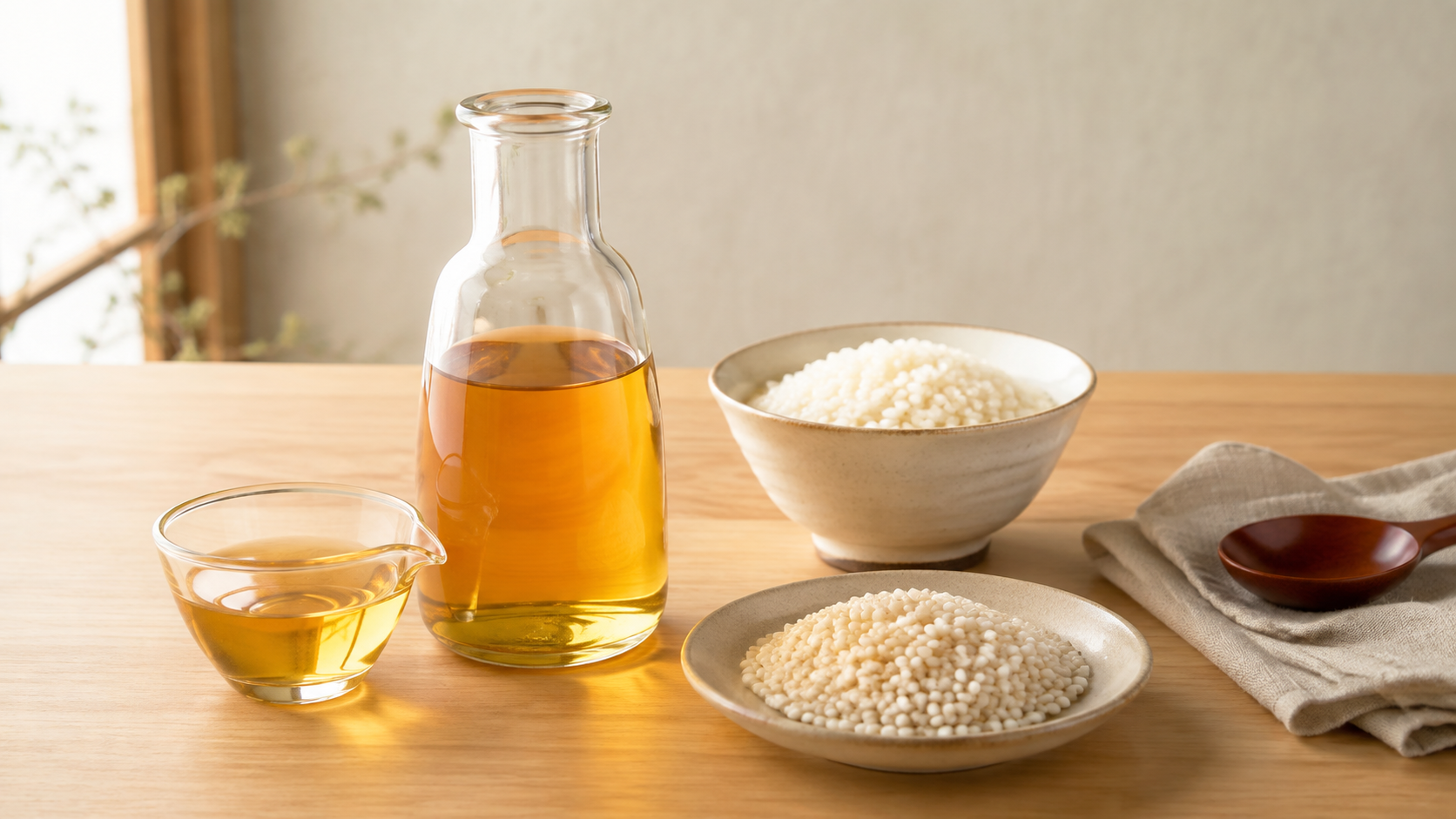
What is mirin? Mirin is a sweet Japanese rice seasoning used to add depth, aroma, and a glossy finish to cooked food. Authentic hon mirin contains alcohol and is traditionally made from glutinous rice, rice koji, and shochu or another distilled alcohol.
It is not simply sugar water, sweet soy sauce, or a type of sake. Products sold under names such as mirin, aji-mirin, mirin-like seasoning, and mirin-style seasoning can differ substantially in ingredients and alcohol content.
This guide explains what mirin tastes like, how hon mirin is made, how the main product categories differ, and how to choose and use it in Japanese cooking.
Mirin: The Basic Meaning
In its traditional sense, mirin is a sweet alcoholic seasoning produced from rice, koji, and distilled alcohol. It developed from an earlier sweet drink into a fundamental cooking ingredient, particularly during the Edo period as soy sauce-based sauces and noodle dishes became more widespread.
In Japan, genuine hon mirin is legally treated as an alcoholic beverage. The alcohol is not merely an incidental trace: it is part of the production process and contributes to the seasoning’s aroma and cooking behavior.
However, the word mirin is also used loosely outside Japan for several convenient substitutes. The front label alone may not tell you whether a bottle is traditional hon mirin, a salted fermented seasoning, or a low-alcohol imitation. The ingredient list and alcohol information are therefore important.
What Does Mirin Taste Like?
Hon mirin has mellow, rounded sweetness rather than the direct sweetness of plain sugar. Rice and koji contribute a gentle fermented aroma, while amino acids and other compounds formed during maturation add complexity and umami.
The taste can include mild rice, caramel-like, or floral notes, depending on the producer and aging method. A well-balanced example should taste integrated rather than sharply sugary or dominated by alcohol.
Mirin-style products vary more widely. Some obtain much of their sweetness from glucose syrup or other sweeteners and use acids, flavorings, or color to approximate aspects of hon mirin. They can still be useful, but they do not necessarily produce an identical result.
How Is Hon Mirin Made?
Production methods differ among makers, but traditional hon mirin generally follows these stages:
- Glutinous rice is washed, soaked, and steamed.
- The steamed rice is combined with rice koji.
- Shochu or another distilled alcohol is added to the mixture.
- The mash is allowed to mature while koji enzymes act on the rice.
- The matured mixture is pressed to separate the clear liquid from the solids.
- The liquid may be rested, filtered, blended, and bottled according to the producer’s method.
During maturation, amylase enzymes from the koji convert rice starches into sugars. Protease enzymes break proteins into peptides and amino acids. These changes help create mirin’s sweetness, aroma, and savory complexity without relying only on added refined sugar.
This process is different from sake brewing. In sake, yeast converts sugars into alcohol. In hon mirin, distilled alcohol is present from the beginning while koji enzymes gradually transform the rice. Both products use rice and koji, but their purposes, proportions, and fermentation systems are different.
Hon Mirin vs. Mirin-Style Seasoning
The exact terminology changes by country and manufacturer, but the following distinctions are useful when reading Japanese products.
| Product | General character | What to check |
|---|---|---|
| Hon mirin | Traditional alcoholic seasoning made through rice-and-koji maturation | Alcohol content, ingredients, and whether it is intended for cooking |
| Fermented mirin-type seasoning | Often made through fermentation but formulated with salt or other ingredients | Salt level, alcohol, sweeteners, and suggested quantity |
| Mirin-style seasoning | Usually less than 1 percent alcohol in the Japanese product category and designed for convenience | Sweeteners, acids, flavorings, color, and storage directions |
Aji-mirin is a product name or market term rather than a universal guarantee of one formula. Depending on the country and brand, it may refer to a mirin-style seasoning with low alcohol or to a differently formulated product. Always read the complete label.
A salted fermented seasoning may taste closer to hon mirin than a simple syrup-based substitute, but the added salt affects the rest of the recipe. Reduce other salty ingredients when necessary rather than replacing hon mirin automatically in equal amounts.
What Does Mirin Do in Cooking?
Mirin contributes more than sweetness. In Japanese cooking, it can perform several roles at once:
- Sweetness: balances salty seasonings without tasting like plain granulated sugar
- Aroma: adds a mild fermented rice fragrance
- Gloss: helps create an attractive sheen on sauces and glazed foods
- Depth: contributes amino acids and other flavor compounds
- Odor control: alcohol and aroma can soften the perception of strong fish or meat odors
- Flavor integration: supports the rounded character of simmering liquids, tare, and marinades
Mirin is often paired with Japanese soy sauce. Soy sauce supplies salinity, color, fermented aroma, and savoriness; mirin supplies sweetness, gloss, and its own aroma. Their frequent use together does not make mirin a sweet soy sauce. They remain separate seasonings with different functions.
How Is Mirin Used?
Mirin appears in many everyday Japanese preparations:
- Simmered dishes: added to broth for vegetables, tofu, fish, or meat
- Tare and glazes: combined with soy sauce for grilled or broiled foods
- Noodle sauces: used with soy sauce and dashi in dipping sauces and broth
- Soups: added in measured amounts to round out seasoning
- Marinades: used with soy sauce, sake, ginger, or other aromatics
- Egg dishes: used in some styles of tamagoyaki for sweetness and tenderness
- Dressings and sauces: incorporated into cooked or uncooked mixtures when the product is suitable
When using alcoholic hon mirin, add it early enough for the desired cooking effect and follow the recipe rather than assuming that a brief boil removes all alcohol. For a glaze, some mirin may be reduced with other seasonings until the sauce thickens and becomes glossy.
Begin with the quantity specified in a reliable recipe. Different bottles vary in sweetness, salt, and alcohol, so taste before adding extra sugar or soy sauce.
Mirin vs. Sake
Mirin and sake are both rice-based alcoholic products used in Japanese cooking, but they are not interchangeable. Mirin is much sweeter and is used chiefly for sweetness, gloss, and rounded flavor. Cooking sake is drier and is used more for aroma, moisture, and the handling of strong food odors.
A recipe may use both because they contribute different things. Replacing mirin with sake alone removes sweetness, while replacing sake with mirin can make a dish unexpectedly sweet. If substitution is unavoidable, the sugar and liquid balance must be adjusted separately.
How to Choose Mirin
For a traditional result, choose a hon mirin whose ingredient list is centered on glutinous rice, rice koji, and distilled alcohol. Products with longer maturation may offer greater complexity, but age and price alone do not guarantee that one bottle is best for every dish.
For convenient everyday cooking, a fermented mirin-type seasoning or mirin-style product can be practical. Compare labels for:
- alcohol content
- added salt
- glucose syrup or other sweeteners
- acids, flavorings, and coloring
- allergens and cross-contact information
- refrigeration and use-after-opening directions
If alcohol must be avoided for medical, religious, personal, or household reasons, choose a clearly labeled non-alcoholic or very-low-alcohol product. Do not rely on cooking alone to guarantee complete alcohol removal.
How to Store Mirin
Storage requirements depend on the product. Keep the bottle tightly closed and follow the manufacturer’s label. Some hon mirin products are stored in a cool, dark place, while other makers recommend refrigeration after opening. Mirin-style seasonings may have different requirements because their formulations differ.
Use a clean cap and avoid leaving the bottle near the stove, where heat and light can affect color and aroma. If the product develops an unexpected odor, visible contamination, or another change not described by the maker, discard it.
Buying, Storing, and Substituting Mirin
Is mirin alcoholic?
Hon mirin contains alcohol and is legally treated as liquor in Japan. Mirin-style seasoning is generally formulated with less than 1 percent alcohol in the Japanese category. Products sold internationally may use different terminology, so check the bottle.
Can children eat food cooked with mirin?
The amount of alcohol remaining depends on the product, quantity, cooking method, surface area, and cooking time. A short simmer does not guarantee that all alcohol is gone. If complete avoidance is required, use a suitable non-alcoholic seasoning and seek relevant professional guidance when necessary.
Is mirin gluten-free?
Traditional hon mirin is commonly based on rice, rice koji, and distilled alcohol, but formulas and production facilities vary. Prepared seasonings may contain additional ingredients. Anyone who must avoid gluten should check the full label and appropriate certification rather than relying only on the word mirin.
Can I replace mirin with sugar?
Sugar can replace some sweetness, but it does not reproduce mirin’s alcohol, fermented aroma, moisture, amino acids, or glazing behavior. A recipe adjusted with sugar and sake may come closer than sugar alone, but the result will still depend on the dish.
Is mirin the same as rice vinegar?
No. Mirin is a sweet alcoholic or mirin-style seasoning, while rice vinegar is acidic. Substituting one for the other changes the fundamental balance of a recipe.
Use Mirin for Gloss, Aroma, and Balance
Mirin is a foundational Japanese seasoning that contributes mellow sweetness, aroma, gloss, and savory complexity. Traditional hon mirin is made by maturing glutinous rice and rice koji in distilled alcohol, making it distinct from sake, rice vinegar, and simple sweeteners.
Hon mirin, salted fermented seasoning, and low-alcohol mirin-style products can all be useful, but they are not identical. Read the ingredients, alcohol content, salt level, and storage instructions, then adjust the rest of the recipe to match the bottle you are using.
If this guide gave you a clearer understanding of a Japanese ingredient, you can support Japan Food Compass on Ko-fi and help us continue sharing carefully researched guides and original kitchen stories.