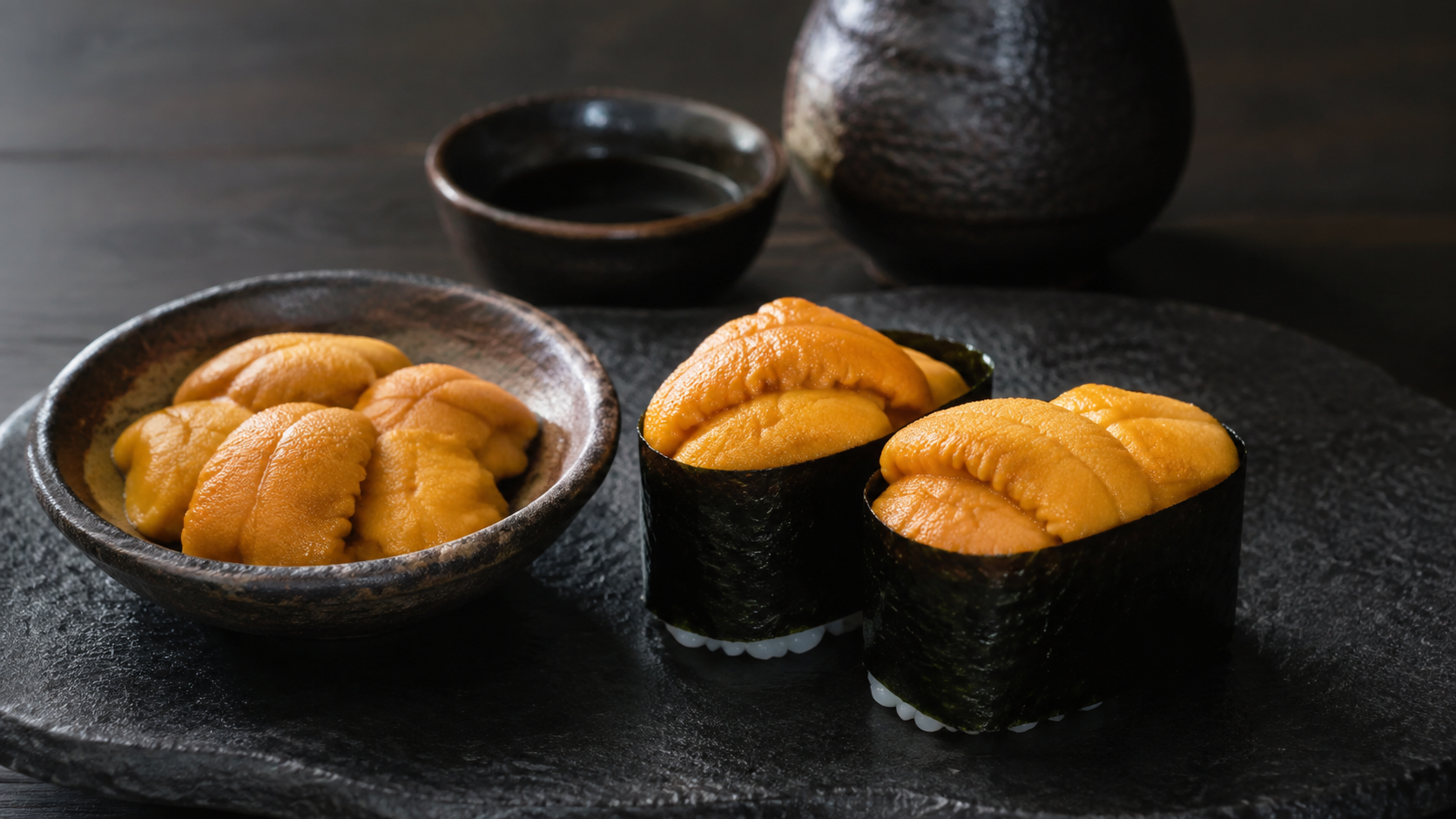
Although uni is often described as sea urchin roe, it is not simply a mass of eggs. The edible part is the reproductive organ, or gonad, of either a male or female sea urchin.
This guide explains what uni tastes like, the types commonly found in Japan, what affects its quality, and how it is served in sushi.
What Part of a Sea Urchin Is Uni?
A sea urchin has a hard shell covered with movable spines. Inside are five sections of edible gonad tissue. When the shell is opened, these delicate lobes are carefully removed, cleaned, and prepared for sale.
Both male and female sea urchins produce edible uni. The gonads store nutrients as well as support reproduction, and their condition changes with species, diet, season, and maturity. These factors help explain why uni from different places or harvests can vary in color, firmness, sweetness, and bitterness.
Calling uni “roe” is convenient in restaurant language, but “sea urchin gonads” is anatomically more accurate. Uni is therefore different from ikura or tobiko, which are individual fish eggs.
What Does Uni Taste Like?
High-quality uni has a gentle sweetness, rich umami, and a fresh aroma that suggests the sea without tasting strongly fishy. Its texture is soft, creamy, and almost custard-like. A good piece melts easily while still holding its shape.
The flavor may also carry hints of kelp, shellfish, butter, or mild nuttiness. Uni is rich but should finish cleanly. Strong bitterness, metallic notes, excessive wateriness, or a harsh chemical aftertaste are not defining features of good uni.
Flavor is influenced by what the sea urchin eats. Kelp and other seaweeds contribute nutrients that support the gonads. Species, harvest season, reproductive stage, freshness, water conditions, and processing also affect the result.
Common Types of Uni in Japan
Japan has several edible sea urchin species. The following names are commonly encountered, but color and flavor descriptions are general rather than guaranteed.
| Japanese Name | General Appearance | Typical Character |
|---|---|---|
| Ezobafun uni | Deep yellow to orange, compact lobes | Rich, creamy, and strongly savory; closely associated with Hokkaido |
| Kita-murasaki uni | Pale yellow to golden, often longer lobes | Delicate sweetness and a clean ocean finish |
| Bafun uni | Orange or reddish orange, relatively small lobes | Concentrated sweetness and umami |
| Murasaki uni | Yellow to light orange | Gentle, refined, and less intensely rich |
Hokkaido is especially famous for Ezobafun and Kita-murasaki uni. Hokkaido government information describes Kita-murasaki uni as pale and Ezobafun uni as darker orange. However, origin, feed, maturity, and handling can create substantial variation within each species.
Does Uni Color Indicate Quality?
Good uni may be pale yellow, gold, deep orange, or somewhere between. A bright, even appearance is attractive, but darker color does not automatically mean a richer taste, and pale uni is not necessarily weak.
Tray Uni vs. Saltwater Uni
Uni is commonly sold arranged in a tray or packed in lightly salted water. These formats affect texture and handling.
Tray Uni and Alum
Delicate uni can quickly lose its shape after removal from the shell. Some processors use an alum solution to help the lobes remain firm and presentable in a tray.
Alum use does not automatically make uni poor quality. Concentration, temperature, and exposure time matter. Japanese fisheries research has found that overly strong or prolonged treatment can contribute an astringent taste, while controlled treatment can preserve shape without the same effect.
Saltwater Uni
Ensui uni, or saltwater uni, is packed in brine rather than tightly arranged on a tray. It is often valued for a soft texture and flavor close to freshly opened uni. Because it receives less structural support, the lobes may break more easily.
What I Check Before Serving Uni
At the sushi counter, I do not judge uni by bright color alone. I look at whether the lobes still hold their shape, how much liquid has collected around them, whether the surface appears dry or damaged, and how the aroma changes after the container is opened. Natural color varies, so an unusually vivid tray is not automatically the best one.
The taste should be evaluated as a whole: sweetness, sea-like aroma, creaminess, and the cleanliness of the finish. A bitter or metallic impression can be influenced by species, season, maturity, storage, and processing, so it should not be blamed on one factor without evidence.
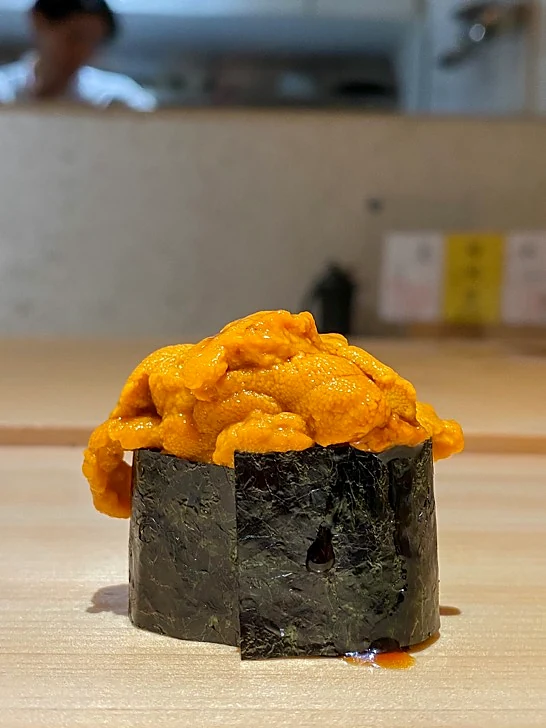
For gunkan sushi, timing is especially important. The nori should still be crisp, the rice portion should support rather than bury the uni, and the piece should be served soon after assembly. Even expensive uni loses much of its appeal if warm handling, excess moisture, or soft nori disrupts the texture.
How Uni Is Used in Sushi
Uni Gunkan
Gunkan-maki is one of the most familiar ways to serve uni. A strip of nori surrounds a small mound of vinegared rice, forming a cup that supports the soft lobes.
The crisp seaweed contrasts with the creamy uni, while the rice balances its richness. Because uni is delicate, it should not be pressed or handled more than necessary.
Uni Nigiri
Firm, well-shaped uni may be placed directly over sushi rice without a nori wall. This style presents the flavor clearly but requires pieces that can hold together. Some chefs use a small support or careful arrangement to keep the topping stable.
Uni Don and Sashimi
Uni-don serves a generous portion over rice, sometimes with nori, shiso, wasabi, or other seafood. Uni may also be presented by itself as sashimi or as part of a seasonal appetizer.
In Edomae-style sushi, chefs consider the balance among topping, rice temperature, vinegar, nori, and serving time. Uni is usually served quickly so its aroma and texture remain at their best.
How to Choose and Store Uni
When buying uni, check the species or product name, origin, processing format, use-by date, and storage instructions. The lobes should have a clean marine aroma and a soft but not completely dissolved appearance.
Uni is highly perishable. Keep it refrigerated at the temperature stated on the package and return it to cold storage promptly after serving. Use a clean utensil, and follow the producer’s instructions after opening.
Do not apply one storage period to every product. Saltwater, tray-packed, chilled, and previously frozen uni can have different requirements. If the package is damaged, the cold chain has been interrupted, or the uni has an unpleasant odor, do not use it.
Common Questions About Uni
Is uni raw?
Uni served in sushi is usually uncooked, although it has been removed, cleaned, and sometimes treated or packed in brine. Processed, steamed, baked, frozen, and salted uni products also exist.
Is uni sea urchin roe?
It is commonly called sea urchin roe, but the edible part is the gonad of a male or female sea urchin rather than loose eggs alone.
Why does some uni taste bitter?
Bitterness can be influenced by species, diet, maturity, deterioration, or processing. Excessive alum treatment may add astringency, but it is not the only possible cause.
What is the difference between bafun and murasaki uni?
Bafun-type uni is often deeper orange and more concentrated, while murasaki-type uni is commonly paler and more delicate. These are useful tendencies, not universal quality rankings.
Can uni be eaten with soy sauce and wasabi?
Yes, but use them sparingly. Uni has a delicate flavor, and strong soy sauce or too much wasabi can cover its sweetness.
What to Remember When Choosing Uni
Uni is the edible gonad of a sea urchin, appreciated for its creamy texture, natural sweetness, umami, and ocean aroma. Japan uses several species, including Ezobafun, Kita-murasaki, Bafun, and Murasaki uni.
Species names and color provide useful clues, but quality depends on diet, season, maturity, freshness, processing, and temperature control. Whether served as gunkan, nigiri, sashimi, or over rice, good uni should taste clean, rich, and delicately sweet rather than harsh or strongly fishy.
Sources for This Uni Guide
- NOAA Fisheries — Sea Urchin Gonads and Aquaculture
- Japan Fisheries Research and Education Agency — Amino Acids in Edible Sea Urchin Gonads
- Ministry of Agriculture, Forestry and Fisheries of Japan — Hamanaka Farmed Sea Urchin
- Hokkaido Government — Kita-murasaki and Ezobafun Uni
- AgriKnowledge — Appropriate Alum Treatment for Tray-Packed Uni