A yakitori grill has a deceptively simple job: hold the food over heat. At a specialist restaurant, however, the cook is also managing exposed bamboo skewers, dripping fat, pieces that finish at different speeds, and a charcoal bed that changes during service. The grill’s proportions make that work possible.
This guide compares narrow charcoal grills, portable shichirin, and gas alternatives. It focuses on the equipment rather than repeating the history, cuts, and dining customs covered in our introduction to what yakitori is.
Why Yakitori Grills Are Long and Narrow
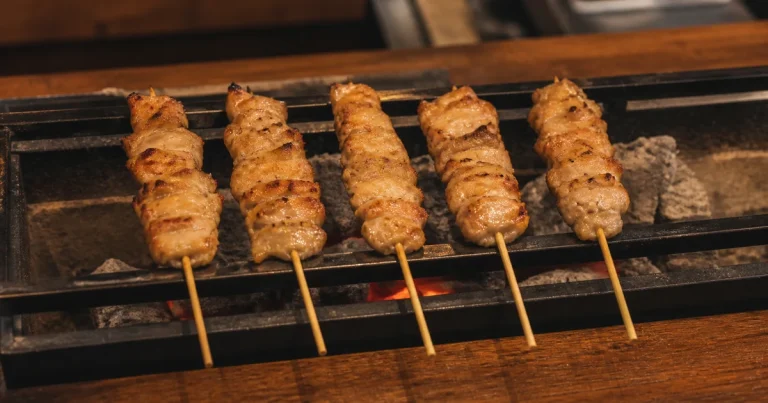
A restaurant-style yakitori grill is usually much narrower than a general barbecue. The food sits above the heat while the bare ends of the skewers rest on the grill’s edges or metal rails. This keeps the bamboo away from the hottest part of the fire and gives the cook access to turn each skewer.
Width matters more than the product name. If a grill is too wide for the skewers, their ends may not reach both supports. A round shichirin can be excellent for a mesh grate, yet awkward for a row of short skewers. Before buying, compare the usable span across the grill with the skewers you intend to use.
Which Grill Fits Which Job?
| Grill type | How it handles skewers | Best setting | Main tradeoff |
|---|---|---|---|
| Narrow charcoal konro | Edges or rails support both ends | Outdoor cooking or properly designed professional installation | Charcoal safety, ash, and slower preparation |
| Round or square shichirin | Often easier with a wire grate | Small outdoor servings of seafood, vegetables, or meat | Limited space and less convenient skewer support |
| Gas robata-style grill | Some models include removable skewer bars | Home use when the exact appliance is approved for that location | No charcoal character; grease and flame control still matter |
| Electric skewer grill | Varies by rack design | Indoor kitchens where permitted by the instructions | Different heat response and browning |
Konro is a broad Japanese word for a stove or burner, while shichirin commonly describes a compact charcoal brazier. Retail names are not perfectly consistent. Judge the cooking surface, fuel, dimensions, and manufacturer’s instructions rather than assuming every product labeled “konro” works like a restaurant yakitori grill.
How a Yakitori Shop Builds a Working Charcoal Bed
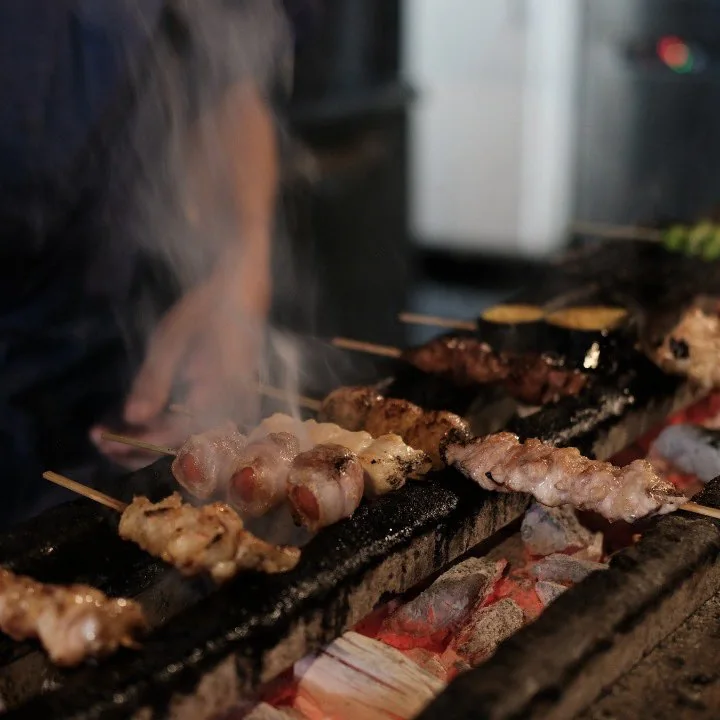
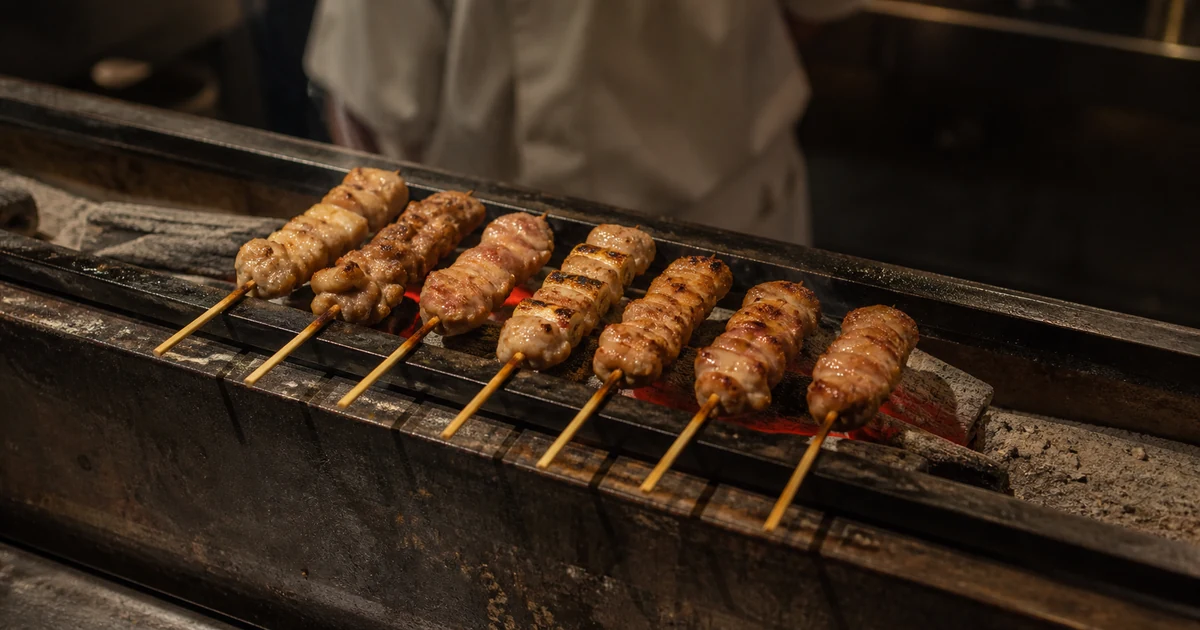
In the restaurant photo above, long pieces of charcoal are arranged inside a narrow trough rather than scattered across a broad barbecue. Several skewers can cook at once, and the exposed ends remain accessible. The cook turns them quickly and moves individual skewers as their surfaces brown.
The objective is not simply the highest possible heat. A useful fire bed is predictable. Different areas may run hotter or gentler, allowing a cook to respond to the amount of fat, the size of each piece, and how far cooking has progressed. This matters because the items in a guide to yakitori cuts do not all cook alike.
A restaurant scene should not be treated as a home-installation model. Commercial charcoal equipment may be paired with purpose-built exhaust, fire protection, and workplace procedures. Recreating the visible arrangement without those systems can be dangerous.
The Grill and the Charcoal Do Different Jobs
The grill determines the distance, support, airflow, and working area. The fuel determines how the heat develops and changes. Dense Japanese white charcoal is valued by grill cooks for stable heat and long burning, but it is difficult to light and is not literally smokeless. Dripping chicken fat can still produce smoke or flare-ups.
Our separate guide to binchotan charcoal explains white-charcoal production, genuine Kishu binchotan, heat characteristics, and carbon monoxide risk. A well-shaped grill does not make poor fuel predictable, and premium charcoal cannot correct a grill that is the wrong width for its skewers.
What Experienced Cooks Check Before the Brand Name
- Usable width: Can the skewer ends rest securely without putting the handles over the main heat?
- Heat distance: Is there practical space between the fuel or radiant surface and the chicken?
- Support shape: Do rails hold round and flat skewers without letting them roll unexpectedly?
- Air control: If the charcoal unit has vents, are they accessible during use?
- Grease management: Where will rendered fat fall, and can the relevant tray or firebox be cleaned as directed?
- Replacement parts: Are grates, rails, and trays available for the model?
Seasoning also affects the work around the fire. Salted skewers mainly require turning and heat control, while sauce may be applied in stages and can drip or scorch. See yakitori tare vs. shio for the flavor differences; the grill decision here is whether the equipment remains controllable and cleanable during either style.
Can a Small Shichirin Re-create the Yakitori Atmosphere?
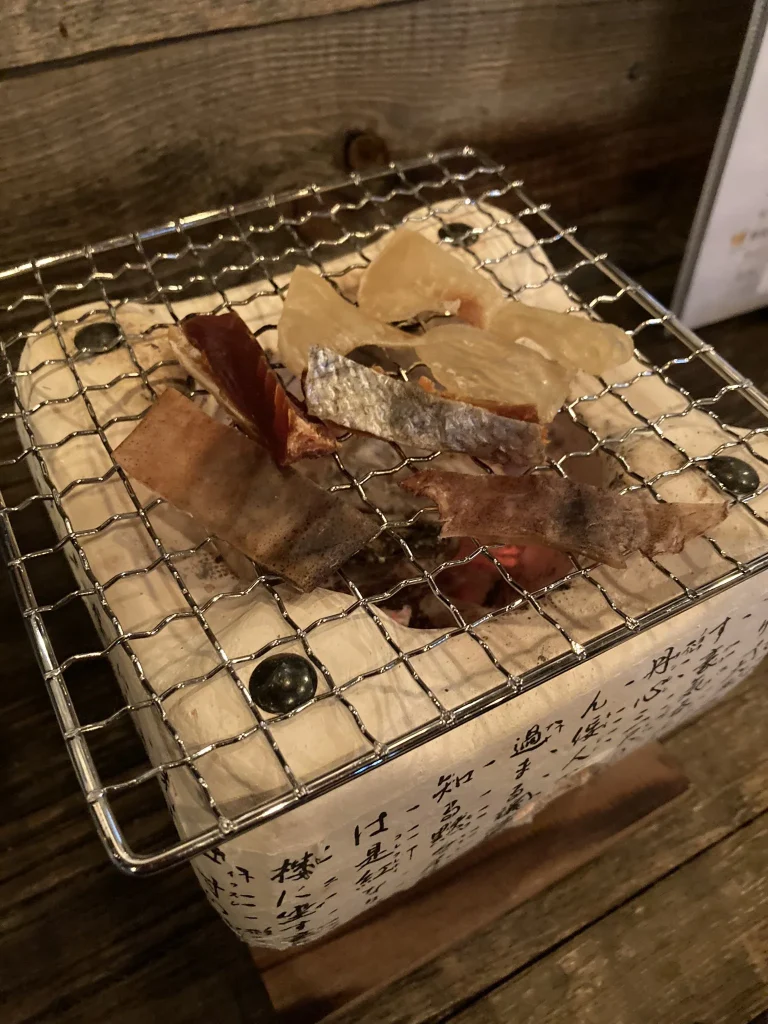
A compact shichirin can bring some of the sights and direct-fire character of Japanese grilling to a small outdoor setup. A wire mesh makes it practical for dried seafood, vegetables, and bite-size pieces. It does not provide the same skewer capacity or movement as a long restaurant grill, but that may be acceptable when the goal is a relaxed serving rather than restaurant production.
The photo shows the compact form, not a recommendation for indoor use. Burning charcoal produces carbon monoxide, an odorless gas that can reach deadly levels. The U.S. Consumer Product Safety Commission states that charcoal should be used outside only—not inside a home, garage, tent, camper, or similar enclosure, even with ventilation.
Charcoal Can Pop and Throw Hot Fragments
Dense charcoal can sometimes crack or pop as it heats. In Japanese this is called bakuchō. Moisture or gases inside a piece may expand and cause sharp, hot fragments or sparks to scatter unexpectedly. High-quality charcoal is not a guarantee that popping will never occur, especially if it has absorbed moisture during storage.
Do not lean over the charcoal or place your face close to it. Keep children, paper, cloth, dry vegetation, and other combustible materials away from the grill. Use a stable, noncombustible surface, keep the unit attended, and follow the instructions supplied with both the grill and fuel. Never add liquid starter to hot or burning charcoal.
These precautions address different hazards. Distance from combustible material reduces fire risk; it does not prevent carbon monoxide poisoning. Outdoor use is still required for a charcoal shichirin or konro.
Choose the Location Before the Fuel
For restaurant service: equipment selection belongs within a professionally designed cooking, exhaust, and fire-safety system. Grill dimensions should follow the skewer length and expected volume.
For charcoal cooking at home: choose an outdoor-only unit with clear manufacturer instructions, a stable base, and a cooking surface suited to your food. A long rectangular model is more convenient for multiple skewers; a small shichirin is more flexible for mesh grilling.
For an indoor home kitchen: do not substitute a charcoal grill. Consider only a gas or electric appliance explicitly approved for the intended indoor setting, and follow its clearances, ventilation requirements, fuel rules, and limits. A purpose-built gas robata-style unit can provide skewer supports and adjustable heat, but it should not be presented as identical to charcoal.
The practical buying sequence is therefore location, approved fuel, skewer span, heat adjustment, and cleaning—not appearance. That order helps separate a useful yakitori grill from a decorative object that is unsafe or frustrating in the place where you plan to cook.
Editorial Sources
- Ministry of Agriculture, Forestry and Fisheries: Yakitori and direct-fire grilling
- Ministry of Agriculture, Forestry and Fisheries: Kishu binchotan
- Kaginushi Kogyo: Diatomaceous-earth shichirin and charcoal konro
- Iwatani: Household gas robata grill specifications and precautions
- U.S. Consumer Product Safety Commission: Charcoal and carbon monoxide safety
- Chemical Product PL Consultation Center: Charcoal popping and ignition hazards