Japanese soy sauce, called shoyu in Japanese, is a fermented liquid seasoning used both at the table and during cooking. It adds saltiness, aroma, color, and savory depth to foods ranging from tofu and vegetables to ramen and other noodles, grilled fish, sushi, and simmered dishes.
The familiar dark reddish-brown all-purpose sauce is only one variety. Japan officially recognizes five principal types, each with a different balance of ingredients, color, aroma, and intensity.
This guide explains how shoyu is brewed, what it tastes like, how koikuchi, usukuchi, tamari, saishikomi, and shiro shoyu differ, and what to check when choosing a bottle.
Japanese Soy Sauce: The Basic Meaning
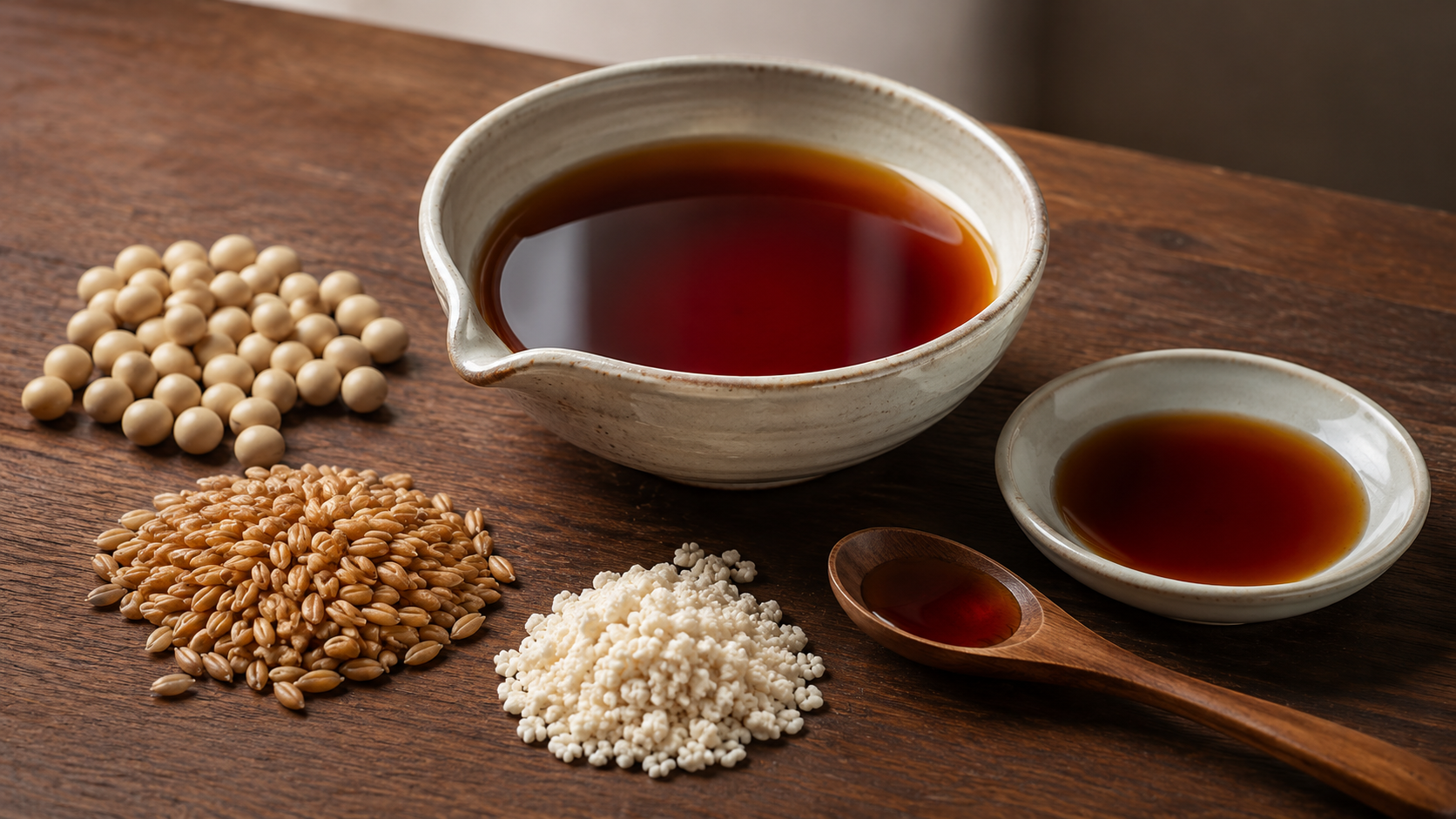
Traditional Japanese soy sauce is made by fermenting soybeans and usually wheat with salt, water, and koji. The Japanese word shoyu distinguishes it from the many other fermented sauces produced across Asia, which may use different ingredients, proportions, and methods.
Shoyu developed within a much older East Asian tradition of preserving foods with salt. Its history in Japan is closely connected with fermented soybean products such as miso, but modern soy sauce is a separate liquid seasoning with its own brewing methods and regional styles.
The five Japanese categories are koikuchi, usukuchi, tamari, saishikomi, and shiro shoyu. Koikuchi is by far the most common, but the other styles are important in particular regions and dishes.
What Does Japanese Soy Sauce Taste Like?
Japanese soy sauce is salty, but a well-brewed example is not simply salt water with color. Fermentation produces acidity, subtle sweetness, bitterness, aroma, and umami. Together, these qualities give the seasoning its rounded and persistent character.
A small amount can make other ingredients taste fuller while adding its own roasted, fermented fragrance. Heating creates another aromatic effect, which is why soy sauce is often brushed onto grilled foods or added around the edge of a hot pan.
Flavor differs by type and producer. Some sauces are balanced and versatile, others pale and fragrant, thick and soybean-rich, or dark and concentrated. Color alone does not tell you how salty a product will taste.
How Is Japanese Soy Sauce Made?
The exact process depends on the type, but traditional honjozo brewing generally follows these stages:
- Soybeans are soaked and steamed, while wheat is roasted and crushed.
- The soybeans and wheat are inoculated with koji mold to make soy sauce koji.
- The koji is mixed with salt water to form a mash called moromi.
- The mash ferments and matures as microorganisms transform its proteins and carbohydrates.
- The matured moromi is pressed to separate the raw liquid from the solids.
- The liquid is clarified, normally heated for stability and aroma, and then bottled.
Production time and details vary. Saishikomi uses soy sauce instead of ordinary brine for part of the brewing process, while tamari and shiro shoyu use markedly different proportions of soybeans and wheat.
The Five Main Types of Japanese Soy Sauce
Koikuchi Shoyu: The All-Purpose Standard
Koikuchi means “dark-colored,” and this style accounts for roughly 80 percent of Japanese production. It is commonly brewed with similar proportions of soybeans and wheat and offers a balanced mixture of saltiness, aroma, acidity, sweetness, and savory depth.
For most beginners, koikuchi is the best first bottle. It works for dipping, seasoning, marinades, stir-fries, simmered dishes, and sauces. When an English-language Japanese recipe simply says “soy sauce,” koikuchi is usually the closest default.
Usukuchi Shoyu: Light Color, Not Low Sodium
Usukuchi originated in the Kansai region and is lighter in color than koikuchi. It is used when cooks want to season a dish without making the ingredients or broth noticeably dark. Clear soups, udon broth, and delicate simmered vegetables are common examples.
The name means light-colored, not lightly salted. Traditional usukuchi is often saltier than koikuchi, so substituting equal amounts can make a dish too salty. Use less at first and adjust by tasting.
Tamari Shoyu: Dense and Soybean-Rich
Tamari is associated especially with the Tokai and Chubu regions of central Japan. It is made with a high proportion of soybeans and typically has a dark color, thicker body, and concentrated savory taste.
It is often used for dipping sushi or sashimi and for glazing grilled foods because heating can produce an attractive reddish sheen. Some tamari contains little or no wheat, but the name does not guarantee that it is gluten-free. Always check the ingredients and certification.
Saishikomi Shoyu: Refermented Soy Sauce
Saishikomi is brewed using soy sauce in place of the salt water normally added to the koji. This additional concentration creates a dark, rich, and often slightly viscous seasoning with a deep aroma.
Because of its intensity, it is commonly used at the table in smaller amounts with sashimi, sushi, or chilled tofu. It can also finish a sauce when a cook wants depth without adding a large volume of liquid.
Shiro Shoyu: Extra-Light Soy Sauce
Shiro shoyu, or white soy sauce, is pale amber and traditionally uses much more wheat than soybeans. It has a distinctive grain aroma and sweetness, with a lighter body and less pronounced soybean savoriness than darker styles.
Its pale color is useful in clear soup, chawanmushi, pickles, and dishes where the natural appearance of the ingredients should remain visible. Like usukuchi, a light color does not mean reduced sodium.
Japanese Soy Sauce vs. Other Soy Sauces
Soy sauce is produced throughout East and Southeast Asia, and the styles are not interchangeable in every recipe. Chinese light and dark soy sauces, Korean ganjang, Indonesian kecap, and other regional products have their own ingredient ratios, textures, sweetness levels, and culinary roles.
This does not make one national style better than another. It means that a recipe designed for Japanese shoyu may change in color, saltiness, sweetness, or aroma when another product is substituted.
For Japanese recipes, begin with koikuchi unless the recipe specifies usukuchi, tamari, saishikomi, or shiro shoyu. Taste before adding more because brands vary.
How Is Japanese Soy Sauce Used?
Shoyu is used at different stages of cooking:
- Dipping: served in a small amount with sushi, sashimi, tofu, dumplings, or vegetables
- Seasoning: added to soup, dashi-based broth, noodles, rice dishes, and simmered foods
- Marinating: combined with sake, mirin, ginger, garlic, or other ingredients for fish, meat, and tofu
- Glazing: brushed onto grilled foods to create color and aroma
- Blending: used in ponzu-style sauces, noodle dipping sauces, dressings, and tare
Use it as a seasoning rather than treating every dish as something to soak. With sushi, for example, a small amount is usually enough because the rice and topping have already been carefully balanced.
Regular, Light-Colored, and Reduced-Sodium Labels
Three labels that look similar in English can mean different things:
- Regular or all-purpose soy sauce: usually koikuchi-style shoyu
- Light-colored soy sauce: usually usukuchi, chosen mainly for its pale color and not for lower sodium
- Reduced-sodium soy sauce: formulated to contain less sodium than the producer’s regular version
Do not substitute usukuchi when a recipe or dietary plan calls for reduced-sodium soy sauce. Check the nutrition panel and serving size rather than relying on the word “light.”
How to Choose Japanese Soy Sauce
For a first bottle, choose a naturally brewed or honjozo koikuchi from a reputable producer. It will cover most everyday Japanese cooking and table use.
Add another style only when your cooking calls for it:
- choose usukuchi for pale soups and Kansai-style dishes
- choose tamari for a thicker, soybean-forward dipping or glazing sauce
- choose saishikomi for a concentrated finishing sauce
- choose shiro shoyu when preserving a very light color is important
Read the label for wheat, soy, alcohol, sweeteners, fish-based dashi, and other additions. Soy and wheat are major allergens, and specialty products may differ from the traditional formulas described here.
How I Choose Soy Sauce While Cooking
In the kitchen, I choose soy sauce for the finished balance rather than by color alone. Usukuchi is lighter in appearance but is not necessarily lower in salt, while koikuchi can add both color and a familiar fermented aroma. The same amount therefore does not give the same result in every dish.
I add it with the other seasonings in mind. Dashi, mirin, sugar, sake, and the ingredient’s own saltiness all change how soy sauce is perceived. For simmered food, adding everything at once can make correction difficult, so tasting during cooking is more reliable than following color as a measurement.
Heat also changes aroma. Soy sauce cooked for a long time contributes differently from a small amount brushed onto grilled food or added near the end. This is why one bottle can play several roles, but also why a delicate dipping sauce and a strongly seasoned simmered dish should not be judged by the same standard.
How to Store Soy Sauce
After opening, close the bottle tightly and follow the manufacturer’s storage directions. Refrigeration generally helps slow oxidation and preserve the color and aroma of ordinary brewed soy sauce.
Exposure to air and warmth can make the liquid darker and change its fragrance. A small bottle that you can finish while it still tastes fresh may be a better choice than a large container used very slowly.
Common Questions About Japanese Soy Sauce
Does Japanese soy sauce contain gluten?
Most standard koikuchi contains wheat. Some tamari products are made without wheat, but others contain it or may be processed where cross-contact is possible. Anyone requiring a gluten-free product should check the ingredients and look for appropriate certification.
Is Japanese soy sauce vegan?
Plain shoyu made from soybeans, wheat, salt, water, and koji is plant-based. However, flavored products may contain fish-based dashi or other ingredients, so check the label.
Is soy sauce the same as teriyaki sauce?
No. Soy sauce is a fermented seasoning. Teriyaki sauce is a prepared sauce or glaze typically built from soy sauce with sweet ingredients and often sake or mirin.
What to Remember When Choosing Soy Sauce
Japanese soy sauce is a fermented seasoning with far more variety than one all-purpose bottle suggests. Koikuchi is the everyday standard, while usukuchi, tamari, saishikomi, and shiro shoyu serve different regional and culinary purposes.
Start with koikuchi, remember that pale usukuchi is not reduced-sodium sauce, and never assume tamari is gluten-free without checking. Choosing the right type—and using it in measured amounts—adds aroma, color, saltiness, and savory depth without overwhelming the food.
If this guide gave you a clearer understanding of a Japanese ingredient, you can support Japan Food Compass on Ko-fi and help us continue sharing carefully researched guides and original kitchen stories.