A chicken heart is small, but it exposes careless preparation quickly. Leave blood inside and the flavor can become heavy. Cut the pieces unevenly and some tighten before the others are cooked. Keep the skewer over heat too long and its appealing bounce turns into a prolonged chew.
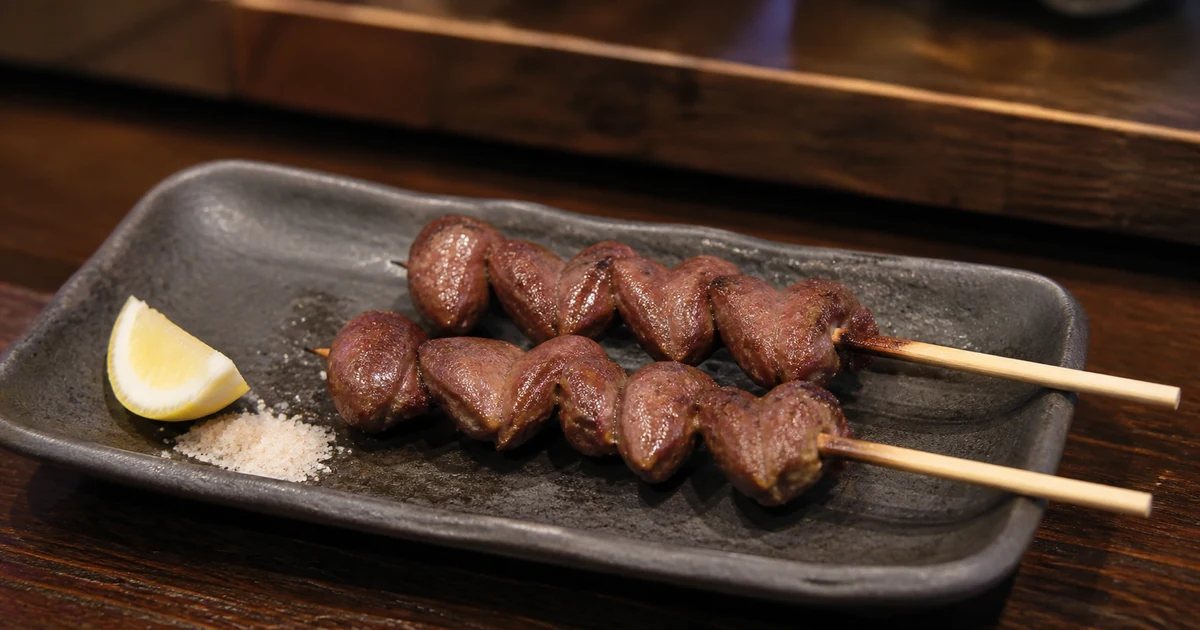
Hatsu yakitori is grilled chicken heart, valued for a compact, springy texture and a clean savory flavor. It is an organ skewer, yet it eats more like a resilient piece of meat than the soft, mineral-rich liver many first-time diners expect.
Heart Is a Working Muscle, Not a Soft Liver Substitute
Hatsu is a common yakitori-menu name for chicken heart. Some restaurants use kokoro, and specialist shops may distinguish nearby portions with additional names. If both terms appear on one menu, ask rather than assuming they are identical preparations.
The heart is an organ, but its texture comes from muscle that works continuously. That is why a properly cooked piece offers resistance and then yields. Liver should feel soft and creamy; gizzard has a crisper, denser bite; thigh is juicier and more tender. Hatsu sits between familiar meat and offal, which makes it a useful first organ skewer.
For a map of the other names, see the guide to yakitori cuts. This page stays with the decisions that determine whether heart tastes clean and feels springy.
The Most Important Work Happens Before the Grill
A whole heart may have surrounding fat, vessels, and blood inside its chambers. Japan’s Ministry of Agriculture, Forestry and Fisheries illustrates trimming the exterior and cleaning out blood as part of preparing this cut. The exact restaurant method varies, but the purpose is consistent: remove what would interfere with a clean taste while preserving enough of the heart to keep its characteristic bite.
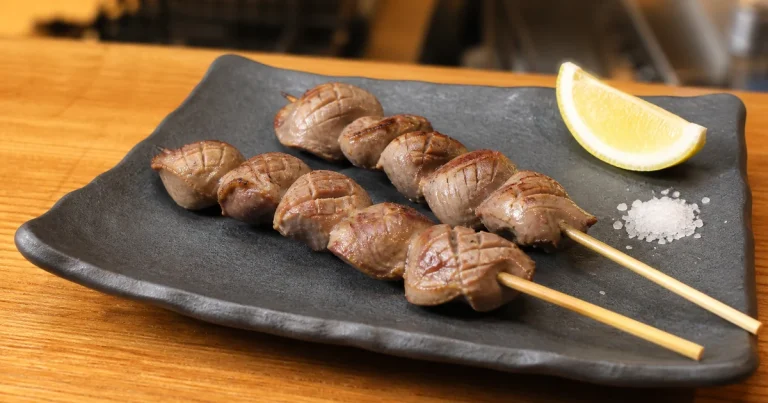
A cook may open the heart lengthwise, split it into sections, or leave a compact shape after cleaning. Opening makes the interior easier to inspect and creates more surface for seasoning and browning. A thicker form can retain a plumper center but demands more careful heat control.
When evaluating prepared pieces, cooks pay attention to more than size. The pieces should have similar thickness, the cut surfaces should be clean, and the skewer should not alternate very thick and very thin sections. Consistency here matters because one stick must be turned as a unit.
Skewering Controls Both Shape and Doneness
Several pieces are threaded so they remain stable when the skewer is lifted and turned. Packing them too loosely can let the pieces rotate independently. Compressing them into a dense mass can slow heating at the center. The useful arrangement is secure without hiding large cold pockets between folds.
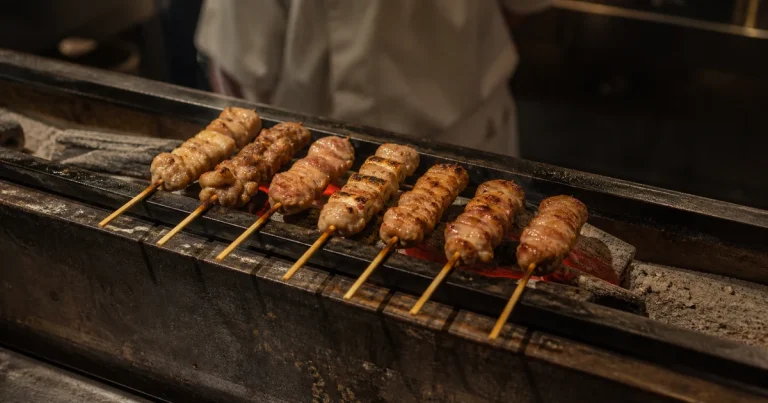
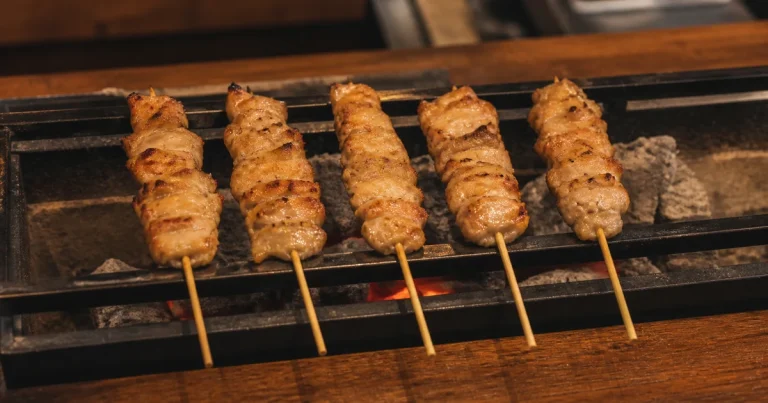
Over the grill, the surface first loses its raw sheen, then begins to brown. Moisture and fat may glisten at the edges. The cook turns the skewer to control color on both sides rather than waiting for one face to become dark. These visual changes help with timing, but they do not replace safe-temperature checks in home cooking.
The desired bite is elastic, not rubbery. Too little cooking is a poultry-safety problem; too much cooking contracts the muscle and makes the chew increasingly firm. That narrow middle is the reason hatsu deserves its own attention instead of being grilled on the same schedule as thigh or skin.
Shio Shows the Preparation; Tare Changes the Finish
Salt is a revealing first order. Shio leaves the trimmed heart, browned edges, and natural savoriness exposed. If the cleaning or heat control is poor, there is little sauce to conceal it.
Tare adds sweetness, soy-based savoriness, and a glazed surface. It can make organ meat feel more familiar, but the recipe varies by restaurant and may contain soy, wheat, mirin, sake, or other ingredients. Diners with allergies or alcohol-related restrictions should confirm the actual sauce.
Neither seasoning is universally correct. Some restaurants have already chosen the version that matches their cut and grill. When both are offered, shio is useful for understanding the heart itself; tare is useful when you want a rounder, more caramelized finish. The broader tare and shio comparison explains why other cuts may lead to a different choice.
What to Notice in the First Bite
Begin with texture. A good piece should feel firm immediately, then break cleanly rather than requiring a long chew. The flavor should be meaty and savory without the pronounced mineral quality associated with liver. Light browning adds roasted notes, while the center retains moisture.
If you want a controlled comparison, order hatsu beside sunagimo and momo. Gizzard should feel crisper, heart more elastic, and thigh softer and juicier. This three-skewer sequence teaches more than a long list of menu definitions because the differences are physical and immediate.
Look for ハツ, はつ, or こころ on the menu. Hatsu, ippon kudasai asks for one skewer, although some restaurants set a two-skewer minimum. Our yakitori ordering guide covers quantities, pacing, and when to follow the chef’s seasoning choice.
A Regional Mixed Skewer Is a Different Experience
Hatsu can also appear as one component rather than the entire skewer. MAFF’s description of Bibai yakitori in Hokkaido includes mixed chicken parts such as heart, liver, gizzard, skin, and meat with onion. That regional style should not be confused with a standard hatsu order made only from heart.
The distinction matters when traveling: a familiar word may refer to a single cut in one shop and appear within a regional mixture in another. Read the menu description rather than expecting every skewer to follow a national template.
Handling Chicken Heart at Home
Raw heart is poultry giblet meat. Keep it refrigerated, separate it from ready-to-eat food, and clean hands, knives, boards, and work surfaces after contact. The USDA Food Safety and Inspection Service lists 165°F (73.9°C) as the safe minimum internal temperature for poultry, including giblets, measured with a food thermometer.
Small pieces make thermometer placement awkward, so check the thickest practical piece and avoid mixing dramatically different sizes on one stick. Dark meat color, browned edges, and clear-looking juices are not reliable substitutes for temperature. Product instructions and local food-safety guidance take priority.