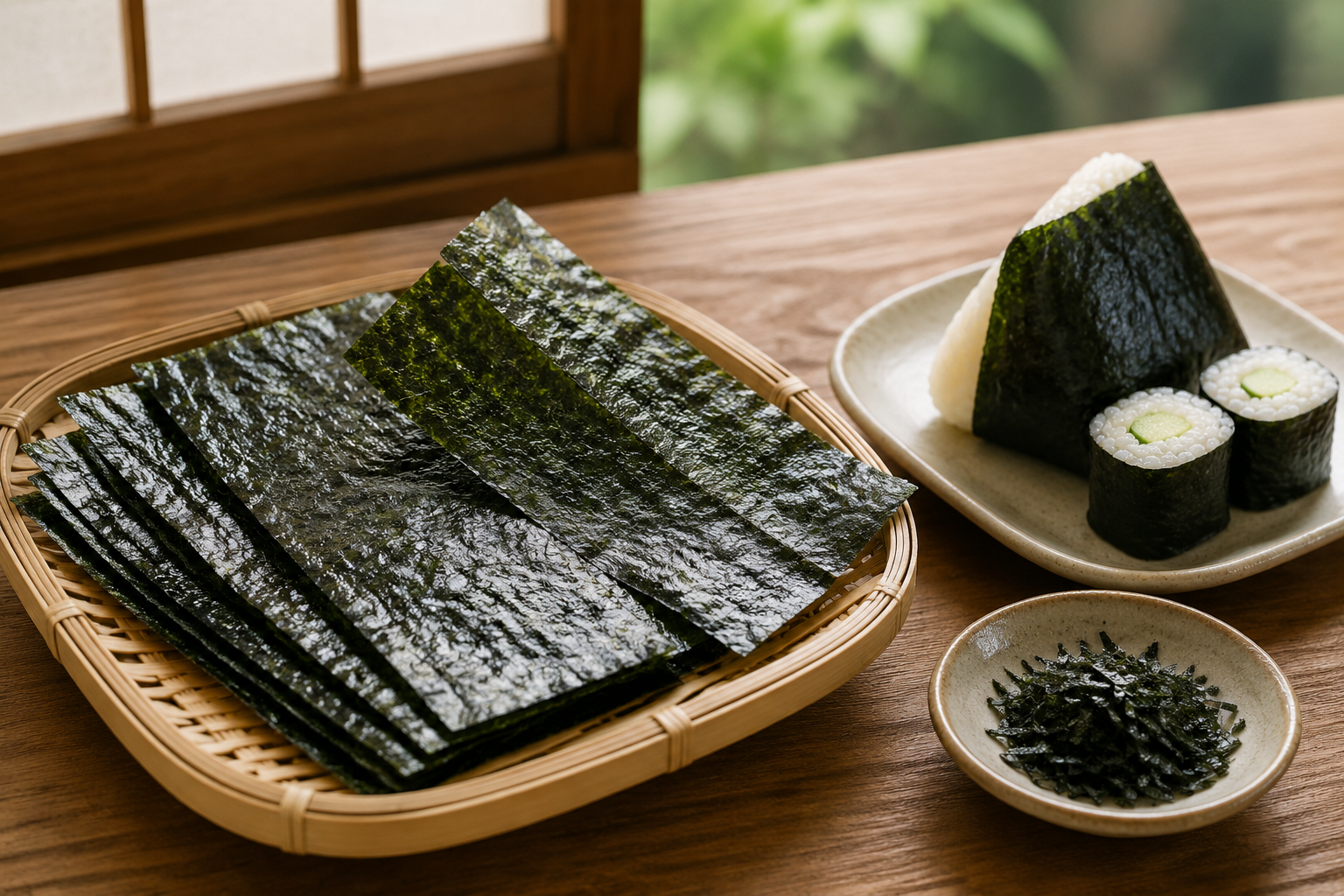
Nori is the thin, dark seaweed most closely associated with sushi rolls and onigiri. When it is fresh and dry, it can be crisp, delicate, and aromatic, with a mild ocean flavor and noticeable umami.
However, the word nori can describe several products. Some sheets are dried, some are roasted, and others are seasoned with soy sauce, sugar, or other flavorings. Aonori and aosa may also be translated as “nori,” even though they are different seaweeds used in different ways.
This guide explains what Japanese nori is, how sheets are made, what the main types taste like, and how to choose and use them.
Understanding Japanese Nori
In everyday Japanese food, nori usually means edible seaweed processed into thin sheets. These sheets are used to wrap sushi, rice balls, and other foods. Nori can also be cut into strips, torn into flakes, or sold as small seasoned pieces.
The familiar sheet is made by washing and finely cutting harvested seaweed, spreading it in a thin layer, and drying it. The process resembles traditional Japanese papermaking and produces a flat sheet with an even thickness.
Nori is not the same as wakame or kombu. Wakame is commonly rehydrated for soups and salads, while kombu is a thicker kelp frequently used to make dashi. Nori is generally thinner and is often eaten without soaking.
How Is Nori Made?
Most nori sold today comes from cultivated seaweed. Methods vary by region and producer, but sheet nori generally follows these stages.
- Cultivated seaweed is harvested from coastal waters and washed.
- It is chopped, mixed with water, and spread in a measured layer on a screen.
- The water drains, the sheet dries, and it is removed from the screen.
- The sheet may then be roasted, cut, seasoned, and packaged.
Sheet-forming became closely associated with Edo-period nori production around present-day Tokyo. The technique helped turn cultivated seaweed into a convenient food that could be stored, transported, and used for rolled sushi.
Aroma and Crispness Reveal Nori Quality
Good nori has a clean marine aroma, gentle saltiness, and savory depth. Roasting strengthens the aroma and gives the sheet a light, crisp texture.
Texture changes quickly when nori touches moisture. A sheet wrapped around freshly prepared rice gradually becomes softer and more flexible. This is desirable in some foods, while hand rolls are normally eaten promptly so the nori remains crisp.
Flavor and texture vary with the harvest, processing, roast, thickness, and storage. Dark color or a high price alone does not guarantee quality.
Main Types of Nori
Hoshi Nori: Dried Nori
Hoshi nori is dried sheet nori that is not necessarily roasted. Because international labeling varies, check whether the package says dried, toasted, or roasted.
Yaki Nori: Roasted Nori
Yaki nori is roasted sheet nori. It is the common choice for sushi, temaki, and onigiri because it is ready to use and usually crisp.
Ajitsuke Nori: Seasoned Nori
Ajitsuke nori is roasted nori flavored with ingredients such as soy sauce, sugar, salt, mirin, broth, or spices. It is often sold in small rectangles as a rice accompaniment or snack.
Kizami Nori: Shredded Nori
Kizami nori means nori cut into fine strips. It is used as a garnish for soba, udon, rice bowls, pasta, salads, and chilled tofu. Check the package because shredded nori may be plain or seasoned.
Aonori and Aosa
Aonori is a fragrant green seaweed sold as flakes or powder for okonomiyaki, yakisoba, and takoyaki. Aosa is another green seaweed used in soups, tempura, and seasonings. Neither is the same product as ordinary sushi sheets.
How Nori Is Used in Japanese Food
Maki Sushi
Maki sushi is made by rolling seasoned rice and fillings with nori. The sheet holds the roll together and contrasts with the soft Japanese rice.
The rice used for sushi is seasoned, commonly with rice vinegar, sugar, and salt. Plain roasted nori is generally preferable because the rice and fillings already provide seasoning.
Temaki
Temaki is hand-rolled sushi shaped like a cone. Crisp nori is wrapped around rice and fillings immediately before eating so it does not soften too early.
Gunkan Sushi
Gunkan uses a strip of nori around a small mound of sushi rice. The raised edge holds soft or loose toppings such as sea urchin, salmon roe, or chopped seafood.
This is one example of how nori contributes structure as well as flavor in traditional Edomae-style sushi.
Onigiri
Nori may cover all or part of an onigiri. Wrapping it just before eating keeps it crisp, while wrapping it earlier creates a softer texture that many people also enjoy.
Garnishes and Everyday Dishes
Torn or shredded nori can be added to noodles, rice bowls, ochazuke, salads, soups, and tofu. Small seasoned sheets are also eaten with plain rice or enjoyed as snacks.
Plain Nori vs. Seasoned Nori
| Type | Ingredients | Best Use |
|---|---|---|
| Plain roasted nori | Usually seaweed only | Sushi, onigiri, temaki, and general cooking |
| Seasoned nori | Seaweed plus sauce, salt, sugar, oil, or other flavorings | Rice accompaniment, snack, or flavored garnish |
For homemade sushi, plain roasted nori gives you greater control over saltiness and sweetness. Seasoned products are better treated as a separate food unless the recipe specifically calls for them.
How to Choose Nori
Choose full-size roasted sheets for maki, smaller sheets for temaki and onigiri, and shredded nori for toppings.
Read the ingredients. Plain nori may contain only seaweed, while flavored products can include soy sauce, wheat, sugar, oil, or seafood-based broth.
Packaging should protect the sheets from air and moisture. Nori should feel dry, smell clean, and tear without becoming leathery.
Grade words such as premium or gold are not always comparable between brands. Choose according to flavor, texture, size, and purpose.
How to Store Nori
Nori absorbs moisture easily. After opening, seal the package tightly or use an airtight container. Store it in a cool, dry, dark place and follow the label.
Many packages include a desiccant. Keep it inside if instructed, but never open or eat it. Avoid steam from a rice cooker, kettle, or stove.
If the nori develops visible mold, an unusual odor, or another unexpected change, discard it. A sheet that has merely lost crispness may not be spoiled, but it will not give sushi the intended texture.
Is nori the same as seaweed?
Nori is seaweed, but seaweed is a broad category. Nori sheets, wakame, kombu, hijiki, aosa, and aonori are different products with different textures and culinary uses.
Is nori vegan?
Plain nori is made from seaweed. Seasoned nori may contain broth or other added ingredients, so people following a strict vegan diet should check the complete label.
Is nori gluten-free?
Plain seaweed does not contain gluten, but seasoned products may use soy sauce containing wheat or be processed with other ingredients. Check the allergen statement and certification required for your needs.
Which side of nori faces outward?
Both sides are edible. For many rolls and hand rolls, the smoother or shinier side is placed outward for appearance, while rice is spread on the rougher side. The difference does not prevent the nori from being used either way.
Can I use seasoned nori for sushi?
You can, but it changes the flavor and may be more fragile or sticky. Plain roasted sushi nori is the more predictable choice when the rice and fillings are already seasoned.
Choose Nori for the Dish, Not by Color Alone
Nori is more than a wrapper. It adds aroma, umami, texture, and structure to sushi, onigiri, and many everyday Japanese dishes.
For beginners, plain roasted nori is the most versatile option. Choose full sheets for sushi rolls, smaller sheets for hand rolls or rice balls, and shredded nori for garnishes. Treat seasoned nori, aonori, and aosa as related but distinct products.
Keeping nori dry is just as important as choosing it. A tightly sealed package preserves the crisp texture that makes freshly prepared sushi and onigiri especially enjoyable.
If this guide gave you a clearer understanding of a Japanese ingredient, you can support Japan Food Compass on Ko-fi and help us continue sharing carefully researched guides and original kitchen stories.