Japanese chefs cut squid according to its species, body part, texture, and intended seasoning. A smooth slice can be delicious on its own, but fine scoring can help soy sauce cling and make resilient flesh feel more tender. The pattern is attractive, yet its real purpose is functional.
At a sushi counter, this quiet knife work may be the difference between a firm white slice and a piece that opens gently across the tongue. It also shows why “ika” is not one fixed experience: Japan serves many kinds of squid, and one animal contains several noticeably different textures.
From Whole Squid to the Finished Plate
Japan is surrounded by productive seas, and squid appears in sushi, sashimi, grilled dishes, simmered dishes, and dried seafood. Names seen in markets and restaurants include surume-ika (Japanese flying squid), yari-ika (spear squid), kensaki-ika, aori-ika, and several kinds of cuttlefish.
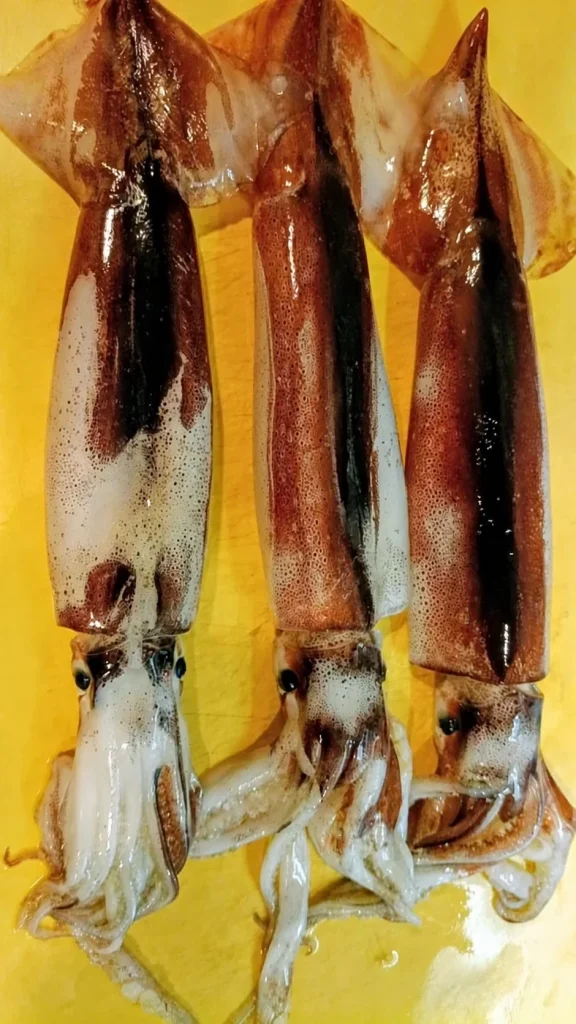
These names matter because the flesh is not identical. Thickness, sweetness, moisture, and resistance can differ. Season and individual condition matter too, so a chef does not necessarily use one cut for every squid.
Mugi-ika needs a special explanation. It is not a separate species; Japan’s Fisheries Research and Education Agency lists it as a name for a small Japanese flying squid. Market names can describe size or season as well as species. Likewise, mongo-ika is commonly used in commerce for cuttlefish, but it should not be treated as one precise species name in every context.
One Squid, Several Textures
A squid is not simply divided into “good sushi meat” and leftovers. The mantle, fins, and arms can all be eaten, but they do not provide the same bite.
| Part | Common Japanese term | Typical character |
|---|---|---|
| Body wall | Do or mantle | Broad, smooth flesh used for sashimi and nigiri; texture varies greatly by species and cut |
| Fins | Enpera or “ears” in casual kitchen speech | Thinner and often firmer, with a more distinct chew |
| Arms and tentacles | Geso | Springy and strongly textured; often cut separately or cooked |
The English word “ears” can be confusing here. Squid do not have ears like mammals; the kitchen nickname refers to the fins near the top of the mantle. The broad mantle is the part most international diners recognize as pale ika sashimi or nigiri.
Why Soy Sauce Runs Off Smooth Squid
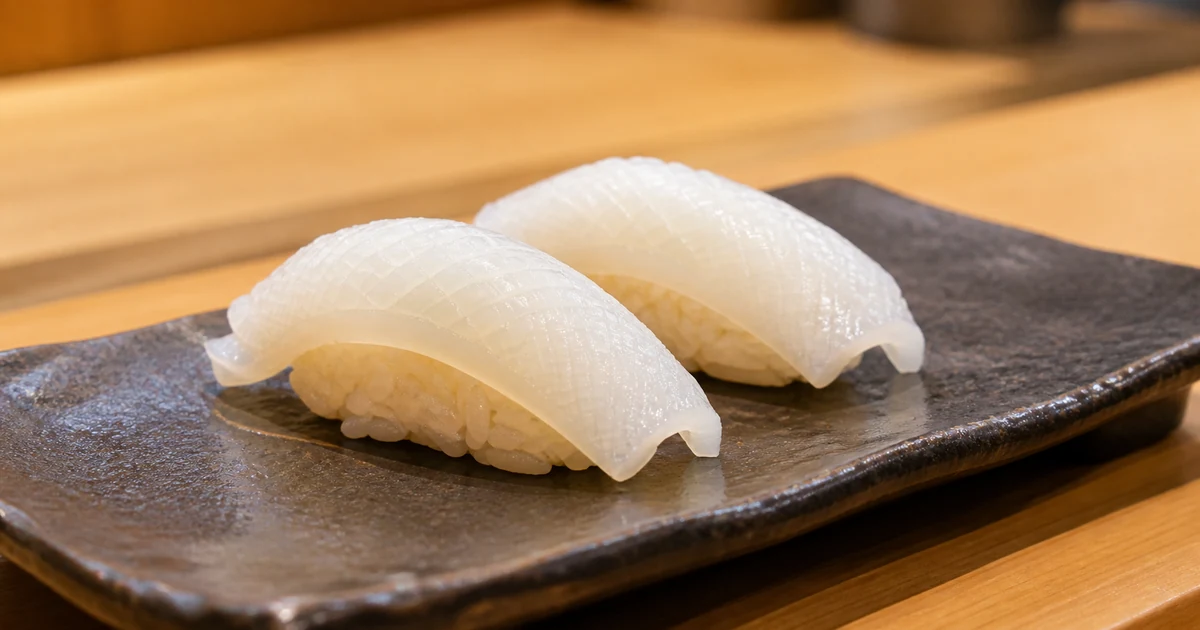
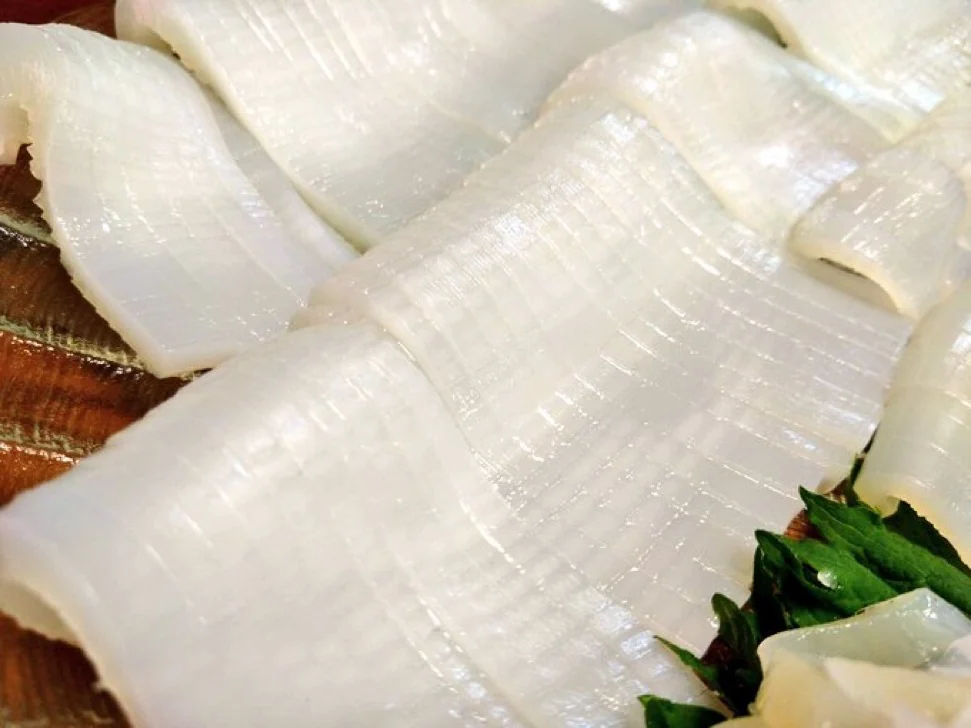
After the outer skin and membranes are removed, squid can have a very smooth, moist surface. If that surface is left completely flat, a small amount of Japanese soy sauce may bead or run away instead of coating the bite evenly.
A chef can address that problem by making shallow cuts. The incisions create edges and increase the exposed surface, giving brushed soy sauce, salt, citrus, or another seasoning more places to settle. This does not mean every piece must be scored. Plainly sliced squid can still be excellent when its natural flavor and texture suit the intended dish.
The Function Behind Decorative Knife Work
Decorative cutting is broadly called kazari-giri, although chefs may use more specific names for particular patterns and purposes. On squid, parallel lines or a fine crosshatch are common. The blade enters only partway; cutting all the way through would turn the topping into separate strips.
The exact depth, spacing, direction, and number of cuts affect the result. Shallow scoring mainly changes the surface. Deeper or closer cuts make the flesh separate more readily as it is chewed. Cutting across the structure of the flesh can reduce the impression of toughness, while an overly deep cut can weaken the piece and make it difficult to shape as nigiri.
This is why the work should not be judged only by how complicated the pattern looks. Good scoring is controlled and suited to that squid. It preserves enough structure for the slice to sit neatly over rice while changing how sauce, teeth, and tongue meet the flesh.
Scoring Also Changes Ika Nigiri
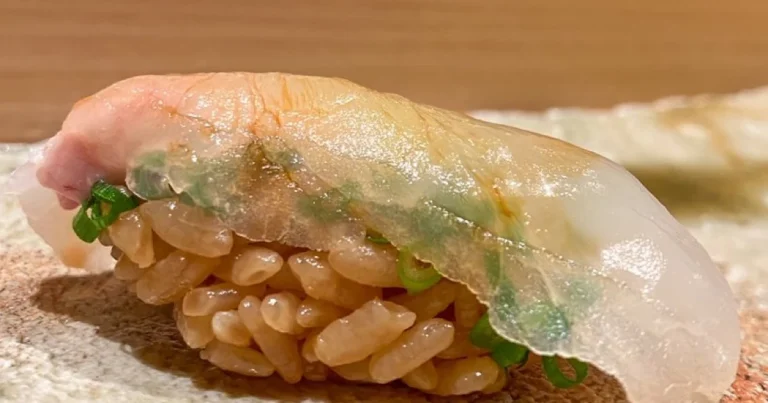
For nigiri, the chef must consider both the squid and the rice. A thick, cold, unscored topping may feel firmer than expected. Fine cuts can make it bend over the shari and separate more easily in the mouth. At some counters, gently warm rice is also used to avoid reinforcing a cold, rigid impression. Our article on sushi rice temperature explains how one restaurant adjusts shari for squid and other toppings.
Scoring can create curls, ridges, or a fine lattice when the topping is shaped. A chef may add a light brush of sauce, salt, citrus zest, ginger, or another restrained garnish. Because squid has a delicate sweetness, heavy seasoning can quickly dominate it.
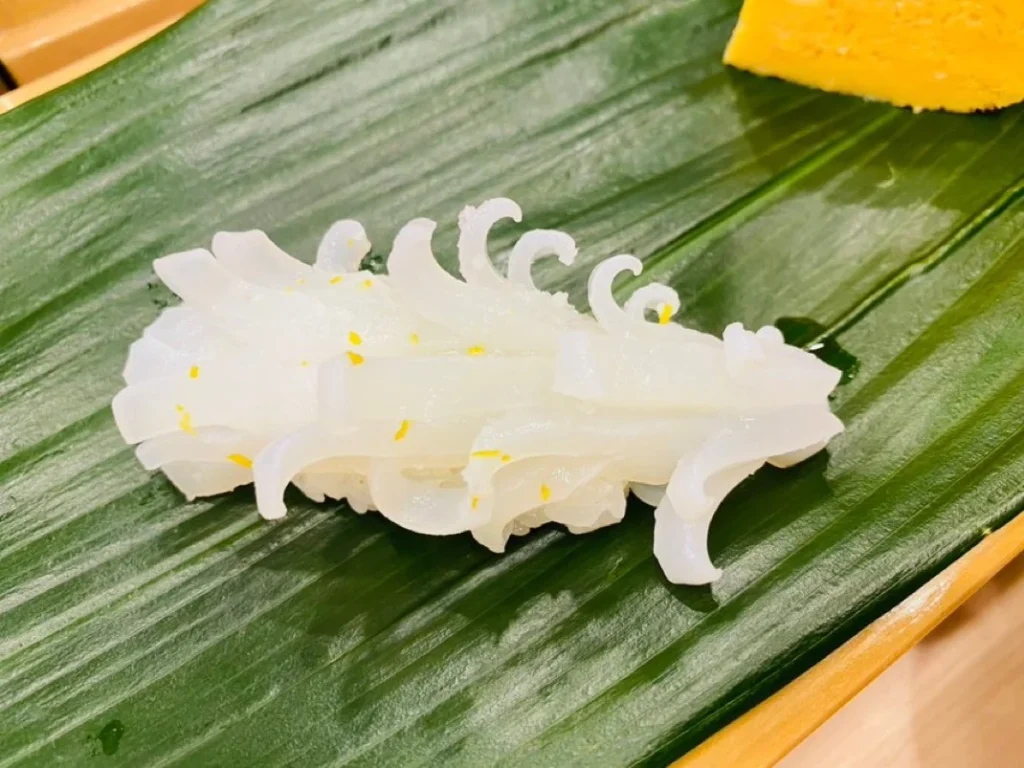
The finished piece may look elaborate, but decoration is not proof of quality by itself. The important question is whether the cut improves the intended texture and lets the squid, seasoning, and rice arrive as one balanced bite.
Simple Sashimi Has a Different Strength
Not every squid dish benefits from a complex pattern. A straightforward sashimi slice can emphasize the ingredient’s clean flavor, translucency, and natural resistance. Thin strips can highlight crispness, while a slightly thicker piece may give sweetness more time to develop as it is chewed.
Sashimi and nigiri also ask different things of the cut. Sashimi stands alone, so its thickness and orientation determine most of the eating experience. Nigiri must work with vinegared rice and remain stable when lifted. For readers who are unsure about the categories, our sushi and sashimi comparison explains why raw seafood alone is not automatically sushi.
What Diners Can Notice
When two squid preparations are available, compare them before adding extra soy sauce. Notice whether the surface is smooth, lined, or crosshatched; whether the slice feels creamy, crisp, sticky, or springy; and whether it separates easily or asks for more chewing.
Then look at the part being served. Mantle sashimi, fin meat, and geso should not be expected to feel identical. A firmer bite is not automatically a flaw, just as softer squid is not always superior. The chef may be preserving a characteristic texture rather than trying to remove every trace of chew.
Our introductory guide to ika sushi covers flavor, ordering, and common varieties. The point here is narrower: knife work gives a chef a way to translate each squid’s structure into a more deliberate eating experience.
A Short Safety Note About Raw Squid
Knife skill does not make untreated squid safe to eat raw. Japan’s Ministry of Health, Labour and Welfare identifies squid among the seafood that may carry Anisakis larvae. It also states that ordinary vinegar, salt, soy sauce, and wasabi do not kill the larvae.
Restaurants and suppliers need appropriate sourcing, inspection, temperature controls, freezing or cooking procedures, sanitation, and compliance with local rules. This article describes professional presentation; it is not a guide for turning ordinary fresh squid into home sashimi.
The Best Cut Is the One That Fits the Squid
Japanese squid preparation is not about making every slice look ornate. It is about choosing what to preserve and what to adjust. Species and market name provide clues, each part offers a different texture, and fine scoring can help seasoning cling while making firm flesh easier to enjoy.
A plain slice may be the right answer for one squid, while a carefully scored piece may reveal the best qualities of another. That decision—more than the pattern alone—is where a sushi chef’s judgment becomes visible.