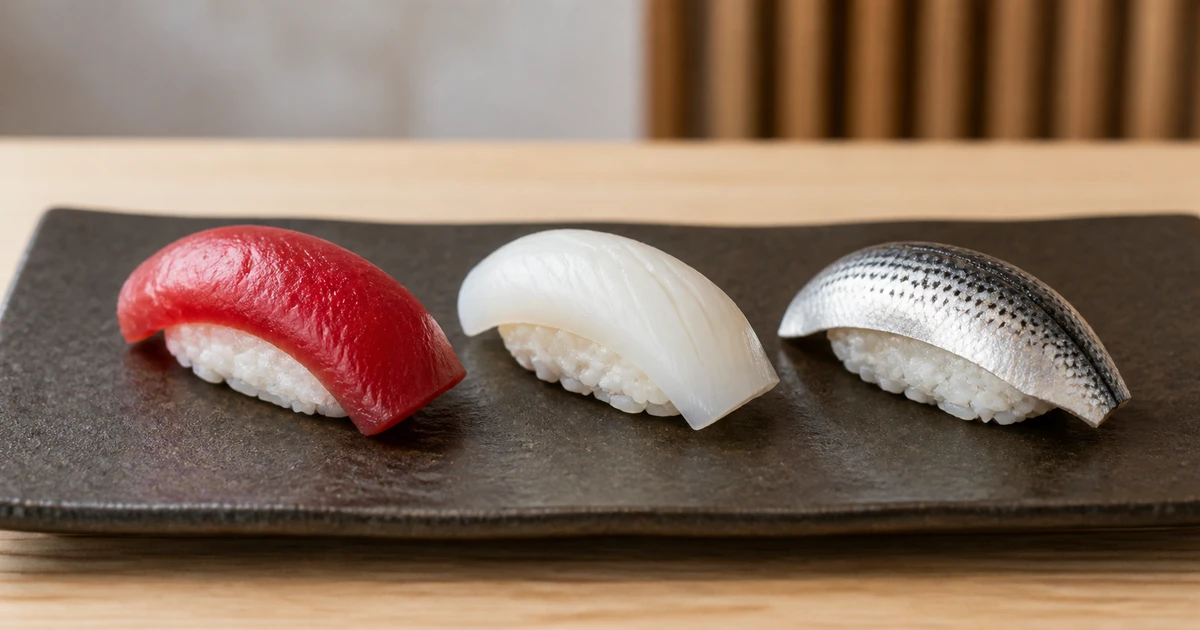
Sushi rice does not have to be the same temperature beneath every piece of fish. At one Japanese sushi counter, slightly cooler shari may be paired with silver-skinned fish, warmer shari with tuna or richer fish, and gently warm shari with squid. The purpose is not to follow a universal temperature chart. It is to balance aroma, fat, texture, and seasoned rice in a single bite.
This is one of the quiet decisions that separates carefully composed nigiri from fish placed on rice. Diners may not see a thermometer, but they can often feel the result.
Shari Is an Active Part of Nigiri
Shari is the sushi-counter term for vinegared rice. It is made from short-grain Japanese rice seasoned with vinegar, salt, and usually some sugar, although the balance varies by restaurant. The topping is called neta. Nigiri works when the two are considered together.
Rice temperature affects more than whether a piece feels warm or cool. Product temperature can alter perceived flavor intensity, melting sensations, thickness, and texture. Food-science studies have demonstrated these effects in model foods, although they do not establish a sushi-specific rule. Nigiri is even more complex because the mouth experiences warm or cool rice, raw or cured seafood, fat, moisture, vinegar, and soy-based seasoning at once.
The practical lesson is modest: temperature can change perception, so a chef may use it as one adjustment among many.
Why One “Correct” Temperature Is Too Simple
Online descriptions often say that sushi rice should be served at body temperature. That can be a useful reference point, but it becomes misleading when treated as a requirement for every counter, season, rice recipe, and topping.
Freshly seasoned rice cools throughout service. A chef also decides how much rice to hold, when to prepare another batch, how firmly to shape each piece, and when to serve it. The fish may be lean or fatty, chilled or allowed to lose some chill, raw or cured. Room temperature and the pace of the course matter as well.
Instead of asking for one ideal number, it is more useful to ask what the chef wants the complete bite to express.
How I Adjust Shari by Topping
| Topping | Approach in my own practice | Intended balance |
|---|---|---|
| Silver-skinned fish | Slightly cooler rice | Keep its distinctive aroma from becoming too prominent |
| Tuna and richer fish | Warmer rice | Encourage aroma, fat, and rice to come together |
| Squid | Gently warm rice | Avoid an excessively cold, firm impression |
These are working principles from my own sushi-counter experience, not fixed standards for all sushi chefs. Another counter may use a different rice blend, vinegar profile, course sequence, or preparation and reach a different balance.
Silver-Skinned Fish: Slightly Cooler Shari
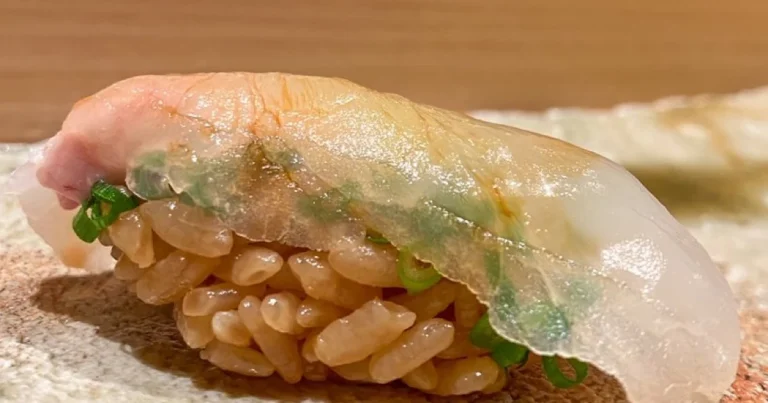
Silver-skinned fish, collectively called hikarimono at sushi counters, can have a pronounced aroma. The group includes fish such as kohada, sardine, horse mackerel, and mackerel, but the exact preparation differs by species. Salt, vinegar curing, ginger, scallion, and knife work may all be used to shape the final character.
In my own practice, I may choose slightly cooled shari because warmer rice can make the fish’s aroma seem more prominent. The aim is not to hide the fish. It is to keep the aroma, acidity, salt, and rice in proportion.
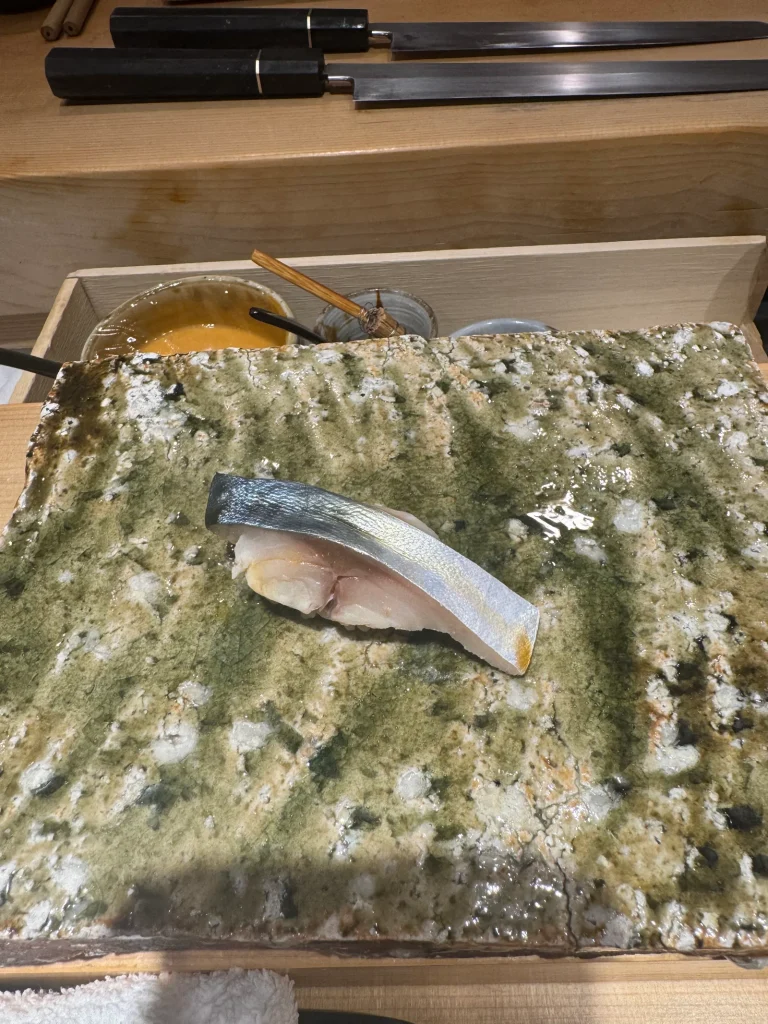
The species in this photograph is left intentionally general because it cannot be confirmed from appearance alone. The image illustrates the broader silver-skinned-fish approach rather than identifying a particular fish.
Tuna and Richer Fish: Warmer Shari
Tuna is not one uniform ingredient. Lean akami, medium-fat chutoro, and rich otoro differ considerably. The guide to maguro sushi explains those cuts in more detail.
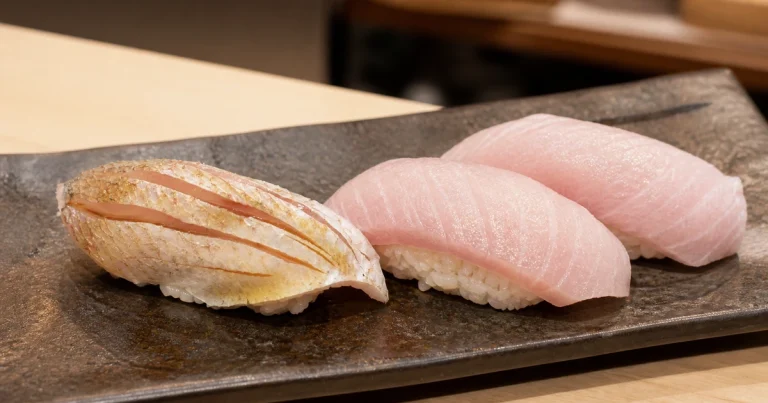
In my own practice, I may pair tuna and fish with more fat with warmer shari. Warmth can make melting and flavor sensations more noticeable, helping the topping and rice feel integrated rather than like two cold layers. With fatty fish, even a small temperature difference can change how quickly richness spreads across the palate.
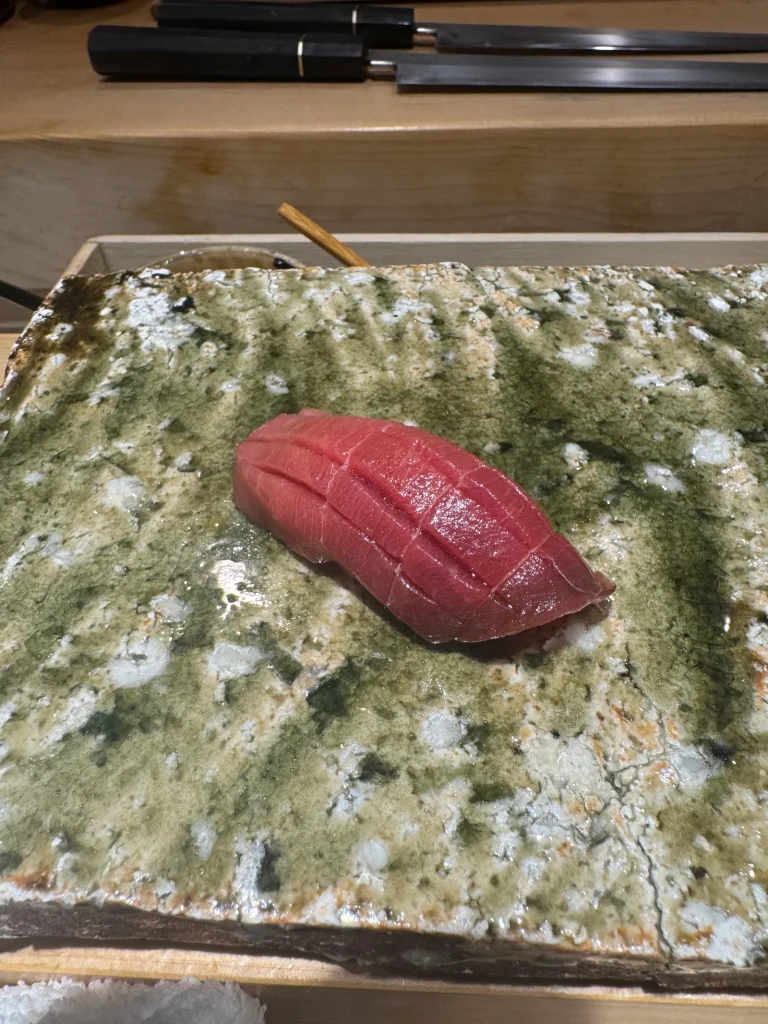
The pictured tuna should not be described as a highly fatty cut based on the photograph alone. It represents the tuna side of the restaurant’s temperature practice; richer cuts can intensify the same consideration.
Squid: Gently Warm Rather Than Cold
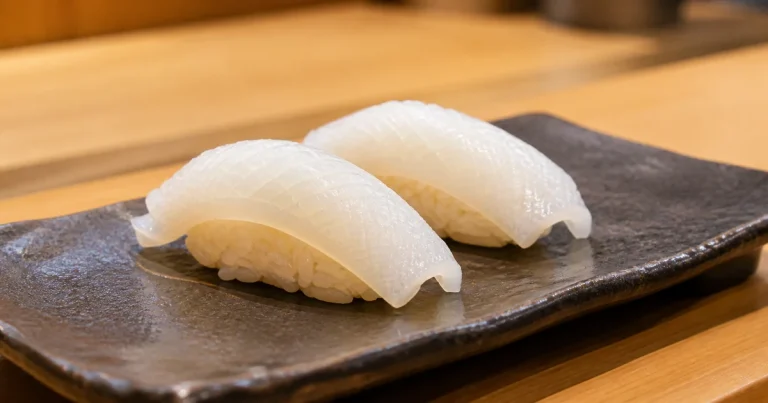
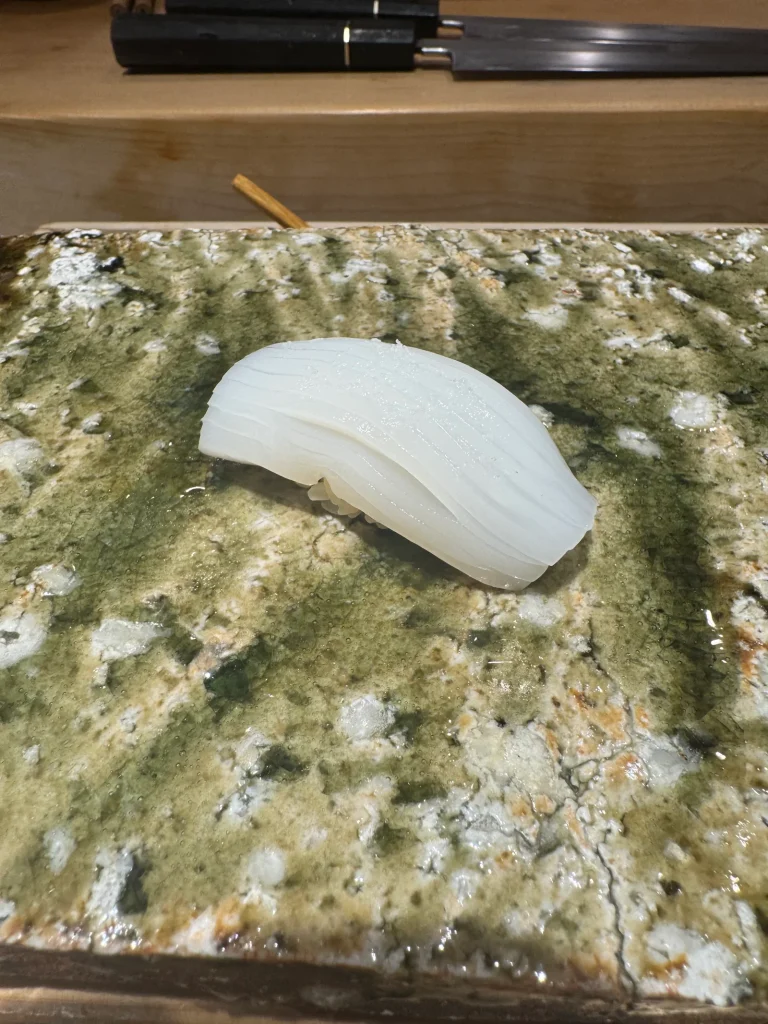
Squid brings a different problem. Its appeal depends on clean sweetness and a texture that can range from tender to distinctly resilient depending on species, cut, scoring, and preparation. If both the squid and the rice feel cold, the complete bite may seem firmer than intended.
For this reason, the counter may use shari that is gently warm with squid. The contrast prevents the rice from reinforcing a cold, rigid impression. Fine scoring across the squid also changes how it bends, separates, and meets the tongue.
Temperature Works With Vinegar, Firmness, and Size
Temperature cannot rescue poorly prepared rice. The grain must first be cooked to the intended moisture level and seasoned evenly with rice vinegar. A counter using a sharper red-vinegar blend may make different choices from one using a sweeter, gentler seasoning.
Shape matters too. Loosely formed shari opens quickly in the mouth, while firmer rice produces more resistance. A large rice portion can overwhelm a delicate topping, regardless of temperature. Soy sauce, nikiri glaze, salt, citrus, or grated ginger may shift the balance again.
This is why the chef’s decision is not simply “warm for fatty fish, cool for everything else.” Temperature belongs to a system that includes rice variety, hydration, seasoning, shaping pressure, topping thickness, preparation, and serving order.
The Temperature Changes During the Course
At an omakase counter, nigiri is normally handed over one piece at a time. Shari naturally changes as a batch rests, and the chef can use timing as part of the course. A piece served early and one served later may not have identical rice temperature even if they come from the same preparation.
That variation is not automatically inconsistency. It may reflect the rice’s natural cooling curve and the order in which different toppings are served. The relevant question is whether each bite feels intentional.
What Diners Can Notice
Eat nigiri soon after it is placed in front of you. Waiting allows both the fish and shari to change. As you eat, notice whether aroma arrives before sweetness, whether fat spreads gradually or immediately, whether the rice separates cleanly, and whether the topping and shari feel like one bite.
Do not expect dramatic heat. “Warm,” “gently warm,” and “slightly cooler” describe small sensory differences, not steaming rice or refrigerator-cold nigiri. For basic counter etiquette, see how to eat sushi in Japan.
These serving choices are also separate from food-safety controls. Cooked rice and raw seafood require appropriate sourcing, acidification or time-and-temperature procedures, sanitation, and compliance with local rules. A restaurant’s sensory temperature choice should not be copied as home storage guidance.
The most important point is that shari temperature is not a background detail. In skilled hands, it becomes another form of seasoning—adjusted so the aroma, fat, and texture of each topping reach the diner in balance.