Ikura is the Japanese name commonly used for separated salmon or trout roe. The glossy orange eggs are known for their delicate skins, rich savory flavor, and distinctive pop. They are served in sushi, rice bowls, hand rolls, and seasonal dishes throughout Japan. For smaller roes, our tobiko comparison explains how flying fish roe differs from ikura and masago.
Ikura is closely related to sujiko, but the two are not identical. The difference lies mainly in whether the eggs remain together in their membrane or are separated into individual pearls. Seasoning, fish species, and processing also affect the final taste.
This guide explains what ikura tastes like, how it differs from sujiko, how it is used in sushi, and what to check when choosing and storing it.
Understanding Japanese Ikura
Ikura consists of mature roe removed from the ovarian membrane of salmon or trout. In Japan, the eggs are commonly salted or marinated in a mixture based on Japanese soy sauce. Sake, mirin, kombu, or bonito stock may also be used, depending on the producer or household.
The word ikura is generally understood to have entered Japanese from the Russian word for fish roe. It became widely used in Japan during the modern period, while salted sujiko had already been familiar in northern regions.
Hokkaido is especially associated with ikura because of its salmon fisheries. Fresh sujiko appears in shops during the autumn salmon season, and some households separate and season the eggs themselves.
Ikura vs. Sujiko
Ikura and sujiko come from the same basic ingredient, but their form and eating experience differ.
| Product | Form | General Character | Common Uses |
|---|---|---|---|
| Ikura | Eggs separated into individual pearls | Juicy, delicate, and easy to portion | Gunkan sushi, rice bowls, temaki, and garnishes |
| Sujiko | Eggs cured while still held in the ovarian membrane | Dense, concentrated, and often saltier | Rice accompaniments, onigiri fillings, and small servings |
These descriptions are useful starting points rather than rigid rules. Salt levels, marinades, fish species, egg size, and texture vary among producers. Read the label instead of relying only on the product name.
Good Ikura Bursts Cleanly Instead of Resisting
Good ikura has a clean marine aroma, noticeable savoriness, and a rich but not heavy finish. Each egg should yield gently and release seasoned liquid rather than feel rubbery or dry.
Salted ikura emphasizes the natural flavor of the roe. Soy-marinated ikura, called ikura no shoyu-zuke, adds fermented depth and may also carry mild sweetness from mirin or sake. Kombu- or bonito-based seasoning can create a fuller umami finish.
The eggs are naturally rich, so a small quantity can flavor an entire bite of rice. Excessive salt, sweetness, or soy sauce can hide their more delicate character.
From Sujiko to a House Soy Cure
Fresh sujiko is gently broken apart so the eggs separate from the surrounding membrane. The roe is cleaned, drained, and then salted or marinated. Traditional household methods in Hokkaido often use soy sauce and sake, while other versions include mirin or dashi.
Commercial ikura may be sold chilled or frozen and may already be fully seasoned. It is not safe to assume that every package can be handled in the same way. Follow its storage, thawing, and use instructions.
How Ikura Is Used in Sushi
Ikura Gunkan
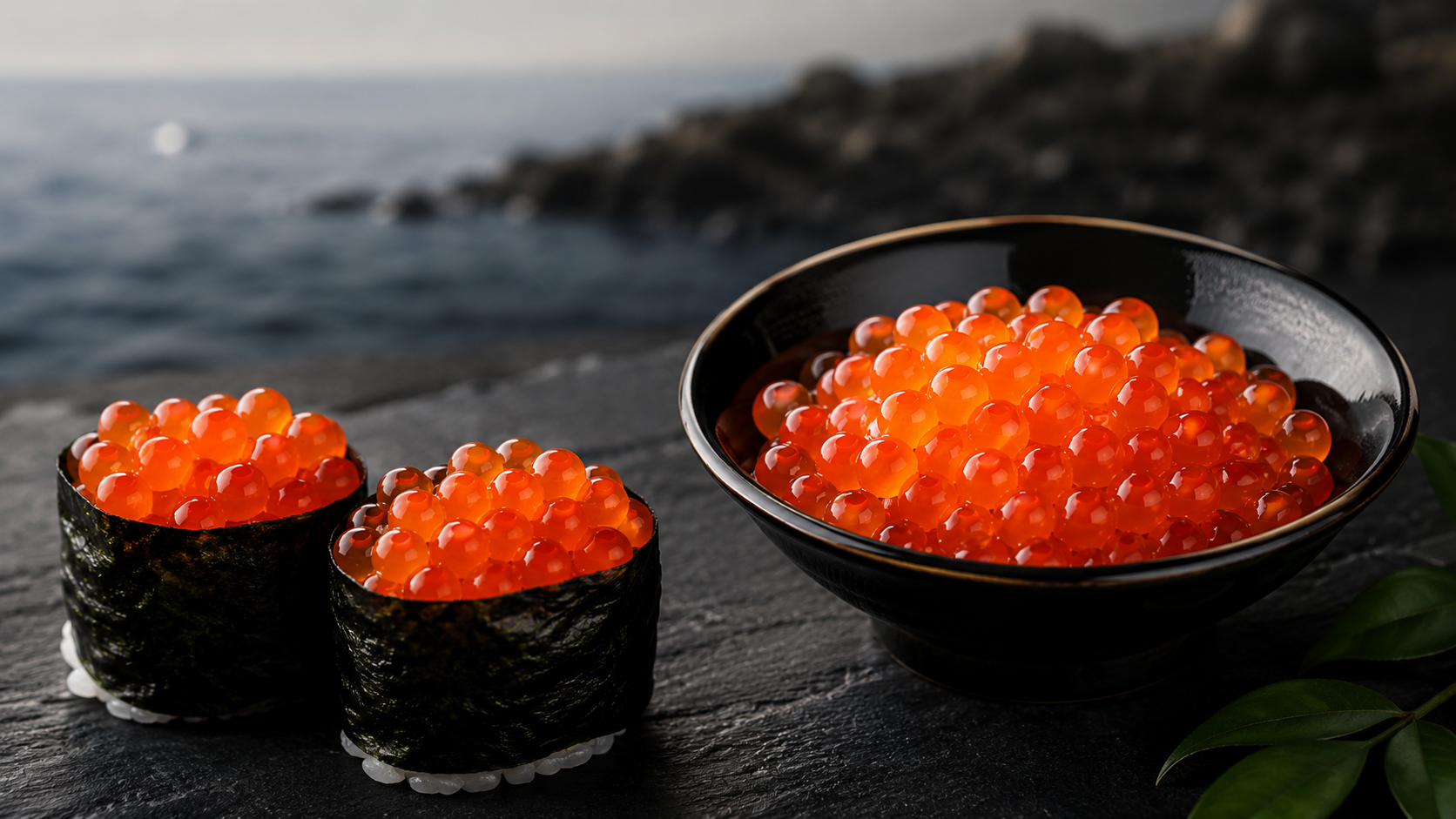
Ikura is most strongly associated with gunkan-maki. A strip of nori is wrapped around a small mound of seasoned rice, creating a raised edge that holds the loose eggs in place.
The crisp seaweed, tender vinegared sushi rice, and juicy roe create contrasting textures. Because both the rice and ikura are seasoned, extra soy sauce is often unnecessary.
Temaki
Ikura also works well in hand-rolled sushi. A spoonful may be combined with cucumber, shiso, salmon, crab, or other seafood. Assemble temaki shortly before eating so the nori remains crisp.
Chirashizushi and Rice Bowls
Scattered over chirashizushi, ikura adds color and concentrated flavor among sliced seafood, egg, vegetables, and rice. Ikura-don places the roe more prominently over warm or cooled Japanese rice, sometimes with shredded nori or wasabi.
Ikura may also appear as a garnish on small appetizers, chilled noodles, grated daikon, or dishes prepared for celebrations. Its bright color makes a small amount visually effective.
How to Choose Ikura
Choose according to the intended use rather than egg size or price alone. For sushi, look for eggs that are intact, evenly colored, and clearly labeled for ready-to-eat use. For rice bowls, a strongly seasoned product may work well, while a lighter marinade allows the roe flavor to remain more prominent.
Check the label for:
- the fish species or general salmon/trout description
- whether the roe is salted or soy-marinated
- soy sauce, wheat, fish stock, or other allergens
- added sweeteners, sake, mirin, or flavorings
- whether the product is chilled, frozen, or previously frozen
- thawing and use-after-opening directions
Cloudy liquid, broken eggs, or an unpleasant odor can indicate poor handling or deterioration, although appearance varies by product. When uncertain, follow the seller’s guidance rather than tasting questionable roe.
How to Store Ikura
Ikura is perishable. Keep it refrigerated or frozen exactly as directed on the package, maintain the cold chain, and return it to cold storage promptly after serving. Use a clean utensil to avoid introducing contamination.
Once opened or thawed, use the roe within the period specified by the producer. Do not apply a universal storage time to every product because salt content, packaging, processing, and preservatives differ.
Discard ikura that develops mold, gas, an unpleasant odor, or another unexpected change. If the package is damaged, leaking, or no longer properly chilled, do not use it.
Is ikura raw?
Ikura is not normally cooked like fish flesh, but it is usually cured with salt or a soy-based marinade. Commercial products may also have been frozen or processed in other ways. Check the package if the preparation method matters to you.
Is ikura the same as caviar?
Ikura is sometimes described informally as salmon caviar because both are salted fish roe. In precise culinary labeling, however, caviar traditionally refers to sturgeon roe. Calling the product salmon roe or ikura is clearer.
Does ikura always come from salmon?
Japanese standards and market usage may include roe from salmon or trout species. The exact fish affects egg size, color, richness, and price, so check the species information when it is provided.
Is ikura gluten-free?
Plain salted roe may not contain gluten, but soy-marinated ikura can use soy sauce made with wheat. Choose a product specifically labeled gluten-free if strict avoidance is required.
Can you eat ikura by itself?
Yes. Ready-to-eat ikura can be served in a small dish as an appetizer or rice accompaniment. Because it is rich and often salty, it is usually eaten in modest portions.
Season and Skin Decide the Experience
Ikura is separated salmon or trout roe valued for its brilliant color, delicate pop, and concentrated savory flavor. It differs from sujiko mainly in form: ikura is separated into individual eggs, while sujiko remains cured in its membrane.
For sushi, ikura gunkan is the classic starting point. The nori provides structure, the seasoned rice balances the richness, and the roe supplies both flavor and texture. When buying ikura for home use, compare the fish species, seasoning, allergen information, and storage directions rather than choosing by appearance alone.