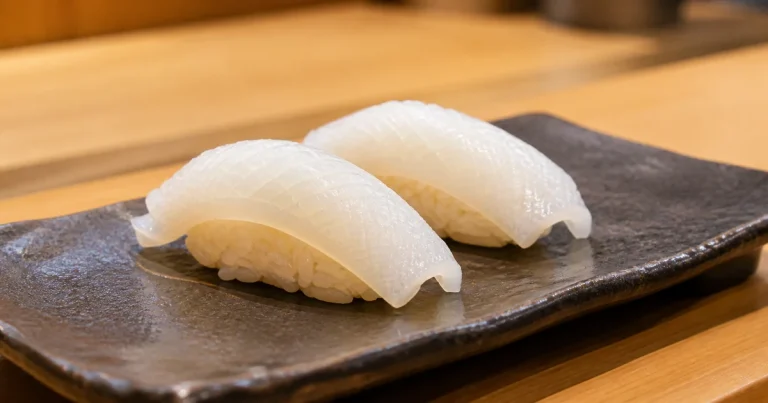
Ika sushi is sushi made with squid. The most familiar version is ika nigiri: a thin piece of prepared squid placed over vinegared sushi rice. It usually has a clean, mildly sweet flavor and a texture that can range from tender and creamy to pleasantly firm, depending on the species, season, cut, and preparation.
Chefs often score the surface with fine cuts to make the squid easier to chew and help seasoning cling to it. From the counter, ika is one of the clearest tests of knife work and ingredient judgment: the chef must decide whether to preserve a crisp bite, rest the squid for a softer sweetness, or use salt and kombu to concentrate a watery piece. This article focuses on those decisions rather than repeating the sushi basics covered in our guide to what sushi is.
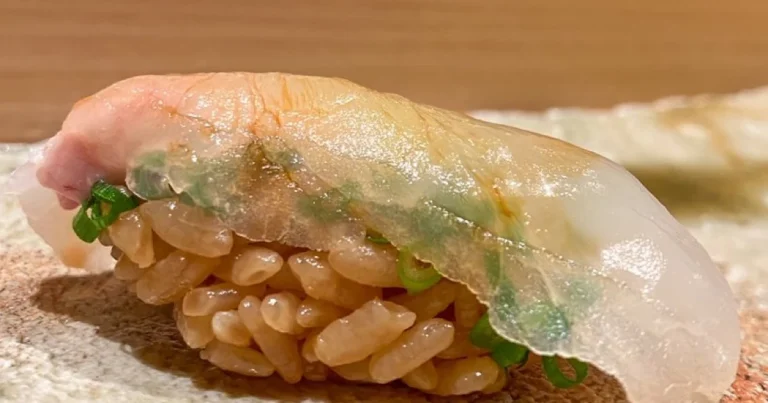
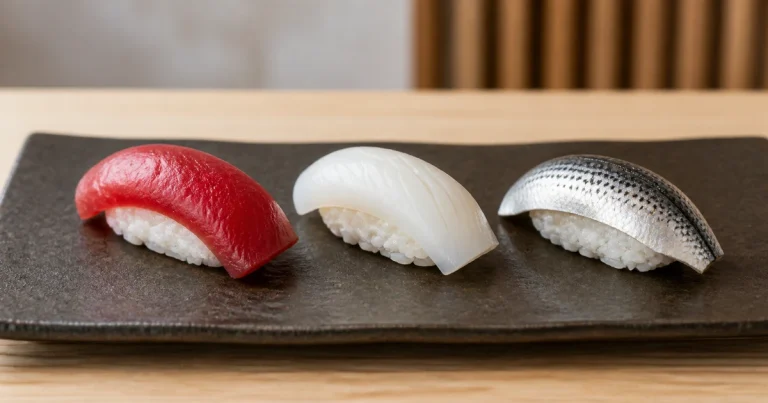
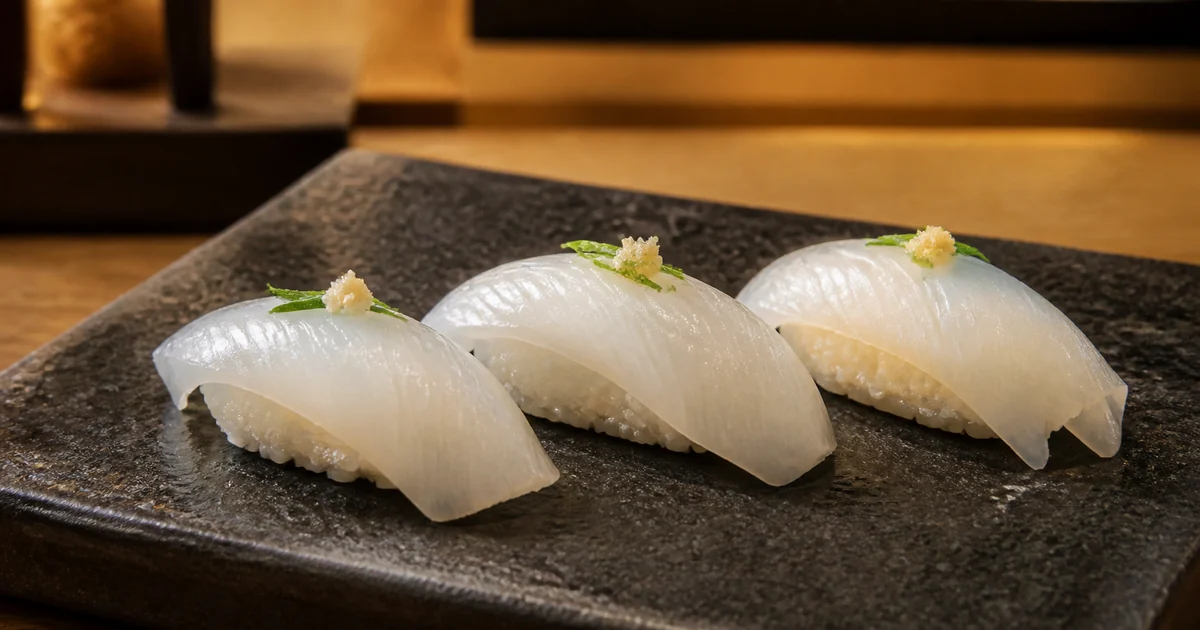
Four Squid, Four Different Textures
| Japanese name | Ika (イカ) |
|---|---|
| English meaning | Squid; the exact species may vary |
| Typical flavor | Mild, clean, subtly sweet, and lightly savory |
| Typical texture | Tender to firm, with a smooth or slightly springy bite |
| Common presentation | Nigiri, sashimi, thin strips, or finely scored slices |
| Beginner note | Texture varies more than the pale appearance suggests |
What Does Ika Mean?
Ika is the general Japanese word for squid. It does not identify one single species, so two restaurants can serve different squid under the same broad English label. A more specific Japanese name may appear when the restaurant wants to highlight the species or season.
Squid is a cephalopod mollusk, not a fish. Broad menu translations may also group some cuttlefish with squid.
Sweetness Appears Through Knife Work
Ika is generally mild rather than strongly fishy. Good squid can have a gentle sweetness, clean ocean character, and restrained savory finish. Because the flavor is subtle, the temperature of the rice and the amount of seasoning are easy to notice.
A chef may add wasabi, salt, a light soy-based sauce, citrus, ginger, or shiso. The garnish should support rather than cover the delicate flavor.
Why Does the Texture Vary?
Texture is the feature beginners notice most. Some ika feels soft, creamy, and gently sticky; another piece may be firm, springy, or chewy. Species, thickness, cutting direction, scoring, temperature, and preparation all affect the bite.
Fine crosswise or crosshatched cuts shorten the muscle fibers without slicing through the piece. They make firm squid easier to bite and help hold seasoning, so the pattern is functional as well as decorative.
Chewy does not automatically mean poor quality. The question is whether the texture feels deliberate and pleasant.
How Is Ika Prepared for Sushi?
The body, or mantle, is usually trimmed into the pale topping seen on nigiri. Preparation then varies with the squid and restaurant.
Ika Nigiri
For nigiri, a prepared slice is placed over sushi rice and may be secured by its natural tackiness or by fine knife cuts. Some pieces are served almost translucent; others appear opaque white. A chef may season the top before serving, so taste it once before adding more soy sauce.
Ika Sashimi
Ika can also be served without rice as sashimi, sometimes in thin noodle-like strips called ika somen. The ingredient may be similar, but the dish is not sushi without vinegared rice. Our sushi vs. sashimi comparison explains that distinction in more detail.
Other Preparations
Squid may also be blanched, cooked, marinated, or paired with its legs. Small firefly squid are commonly cooked and served whole in seasonal dishes rather than used as the familiar white sheet of ika nigiri.
Common Ika Names You May See
Japanese seafood names may reflect species, regional names, or trade labels. These names often appear on specialist menus:
- Yari ika: spear squid, often valued for delicate flavor and a tender bite.
- Aori ika: often translated as bigfin reef squid; its thick flesh can feel smooth, rich, and sweet.
- Surume ika: Japanese flying squid, which may be firmer and more savory.
- Hotaru ika: firefly squid, a small seasonal squid associated with spring in Toyama and usually presented differently from standard nigiri.
Availability changes with season, region, and restaurant. If a menu says only “ika,” staff may not have a precise English species name.
Four Ika Seen at Sushi Counters
Season labels are useful, but they are not fixed nationwide. Spawning cycles, fishing area, water temperature, and market supply shift the timing. A chef judges the actual body, transparency, firmness, aroma, and handling history in front of them.
Sumi Ika and Shin-Ika
Sumi ika usually refers to cuttlefish used in the Edomae sushi tradition. Mature pieces have thick flesh and a clean, decisive bite. The young seasonal form called shin-ika appears for a limited period, often from summer into early autumn depending on the market. Its thin, delicate body may be layered two or three pieces on one nigiri. The appeal is tenderness and immediacy rather than the forceful bite of a mature cuttlefish.
Aori Ika
Aori ika has thick flesh, pronounced sweetness, and a smooth, sticky texture when prepared well. Because the tissue can feel powerful and dense, careful membrane removal, cutting direction, scoring, and optional resting have a major effect on whether it feels luxurious or simply chewy.
Kensaki Ika
Kensaki ika is prized for sweetness and relatively tender flesh. It is important in summer sushi in many regions, but names and peak seasons vary by fishing area; shiro ika and aka ika can be regional or trade names rather than dependable nationwide species labels. A short controlled rest can soften the texture and deepen the perception of sweetness, but the chef must preserve freshness and cleanliness.
Yari Ika
Yari ika is slender and comparatively delicate, with a clean flavor and thinner body than aori ika. It is commonly associated with the colder months into spring, though the exact season changes by area. Light scoring, salt, and citrus can emphasize its precise bite without covering it.
Knife Work Changes the Value of Ika
Squid and cuttlefish contain strong muscle structures and thin membranes that can remain in the mouth after the rice has dispersed. The chef’s task is to shorten or redirect that resistance so the topping and shari can be eaten as one piece.
Scoring and Kanoko Cuts
Fine parallel, diagonal, or crosshatched cuts may be placed less than a millimeter apart, but depth and spacing depend on the species and thickness. The blade must enter far enough to shorten the resisting tissue without cutting the topping into fragments.
- Texture: Fine cuts make a firm sheet easier to bite and help it release with the rice.
- Flavor perception: Increasing the exposed surface lets the squid’s soluble taste compounds meet the tongue more quickly. Squid is animal tissue and does not have plant-like cell walls; the knife is changing muscle structure and surface area.
- Seasoning: The grooves hold a controlled amount of nikiri, salt, citrus, ginger, or another garnish instead of letting it slide off a smooth surface.
Removing the Membranes
Removing only the colored outer skin is not always enough. Fine membranes can remain on both surfaces of the mantle and create an unpleasant pull even after scoring. The chef uses fingers, cloth, and the knife tip to remove what the chosen presentation requires without tearing away useful flesh.
Fresh, Rested, or Kombu-Cured?
| Approach | When a Chef May Choose It | Intended Result |
|---|---|---|
| Serve with minimal resting | The individual sumi ika, shin-ika, yari ika, or another squid has an especially attractive clean bite | Preserve snap, transparency, and a fresh-textured finish |
| Controlled resting | Thick aori ika or kensaki ika is clean and suitable but too forceful immediately after preparation | Soften resistance and allow sweetness and savory flavor to become more apparent |
| Salt and kombu curing | The piece carries excess surface moisture or needs more concentrated structure and umami | Draw out moisture, firm the surface, and add restrained kombu depth |
A two-to-four-day rest is sometimes used under professional refrigeration and hygiene controls, but it is not a home instruction or a rule for every species. The chef evaluates smell, surface condition, firmness, catch and processing history, storage temperature, and the restaurant’s safety plan throughout. “Older” is not automatically sweeter or better.
For kombu curing, the squid may be lightly salted, dried carefully, and rested with prepared kombu for a period determined by thickness and moisture. Too much time replaces the squid’s delicacy with kombu flavor and an overly tight texture.
Seasoning and Shari at the Counter
Salt and sudachi are useful when the chef wants to expose the squid’s sweetness and preserve a clean aroma. Nikiri soy sauce can be better when the squid has enough depth to carry it. Neither choice is automatically more traditional or more correct; the cut, rice, and position in the course decide.
A very small piece of shiso between the topping and rice can add freshness to a rich, sticky aori ika, while ginger or citrus may sharpen a lighter squid. Garnish should disappear into the intended bite rather than announce itself separately.
Warm shari can make aroma and sweetness easier to perceive, but squid is generally lean, so the main issue is not “melting its fat.” The chef manages the temperature difference so the topping does not feel refrigerator-cold against the rice. There is no requirement that every shop hold shari at exactly 36°C.
Is Ika Sushi Raw?
It can be, but not every ika dish is raw. Squid for nigiri or sashimi may be served raw, while other preparations are blanched or cooked. Both can look pale, so ask when it matters.
Raw or undercooked squid can carry foodborne risks, including parasites. FDA guidance provides freezing controls for seafood intended to be eaten raw, but home freezers vary. Use a reputable supplier and never assume ordinary fresh squid is suitable for sushi.
People at higher risk from foodborne illness should seek current medical or public-health advice about raw seafood. Ask specifically for fully cooked ika when needed.
How to Order and Eat Ika Sushi
Ika nigiri is mild, but its texture can surprise diners expecting tuna or salmon. Order one piece first if unsure. Tender squid may suit beginners, while firmer varieties appeal to people who enjoy more chew.
Use your hands or chopsticks, and avoid soaking the rice in soy sauce. If the chef has seasoned the piece, taste it first. For broader customs, see our guide to eating sushi in Japan.
At a traditional counter, preparation changes with the squid. This reflects a wider Edomae sushi principle: technique matters as much as serving seafood raw.
Allergies and Dietary Questions
Squid is a mollusk and can cause allergic reactions. U.S. packaged-food rules treat molluscan and crustacean shellfish differently, so do not rely only on a “major allergens” statement. Ask about squid and cross-contact directly.
Sauces may contain soy or wheat, and toppings can include other seasonings. Communicate serious allergies clearly instead of judging by appearance.
Is ika squid or cuttlefish?
Ika generally means squid, but broad English menu translations may not distinguish every squid and cuttlefish species consistently. Ask about the specific type when that distinction matters.
Why is ika sushi scored with a knife?
Fine scoring makes firm squid easier to chew and helps seasoning adhere to the surface. It can also create an attractive pattern, but its main value is textural.
Is ika sushi very fishy?
Usually not. Its flavor is commonly mild, clean, and subtly sweet. Texture tends to be more noticeable than a strong seafood flavor.
Is squid sushi cooked?
Some is raw, while some is blanched or cooked. Ask the restaurant if you need a fully cooked option.
How the Cut Determines the Nigiri
Ika sushi pairs prepared squid with vinegared rice. It is known for a mild, lightly sweet flavor and a texture that varies from tender and creamy to firm and springy. Species, season, slicing, scoring, and other preparation choices all affect the result.
For a first order, focus less on whether the squid is simply “fresh” and more on whether its texture, rice, and seasoning feel balanced. That combination is what turns a pale slice of squid into a carefully prepared piece of sushi.
Continue Exploring Squid and Seasonal Sushi
- How Japanese chefs use decorative cuts on squid
- Where squid fits into Japan’s seasonal sushi calendar
Editorial Sources
- Japan Fisheries Research and Education Agency: Japanese Flying Squid
- Ministry of Agriculture, Forestry and Fisheries: Hotaruika no Sumiso Ae
- Japan National Tourism Organization: Saga Local Cuisine and Yobuko Squid
- U.S. Food and Drug Administration: Bad Bug Book—Anisakis simplex
- U.S. Food and Drug Administration: Selecting and Serving Fresh and Frozen Seafood Safely
- U.S. Food and Drug Administration: Food Allergen Labeling Guidance
- Tokyo Metropolitan Central Wholesale Market: Yari Ika
- Fisheries Agency of Japan: Seafood naming guidelines