Itadakimasu is a Japanese expression said before eating, while gochisousama or gochisousama deshita is said after the meal. They express appreciation for the food and the effort behind it. Neither phrase has one perfect English translation, and they are more than Japanese versions of “bon appétit” and “thank you for the meal.”
You may hear these expressions at home, at school, in a restaurant, or before opening a packed lunch. Visitors do not need to perform them perfectly, but understanding their meaning makes everyday Japanese dining customs much easier to follow.
Two Phrases Frame the Japanese Meal
| Expression | When it is said | Practical meaning |
|---|---|---|
| Itadakimasu | Before the first bite | “I gratefully receive this meal” |
| Gochisousama | After finishing | A casual “thank you for the meal” |
| Gochisousama deshita | After finishing or when leaving | A more polite acknowledgment of the meal |
What Does Itadakimasu Mean?
Itadakimasu comes from itadaku, a humble verb meaning “to receive” or “to partake.” In a dining context, the speaker is acknowledging that they are about to receive the meal. A natural English explanation is “I gratefully receive,” although people do not normally translate the phrase aloud.
The expression can include thanks to the person who cooked, the farmers and fishers who supplied the ingredients, and the natural world from which the food came. Japan’s Ministry of Agriculture, Forestry and Fisheries also explains it as gratitude toward nature and the people involved in growing and preparing food.
This is why “let’s eat” captures the timing but not the full meaning. “Bon appétit” is also different: it is generally a wish directed toward other diners, whereas itadakimasu describes the speaker respectfully receiving the meal.
Why Do Japanese People Say Itadakimasu?
The phrase turns the beginning of a meal into a brief acknowledgment rather than an automatic first bite. It fits broader values often associated with washoku and Japanese food culture, including respect for ingredients, preparation, seasonality, and the people sharing the table.
However, individual habits vary. Some people say it clearly at every meal, some say it quietly, and others may omit it when eating alone or in a hurried setting. It should not be treated as a test of whether someone is behaving “authentically Japanese.” Family practice, age, setting, and personal preference all affect how visible the custom is.
Is Itadakimasu a Religious Prayer?
It is better understood as a cultural mealtime expression than as a prayer belonging exclusively to one religion. Its emphasis on gratitude for life, nature, food, and human effort can connect with ethical or religious ideas, but saying it does not necessarily indicate that the speaker is Buddhist, Shinto, or religious at all.
For visitors, there is no need to assign the phrase a religious meaning that the people at the table have not expressed. In most everyday situations, joining the group simply communicates respect and appreciation.
What Does Gochisousama Mean?
Gochisousama is said after eating. The word chisou historically carries the idea of running around or making efforts to prepare a meal. The expression therefore recognizes not only the finished food but also the work, time, and hospitality involved in providing it.
Gochisousama deshita is the more polite past-tense form commonly heard after a meal. At home, diners may say it to whoever cooked. In a small restaurant, customers may say it to the chef or staff when leaving. It can sound warm and appreciative, but it is not a substitute for paying, following the restaurant’s rules, or addressing a problem directly when something needs attention.
When and How Should You Say the Phrases?
Before Eating
Wait until the meal is ready and the group is about to begin. Say itadakimasu once, then start eating. When dining with other people, it is considerate to avoid taking the first bite while someone is still being served, unless the host or staff tells you to begin before the food cools.
After Eating
Say gochisousama or gochisousama deshita when you have finished. The longer form is a safe, polite choice when thanking a host, cook, chef, or restaurant staff member. At a busy chain restaurant, staff may not hear you, and that is not a serious etiquette failure.
At sushi restaurants, these phrases fit around the practical customs explained in our guide to eating sushi in Japan. At a yakitori restaurant, they do not replace the need to understand ordering, seasoning, and skewer quantities; see our guide to ordering yakitori in Japan.
Do You Need to Put Your Hands Together?
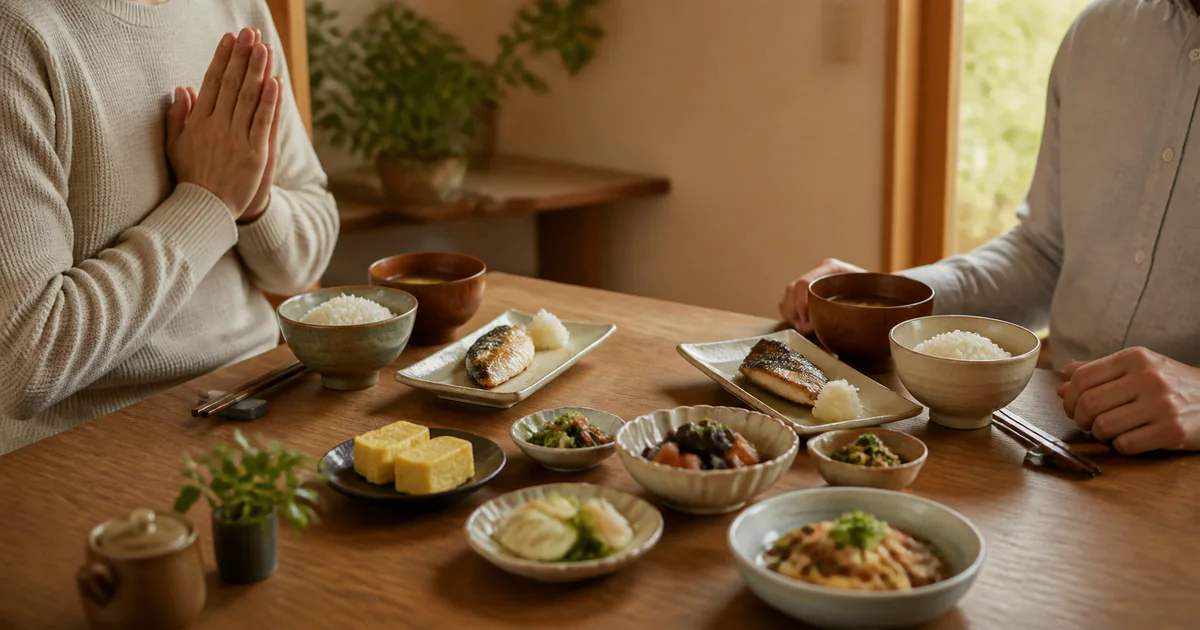
Some people briefly place their palms together and make a small nod while saying itadakimasu or gochisousama. This is especially familiar in homes, schools, and media. The gesture is not a universal requirement, however. Others say the words without moving their hands.
Visitors can follow the people they are eating with. A calm, small gesture is enough if the group uses one. There is no need for an exaggerated bow, a loud announcement, or a performance designed to attract attention.
Should Visitors Say Itadakimasu in Japan?
Yes, if it feels natural, particularly when someone has invited you into their home, prepared a meal, or begins the phrase with the group. Joining in is generally appreciated. Pronunciation does not have to be flawless; speaking at a normal volume and following the table’s timing matters more.
You are not required to announce itadakimasu every time you buy a snack, eat alone, or enter a restaurant. Likewise, you do not need to search for a staff member solely to say gochisousama deshita. Use the expressions as sincere acknowledgments, not as compulsory lines.
Common Misunderstandings to Avoid
- It is not exactly “bon appétit.” The timing is similar, but the direction and meaning differ.
- It does not have to be loud. A quiet phrase at your own table is normal.
- Palms together are optional. Follow the setting instead of treating the gesture as mandatory.
- Gochisousama is not only a food review. It acknowledges the meal and the effort behind it, not merely whether every dish suited your taste.
- Customs are not identical everywhere. Household, restaurant, school, and regional habits can differ.
Using the Phrases Without Sounding Forced
How Do You Pronounce Itadakimasu?
A useful beginner approximation is “ee-tah-dah-kee-mahs.” Keep the syllables relatively even rather than placing heavy English-style stress on one part of the word.
What Is the Difference Between Gochisousama and Gochisousama Deshita?
Both express thanks after eating. Gochisousama deshita is more complete and polite, making it a good choice for hosts and restaurant staff. Gochisousama is common in more casual situations.
Can You Say Itadakimasu When Eating Alone?
Yes. Some people say it even when no one else is present because the appreciation is directed toward the food and everyone involved in producing it. Others omit it when alone; both habits exist.
Who Are You Thanking with Gochisousama?
Depending on the situation, it may acknowledge the cook, host, restaurant staff, ingredients, and the overall effort that made the meal possible. You do not need to identify one specific recipient for the phrase to be appropriate.
Use the Words Naturally, Not Ceremonially
Itadakimasu is said before eating to acknowledge receiving the meal, while gochisousama or gochisousama deshita expresses appreciation afterward. The phrases reflect gratitude for food and the work behind it, but their use is flexible rather than a rigid ritual. For visitors, the simplest approach is to follow the people at the table, speak naturally, and treat the words as sincere thanks rather than a performance.