Seasonal sushi in Japan is not simply a list assigning one fish to each month. The season changes what reaches the market, how much fat a fish carries, how its flesh feels, and which preparation makes sense at the counter. A fish served in spring can offer a very different pleasure from a fish prized in midwinter.
Two pieces show that contrast particularly well. Spring kasugo is small, delicate, and labor-intensive to prepare. Winter buri can come from a fish more than a meter long, with abundant fat and deep savoriness. One expresses the value of fine work on a young fish; the other shows what cold-season richness can bring to nigiri.
A Seasonal Sushi Menu Is a Moving Target
Japan stretches across different climates and fishing grounds, so a useful season is not always a fixed national date. Water temperature, migration, spawning cycles, weather, fishing conditions, and region all affect availability. Farmed fish can also provide more consistency than a seasonal wild catch.
At a sushi counter, “in season” may refer to a fish arriving early, reaching a recognized peak, or giving a final taste before its main run ends. Japanese food culture sometimes describes these stages as hashiri, shun, and nagori. The point is not to memorize a perfect calendar. It is to notice how the ingredient changes and why the chef chooses it that day.
Spring Kasugo: Small Fish, Detailed Work
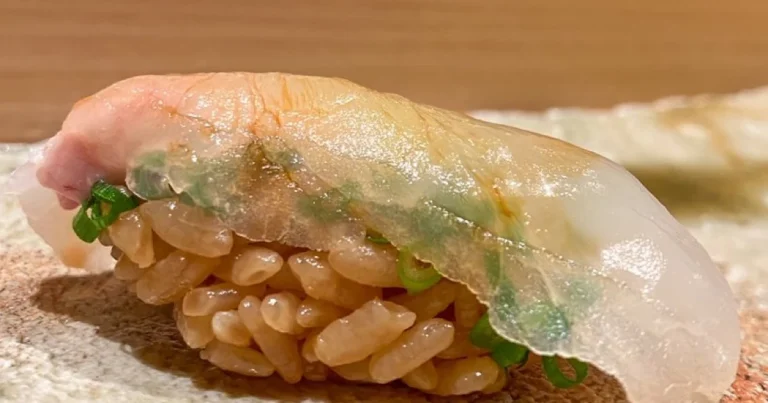
Kasugo is a sushi-market name for small young sea bream. It often refers to juvenile chidai, although young madai and kidai may also be sold under the name. Toyosu Market describes kasugo as roughly palm-sized and closely associated with spring Edomae sushi. It should not be treated as a separate adult species or as simply a miniature version of every tai nigiri.
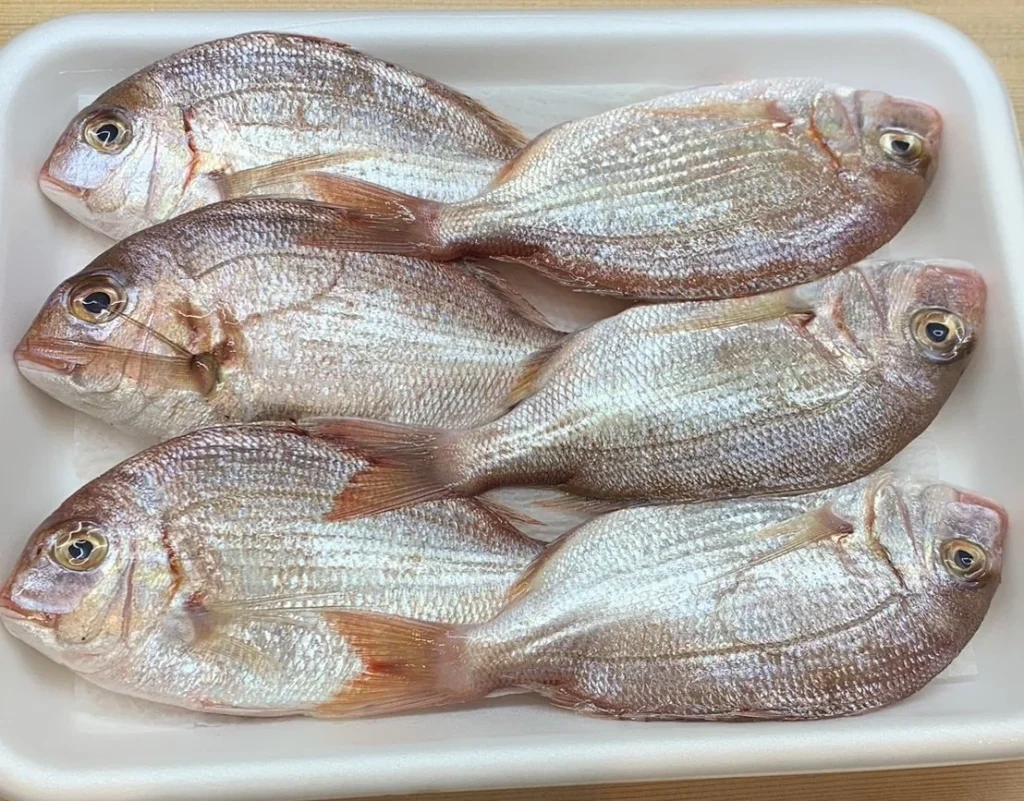
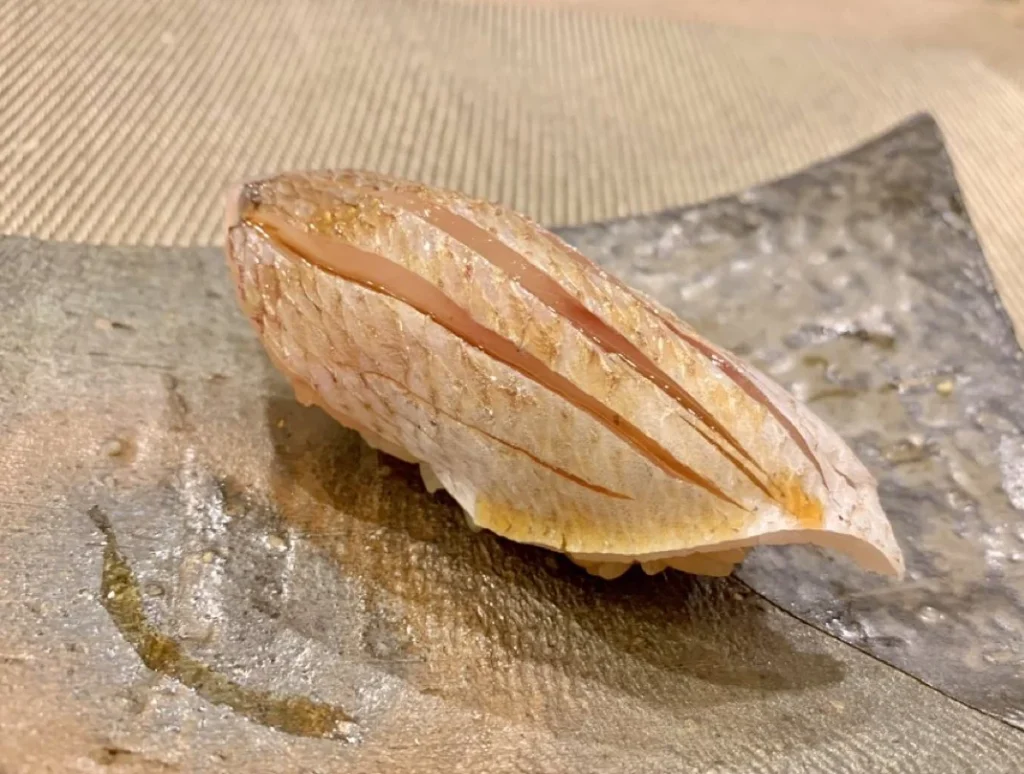
The fish handled here were around fist-sized. Their small bodies meant more individual work: scaling, filleting, removing fine bones, seasoning, and shaping each piece. Depending on the shop, kasugo may be lightly salted and vinegar-cured, and the skin may be scored or otherwise handled to create a tender bite.
Compared with ordinary adult tai nigiri, this kasugo had a softer texture and a more delicate sweetness. The flavor was not powerful in the same way as a fatty winter fish. Its appeal came from the balance of mild flesh, skin, seasoning, and rice—and from the care needed to make such a small fish feel complete.
Summer Favors Fish That Eat Cleanly
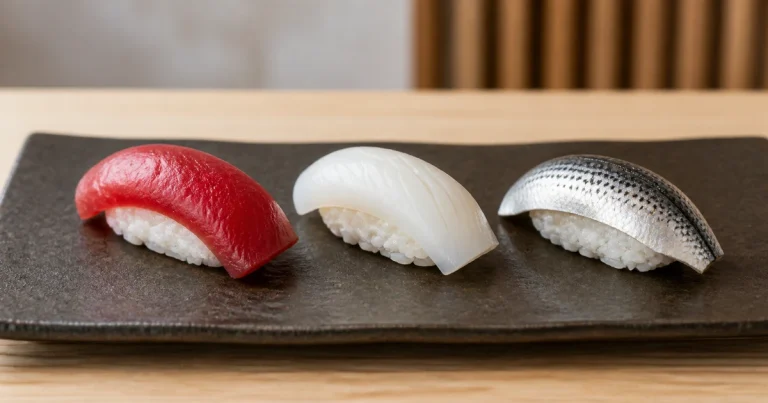
Summer does not mean that every fish becomes lean, but the season often brings attention to seafood with a clean finish, lively aroma, or refreshing preparation. Aji can be served with ginger and green onion, while kohada and other silver-skinned fish may be adjusted with salt and vinegar. The exact timing varies by fishing ground and size.
Anago offers a different summer experience. Rather than being served simply as raw fish, it is commonly simmered until tender and finished with a sweet-savory sauce. Uni also has multiple species and producing regions, so its best season cannot be reduced to one nationwide summer rule.
Autumn Brings a Stronger, Oilier Turn
As waters cool, autumn menus often shift toward fish valued for increasing fat and a more pronounced flavor. Mackerel is the clearest example. Sanma is another autumn fish whose preparation can change from grilling to nigiri. MAFF describes chub mackerel as especially flavorful when it gains fat in autumn, although species and region matter.
At the sushi counter, saba also demonstrates how preparation responds to the ingredient. Salt and vinegar can tighten the flesh, balance richness, and shape the final aroma. A seasonal fish is therefore not only a raw material; it can change the chef’s decisions about curing, slicing, garnish, and serving order.
Winter Buri: Size, Fat, and Deep Savoriness
Large buri can exceed one meter in length. In winter, wild buri caught in cold waters may develop substantial fat and is commonly called kan-buri. The best-known regional examples are associated with the Sea of Japan, but the name and quality claims should still be understood in the context of origin, catch, and seller.

The market scene makes the contrast with kasugo immediate. A single large buri can supply many portions, yet the quality is not judged by size alone. Fat distribution, firmness, freshness, handling, and the specific cut all affect the bite. Belly meat can be especially rich, while another section may feel cleaner and firmer.
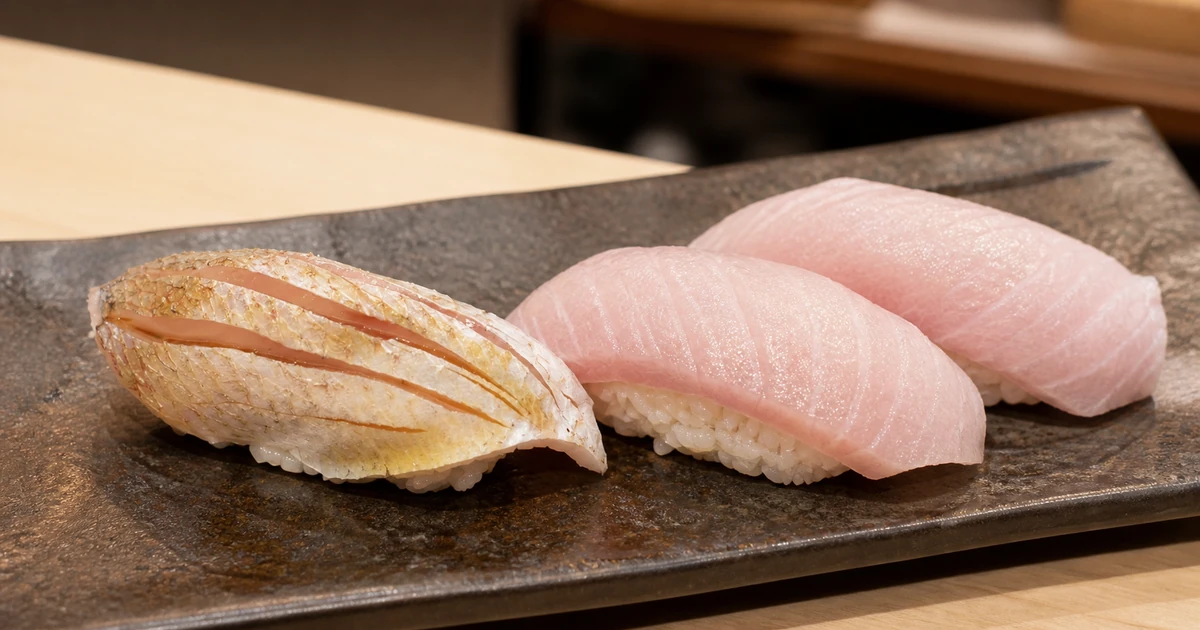
The winter buri nigiri shown here had a generous layer of fat and powerful savoriness. Its pale flesh looked restrained, but the mouthfeel was broad and lingering. That richness is very different from the mild sweetness of spring kasugo.
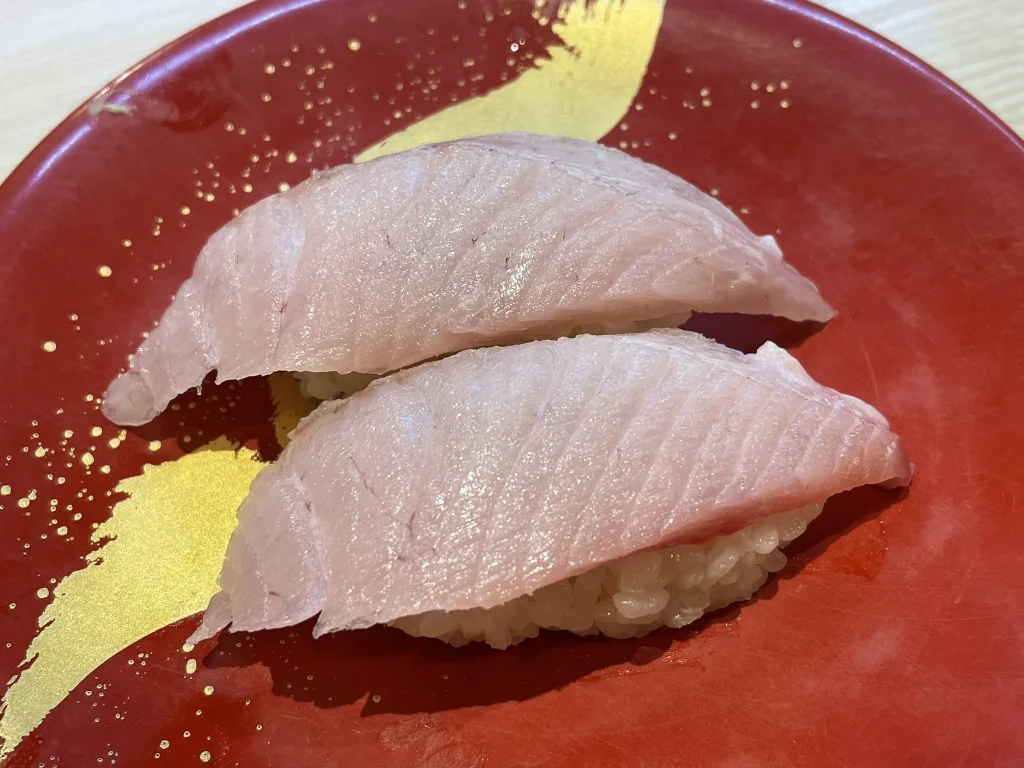
The names hamachi and buri can also reflect growth stage, region, and restaurant usage. Seeing “yellowtail” in English does not tell you the fish’s size, origin, or seasonal character.
How I Build Seasonal Pieces into a Course
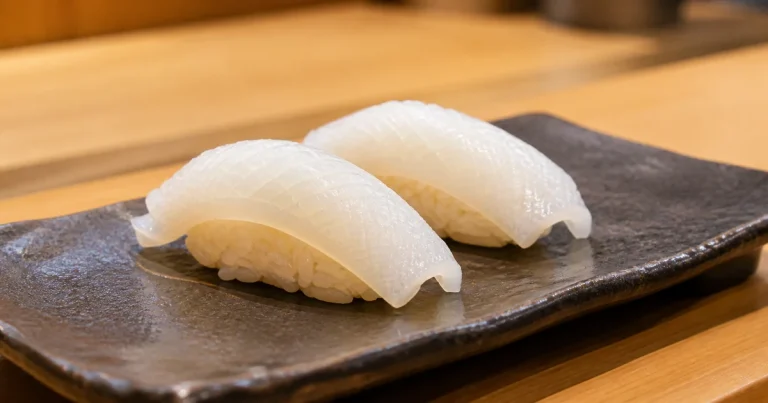
In my own course planning, I usually think about intensity before prestige. I may begin with a mild, clean-tasting fish, then move toward silver-skinned fish, lean tuna, or lightly vinegared preparations that sharpen the appetite. The exact species changes with the season and the day’s condition.
Richer and fattier fish, pieces brushed with tare, and preparations with stronger umami generally make more sense after the diner has tasted the quieter items. This progression helps prevent a powerful piece from making the next delicate fish seem flat. It is a working approach rather than a rule followed by every sushi restaurant.
Toward the end, a roll or tamagoyaki can help the meal feel settled. I also watch the diner’s pace and appetite rather than forcing a fixed sequence to continue unchanged. Seasonality affects the ingredients, but a successful course still depends on balance, timing, and the person eating it.
How to Order Sushi with the Season
Ask what is especially good that day rather than requesting a fish only because a calendar labels it seasonal. At an omakase counter, the sequence may already express the season. At an à la carte restaurant, a handwritten recommendation board or seasonal insert can be more useful than the permanent menu.
- Ask about origin: the fishing area can explain why a fish appears earlier or later than expected.
- Notice preparation: curing, simmering, searing, and scoring often reveal how the chef is handling the fish’s current condition.
- Compare textures: try a delicate piece beside a richer one instead of ordering only fatty fish.
- Allow for variation: weather and supply can remove a famous seasonal item from the menu.
Seasonality is not a guarantee that one piece will suit every diner, nor does it make raw fish automatically safer. Reputable sourcing and professional handling remain essential. The reward is variety: return in another season and the same counter may offer a different balance of sweetness, acidity, aroma, firmness, and fat.
Kasugo and buri make that idea easy to taste. Spring turns a small, painstakingly prepared fish into a delicate piece of nigiri. Winter transforms a large migratory fish into something lush and deeply savory. Seasonal sushi is most interesting when the calendar becomes visible in both the fish and the work behind it.
Sources for This Seasonal Sushi Guide
- Toyosu Market: Kasugo season, size, and species
- Tsukiji Outer Market: Kasugo preparation and its place in spring sushi
- Ministry of Agriculture, Forestry and Fisheries: Summer seafood
- Ministry of Agriculture, Forestry and Fisheries: Mackerel season and sushi
- Ministry of Agriculture, Forestry and Fisheries: Winter buri, fat, and culinary uses