Sushi and sashimi are often placed in the same category, but they are not the same food. The simplest difference is the rice: sushi includes seasoned sushi rice, while sashimi is served without it.
This distinction is more useful than asking whether the fish is raw. Some sushi contains raw seafood, but other kinds use cooked ingredients, vegetables, or egg. Sashimi is usually raw and is valued for the flavor and texture of the ingredient itself.
Sushi vs. Sashimi: The Quick Answer
- Sushi is made with vinegared rice combined with a topping, filling, or other ingredient.
- Sashimi consists of carefully sliced raw seafood or another ingredient served without rice.
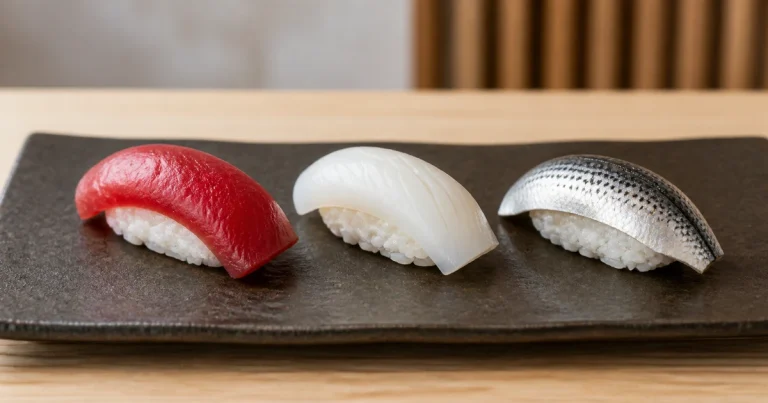
- Nigiri is a type of sushi: a topping is placed over a small portion of sushi rice.
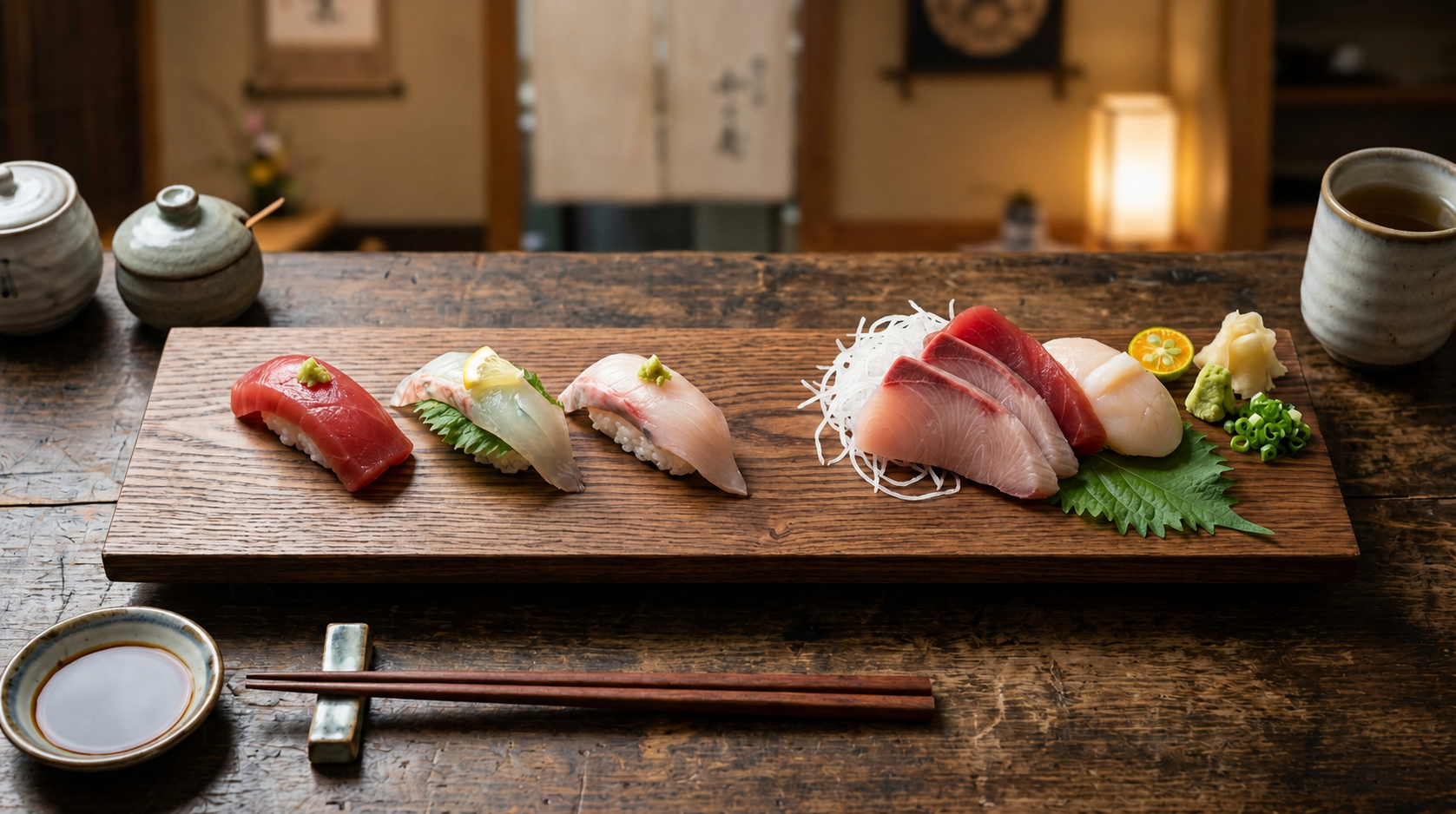
For example, a slice of tuna served by itself is tuna sashimi. When tuna is placed over seasoned rice, it becomes tuna nigiri sushi.
What Is Sushi?
The defining part of sushi is the rice, not raw fish. Sushi rice is cooked rice seasoned with vinegar, salt, and usually some sugar. It is often called shari at sushi restaurants.
The rice may be paired with raw tuna, cooked shrimp, grilled eel, egg, cucumber, pickled vegetables, or many other ingredients. Familiar styles include nigiri, maki rolls, temaki hand rolls, gunkan, and chirashi. For a fuller explanation, see What Is Sushi? A Beginner’s Guide.
What Is Sashimi?
Sashimi is an ingredient sliced and served without sushi rice. Tuna, sea bream, yellowtail, salmon, squid, scallop (hotate), and octopus are common examples, although the selection changes by restaurant and season.
The cut is part of the preparation. Thickness, direction, and knife technique can change the texture and how the flavor develops in the mouth. Sashimi is commonly served with soy sauce and condiments such as wasabi, grated ginger, or shiso, depending on the ingredient.
The Main Differences Between Sushi and Sashimi
- Rice: Sushi always includes seasoned rice. Sashimi does not.
- Ingredients: Sushi can contain raw, cooked, or plant-based ingredients. Sashimi is usually raw seafood, though the word is not limited only to fish.
- Preparation: Sushi focuses on the balance of rice, topping, seasoning, and temperature. Sashimi places greater attention on the ingredient, knife work, and texture.
- Serving style: Sushi may be served as individual pieces, rolls, or a bowl. Sashimi is generally arranged as slices on a plate.
- How it is eaten: Nigiri may be eaten with clean hands or chopsticks. Sashimi is normally eaten with chopsticks.
| Point of comparison | Sashimi | Sushi, especially nigiri |
|---|---|---|
| Center of the dish | The cut ingredient and its own texture | The relationship among shari, topping, wasabi, and seasoning |
| Knife-work goal | Create the intended surface, firmness, and shape for an individual slice | Make the topping bend over the rice and break apart with it |
| Temperature | Often served cool, but not automatically ice-cold | Shari is commonly warm or near body temperature; the topping is tempered according to the fish |
| Seasoning | Often adjusted by the diner with soy sauce, ponzu, salt, or condiments | Frequently completed by the chef with nikiri, salt, citrus, or sauce |
| Role in a course | Often appears among early tsumami with drinks | Nigiri often forms the central or later meal sequence |
| Ideal finish | The seafood remains the clearest impression | Topping and rice separate and combine at the same moment |
These are tendencies rather than definitions. Sashimi may be aged, cured, or dressed, and sushi can be served cool. Restaurants also structure courses differently. The non-negotiable distinction is the seasoned rice: without shari, a slice of fish is not nigiri sushi.
How the Difference Feels at the Counter: A Cook’s View
From a cook’s perspective, sushi rice is not simply something added beneath the fish. Its temperature, firmness, vinegar balance, and size change how the topping tastes. The same cut of tuna can feel clean and direct as sashimi, yet rounder and more aromatic as nigiri because the warm, seasoned rice releases aroma and adds acidity.
With sashimi, the knife work carries more of the responsibility. Cutting across or with the grain, changing the thickness, or adding a fine surface cut can make the same ingredient feel tender, firm, or crisp. This is why two slices from the same fish may not give the same eating experience.
In a chef-led course, sashimi is often served before nigiri so the diner can notice the seafood without the flavor and fullness of rice. That is a common progression rather than a fixed rule; the order depends on the restaurant, the day’s ingredients, and the chef’s intended sequence.
The Same Fish Requires a Different Knife Decision
When I prepare the same loin for sashimi and nigiri, I do not simply cut one portion without rice and place another on rice. I first decide what the diner should feel. For sashimi, a clean face and defined edges can emphasize the ingredient’s sheen, firmness, and direction of grain. For nigiri, I also need the slice to curve over the rice, stay attached during lifting, and yield at the same moment as the shari.
Sashimi Cuts Emphasize the Slice
Hira-zukuri, or a relatively thick rectangular cut, can give tuna or yellowtail a substantial bite. Usu-zukuri creates very thin slices—often associated with firm white fish—and changes the experience from a single dense bite to delicate overlapping layers. A long drawing cut with a sharp knife leaves a glossy surface with clean corners rather than a sawn or crushed edge.
The garnish and dipping condiment then frame that texture. Sea bream may meet salt, citrus, ponzu, or soy sauce; oily fish may be paired with ginger or scallion. Although the seafood remains the center, sashimi is not always “untouched raw fish.” Aging, light salting, kombu curing, searing, and careful temperature adjustment may all be used.
Nigiri Cuts Must Work With Shari
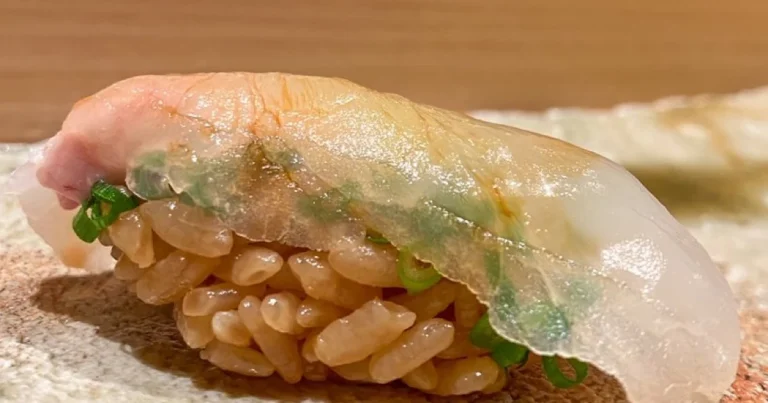
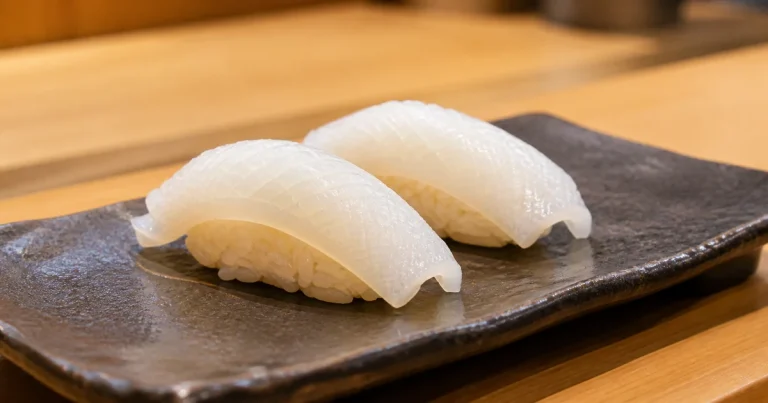
For nigiri, a broader diagonal slice can provide enough surface to cover the rice without becoming needlessly thick. I may cut through resistant fibers, taper the edges, or add fine hidden cuts to squid, shellfish, or firmer fish. These cuts are functional: they make the topping easier to bite, hold seasoning, and help it open in the mouth with the rice.
The correct cut is species- and condition-specific. Not every topping should be wide, thin, or heavily scored. Soft fatty tuna can lose its shape if overworked, while squid may remain unpleasantly resistant without enough attention to its membranes and fibers. The chef is constantly matching resistance above the rice to the looseness designed inside it.
Preparation Aims at a Different Final Flavor
With sashimi, I often ask: what treatment makes this slice’s own aroma and texture clearest? That may mean serving it relatively fresh and firm, resting it to build flavor, drawing out a little water with salt, or using kombu to add savoriness without overwhelming the flesh.
With nigiri, the question becomes relational: what will happen when this topping meets acidic rice, wasabi, and surface seasoning? Lean tuna may be marinated as zuke so its savory depth joins the vinegar in the rice. Kohada can be salted and vinegar-cured so its acidity forms a deliberate bridge to the shari. Anago is cooked until tender and finished with a concentrated sauce because the piece is designed to dissolve with warm rice rather than imitate raw fish.
This is why “fresher” does not always mean “better” and “raw” does not mean “unprepared.” The craft lies in choosing the treatment that completes the intended dish.
Temperature Changes What the Same Fish Reveals
Very cold fish can feel firm and clean, but excessive cold suppresses aroma and makes fat seem waxy. Sashimi is often kept cool for quality and safety, then served at a temperature selected for the ingredient rather than automatically straight from the coldest part of the refrigerator.
In nigiri, shari is commonly served warm or around body temperature, but 36°C is not a universal rule. Each restaurant has its own rice, vinegar balance, holding method, and rhythm of service. I consider the temperature gap as well as the individual temperatures: warm rice beneath icy fatty tuna can feel disconnected, while correctly tempered fish allows aroma and fat to open as the rice loosens.
How I Use Both in a Course
At the counter, sashimi often appears among the early tsumami because it lets the guest concentrate on seafood and pairs naturally with sake. Nigiri introduces rice, acidity, warmth, and a more complete sense of eating a meal. Moving from one to the other changes not only fullness but also the way the palate reads the fish.
I might serve a fish as sashimi first to show its cool firmness, then use a related cut or preparation later as nigiri so the guest can experience how shari changes its sweetness and aroma. This is not a compulsory order: some sushi counters serve almost no sashimi, while other omakase courses alternate dishes and nigiri. The course should follow the ingredients and the restaurant’s style rather than a textbook diagram.
Is Sushi Always Raw?
No. The idea that sushi means raw fish is one of the most common misunderstandings about Japanese food. Cooked shrimp, eel, octopus, egg, tofu, and vegetables can all appear in sushi.
Even seafood that looks raw may have been salted, marinated, aged, cured with kombu, or lightly seared. These techniques are part of sushi preparation rather than signs that the ingredient is less fresh.
How to Order Sushi and Sashimi in Japan
At an izakaya or Japanese restaurant, sashimi is often ordered as a shared starter, while sushi may be ordered separately or served later in the meal. A sashimi assortment is usually listed as moriawase and lets the restaurant select several varieties.
At a sushi counter, an omakase course may include both sashimi and nigiri. You do not need to choose between them unless you are ordering à la carte. If you have allergies or cannot eat raw seafood, tell the restaurant before the meal begins.
For practical advice about soy sauce, chopsticks, wasabi, and counter manners, read How to Eat Sushi in Japan.
Which Should You Choose?
Choose sushi if you want the balance of seasoned rice, seafood, and other toppings. Choose sashimi if you want to focus on the flavor and texture of the seafood without rice.
Neither is more authentic or automatically higher in quality. They are different preparations, and many meals in Japan include both. Beginners may find nigiri or rolls more filling, while sashimi makes it easier to compare the texture of different fish.
Common Questions About Sushi and Sashimi
Is sashimi a type of sushi?
No. Sashimi does not include sushi rice, so it is a separate dish.
Is nigiri sushi or sashimi?
Nigiri is sushi because the topping is served over seasoned sushi rice.
Can sushi be vegetarian?
Yes. Sushi can be made with cucumber, pickled vegetables, tofu, egg, and other ingredients that do not contain raw fish. Diners with dietary restrictions should still ask about sauces, stocks, and cross-contact.
The easiest way to remember the difference is simple: sushi is defined by seasoned rice, while sashimi is served without it. Once you understand that rule, Japanese menus become much easier to read.
Compare the Same Ingredients in More Detail
If this look behind the sushi counter deepened your appreciation of the craft, you can support Japan Food Compass on Ko-fi and help us continue sharing carefully researched guides and original kitchen stories.