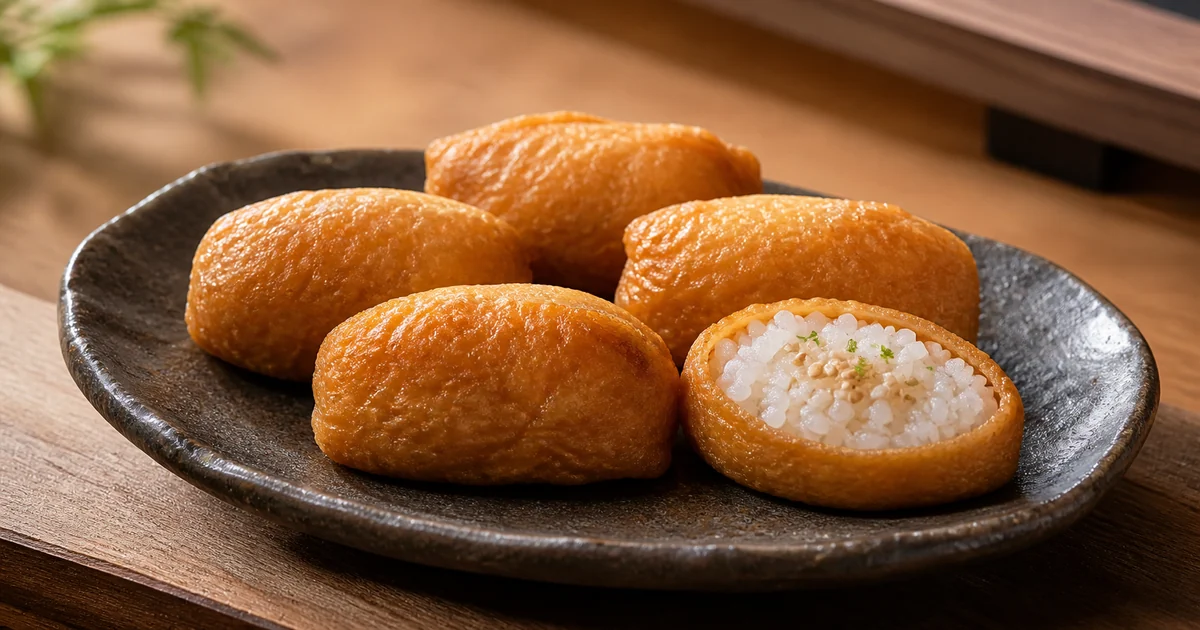
Inari sushi is vinegared sushi rice tucked inside a seasoned fried tofu pocket. The golden-brown wrapper, called aburaage, is usually simmered with sweet and savory seasonings before it is filled. The result is soft, juicy, mildly tangy, and noticeably sweeter than many seafood-based types of sushi.
Basic inari contains no raw fish, making it approachable for beginners and people who prefer plant-based ingredients. However, it is not automatically vegetarian because the tofu may be simmered in fish-based dashi. From a professional kitchen perspective, inari is not merely sweet tofu filled with rice: selecting and opening the aburaage, controlling the simmering liquid, and balancing acidity and moisture all appear in one compact piece. This guide focuses on that work rather than repeating the basics covered in our guide to what sushi is.
The Balance Begins with the Fried Tofu Pouch
| Japanese name | Inarizushi or inari-zushi (いなり寿司) |
|---|---|
| Main components | Seasoned aburaage pocket and vinegared sushi rice |
| Typical flavor | Sweet, savory, mildly tangy, and soy-seasoned |
| Typical texture | Soft and juicy outside; tender and cohesive inside |
| Raw seafood | Usually none in a basic version |
| Common places to find it | Sushi shops, supermarkets, bento boxes, delis, and home meals |
What Is Inari Sushi Made Of?
The outside is aburaage, a thin fried tofu sheet that opens into a pouch. It is commonly simmered with soy sauce, sugar, and a liquid such as dashi; recipes may also include mirin or sake.
The filling is cooked Japanese-style rice seasoned with vinegar, salt, and often sugar—not plain steamed rice. Our guides to Japanese rice and rice vinegar explain those components separately.
Other versions mix in sesame, vegetables, shiitake, lotus root, pickled ginger, hijiki, or local ingredients. Open-top versions may display colorful toppings, but these additions are optional.
Sweet Skin Needs Sharper Sushi Rice
Inari sushi is usually sweet-savory. The tofu absorbs its simmering liquid and releases the seasoning with each bite. Soy sauce adds saltiness, sugar provides sweetness, and vinegar keeps the rice from tasting cloying.
The wrapper should be tender and moist rather than greasy. Soft, lightly chewy rice contrasts with the juicy pouch. Some versions are gently sweet; others are much sweeter and darker.
Why Is It Called Inari Sushi?
The name is associated with Inari worship. Foxes are traditionally regarded as messengers of Inari, and folklore connects foxes with a fondness for fried tofu. MAFF records regional traditions in which inari sushi was offered at Inari shrines, while JNTO notes that shops near Kyoto’s Fushimi Inari Taisha sell both inari sushi and kitsune udon made with aburaage.
The precise origin is not settled. Aichi tradition connects the dish with Toyokawa Inari and the late Edo period, but official sources acknowledge several origin stories.
How a Chef Prepares the Aburaage
Much of inari’s quality is decided before the rice enters the pouch. The wrapper must absorb seasoning, stay supple, and release enough juice to feel generous without soaking the shari.
Choose a Pouch with Body and Flexibility
A useful aburaage is thin enough to open but not so brittle that it tears during simmering and filling. Many cooks look for a soft interior layer that can hold the broth. Products vary greatly, so the best preparation begins by testing how easily the sheet opens and how much liquid it absorbs.
Roll Before Opening
Before cutting, a cook can press a chopstick or rolling pin firmly over the sheet several times. This helps separate the inner surfaces so the pouch opens cleanly to the corners. The pressure must be controlled: enough to loosen the layers, but not enough to split the fried tofu.
Remove Excess Oil without Removing All Character
Depending on the product, aburaage may be rinsed with boiling water or briefly blanched before simmering. This removes stale or excessive surface oil and helps the seasoning penetrate. Overdoing the step can make the pouch dry and bland, while inadequate oil removal can leave a greasy finish. The correct time therefore depends on the thickness, freshness, and oil content of the specific aburaage.
Simmering and Resting the Pouches
The seasoning reveals regional and household preferences. A darker Kanto-style example may use dashi, dark soy sauce, sugar, mirin, and sake for a pronounced sweet-savory character. A lighter Kansai-style approach may emphasize kombu dashi, light soy sauce, and a paler sweetness. These are broad tendencies rather than fixed rules.
Once the liquid reaches a simmer, the pouches are cooked gently under a drop lid. Vigorous boiling can tear or toughen them and may reduce the liquid unevenly. Resting after cooking is equally important: as the pouches cool in their liquid, moisture and seasoning have time to become more evenly distributed. Some kitchens prepare them the day before, although timing depends on the recipe and food-safety controls.
Balancing the Shari with the Sweet Pouch
Acidity Prevents a Heavy Finish
A richly seasoned pouch can support shari with a clear vinegar and salt profile. If both wrapper and rice are strongly sweet, the flavor may become dull or cloying. A chef adjusts the rice to the pouch rather than assuming the same seasoning must be used for every style of sushi.
The Squeeze Controls Juiciness
Before filling, the pouch is pressed gently to remove excess simmering liquid. Squeezing too firmly produces a dry wrapper; leaving too much liquid can soak the rice and erase the outline of the grains. The target is a moist pouch that releases seasoning when bitten without making the shari wet.
Mixed-Rice Accents
Toasted white sesame, chopped gari, yuzu zest, shiso, simmered shiitake, vinegared lotus root, or other regional ingredients can add aroma and contrast. Their role is to interrupt sweetness with fragrance or texture, not to crowd the pouch with unrelated flavors.
Filling and Shaping without Compressing the Rice
The rice is lightly gathered and placed into the corners without being packed like a firm rice ball. It should hold its shape but loosen naturally in the mouth. The open edges can be folded inward to create a stable, neat base, while open-top styles deliberately display the rice or garnish.
Some cooks turn the pouch inside out before filling. The softer interior surface then becomes visible and gives the first bite a different, more absorbent texture. This is a stylistic choice rather than a superior form.
A Kanto-Style Working Example
The following is one practical starting point, not a universal restaurant formula. Aburaage brands differ in size, salt, oil, and absorption, so taste the liquid and adjust before treating the numbers as fixed.
- Aburaage: 10 rectangular sheets, halved to make approximately 20 pouches
- Dashi: 350 ml
- Dark soy sauce: 3½ tablespoons
- Sugar: 4½ tablespoons, using zarame or regular sugar according to the desired flavor
- Mirin and sake: 2 tablespoons each
- Roll the sheets to loosen the inner layers, cut them in half, and open them gently.
- Remove excess oil with hot water or a brief blanch, adjusting the time to the product, then drain and press gently.
- Simmer the pouches slowly under a drop lid until tender and evenly seasoned.
- Cool them in the liquid and refrigerate promptly if holding them for later service.
- Drain to the desired juiciness and fill each pouch with roughly 25–30 g of lightly shaped sushi rice, adjusting for the pouch size.
Regional and Household Variations
There is no single national form. Pieces may be rounded, rectangular, bale-shaped, or triangular, and may be closed or left open. Sweetness and fillings also vary.
Tochigi: Kanpyo-Tied Inari
A traditional Tochigi version wraps seasoned kanpyo, or dried gourd strip, around the middle of the stuffed tofu pouch. This creates a bale-like shape and reflects Tochigi’s strong connection with kanpyo production.
Aichi and Toyokawa
MAFF describes Aichi-style aburage-zushi as sweet-savory tofu filled with sushi rice, sometimes with the bottom left open. Mixed rice ingredients and creative toppings are also found around Toyokawa.
Tsugaru: Pink and Extra Sweet
In the Tsugaru region of Aomori, inarizushi can be strikingly pink. Chopped red pickled ginger is mixed into glutinous rice, and the seasoning is often sweeter than visitors expect. This regional example shows why one familiar supermarket version should not be treated as the only authentic style.
Is Inari Sushi Vegetarian or Vegan?
Sometimes, but appearance cannot confirm it. Tofu and rice are plant-based, yet aburaage may be simmered in dashi made with katsuobushi or other fish. Ask about the stock and seasonings, not only whether the sushi contains meat.
Kombu- or shiitake-based stock can make a plant-based version possible. Check packaged ingredients for fish extracts, and ask about restaurant cross-contact when relevant.
Allergens and Dietary Considerations
Aburaage is made from soybeans, one of the nine major allergens recognized under U.S. federal labeling rules. Soy sauce may contain wheat, and sesame is common in mixed-rice versions. Dashi may introduce fish, while specialty toppings can add egg, seafood, or other allergens.
If an allergy is serious, ask about the tofu pouch, simmering liquid, rice mixture, toppings, and shared preparation surfaces. “No raw fish” does not mean allergen-free, gluten-free, vegetarian, or vegan.
How to Eat and Order Inari Sushi
Inari sushi is normally eaten with your hands or chopsticks and does not need extra soy sauce. The pouch is already seasoned, and dipping it can make the flavor too salty or cause liquid to drip. It is commonly served at room temperature or slightly cool rather than hot.
Look for names such as inari, inarizushi, “tofu pocket sushi,” or “bean curd sushi” on English menus. It works well in bento because it is compact and easy to eat, though prepared rice dishes should still be handled and stored according to the seller’s food-safety directions.
Inari Sushi vs. Onigiri
Both are convenient rice foods, but inari sushi uses vinegared sushi rice inside a seasoned tofu pocket. Onigiri is usually made from plain or lightly salted rice and may be wrapped in nori or filled with salmon, umeboshi, tuna, or other ingredients. The presence of sushi rice is what keeps inari within the broad sushi family.
Does inari sushi contain raw fish?
Basic inari sushi normally does not. Specialty versions can have additional toppings or fillings, so check the individual item.
Is the outside of inari sushi tofu?
Yes. It is aburaage, a thin fried tofu sheet that is opened into a pouch and seasoned before filling.
Why is inari sushi sweet?
The tofu pouch is commonly simmered with sugar and soy sauce. Sushi rice also often contains some sugar, and regional recipes may increase the sweetness further.
Is inari sushi served cold?
It is commonly served at room temperature or cool. Follow storage instructions for packaged products and do not leave prepared rice dishes unrefrigerated longer than recommended.
What Makes an Inari Feel Light Instead of Heavy
Inari sushi is seasoned aburaage filled with vinegared sushi rice. Its soft, juicy tofu pocket and sweet-savory flavor make it distinct from seafood nigiri, while its portable shape suits bento, casual meals, and celebrations.
Versions differ across Japan, from kanpyo-tied Tochigi inari to the pink, sweet style of Tsugaru. Beginners should also remember that a fish-free appearance does not guarantee a vegetarian, vegan, gluten-free, or allergen-free dish.
Editorial Sources
- Ministry of Agriculture, Forestry and Fisheries: Aburage-zushi/Inari-zushi—Aichi
- Ministry of Agriculture, Forestry and Fisheries: Inari-zushi—Tochigi
- Ministry of Agriculture, Forestry and Fisheries: Inarizushi—Tsugaru, Aomori
- Japan National Tourism Organization: Fushimi Inari Taisha Shrine
- U.S. Food and Drug Administration: Food Allergies