The most revealing piece in an Edomae sushi meal may not be raw at all. Anago reaches the counter only after the fish has been opened, cleaned, heated, simmered, lifted without breaking, portioned, warmed, and finished with sauce or salt. By the time it rests on shari, most of the work is invisible.
That is why many sushi cooks treat anago as a test of the kitchen rather than merely another topping. Fresh fish and good knife work matter, but they cannot compensate for slime left on the skin, rough simmering, a sauce reduced too far, or a cooked fillet allowed to turn cold and dry.
The ideal is not simply “soft.” The anago should remain coherent enough to travel from the counter to the mouth, then yield with very little resistance. Its mild marine savor should still be recognizable beneath the tsume. Achieving that balance takes more judgment than a fixed temperature or thirty-minute timer can provide.
Anago Begins as a Difficult Fish, Not a Soft Topping
Anago most often refers to marine conger eel used in Japanese cooking. It is not the freshwater eel called unagi. Anago is generally leaner and milder; unagi is usually richer and particularly suited to grilling and glazing. Both can be cooked in several ways, so habitat and species—not sauce alone—separate the two.
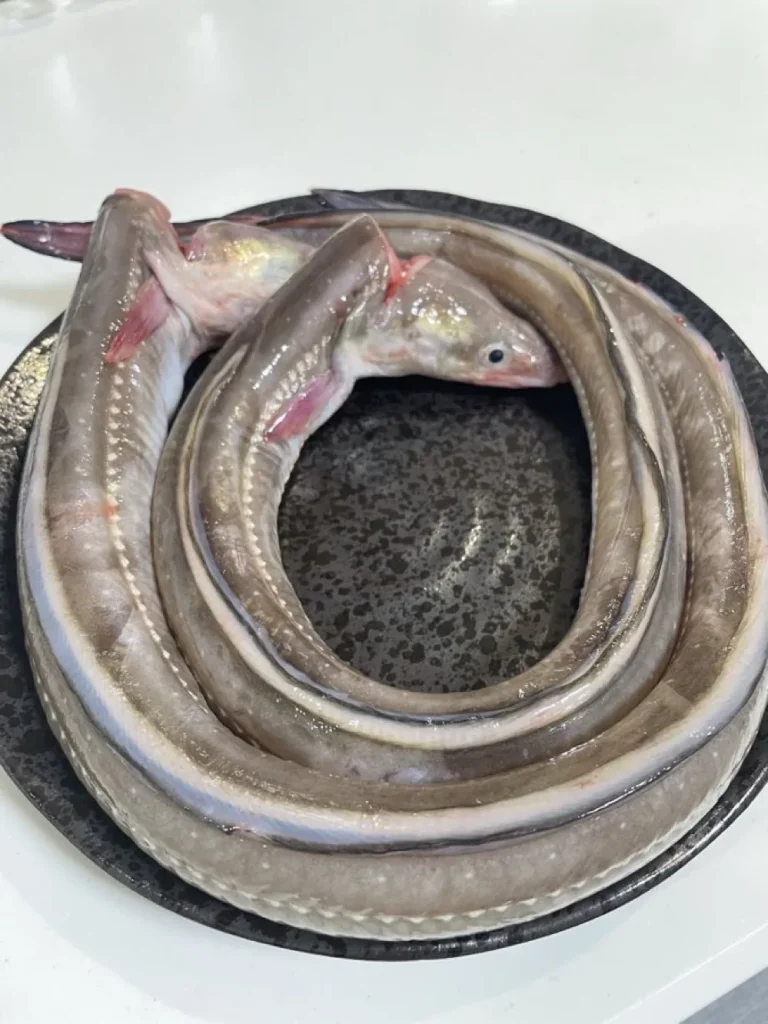
The fish’s surface is naturally slippery. That mucus is one source of unpleasant aroma or mouthfeel when cleaning is careless, but it is misleading to blame every muddy or fishy note on slime alone. Freshness, bleeding, gutting, storage, and contamination during handling also affect the result.
Opening anago cleanly is specialist work. The backbone and abdominal bones must be dealt with while preserving enough flesh to cook evenly. Small bones and their effect on the final bite depend on the size of the fish and the preparation; chefs do not follow one universal pattern of cutting every tiny bone.
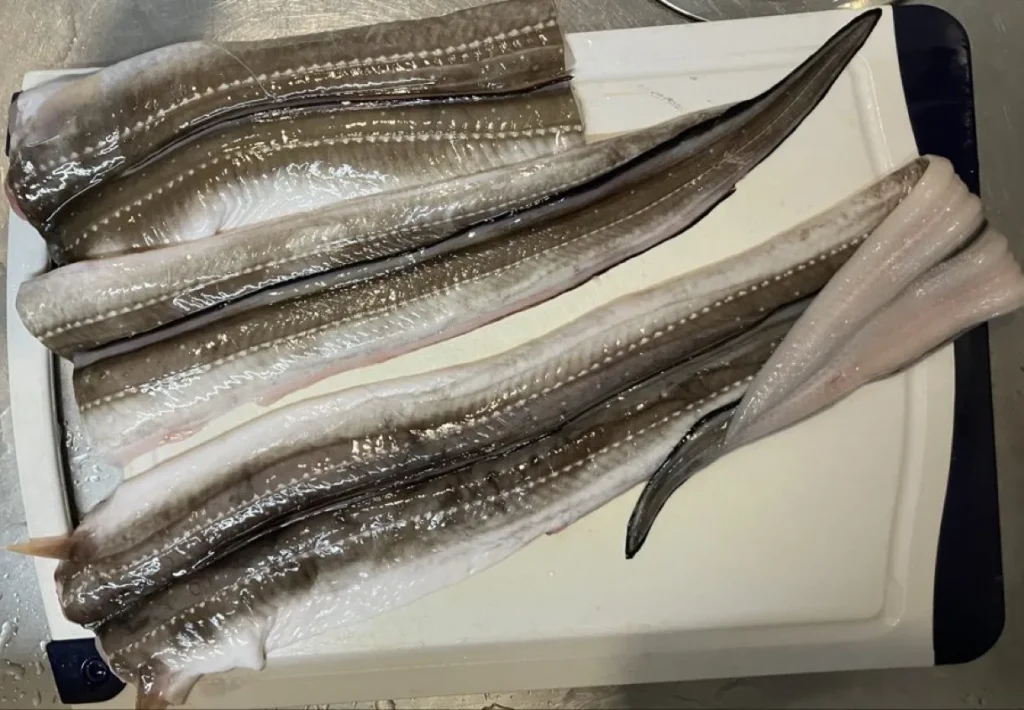
Removing Slime Without Damaging the Skin
A common sushi-kitchen method is to expose the skin briefly to hot water so the transparent surface material turns opaque and becomes easier to scrape away. Some cooks pour hot water over the opened fish; others blanch it briefly. The exact water temperature and contact time vary with the fish and the house method, so 80–90°C should not be treated as a universal formula.
After cooling the fillet enough to stop further surface cooking, the cook scrapes the skin gently with the back of a knife or another suitable tool. The pressure has to remove the whitish residue without tearing the thin skin or gouging the flesh. Working only from head to tail is also not an absolute rule; control and complete removal matter more than a theatrical stroke.
At this stage, the cook checks by sight and touch. Remaining patches feel slick and look cloudy against the skin. The clean surface feels more even and no longer sheds the same white residue. The fish and work area must be kept hygienic throughout: hot-water treatment for cleaning is not a substitute for fully cooking seafood.
The Simmer Must Tenderize Without Tossing the Fish Apart
The prepared fillets are arranged so that the cooking liquid can reach them evenly and so that they need as little handling as possible once tender. A broad pan can be useful because stacking creates uneven pressure and makes fragile pieces harder to lift.
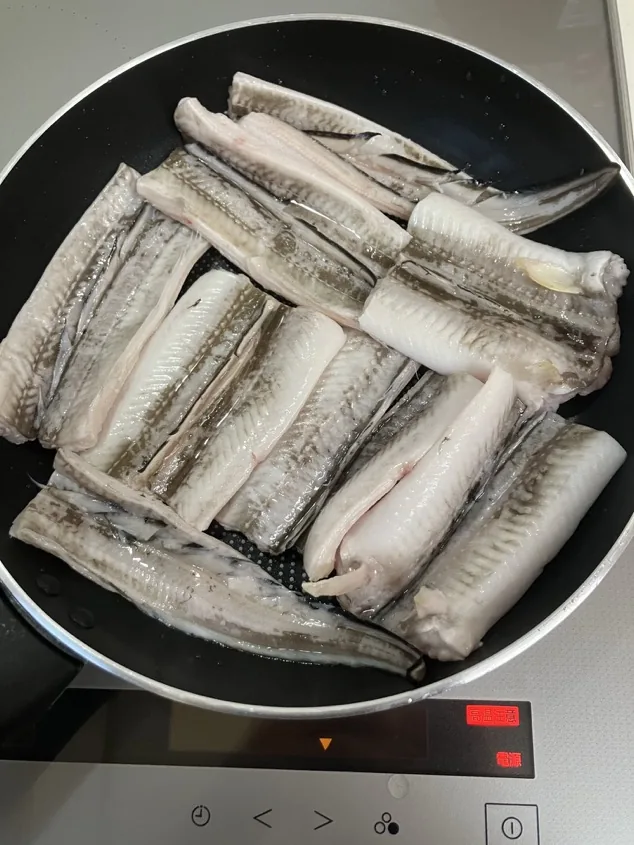
The cooking liquid may contain sake, sugar, soy sauce, and other seasonings, but shops formulate it differently. Gentle movement is important. A violent boil can knock the fillets against one another, break the flesh, and reduce the liquid before the center has reached the intended texture. An otoshibuta, or drop lid, can keep the surface moist and limit movement when used carefully.
“Low heat” does not mean that the fish can be left unattended. The cook watches the shape of the simmer, how the drop lid moves, how quickly the liquid reduces, and how the thickest sections respond when tested. Thirty to forty minutes may suit one batch, but fish size, initial temperature, vessel, liquid volume, and heat source can shift the endpoint substantially.
The goal is also not to melt every trace of collagen until the flesh has no structure. Connective tissue softens with moist heat, while muscle proteins tighten and lose moisture as cooking continues. Good anago occupies the narrow practical space where it is tender and moist but can still be portioned and lifted.
The Pot I Turned into Anago Soup
When I was a trainee newly trusted with simmered dishes, I once left a pan of anago on the heat during a lunch rush. I had raised the flame to hurry the batch, then another job pulled me away.
When I opened the lid, the fillets were no longer lying quietly in the pan. The stronger boil had moved and battered them until much of the flesh had separated into the liquid. I tried to lift the pieces with a mesh skimmer, but they broke before they cleared the surface. What should have become nigiri had become a thick fish soup.
The entire batch was unusable for the counter. My chef’s criticism was simple: once anago starts becoming tender, the cook has to watch the pot and control the movement. A timer cannot tell you that the heat is too aggressive, the pieces have shifted, or the liquid is reducing faster than yesterday.
I did not learn a “split-second secret” that day. I learned a more useful discipline: set the pan up so the fish needs minimal handling, keep the simmer calm, check it repeatedly, and make the other kitchen work wait when the batch approaches its endpoint.
Tsume Is a Second Piece of Cooking
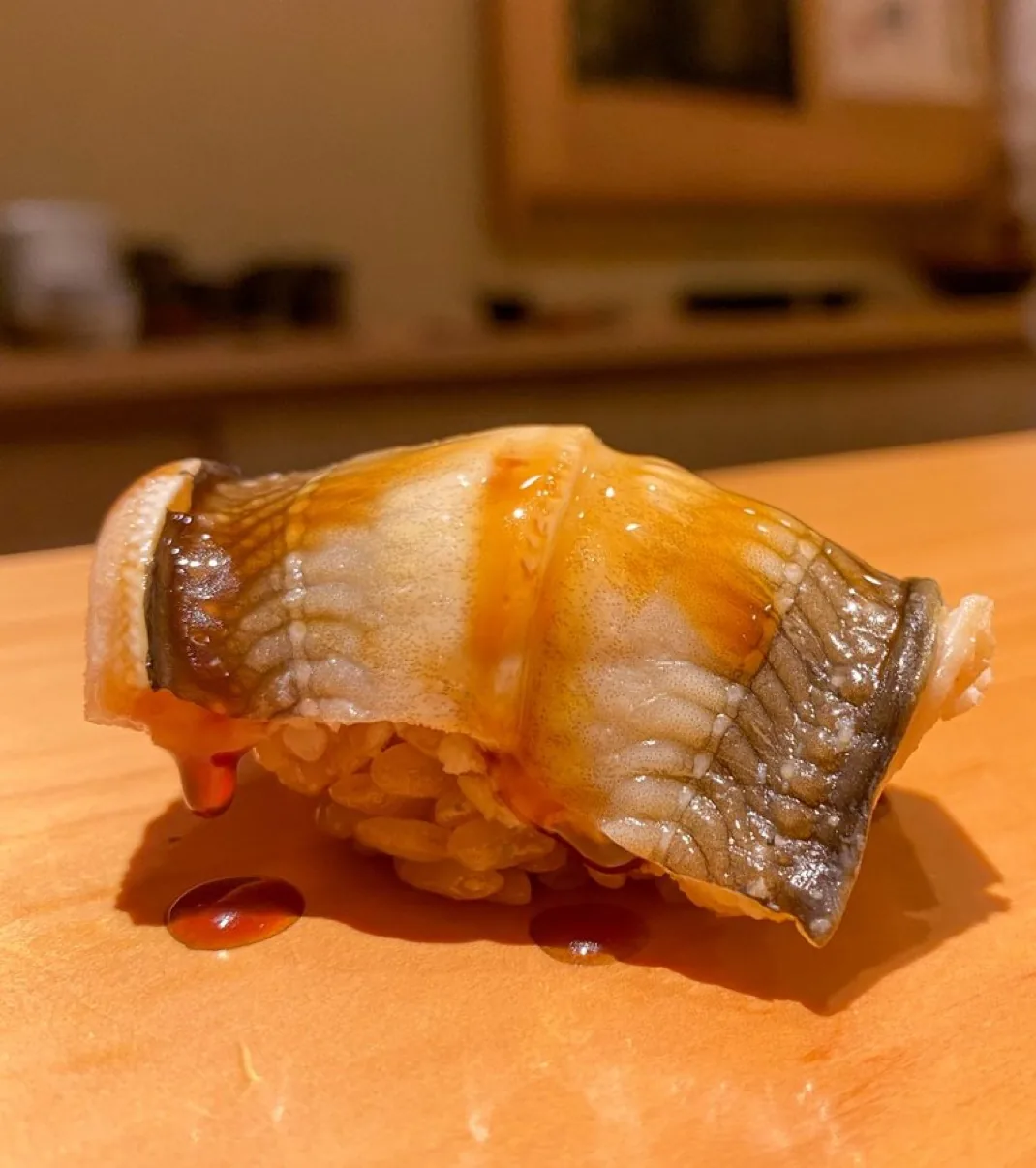
The glossy sauce on anago is commonly called tsume or nitsume. Japan’s Ministry of Agriculture, Forestry and Fisheries describes anago sushi as simmered conger eel on vinegared rice brushed with tsume, and notes a traditional method in which the head and bones contribute stock for the sauce.
Some kitchens reduce strained cooking liquid; others prepare a separate stock or combine it with soy sauce, sugar, sake, or mirin. A sauce repeatedly replenished over time is part of some restaurant traditions, but it is not a requirement for authentic anago. Such sauces also demand disciplined straining, reheating, storage, and food-safety controls. Age alone does not make a sauce good.
The reduction must stop while the sauce can still be brushed in a thin layer. Too loose, and it runs into the rice without giving the fish a clear finish. Too thick or sweet, and the diner tastes syrup before anago. The ideal intensity depends on how strongly the fish was seasoned during simmering and on the acidity and salt of the vinegar blend used in the shari.
Warmth Changes the Final Bite
Anago often shows its best texture with gentle warmth. Rewarming can soften gelled cooking juices, release aroma, and bring the topping closer to the temperature of freshly prepared rice. Some chefs warm it briefly in liquid; others use light direct heat that adds a roasted note.
There is no mandatory serving temperature of exactly 40°C. The fillet’s thickness, the amount of sauce, the shari temperature, and the chef’s intended contrast all matter. Anago may also be served at room temperature or cooler in other dishes. Warmth should improve tenderness and aroma without continuing to cook the fish dry.
Timing at the counter therefore matters. A very tender piece can sag slightly as it rests, but visible “self-weight sinking” is not a reliable test of quality by itself; rice structure, topping size, cut, and sauce all affect the shape. The better test comes in the mouth: does the topping yield with the rice, or does one disappear long before the other?
Tsume, Salt, and Shirayaki Are Different Choices
Tsume is the classic finish many travelers will encounter. A chef may instead serve gently seasoned anago with salt, citrus peel, sansho, or another light accent. This does not automatically prove that the kitchen is more confident, nor does sauce imply that the fish is being hidden. Each finish should be judged by how it supports the prepared fish.
Shirayaki should not be defined as merely “plain boiled anago.” The term generally refers to eel grilled without the familiar sweet tare. A restaurant may serve simmered anago with salt or separately offer grilled shirayaki; those are related but not identical preparations.
How to Enjoy Anago Without Turning It into an Etiquette Test
Anago often appears toward the later part of an Edomae progression, although there is no compulsory order. When it arrives, look first at how it has been finished. If tsume or salt is already present, taste the piece before adding soy sauce.
Eat it reasonably soon if it has been warmed. Clean fingers or chopsticks are both acceptable. Hands can make a fragile piece easier to support, but diners should use whichever method gives them control. One bite preserves the planned ratio when comfortable; anyone who finds the piece too large can ask for smaller shari rather than forcing it.
The wider guide to eating sushi at a Japanese counter explains why temperature and timing matter without presenting manners as traps. For the historical context, see how simmering, curing, and sauces fit into Edomae sushi.
Anago is also served as tempura, pressed sushi, rolls, grilled dishes, and rice bowls such as Hiroshima’s anago meshi. The nearly dissolving Edomae nigiri is only one expression of the fish, but it is the one that exposes every stage of the sushi kitchen most clearly.