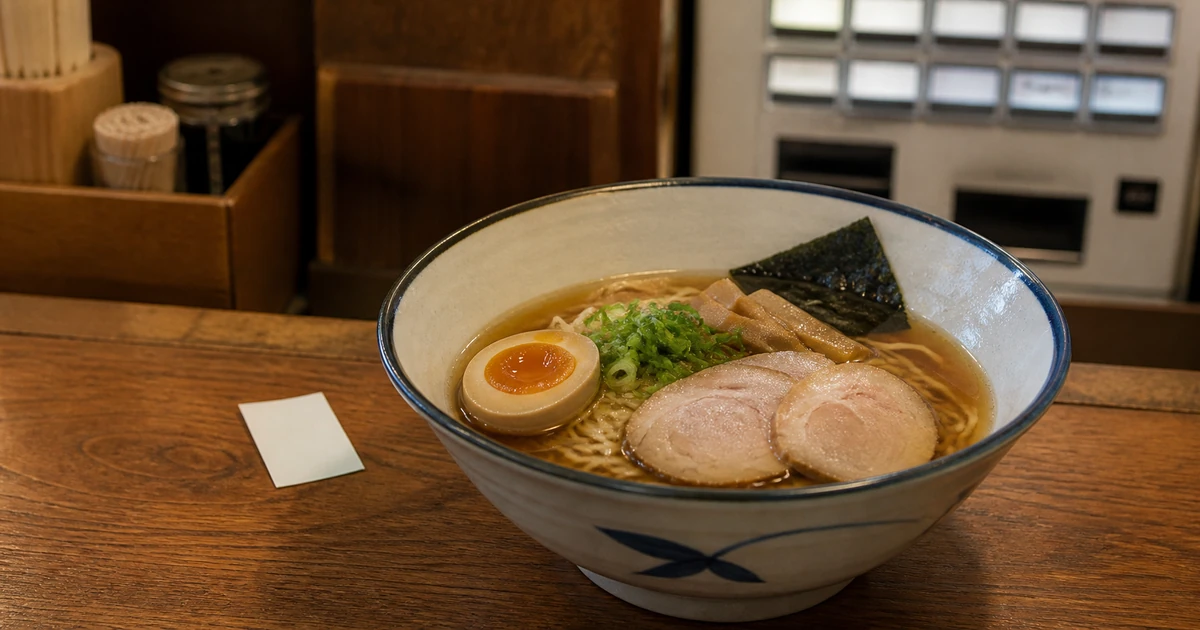
To order ramen in Japan, first check whether the shop uses a ticket machine or takes orders at the counter. At a ticket-machine shop, choose your bowl and extras, pay, collect every printed ticket, and give the tickets to the staff. You may then be asked about noodle firmness or other preferences, but the available choices depend on the restaurant.
The process is usually quick rather than formal. The challenge for a first-time visitor is that the menu, payment point, waiting line, and seating instructions may all appear before anyone explains them. Reading the shop’s signs and watching the customer ahead of you often answers more than memorizing one rigid set of rules.
Read the Shop Before You Join the Line
Pause outside long enough to find the menu, food photos, or a diagram of the queue. Some restaurants want customers to buy a ticket before joining the main line; others direct the line to the machine when space opens. If staff are organizing the queue, follow their instructions rather than copying a system you saw elsewhere.
Choose a basic bowl before you reach the machine. A ramen shop often specializes in one soup and offers variations through extra chashu, a seasoned egg, more noodles, or a larger serving. The most expensive button is not necessarily the standard order—it may simply include nearly every topping.
Compact counters may not seat a group together. Unlike an izakaya, a ramen shop is usually designed for one bowl and a relatively short visit.
Using a Ramen Ticket Machine Step by Step
- Confirm that the machine is for ordering. It will normally display dishes, toppings, sides, and drinks rather than dispense food.
- Select a language option if one is available. Photos and translation tools can help, but check portion size and toppings before pressing.
- Pay using a method the machine accepts. Machines vary: do not assume that every one accepts the same notes, coins, cards, or mobile payments.
- Choose the main bowl first. Then add only the toppings, side dishes, or drinks you actually want.
- Collect the tickets and any change. One order can produce several small tickets.
- Hand the tickets to the staff. Do not sit down automatically if the shop is managing a separate waiting line.
If the machine is difficult to understand, show the staff the item you want on a menu photo. Pointing politely is often enough. Some restaurants take payment directly from staff.
Choose the Broth Before You Focus on Toppings
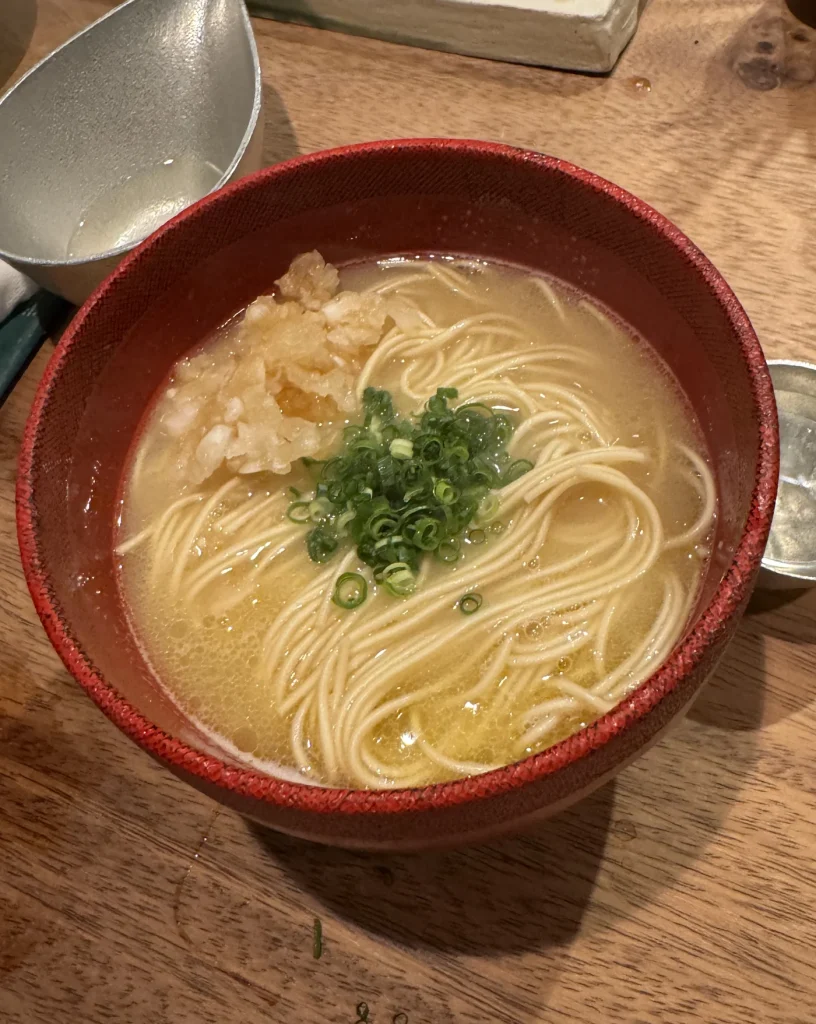
Ramen does not have one standard flavor. Depending on the shop, the broth may be light and gently accented with katsuobushi dashi, firmly seasoned with soy sauce, or rich and full-bodied from pork bones. Some restaurants build their ramen around chicken stock simmered for hours. These differences affect the aroma, richness, saltiness, and toppings, so it helps to identify the broth before using a ticket machine or placing an order.
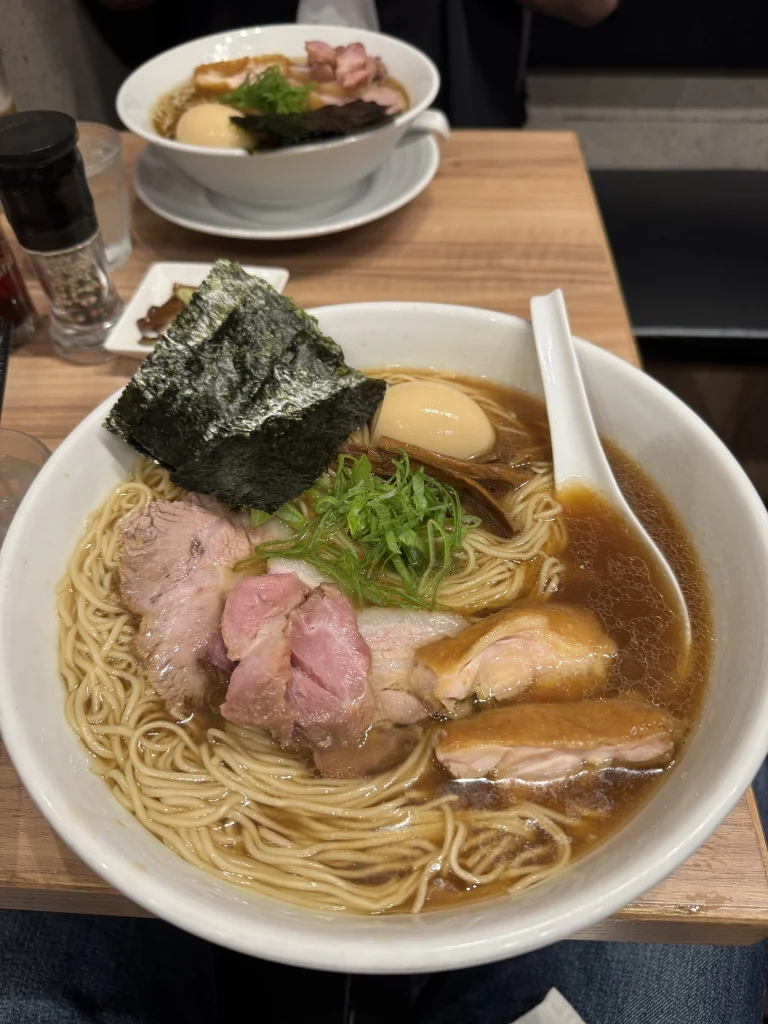
Names such as shoyu, shio, miso, and tonkotsu are useful clues, but they do not predict every bowl. Shoyu describes soy sauce seasoning, while the stock may combine chicken, pork, seafood, or vegetables. A pale, cloudy soup should not be identified as pork solely from its appearance.
Questions You May Hear After Handing Over the Ticket
Buying the ticket may not finish the order. Staff might ask about noodle firmness, the amount of garlic, spice level, or a choice of green onions. Another shop may offer no customization at all. Listen for a question, look for an order sheet, and avoid assuming that familiar options are universal.
Noodle Firmness Is Often Shop-Specific
Firmness choices are strongly associated with some thin-noodle tonkotsu shops, but many ramen restaurants cook noodles to the chef’s intended texture without asking. If a choice is offered and you are unsure, the regular setting is a sensible starting point. Extremely firm noodles are not automatically more authentic.
Toppings Change the Price and Balance
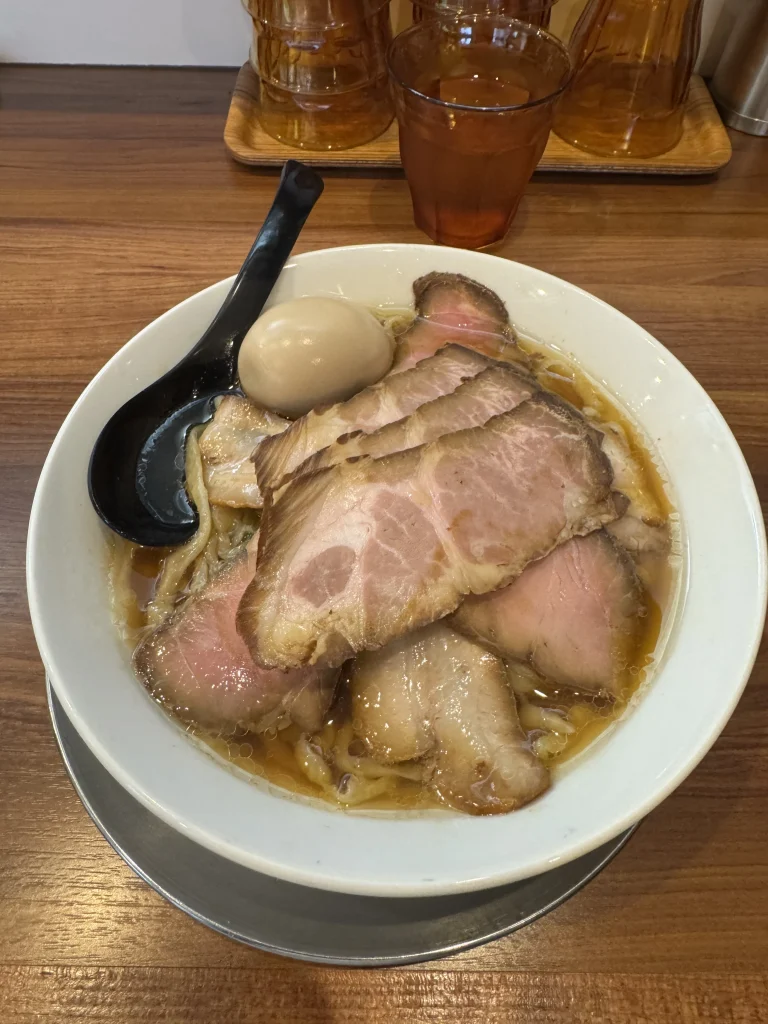
Common extras include chashu, seasoned egg, nori, green onion, bamboo shoots, and additional noodles. A button marked with a shop name or words such as “special” may indicate a fully topped bowl. Check the photo rather than expecting a completely different soup.
Kaedama means an additional serving of noodles added to broth left in the bowl. It is available at some shops, especially those serving thin noodles, but not everywhere. Order it before the remaining soup becomes too cold, and remember that it is noodles rather than a complete second bowl.
Eat Comfortably Without Performing Ramen Etiquette
When your bowl arrives, taste the soup and noodles before adding table seasonings. Condiments are there for adjustment, not a test of how much garlic, chili, pepper, or vinegar you can use. Add a little at a time so you can still understand the shop’s intended flavor.
Slurping noodles is acceptable, but visitors do not have to force a loud sound. It is also fine to leave some broth; finishing every drop is not required. What matters more is handling the bowl and utensils neatly and not blocking a busy counter after you finish.
A ramen shop generally has faster turnover than a restaurant serving teishoku set meals. You can talk normally, but do not take a long break when customers are waiting. Return reusable items only if instructed, then leave the seat available.
Common First-Time Mistakes
- Joining the wrong line: check whether tickets are purchased before or after queuing.
- Leaving tickets in the machine: collect every slip and give them to the staff.
- Ordering by price alone: a costly button may be a large or fully topped version.
- Expecting every customization: noodle firmness, oil, spice, and garlic options depend on the shop.
- Assuming all ramen tastes similar: broth, seasoning, aroma, noodle shape, and toppings vary substantially.
- Taking a seat without direction: wait if staff are assigning seats or managing a queue.
- Lingering at a crowded counter: once you have finished, make room for waiting customers.
Allergies and Dietary Restrictions Need Direct Confirmation
Do not rely on the short name printed on a ticket-machine button. Ramen can contain wheat, egg, soy, pork, chicken, fish, shellfish, sesame, dairy, or other ingredients in the noodles, broth, seasoning, flavored oil, and toppings. Removing visible meat does not make an animal-based broth vegetarian.
For a serious allergy, communicate with staff before buying a ticket and ask about cross-contact as well as listed ingredients. Japan’s Consumer Affairs Agency provides a multilingual food-allergy communication sheet that travelers can prepare in advance. If the restaurant cannot confirm that an order is suitable, choose another place rather than treating a translation app as a safety guarantee.
The Simplest Successful Ramen Visit
Decide on the broth, identify the basic bowl, collect the tickets, follow the queue, and answer only the choices the shop offers. Taste before adding condiments, eat without lingering, and leave when finished.
You do not need perfect Japanese or theatrical slurping. A little preparation, attention to signs, and respect for the shop’s flow are enough. The same practical awareness also helps with broader dining customs, including when Japanese diners say itadakimasu and gochisousama.