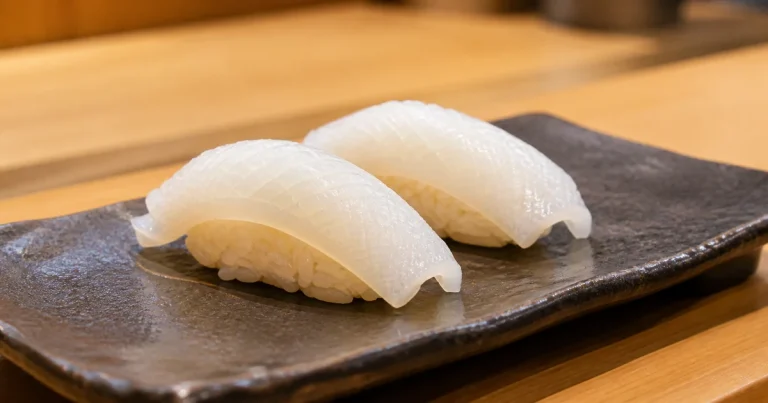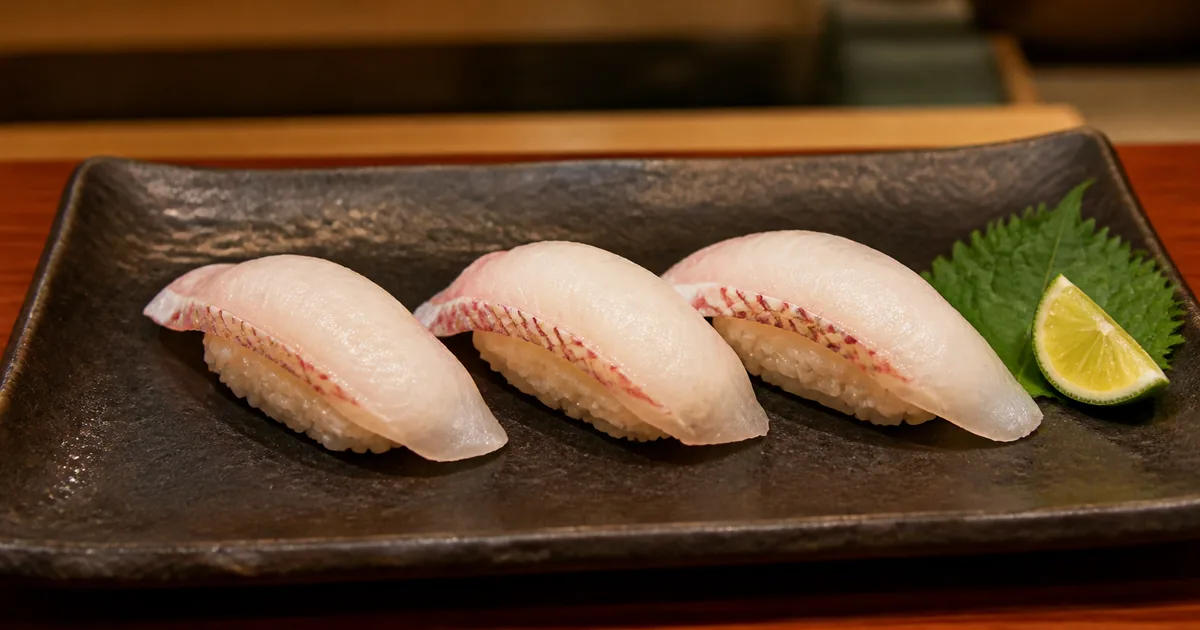
Tai sushi is sushi made with Japanese sea bream, most often the fish called madai. It is usually served as nigiri, with a slice of pale white or pink fish placed over vinegared rice. Tai has a mild, clean flavor and a firm but tender texture, making it a useful choice for diners who want something lighter than fatty tuna or salmon.
The word tai can be broader than one species. From the counter, madai is a test of restraint and judgment: its value changes with season, handling, knife direction, skin treatment, resting, kombu curing, and the rice beneath it. This guide focuses on those tai-specific decisions rather than repeating the forms covered in our guide to what sushi is.
A Fish Whose Character Changes with the Season
| Japanese name | Tai (鯛); madai (真鯛) is the best-known specific name |
|---|---|
| Common English translation | Sea bream or red sea bream |
| Typical flavor | Mild, clean, gently sweet, and lightly savory |
| Typical texture | Firm, fine-grained, and tender when sliced correctly |
| Common presentation | Nigiri, sashimi, skin-on slices, lightly seared fish, or kombu-cured fish |
| Beginner note | A restrained white fish whose preparation can be more noticeable than its fat |
What Does Tai Mean?
Tai is a Japanese name used for sea bream and for several fish names that include the same ending. On sushi menus, it commonly points to a mild white fish from the sea bream or porgy group, but it does not always guarantee one species.
Madai is more precise. The U.S. Food and Drug Administration lists Pagrus major with the common name madai and acceptable market names “sea bream” or “porgy.” It is often translated as red sea bream. Despite the pink-red exterior of the whole fish, the sliced flesh is generally translucent white with a pale pink cast.
English menu names vary. If the species matters, ask whether the fish is madai rather than relying only on “snapper” or “sea bream.”
From Spring Firmness to Autumn Richness
Tai is mild and clean, with gentle sweetness and restrained umami. It is less oily than salmon, fatty tuna, or some yellowtail cuts. The flavor should not be aggressively fishy, although every piece varies with species, season, handling, fat content, and preparation.
Because tai is subtle, the sushi rice is easy to notice. Chefs may add salt, citrus, wasabi, or a light brush of sauce, but heavy seasoning can hide the fish.
What Is the Texture of Tai?
Tai usually has fine-grained flesh with a firm, springy first bite that becomes tender as it is chewed. It does not have the soft, fatty texture of otoro or the slippery quality of some shellfish. Younger or leaner fish may feel especially crisp, while other pieces can be softer and fuller.
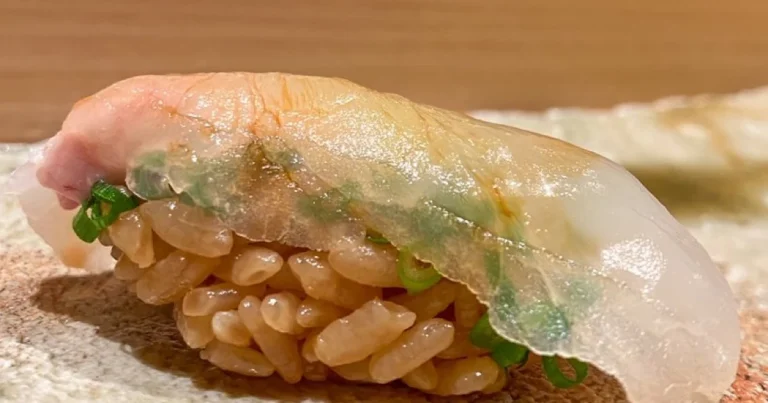
Knife work changes the experience. Thickness, cutting direction, and fine scoring can manage firmness and help seasoning adhere. Skin may be briefly blanched or seared rather than left tough.
How Is Tai Served at Sushi Restaurants?
Tai Nigiri
For nigiri, tai is placed over sushi rice, often with a little wasabi. It may be served plain, lightly salted, brushed with sauce, or finished with citrus.
Tai Sashimi
Tai is also served as sashimi without rice. Sashimi emphasizes the fish and knife work, while nigiri depends on the balance between fish and seasoned rice. Our sushi vs. sashimi guide explains why the presence of rice changes the name of the dish.
Skin-On and Lightly Seared Tai
Skin can add color, flavor, and texture. Hot water or a quick sear can soften it while leaving the flesh beneath raw, so “seared” does not necessarily mean fully cooked.
Kombu-Cured Tai
Tai may be placed against kombu to draw out moisture, firm the surface, and add savory depth. It reflects the Edomae sushi principle that preparation is as important as serving fish raw.
How Madai Changes with the Season
At an Edomae-style counter, tai usually means madai unless another species is named. Its spawning season varies by region and water temperature, so spring and autumn labels should be treated as useful traditions rather than universal quality guarantees.
Sakura-Dai in Spring
Sakura-dai is a seasonal market and culinary name associated with madai around the spring spawning period. The body can take on a vivid pink appearance, and pre-spawning fish may be firm, clean, and well conditioned. The same Japanese name can also refer to a different small fish in biological naming, so the menu context matters. At a sushi counter, it generally signals seasonal madai.
Momiji-Dai in Autumn
Momiji-dai describes autumn madai after a period of feeding. Some fish show fuller flavor and richer fat before winter, which can suit resting, skin-on preparation, or restrained salt and citrus. It is often highly valued, but “autumn” alone does not make every fish superior; origin, size, feed, wild or farmed production, and individual condition remain decisive.
Kasugo-Dai: Small Sea Bream and Delicate Curing
Kasugo is a sushi-market term for young sea bream. It is often associated with juvenile madai, but depending on region and trade usage it can include young chidai or other closely related sea bream. The small body and delicate skin require careful filleting, salting, and vinegar curing. The goal is to keep the fish supple and recognizable rather than let salt or acid dominate it.
Skin, Knife Work, and Kawashimo
Some of madai’s most aromatic character lies near the skin, yet untreated skin can resist the bite. A chef may remove it, score it, sear it, or use kawashimo—a brief hot-water treatment—to keep its color and flavor while making it easier to eat.
What Hot Water Actually Does
For a hot-water skin treatment, the fish is protected as needed, the skin receives boiling water briefly, and the surface is cooled promptly. The heat tightens and softens parts of the skin, changes its aroma, and begins altering collagen at the surface. It does not turn fat into umami. Excessive heat can cook the flesh too deeply or make it dry, so the duration is adjusted to skin thickness and the intended result.
Hidden Cuts through the Skin
Fine cuts, sometimes spaced roughly 1–2 mm apart, can shorten the skin’s resistance while preserving its presence. Spacing and depth are not decorative measurements: the chef changes them according to the skin, slice thickness, and direction of the muscle so the fish, skin, and shari release together.
Fresh, Rested, or Kombu-Cured Madai?
| Approach | Condition the Chef Sees | Intended Result |
|---|---|---|
| Minimal resting | A clean, recently processed fish whose firm bite is part of the appeal | Preserve crisp texture and a light sweetness, often with restrained nikiri, salt, or citrus |
| Controlled resting | A well-handled fish with enough body and fat to develop beyond its initial firmness | Relax the texture and allow post-mortem changes, including ATP breakdown and formation of inosinate, to increase savory perception |
| Kombu curing | A relatively watery or delicate piece, or one that benefits from added concentration | Remove surface moisture, firm the flesh, and add glutamate-rich kombu depth |
Two to four days of resting is one possible professional range, not a rule and not a home-aging instruction. Species identification, killing and bleeding method, temperature history, sanitation, smell, surface condition, and firmness must be monitored. Protein does not simply “turn into inosinic acid”; inosinate is mainly connected with the post-mortem breakdown of ATP-related compounds, while enzymes also change proteins and texture over time.
For kombu curing, the fish may be lightly salted and dried before contact with prepared kombu. Duration changes with thickness, water content, and the strength of the kombu. Too much time can make madai tight, salty, or dominated by kelp.
Seasoning and Shari for Tai
Salt with sudachi or kabosu can make the sweetness and skin aroma of madai easier to notice. Nikiri soy sauce may give a more rounded finish. The chef chooses according to whether the fish is fresh-textured, rested, skin-on, or kombu-cured rather than assigning one condiment to every tai.
A delicate rice seasoning can protect the fish’s clean character, but red-vinegar shari is not automatically unsuitable. What matters is the total balance of acidity, salt, sweetness, rice temperature, slice thickness, and garnish. Shari should be warm enough to release aroma without being forced to an identical 36–37°C in every shop.
Is Tai Sushi Raw?
It often is. Tai nigiri and sashimi may use raw fish, while other preparations can be blanched, seared, grilled, steamed, or otherwise cooked. A lightly treated surface may still leave the center raw, so ask for fully cooked fish when that distinction matters.
Raw seafood can carry foodborne risks even when it looks fresh. FDA guidance notes that freezing can kill some parasites but not every harmful germ; thorough cooking remains safest. Do not assume ordinary retail fish is suitable for raw consumption.
Pregnant people, young children, older adults, and people with weakened immune systems should follow current medical and public-health advice about raw seafood. Anyone with a fish allergy should also ask about species, sauces, shared knives, and cross-contact.
How to Order and Eat Tai Sushi
Look for tai (鯛) or madai (真鯛). Choose nigiri to taste the fish with sushi rice, or sashimi to focus on its texture.
Taste chef-seasoned tai before adding soy sauce. Its mild flavor is easy to overwhelm, and soaking the rice can make the piece too salty or cause it to fall apart. Nigiri may be eaten with clean hands or chopsticks. Our guide to eating sushi in Japan covers the broader etiquette.
Tai can work well early in a tasting sequence because it is relatively light, but there is no universal rule requiring a specific order. During omakase, follow the sequence chosen by the chef.
Is tai the same as madai?
Not exactly. Tai is a broader Japanese term used around sea bream names, while madai identifies Pagrus major, the fish commonly called red sea bream. A menu that says only tai may not specify the exact species.
Is tai sushi fishy?
Tai is generally mild, clean, and only lightly oceanic. Its firm texture and subtle sweetness are usually more noticeable than a strong fish aroma.
Is tai the same as red snapper?
Madai is properly identified as Pagrus major, for which the FDA lists sea bream or porgy as acceptable U.S. market names. “Red snapper” refers to other fish in U.S. labeling, so the terms should not automatically be treated as identical.
Is seared tai fully cooked?
Not necessarily. A chef may sear or blanch only the surface while leaving the center raw. Ask specifically for fully cooked fish if you need to avoid raw or undercooked seafood.
Reading Tai Through the Chef’s Work
Tai sushi most commonly features madai, a Japanese sea bream with pale flesh, mild sweetness, and a firm but tender bite. It can be served as nigiri or sashimi, with or without skin, lightly seared, or cured against kombu. The broad word tai does not always identify one species, so madai is the more precise name to look for.
For beginners, tai offers a clear example of how sushi technique shapes a delicate ingredient. Instead of looking for intense richness, notice the cut, surface treatment, rice, temperature, and restrained seasoning.
Editorial Sources
- U.S. Food and Drug Administration: The Seafood List—Pagrus major
- Ministry of Agriculture, Forestry and Fisheries: Seasonal Japanese Ingredients—Madai and Sakura-Dai
- Japan National Tourism Organization: Sushi—Definitive Seasonal Calendar
- Ministry of Agriculture, Forestry and Fisheries: Ehime Regional Cuisine and Sea Bream
- U.S. Food and Drug Administration: Selecting and Serving Fresh and Frozen Seafood Safely
- Kyushu Regional Agricultural Administration Office: Sakura-dai and the madai spawning season
- Fisheries Agency of Japan: Madai biology and regional spawning periods