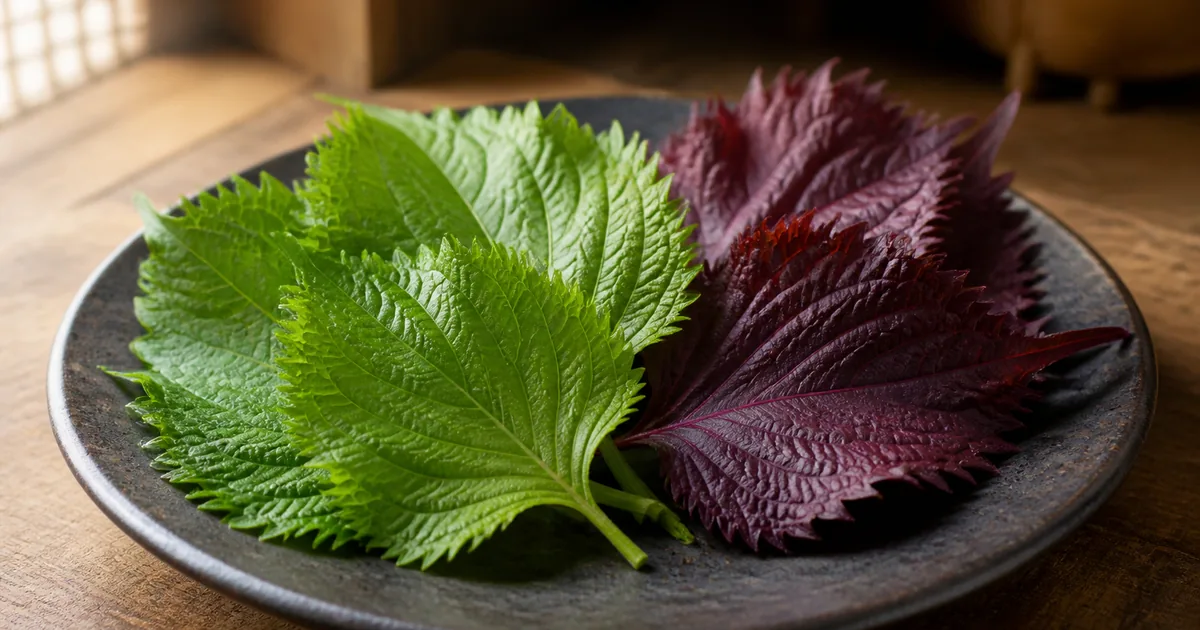
Shiso is an aromatic herb used throughout Japanese cooking. Its serrated leaves can taste fresh, herbal, citrusy, and slightly mint-like, with a gentle spicy or bitter edge. Green shiso commonly accompanies sushi and sashimi, while red shiso is best known for coloring and flavoring pickles and umeboshi.
Shiso is often translated as Japanese perilla or Japanese basil, but neither name describes its flavor perfectly. This guide explains its main types, uses, and storage.
Green, Red, Leaf, Bud, and Seed
| Japanese name | Shiso (しそ or 紫蘇) |
|---|---|
| Plant family | Mint family (Lamiaceae) |
| Typical flavor | Herbal, citrusy, fresh, lightly mint-like, and gently spicy |
| Main forms | Green shiso and red or purple shiso |
| Common uses | Sushi, sashimi, rice, noodles, tempura, pickles, seasonings, and garnishes |
| Common confusion | Japanese shiso and Korean perilla are related but can differ in shape, texture, and flavor |
The Flavor Changes with Color and Maturity
Shiso has a distinctive aroma that is difficult to reduce to one familiar Western herb. It may suggest mint, basil, citrus peel, anise, cinnamon, or clove, but it does not taste exactly like any of them. Fresh green leaves are usually bright and cooling, followed by a lightly peppery or bitter finish.
Strength varies with variety, leaf age, and freshness. A young leaf may be delicate, while a mature leaf can be firmer. Red shiso tends to be earthier and more astringent, so it is often processed.
Green Shiso vs. Red Shiso
Green Shiso: Aojiso or Oba
Green shiso is called aojiso. Large green leaves sold for cooking may also be labeled oba. They are commonly served with sashimi, placed in sushi rolls, shredded over rice and noodles, fried as tempura, or wrapped around meat and other fillings.
The leaf provides aroma as well as visual contrast. Although it may separate foods on a plate or in a package, it should not be treated as a food-safety control. Shiso does not make raw seafood risk-free.
Red Shiso: Akajiso
Red shiso, or akajiso, ranges from deep red to purple. It is used to color and flavor umeboshi, shibazuke pickles, shiso drinks, and other preserved foods. When salted leaves are dried and crumbled, they can become a tart, aromatic rice seasoning commonly associated with the name yukari.
Some cultivars have green upper surfaces and reddish undersides. Color alone therefore does not identify every variety or predict exactly how strong it will taste.
Is Shiso the Same as Korean Perilla?
They are closely related perilla plants, but the leaves sold for Japanese and Korean cooking are not always interchangeable in practice. JETRO notes that the perilla commonly called egoma in Japan has rounder, firmer leaves than green shiso. Korean perilla leaves are frequently used as wraps and in kimchi, while Japanese green shiso is often thinner and more sharply aromatic.
English stores may label both products simply “perilla.” Look at the leaf and intended cuisine rather than relying only on that broad word. Green shiso usually has a pointed shape with pronounced serrated edges. If a recipe depends on shiso’s fragrance, another perilla leaf may change both the texture and flavor.
How Is Shiso Used in Japanese Food?
With Sushi and Sashimi
A whole green leaf may sit beneath sashimi, while shredded shiso can accompany seafood. It can also be rolled with rice, nori, cucumber, umeboshi, or fish. The herb is a flavoring rather than the element that defines sushi.
Do not assume every leaf on a sashimi plate is decorative. Shiso is edible, although diners can leave it if they dislike the aroma. Our guide to what sashimi is explains the role of garnishes and careful slicing in more detail.
With Rice, Noodles, and Tofu
Thinly sliced green shiso can be scattered over steamed rice, mixed into onigiri, or added to chilled tofu, salads, pasta, soba, and cold noodles. Its fragrance is strongest when the leaf is cut shortly before serving. It pairs naturally with the restrained flavor of Japanese rice.
Tempura, Grilling, and Wrapping
Whole leaves can be coated lightly and fried as tempura. Shiso may also be wrapped around chicken, pork, fish, cheese, or miso before grilling or frying. MAFF documents shiso-maki, a Miyagi regional food in which seasoned miso is wrapped in green shiso and cooked.
Pickles, Umeboshi, and Seasonings
Red shiso contributes color, acidity, and aroma to preserved foods. Kyoto’s shibazuke traditionally combines vegetables with shiso and salt. Salted or dried shiso products can be quite salty, so taste them before adding other seasoning.
Buds and Seeds
Japanese cooking also uses shiso flower buds and seed clusters. Buds can garnish sashimi, while the small seeds add texture and aroma to pickles or soy-simmered foods. MAFF records shiso-seed tsukudani as a regional preparation in Okayama.
How to Buy and Store Fresh Shiso
Choose leaves that look crisp and evenly colored, without extensive blackening, slime, or dry edges. A few small marks do not automatically make a leaf unusable, but a strong unpleasant odor or soft decay is a reason to discard it.
Shiso wilts and darkens easily. Keep the leaves cool and protect them from drying out without leaving them wet. One practical method is to wrap the stems or leaves loosely with barely damp paper, place them in a container or bag, and refrigerate them. Avoid crushing the leaves, and follow package instructions when provided.
Wash fresh shiso under clean running water before eating it raw, then dry it gently. Cut it near serving time for the clearest aroma. Use appearance, smell, and package directions instead of relying on a fixed storage period.
What Can Replace Shiso?
There is no exact substitute. For a fresh garnish, a small amount of mint and basil can suggest some of shiso’s herbal brightness, but the result will taste different. Thai basil, lemon basil, or another perilla leaf may work in some recipes depending on the desired texture.
When shiso is central—such as in a shiso roll or red-shiso pickle—substitution changes the identity of the dish. It is usually better to describe the variation honestly than to call another herb shiso.
Are shiso leaves edible?
Yes. Fresh leaves, flower buds, and seeds are used as food. Leaves may be eaten raw or cooked, while processed products can contain substantial salt or other seasonings.
Is shiso basil or mint?
Shiso belongs to the mint family, which also includes basil, but it is a distinct perilla herb. “Japanese basil” is a convenient description, not a precise statement that it is ordinary basil.
Why is shiso served with sashimi?
It adds aroma, color, and a refreshing contrast to seafood. It should not be relied on to remove the risks associated with raw fish.
Can you eat red shiso raw?
It is edible, but its firmer, more astringent character often suits pickling, coloring, drinks, and seasonings better than use as a large raw garnish.
Why Shiso Is More Than a Garnish
Shiso is Japanese perilla: a fragrant herb with green and red forms. Green shiso is commonly eaten fresh with sushi, sashimi, rice, noodles, tofu, and tempura. Red shiso is closely associated with pickles, umeboshi, drinks, and dried rice seasonings.
For a first taste, try one fresh green leaf thinly sliced over rice or tofu. Its citrusy, mint-like aroma is distinctive, so use a small amount before deciding how strongly you want it to flavor the dish.
Editorial Sources
- Ministry of Agriculture, Forestry and Fisheries: The Washoku Way—Yakumi and Shiso
- Japan External Trade Organization: Yakumi—Shiso
- Japan External Trade Organization: Perilla (Egoma)
- Ministry of Agriculture, Forestry and Fisheries: Shiso-Maki
- Ministry of Agriculture, Forestry and Fisheries: Shiso-no-Mi-no-Tsukudani
- Ministry of Agriculture, Forestry and Fisheries: Kawai Aka Shiso