Tobiko can look similar to masago, while its Japanese name is sometimes confused with ikura. However, the three products come from different fish and create noticeably different textures.
This guide explains what tobiko tastes like, how it differs from masago and ikura, why it comes in several colors, and how it is used in sushi. It also adds a working sushi chef’s view from the counter: what each roe contributes to a bite, what to check when receiving and preparing it, and which pairings make tobiko more than a colorful garnish.
What Is Tobiko?
Tobiko is salted or seasoned roe collected from flying fish. The Japanese word for flying fish is tobiuo, and ko can refer to a fish’s eggs. Depending on the brand or region, the product may also be written as tobikko.
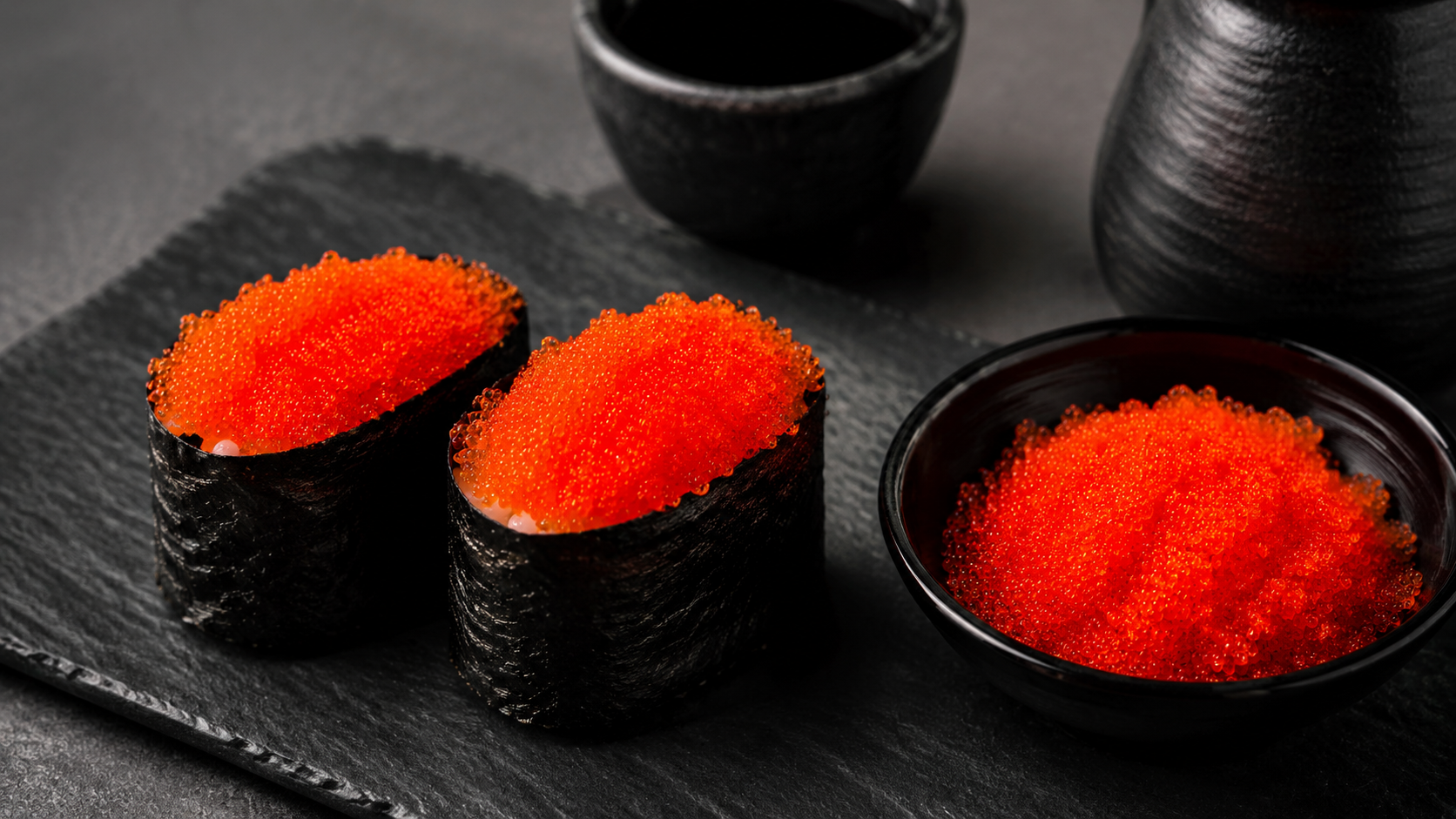
The eggs are naturally small and have skins firm enough to create a distinct pop when bitten. Their usual appearance ranges from golden orange to bright reddish orange, although commercial seasoning and coloring can affect the final shade.
Three Fish Roes, Three Ways of Bursting
Tobiko has a mild marine flavor with noticeable saltiness and a lightly sweet or savory finish. It is less rich and juicy than salmon roe. Its defining quality is texture: the tiny eggs feel crisp and release a gentle pop rather than a large burst of liquid.
Commercial tobiko is often seasoned with salt, sugar, vinegar, mirin, soy sauce, or other flavorings. Products can therefore vary from delicate and clean to sweeter or more strongly seasoned.
Tobiko vs. Masago vs. Ikura
Tobiko, masago, and ikura are all fish roe, but they are not interchangeable names. The source fish, egg size, texture, flavor, and usual price differ.
| Roe | Source | General Size and Texture | Typical Character |
|---|---|---|---|
| Tobiko | Flying fish | Small and distinctly crunchy | Mild, salty, lightly sweet, and often orange |
| Masago | Capelin | Usually smaller and less crunchy | Mild, salty, and commonly used as a lower-cost roe |
| Ikura | Salmon or trout | Much larger, softer, and filled with liquid | Rich, savory, and juicy with a pronounced burst |
Masago is capelin roe. Capelin are small schooling fish in the smelt family. Their eggs are usually finer and softer than tobiko, although processing can make the two products look similar. Masago may be used in place of tobiko, especially when a restaurant wants a subtler texture or lower ingredient cost.
Ikura is visually easier to distinguish. Its salmon or trout eggs are far larger and hold more liquid. Ikura gives a juicy burst, while tobiko creates a drier, crisper crunch.
Color alone is not a reliable way to identify roe. Tobiko and masago can both be seasoned or colored, so the ingredient label is more useful than appearance.
How a Sushi Chef Chooses the Roe
At the counter, the first decision is whether the piece needs a distinct popping texture or a richer liquid burst. Tobiko, masago, and ikura do different jobs, so substituting one for another changes more than appearance.
| Roe | What the Chef Wants | Typical Use |
|---|---|---|
| Tobiko | A clear, crisp pop that adds dimension and encourages another chew | Gunkan, the outside of modern rolls, or a small amount mixed with squid, scallop, or white fish |
| Masago | Fine grains that blend easily into a topping or sauce | Modern rolls, mixed sauces, and casual preparations; it is less common as a featured ingredient at traditional Edomae counters |
| Ikura | A larger, softer egg that releases a savory seasoned liquid | A featured gunkan, chirashizushi, or a composed bite with uni or white fish |
What the Comparison Means in the Mouth
Tobiko creates structure and sound; ikura supplies a juicy burst; masago tends to merge into the surrounding ingredient. A chef therefore chooses by the experience required in the complete bite, not simply by which color looks attractive.
A Chef’s Note on Ikura Quality
With ikura, skin tenderness is a major quality point. Early in the salmon roe season, depending on region and maturity, the membrane can be very soft. As the eggs mature, the skin may become firmer and linger after the liquid has released. Some sushi shops loosen fresh sujiko in-house and briefly season the separated eggs with their own balance of soy sauce, sake, mirin, or dashi. The recipe and soaking time are adjusted so the ikura remains distinct while fitting the restaurant’s shari.
Why Does Tobiko Come in Different Colors?
Classic tobiko is orange, but sushi restaurants and stores may also offer green, black, red, or yellow versions. These colors generally indicate added seasoning, coloring, or both.
- Green tobiko is often sold with wasabi-style flavoring.
- Black tobiko may use squid ink or another approved coloring ingredient.
- Red tobiko may include chili flavoring or red food coloring.
- Yellow or pale-orange tobiko may be associated with citrus-style flavoring.
There is no universal recipe for each color. Green tobiko does not necessarily contain a large amount of genuine Japanese wasabi, and black tobiko is not automatically flavored with squid ink. Always check the product label when ingredients, allergens, or artificial colors matter.
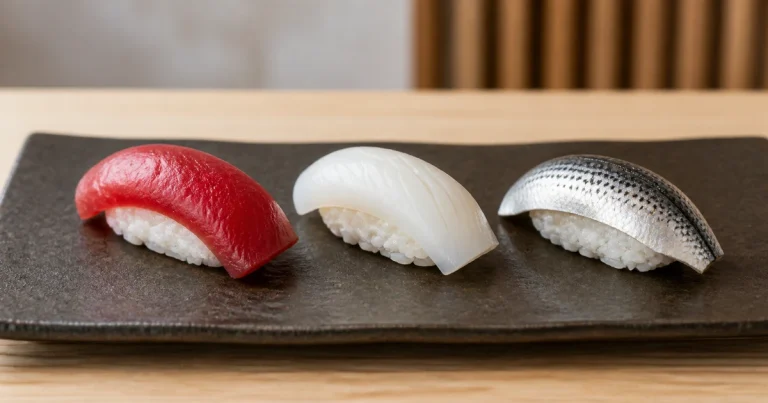
Colored tobiko can also be used as a restrained visual and textural accent. A few dark grains on pale squid, for example, create contrast without covering the ingredient. This is more characteristic of contemporary or creative sushi than traditional Edomae work. Because “wasabi,” “squid ink,” and other color names do not guarantee one fixed recipe, the producer’s ingredient list remains the reliable guide.
How Tobiko Is Used in Sushi
Gunkan Sushi
Tobiko can be served as gunkan-maki. A strip of nori is wrapped around seasoned rice to form a small cup, and the roe is spooned on top. The seaweed holds the loose eggs in place and adds a crisp, savory contrast.
Inside-Out Rolls
Tobiko is especially familiar on uramaki, or inside-out rolls, where the rice is on the outside. It can be pressed onto the surface of a roll or sprinkled over sliced pieces. Kikkoman’s history of modern sushi notes that California rolls are sometimes finished with orange tobiko for color and flavor.
This use is associated more strongly with modern and internationally developed sushi than with classic Edomae preparations. For background on traditional techniques, see our guide to Edomae sushi.
Temaki, Chirashizushi, and Garnishes
A small spoonful of tobiko can add crunch to temaki hand rolls or chirashizushi. It is also used to finish sashimi plates, seafood bowls, salads, and appetizers. Its bright color makes a small quantity visually effective.
Where Tobiko Works Best: Texture Pairings
Tobiko becomes most useful when it is paired with a soft, sticky, or creamy ingredient. The contrast is the point: the partner carries sweetness and umami, while the roe interrupts the texture with a clean pop.
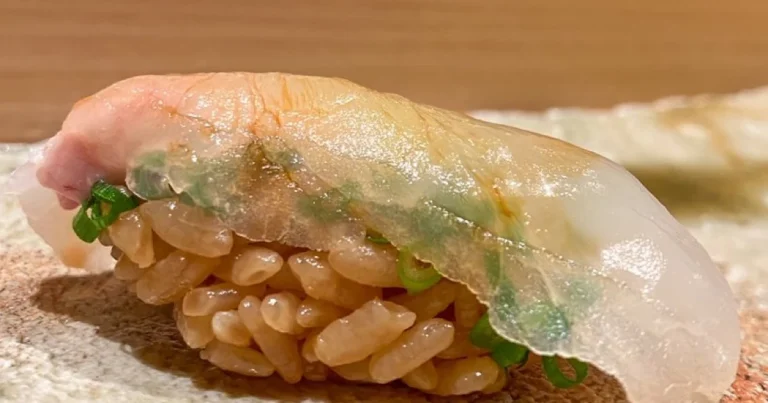
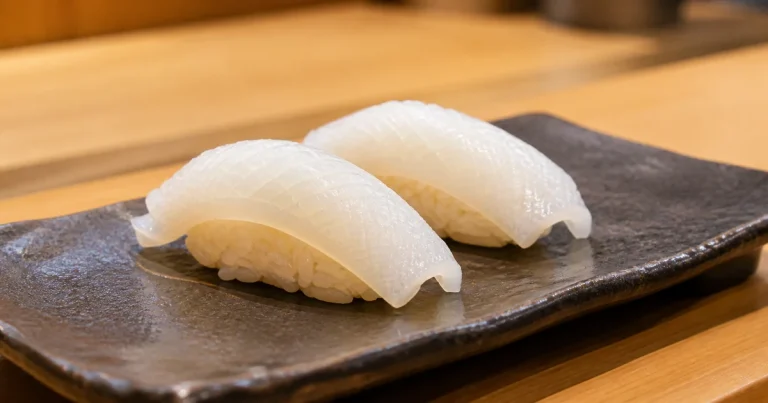
- Squid and tobiko: The smooth, slightly sticky texture of aori-ika or sumi-ika gains a crisp counterpoint. The extra chewing can also prolong the squid’s sweetness.
- Scallop and tobiko: Soft, sweet scallop becomes more defined when a modest amount of roe adds salt and texture.
- White fish and tobiko: Used sparingly, the roe can add structure without overwhelming a delicate topping.
Balance with Shari and Vinegar
Seasoned roe already brings salt, sweetness, and umami. Pairing it with very sweet shari can make the bite feel heavy. A chef may prefer rice with enough acidity—whether from rice vinegar, red vinegar, or a blend—to sharpen the finish. The aim is not to use red vinegar automatically, but to match the roe’s seasoning with the restaurant’s rice.
How a Chef Judges Tobiko Quality
Color is only the first visual clue. At receiving and during preparation, I pay closer attention to the separation of the eggs, the tension of their skins, unwanted liquid, aroma, and the quality of the seasoning.
Distinct Grains and a Clean Pop
The eggs should remain visibly separate and glossy rather than crushed into a wet mass. Excess liquid after thawing can indicate damaged eggs, temperature abuse, or poor handling, although a small amount of liquid may also reflect the product’s marinade. The important test is whether the roe still gives a clean, crisp pop without becoming tough.
Seasoning Should Not Hide the Roe
Commercial products vary widely. Some are strongly sweetened, salted, colored, or flavored, while others are relatively restrained. A clean product should not leave an artificial-tasting sweetness or harsh aftertaste that overwhelms the flying fish roe and shari. Restaurants may choose products seasoned with soy sauce, sake, mirin, dashi, or other ingredients, but there is no single formula that proves quality.
Read the Label as Carefully as the Color
- Confirm that flying fish roe is clearly identified rather than relying on the phrase “sushi caviar.”
- Check added colors, sweeteners, flavorings, salt, soy sauce, and allergen information.
- Note whether the product is chilled, frozen, or previously frozen and follow its thawing instructions.
- Judge aroma and texture after opening; bright color alone does not establish freshness or quality.
How to Store Tobiko
Tobiko is perishable. Keep it refrigerated or frozen exactly as instructed by the producer, and return it to cold storage promptly after serving. Use a clean spoon instead of repeatedly dipping used utensils into the container.
Once opened or thawed, follow the product’s stated time limit. Recipes, salt levels, packaging, and processing methods differ, so one storage period does not apply to every brand. Do not refreeze a product unless its instructions specifically allow it.
Color, Species, and Allergy Questions
Is tobiko raw?
Tobiko is fish roe, but the product served in restaurants is normally salted, seasoned, frozen, or otherwise processed. Preparation varies by producer. Check the label or ask the restaurant if the processing method is important to you.
Is tobiko the same as caviar?
Tobiko is sometimes called flying fish caviar in marketing, but it is flying fish roe rather than traditional sturgeon caviar. The term “fish roe” is the clearest general description.
Is tobiko naturally orange?
Flying fish eggs naturally have a golden-to-orange appearance, but commercial tobiko may be seasoned or colored to create a brighter and more uniform product. Green, black, red, and yellow versions usually contain added coloring or flavoring.
Is masago a type of tobiko?
No. Masago comes from capelin, while tobiko comes from flying fish. Masago is generally smaller and less crunchy, although it can look similar after processing.
Is tobiko the same as ikura?
No. Ikura is separated salmon or trout roe. Its eggs are much larger, softer, and juicier than tobiko.
Choose Roe by Texture Before Color
Tobiko is seasoned flying fish roe valued for its bright color, mild marine flavor, and crisp popping texture. It is smaller and crunchier than ikura, while generally larger and firmer than masago.
In sushi, tobiko is most familiar in gunkan and modern inside-out rolls. When buying it for home use, check the source fish, seasoning, colorings, allergens, and storage instructions instead of relying on color alone.