Yakitori is Japanese grilled chicken, usually cut into bite-size pieces, threaded onto skewers, and cooked over high heat. It may be seasoned simply with salt or brushed with a savory-sweet sauce called tare. A yakitori menu can include thigh and breast as well as skin, heart, liver, gizzard, cartilage, and minced chicken.
Although the basic idea sounds simple, good yakitori depends on how each chicken part is cut, skewered, seasoned, and grilled. This guide explains what the name means, what beginners can expect, and how yakitori differs from other Japanese grilled skewers.
What Does Yakitori Mean?
The word yakitori is written 焼き鳥 or 焼鳥 in Japanese. Yaki refers to grilling or cooking with direct heat, while tori literally means bird and commonly refers to chicken in this food context. Yakitori can therefore be understood as “grilled chicken.”
In standard use, yakitori means chicken prepared on skewers. However, menu language is not perfectly consistent. Some casual restaurants group pork or vegetable skewers under a yakitori heading, and a few regional specialties use the name differently. When the ingredient matters, check the individual item rather than relying only on the section title.
What Is Yakitori Made From?
Yakitori specialists use many parts of the chicken. Each part has its own balance of meat, fat, connective tissue, and texture, so it may require a different cut, skewer arrangement, seasoning, and cooking time.
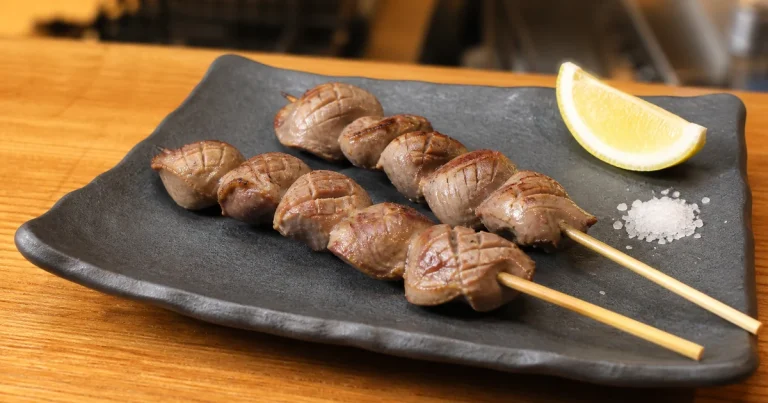
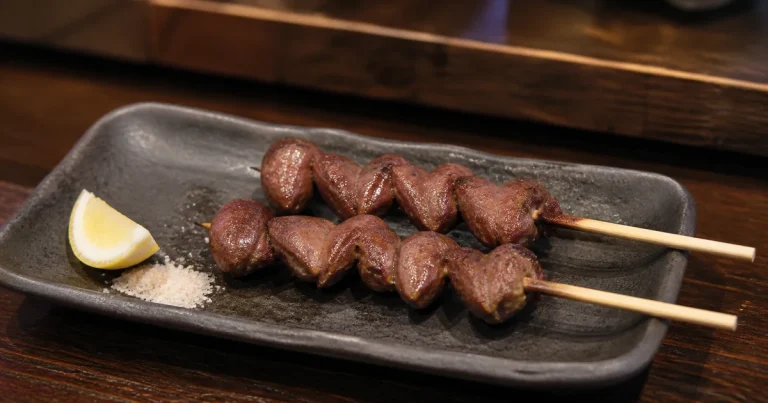
Familiar choices include momo (thigh), mune (breast), and negima, which alternates chicken with pieces of Japanese long onion. Other options include kawa (skin), hatsu (heart), reba (liver), sunagimo (gizzard), nankotsu (cartilage), and bonjiri (tail).
Tsukune is a minced-chicken preparation shaped around a skewer or formed into small pieces. Recipes differ: some are soft and lightly seasoned, while others are firmer or served with tare and egg yolk.
For a detailed comparison of flavors and textures, see our guide to yakitori cuts and beginner-friendly skewers.
Every Cut Carries Heat and Seasoning Differently
The flavor depends on the chicken part and seasoning. Thigh is juicy and moderately rich, breast is milder and leaner, skin can be crisp or chewy, and gizzard has a firm, clean bite. Organ skewers may have deeper or more distinctive flavors.
Grilling adds browned edges and a roasted aroma. Fat dripping toward the heat can create brief bursts of smoke, but yakitori should not taste only of heavy smoke or burnt sauce. The aim is balance: the character of the chicken should remain clear.
Shio vs. Tare: The Two Main Seasonings
Shio means salt. Salt-seasoned yakitori has a direct savory flavor and allows the texture and natural taste of the chicken to stand out.
Tare is a glaze commonly built from ingredients such as Japanese soy sauce, mirin, sake, and sugar, although every restaurant has its own formula. It adds sweetness, savoriness, color, and a glossy surface.
There is no universal rule that one seasoning must accompany each cut. A restaurant may offer a choice, recommend the preparation that best suits the skewer, or serve it without asking. If you are unsure, requesting the house recommendation is completely reasonable.
How Yakitori Is Grilled
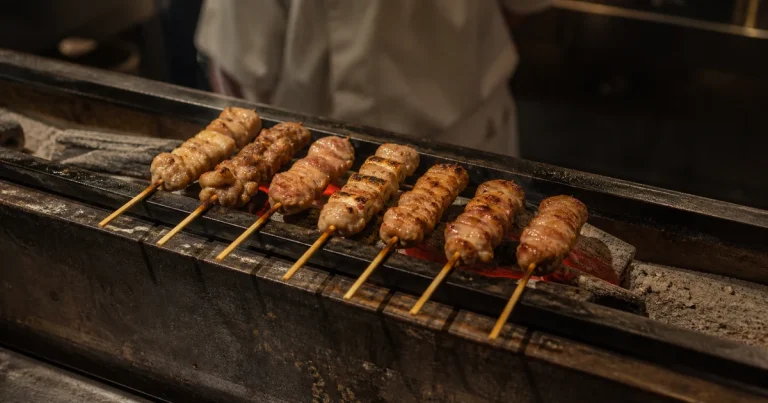
Many specialist restaurants grill yakitori over charcoal. Binchotan, a dense white charcoal, is especially valued because it can produce strong, steady heat when managed correctly. Not all yakitori is cooked over binchotan, however; restaurants may use other charcoal, gas, or electric equipment.
The important point is heat control. Pieces on a skewer need to cook evenly even though their thickness, fat content, and shape differ. The cook adjusts the distance from the heat, turns the skewers, and applies seasoning at the right stage. Tare may be added in layers so that it sets and browns without burning.
This is why yakitori is more than chicken placed on a grill. Skewering, trimming, seasoning, and timing are all part of the craft.
Yakitori vs. Kushiyaki
Yakitori is chicken-focused. Kushiyaki is the broader term for foods grilled on skewers and may include pork, beef, seafood, vegetables, mushrooms, and other ingredients. In simple terms, yakitori is one kind of kushiyaki, but not every kushiyaki is yakitori.
Real menus sometimes use the words more loosely, and regional exceptions exist. Our guide to yakitori vs. kushiyaki explains how to recognize the difference on Japanese menus.
Where Is Yakitori Eaten in Japan?
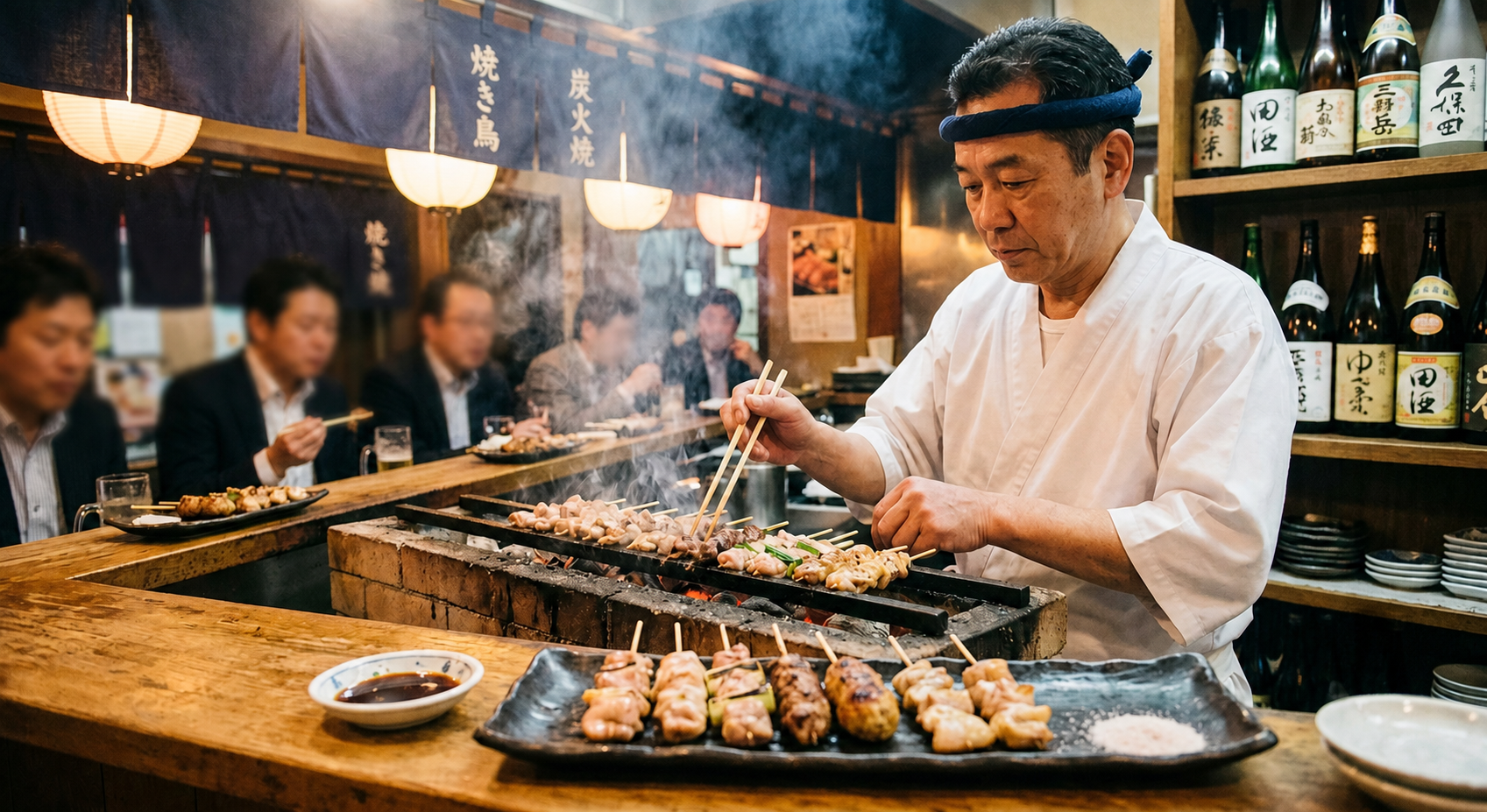
Yakitori ranges from inexpensive everyday food to a chef-led specialty meal. You may find it at a casual neighborhood shop, an izakaya, a takeaway counter, a festival stall, or a refined restaurant serving a sequence of carefully chosen skewers.
At casual places, diners often order several skewers with beer, highballs, sake, or non-alcoholic drinks. A specialist restaurant may offer omakase, leaving the selection and order to the chef. Side dishes such as pickles, raw or dressed vegetables, chicken soup, and rice dishes may complete the meal.
How to Order and Eat Yakitori
Beginners can start with three or four contrasting skewers. Momo or negima offers familiar juicy chicken, tsukune is approachable, and heart or gizzard introduces a firmer texture. A mixed selection called moriawase is useful when you do not want to choose every item.
Yakitori may be eaten directly from the skewer with your hands. Chopsticks are also acceptable. Eat the skewers while they are hot, and place used sticks in the container provided or neatly on your plate. There is no need to follow complicated rituals.
For menu terms, useful Japanese phrases, otoshi, tipping, allergies, and common mistakes, read our practical guide to ordering yakitori in Japan.
Food Safety and Allergies
Chicken and chicken organs can carry harmful bacteria when raw or undercooked. Do not assume that a preparation is risk-free simply because it is traditional or served by a specialist. If a skewer appears undercooked or you have concerns about doneness, ask the restaurant before eating it.
For allergies, confirm both the chicken preparation and the seasoning. Tare may contain soy and wheat, while tsukune may include egg or other binders. Recipes vary by restaurant, so a general ingredient list cannot replace direct confirmation.
Is yakitori always chicken?
Yakitori normally means grilled chicken, particularly chicken served on skewers. Some restaurant menus and regional traditions use the word more broadly, so check the item description when necessary.
Is yakitori the same as teriyaki?
No. Yakitori describes grilled chicken, usually on skewers. Teriyaki refers to a cooking style that creates a glossy surface with a soy-based seasoning. Tare-glazed yakitori may look similar, but the terms describe different things.
Is yakitori spicy?
Yakitori is not usually spicy by itself. Salt and tare are the standard seasonings. Condiments such as shichimi pepper, sansho, yuzu kosho, or mustard may be offered separately.
Can you eat yakitori without tare?
Yes. Shio-seasoned yakitori uses salt instead of tare. Some skewers may also receive another simple seasoning chosen by the chef.
What is the best yakitori for beginners?
Momo, negima, tsukune, and tebasaki are approachable choices. If you want to try an organ skewer, heart and gizzard are often easier starting points than liver.
A Good Yakitori Meal Is a Sequence, Not a Pile of Skewers
Yakitori means grilled chicken, but the dish is defined by more than the literal translation. Different chicken parts, careful skewering, controlled heat, and the choice between shio and tare create a wide range of flavors and textures. Start with a few familiar skewers, try the restaurant’s recommended seasoning, and explore more cuts as you learn what you enjoy.
Go Deeper Into Yakitori Technique
If this glimpse into the craft behind yakitori changed the way you see your next skewer, you can support Japan Food Compass on Ko-fi and help us continue sharing carefully researched guides and original kitchen stories.
Editorial Sources
- Japan National Tourism Organization: Yakitori—Your Guide to Chicken Skewers
- Ministry of Agriculture, Forestry and Fisheries: Yakitori (Grilled Chicken)
- Ministry of Agriculture, Forestry and Fisheries: The Washoku Way
- Ministry of Health, Labour and Welfare: Campylobacter Food Poisoning Prevention Q&A