Yakitori and kushiyaki both appear on Japanese menus, but they are not exact synonyms. Yakitori normally means bite-size pieces of chicken grilled on skewers. Kushiyaki is the broader category: ingredients of many kinds—meat, seafood, vegetables, or other foods—cooked on skewers.
The simplest rule is that yakitori is a type of kushiyaki, while not every kushiyaki is yakitori. Real menus are less tidy, however. Restaurants may group several kinds of skewers under one heading, and regional food traditions sometimes use the word yakitori for something other than standard grilled chicken. This guide explains how to read those labels without treating them as rigid rules.
Yakitori vs. Kushiyaki: The Quick Difference
| Term | Basic meaning | Typical ingredients | What to expect |
|---|---|---|---|
| Yakitori | Grilled chicken, commonly on skewers | Chicken meat, skin, organs, cartilage, and minced chicken | A chicken-focused selection, usually seasoned with salt or tare |
| Kushiyaki | Skewer-grilled food | Chicken, pork, beef, seafood, vegetables, mushrooms, tofu products, and more | A wider assortment whose ingredients depend on the restaurant |
The word kushi means skewer, while yaki refers to grilling or cooking with direct heat. Kushiyaki therefore describes the cooking format more than one specific ingredient. In yakitori, tori means bird and commonly refers to chicken in this food context.
What Counts as Yakitori?
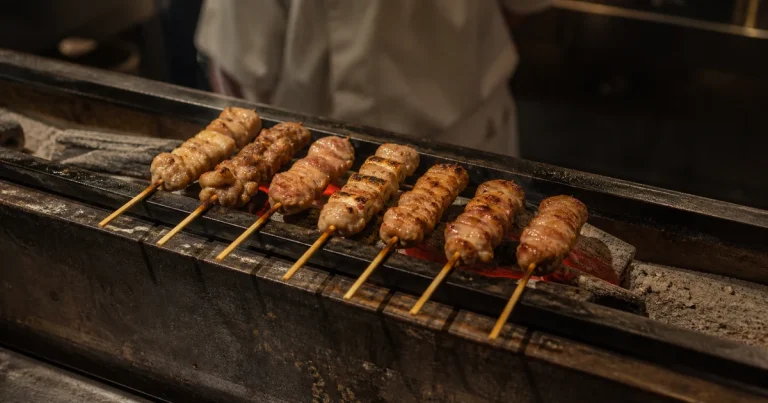
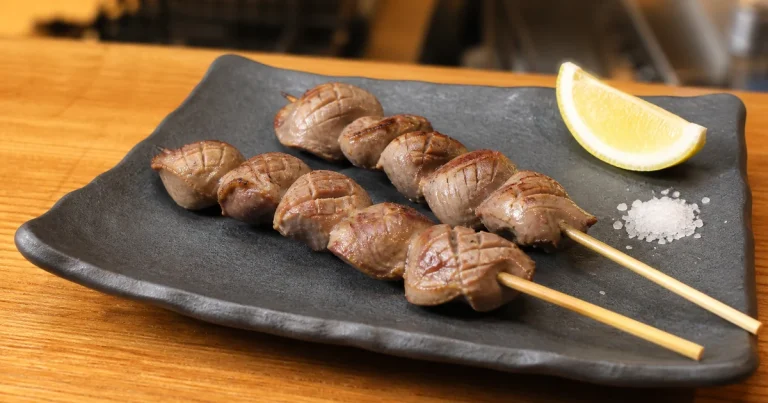
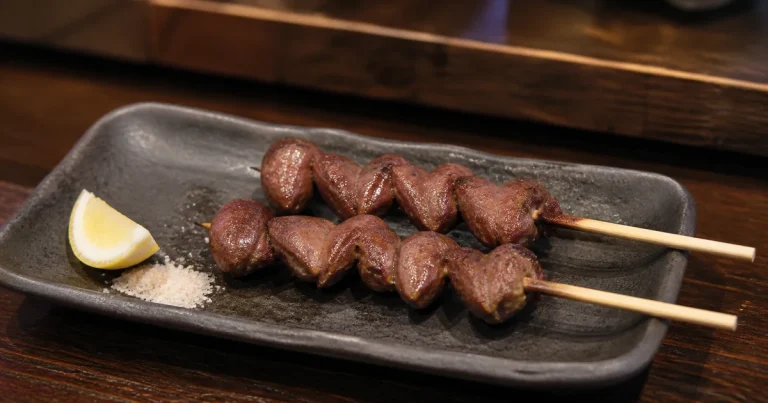
Standard yakitori uses small pieces of chicken threaded onto bamboo skewers and grilled, often over charcoal. A specialist may use much more of the bird than thigh or breast. Skin, heart, liver, gizzard, tail, neck meat, and cartilage can all appear on the menu, with each part cut and cooked to suit its texture.
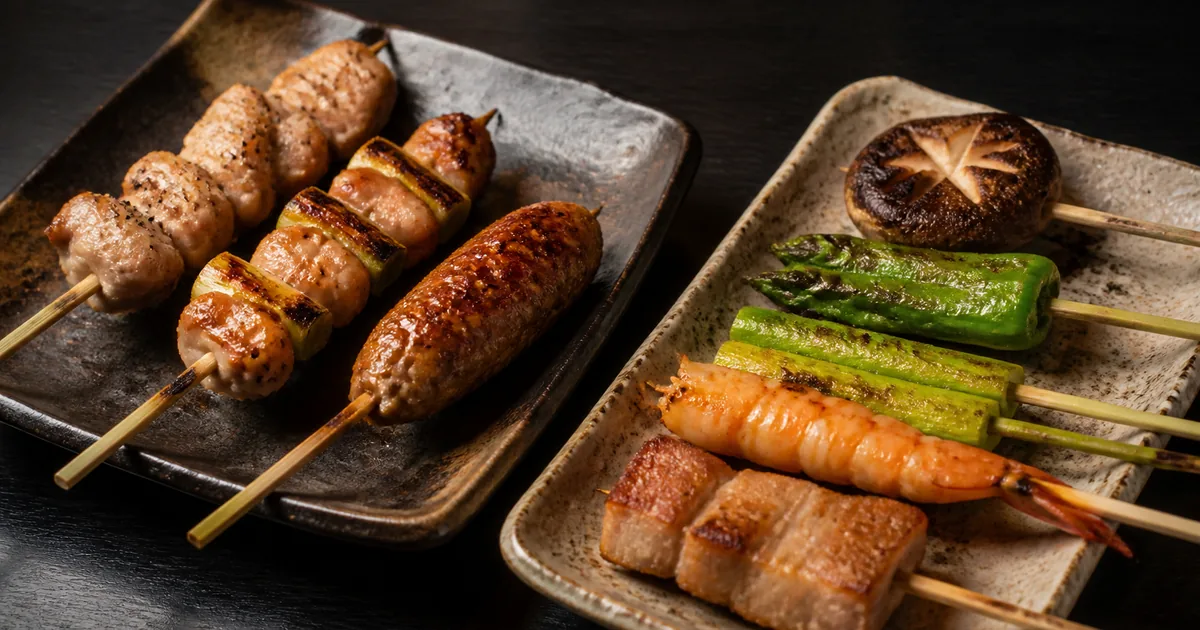
Common examples include momo (thigh), negima (chicken with Japanese long onion), kawa (skin), and tsukune (a minced-chicken preparation). These remain yakitori even though their textures are very different. For a fuller part-by-part guide, see our explanation of yakitori cuts and beginner-friendly skewers.
Yakitori is commonly seasoned with shio (salt) or tare, a savory-sweet glaze that often includes ingredients such as Japanese soy sauce. The seasoning does not determine whether a skewer is yakitori; the chicken is the defining clue.
What Counts as Kushiyaki?
Kushiyaki can include yakitori, but the label also covers skewered ingredients beyond chicken. Depending on the restaurant, you might find pork belly, beef, shrimp, scallops, squid, shiitake mushrooms, shishito peppers, asparagus, eggplant, or tofu products.
Some menus identify each item more specifically. Butakushi means a pork skewer, while gyukushi indicates beef. Vegetable skewers may be described by the ingredient name followed by kushi or simply placed in a vegetable section. A restaurant named a kushiyaki-ya is therefore likely to offer a wider range than a dedicated yakitori-ya, although the actual menu matters more than the sign.
Kushiyaki should not be confused with every food served on a stick. Some skewered dishes are fried, simmered, coated, or prepared by another method. Kushiage and kushikatsu, for example, are breaded and deep-fried rather than grilled.
Why Japanese Menus Do Not Always Follow a Perfect Rule
Food words develop through everyday use, not through one national menu standard. A casual izakaya may place chicken, pork, vegetables, and quail eggs under a familiar “yakitori” heading even when kushiyaki would be the broader technical label. Another restaurant may carefully separate yakitori, vegetable skewers, and other grilled items.
English menus can add another layer of variation. “Yakitori” may be used as the recognizable heading, followed by non-chicken skewers. “Grilled skewers” may replace both Japanese terms. Instead of deciding what an ingredient must be from the section title alone, read the item name and description.
Regional Exceptions: When Yakitori Is Not Standard Chicken-on-a-Stick
Muroran in Hokkaido is a well-known exception. Muroran yakitori traditionally features pork and onion, commonly served with mustard. The city’s own English tourism information distinguishes torikushi (chicken skewers) from butakushi (pork skewers), while retaining yakitori as the name of the local specialty.
These regional names are not mistakes. They reflect local history and usage. They also show why a dictionary definition is only a starting point: in Japan, the name of a famous local dish may carry a meaning that differs from the nationwide default.
How to Tell What You Are Ordering
Use the ingredient name rather than relying only on the category heading. These clues are especially useful:
- Tori or niwatori: chicken
- Buta: pork
- Gyu: beef
- Ebi: shrimp or prawn
- Hotate: scallop
- Yasai: vegetables
- Kushi: skewer
If the menu is unclear, point to the item and ask, “Kore wa tori desu ka?” (“Is this chicken?”). For allergies or dietary restrictions, confirm the ingredient and the seasoning separately. A vegetable skewer, for example, may be brushed with a sauce containing soy, wheat, fish-derived ingredients, or other components that vary by restaurant.
Our practical guide to ordering yakitori in Japan includes useful phrases, skewer counters, etiquette, and common first-timer mistakes.
Which Should a Beginner Choose?
Choose a yakitori restaurant when you want to compare chicken parts and experience how a specialist adjusts the cutting, seasoning, and grilling for each one. A familiar starting order might include thigh, chicken-and-onion, minced chicken, and one firmer cut such as gizzard or heart.
Choose kushiyaki when you want broader variety or are dining with people who prefer different ingredients. A mixed order can combine meat, seafood, and vegetables, but do not assume that every kushiyaki restaurant can accommodate a particular diet. Shared grills and restaurant-specific sauces may matter.
If you are still learning the basic dish, begin with our complete introduction to yakitori. It covers the name, traditional grilling, shio and tare, and yakitori’s place in Japanese dining culture.
Menu Terms That Prevent Ordering Mistakes
Is all yakitori chicken?
In the standard nationwide sense, yakitori is grilled chicken. However, restaurant labeling and regional specialties do not always follow that narrow definition. Muroran yakitori, made with pork and onion, is a notable example.
Is all kushiyaki served on bamboo skewers?
Bamboo skewers are common, but the essential idea is food grilled on a skewer. The exact skewer material and presentation can vary.
Are vegetable skewers yakitori?
Vegetable skewers are more precisely described as kushiyaki or by their ingredient names. They may still appear in the yakitori section of a casual menu.
What is the difference between kushiyaki and kushikatsu?
Kushiyaki is grilled. Kushikatsu is coated in breadcrumbs and deep-fried. Both are served on skewers, but the cooking methods and textures are different.
Does kushiyaki use shio and tare?
It can. Salt and tare are common choices for many grilled skewers, but the seasoning depends on the ingredient and the restaurant.
Read the Menu Category Before You Order
Yakitori is the chicken-focused member of the wider kushiyaki family. That distinction is useful when reading a menu, but it is not an absolute guarantee of what every restaurant will serve. Check the ingredient name, expect regional variation, and ask when a dietary restriction makes the difference important. With those habits, both specialist yakitori counters and mixed-skewer izakaya menus become much easier to navigate.