Dashi is a light, umami-rich stock that forms the flavor base of many Japanese dishes. It can be made from kombu kelp, katsuobushi bonito flakes, dried small fish, dried shiitake mushrooms, or a combination of ingredients.
Unlike a heavy broth designed to become the dominant flavor, dashi often works quietly. It gives soup, noodles, simmered dishes, and sauces depth while allowing the main ingredients to remain recognizable.
This guide explains what dashi is, the main types, how it is prepared, and how to choose an option that fits your cooking and diet.
How Does Dashi Create Umami?
Dashi is Japanese soup stock. Traditional versions are made by soaking or briefly heating ingredients in water to extract their flavor. The liquid is then strained and used as a foundation for other dishes.
The character of dashi comes from umami compounds naturally present in its ingredients. Kombu is rich in glutamate, while katsuobushi and dried fish contribute inosinate. Dried shiitake contributes guanylate. Combining ingredients can create a fuller savory taste than using one source alone.
Dashi is central to everyday cooking as well as formal cuisine. It seasons familiar foods such as miso soup and noodle broth, while a clear soup in a refined meal may reveal the quality of the dashi with very little else to hide it.
What Does Dashi Taste Like?
Dashi is savory, aromatic, and usually lighter than meat-based stock. Its exact taste depends on the ingredients:
- Kombu gives a clean, rounded, mineral-like savoriness.
- Katsuobushi adds a smoky aroma and deeper complexity.
- Niboshi creates a more noticeable dried-fish character.
- Dried shiitake adds an earthy aroma and lingering umami.
Dashi itself is generally not a finished soup. Salt, soy sauce, miso, mirin, or other seasonings are added later according to the dish.
The Main Types of Dashi
Kombu Dashi
Kombu dashi is made by extracting flavor from dried kelp. It has a gentle taste and is useful when a strong fish aroma would distract from other ingredients. It can be plant-based, but packaged products should still be checked because some contain fish-derived seasoning.
Katsuo Dashi
Katsuo dashi uses katsuobushi, thin flakes shaved from processed bonito. It has an aromatic, savory character and is widely used in soups, noodle broths, and sauces.
Awase Dashi
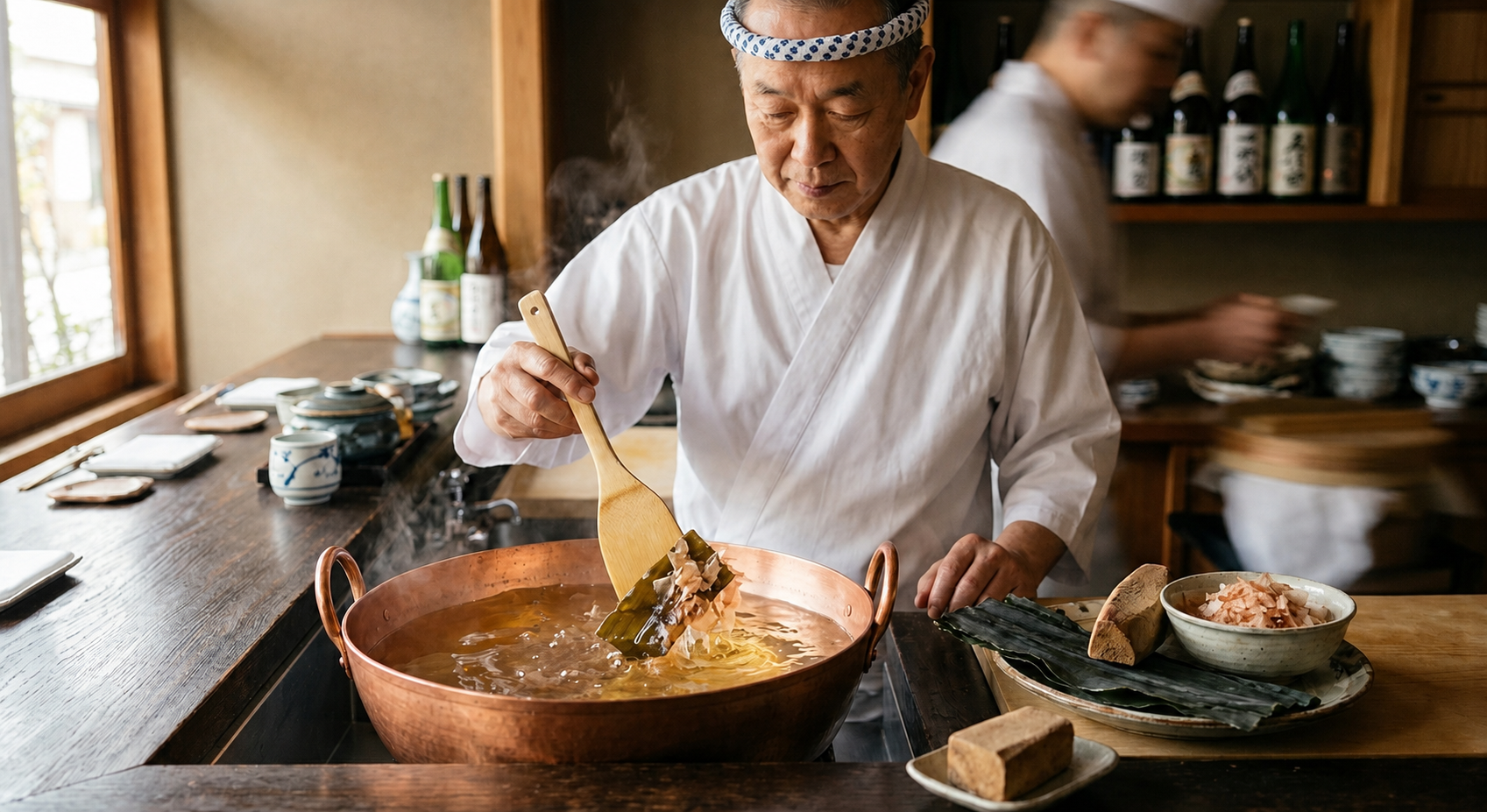
Awase means combined. The most familiar awase dashi brings kombu and katsuobushi together. Their different umami compounds complement one another, producing depth without requiring hours of simmering.
Niboshi Dashi
Niboshi dashi is made from dried small fish, commonly sardines or anchovy-like fish. It has a stronger marine aroma and appears in miso soup, noodle dishes, regional cooking, and some ramen styles.
Shiitake Dashi
Dried shiitake mushrooms release flavor as they rehydrate. Shiitake dashi is often combined with kombu in Buddhist vegetarian cooking and modern plant-based recipes.
How Is Dashi Made?
The method changes with the ingredient, but traditional dashi is usually extracted more gently and quickly than many Western stocks.
Basic Kombu and Katsuobushi Dashi
- Place kombu in water and let it soak.
- Heat the water gradually and remove the kombu around the time small bubbles appear, before a hard boil.
- Add katsuobushi, then remove the pot from the heat.
- Allow the flakes to settle briefly and strain the liquid without pressing aggressively.
Exact temperatures, soaking times, and proportions vary among cooks. The important idea is controlled extraction: enough to draw out umami and aroma without producing an unnecessarily harsh or cloudy result.
Dashi vs. Western Stock
Dashi and stock serve a similar purpose, but their methods and flavor profiles differ.
| Feature | Dashi | Many Western Stocks |
|---|---|---|
| Common ingredients | Kombu, katsuobushi, dried fish, shiitake | Bones, meat, vegetables, herbs |
| Typical extraction | Soaking or brief, controlled heating | Longer simmering |
| Character | Light, clear, umami-forward | Often richer and more roasted or meaty |
These are broad tendencies rather than strict rules. Both traditions include many regional and household variations.
How I Judge Dashi in the Kitchen
In professional cooking, stronger dashi is not automatically better. The extraction has to suit the dish. A clear soup needs a clean aroma and finish, while a simmered preparation may need enough depth to remain noticeable after soy sauce, mirin, vegetables, or seafood are added.
I watch temperature and time closely because forcing the extraction can bring out rough or muddy flavors. Kombu and katsuobushi do not need identical treatment, and different kitchens use different methods. The practical goal is to capture aroma and umami without making the stock taste heavy for the food it is meant to support.
I also judge dashi again after seasoning the finished dish. A stock that seems delicate on its own may become balanced once salt or soy sauce sharpens it, while an impressive, concentrated stock can overpower subtle ingredients. Dashi works best as part of the whole preparation rather than as a standalone intensity test.
What Is Dashi Used For?
Dashi appears in a wide range of Japanese dishes, including:
- Miso soup and clear soups
- Udon and soba broth
- Chawanmushi, a savory steamed egg custard
- Nimono, or simmered dishes
- Oden and hot-pot dishes
- Tamagoyaki, depending on the regional style
- Tempura dipping sauce
- Dressings and seasoned vegetable dishes
Dashi also helps explain the subtle flavor structure of washoku. In kaiseki cuisine, a clear soup can showcase the stock, seasonal garnish, aroma, and serving vessel as one coordinated course.
Is Instant Dashi the Same as Homemade Dashi?
Instant dashi granules and packets are convenient and widely used in Japanese homes. They can produce a consistent result quickly, but the flavor is not identical to freshly extracted stock.
Products vary considerably. Some contain salt, sugar, yeast extract, soy ingredients, or other seasonings in addition to kombu or fish. Check the label before adding more salt and confirm the ingredients if you avoid fish, shellfish, gluten, or other allergens.
Dashi bags sit between granules and fully homemade stock: a packet of dried ingredients steeps in hot water like a tea bag. They are useful when you want clearer ingredient identity with minimal preparation.
Is Dashi Vegetarian or Vegan?
Not always. Dashi made with katsuobushi or niboshi contains fish. Kombu-only dashi and kombu-shiitake dashi can be vegan, provided no animal-derived seasoning has been added.
When eating in Japan, do not assume that a vegetable dish uses vegetable stock. Dashi is often present even when no fish is visible. If you follow a strict vegetarian or vegan diet, ask specifically whether the broth contains katsuobushi, niboshi, or other seafood.
Common Questions About Dashi
Is dashi the same as miso soup?
No. Dashi is the stock that often forms the base of miso soup. Miso is dissolved into the prepared stock, and ingredients such as tofu, wakame, or vegetables may be added.
Can you drink dashi by itself?
You can taste it by itself, but dashi is usually used as a cooking base. A finished clear soup includes additional seasoning and carefully chosen ingredients.
How long does homemade dashi keep?
Fresh dashi is best used promptly. Cool it quickly, refrigerate it in a clean container, and follow a trusted recipe’s storage guidance. Discard it if its smell or appearance changes.
What to Remember About Dashi
Dashi is a Japanese stock that creates depth through efficient extraction rather than prolonged cooking. Kombu, katsuobushi, niboshi, and dried shiitake each produce a different character, while awase dashi combines ingredients for greater complexity.
Once you understand dashi, many Japanese dishes become easier to read. The quiet savoriness behind a bowl of miso soup, a noodle broth, or a simmered vegetable is often the work of this essential foundation.
If this guide gave you a clearer understanding of a Japanese ingredient, you can support Japan Food Compass on Ko-fi and help us continue sharing carefully researched guides and original kitchen stories.
Sources for This Dashi Guide
Ministry of Agriculture, Forestry and Fisheries: Ozoni and Dashi Preparation
Ministry of Agriculture, Forestry and Fisheries: Dashi and Umami
Ministry of Agriculture, Forestry and Fisheries: The Washoku Way