Disclosure: This article may contain affiliate links. If you purchase through these links, Japan Food Compass may earn a commission at no additional cost to you.
What is wasabi? Real wasabi is a Japanese plant whose thickened stem is grated into a fresh green condiment. It has a clean herbal aroma and a brief, nose-tingling pungency. It is best known as an accompaniment to sushi and sashimi, but it is also served with noodles, tofu, meat, and other dishes.
The bright green paste sold as wasabi is not always made mainly from Japanese wasabi. Many prepared products use horseradish, mustard, coloring, or a blend. Understanding the difference makes product labels, restaurant menus, and Japanese recipes much easier to interpret.
What Is Real Wasabi?
Real Japanese wasabi comes from Eutrema japonicum, also known as Wasabia japonica. It is a member of the mustard family, Brassicaceae, along with mustard, cabbage, and horseradish.
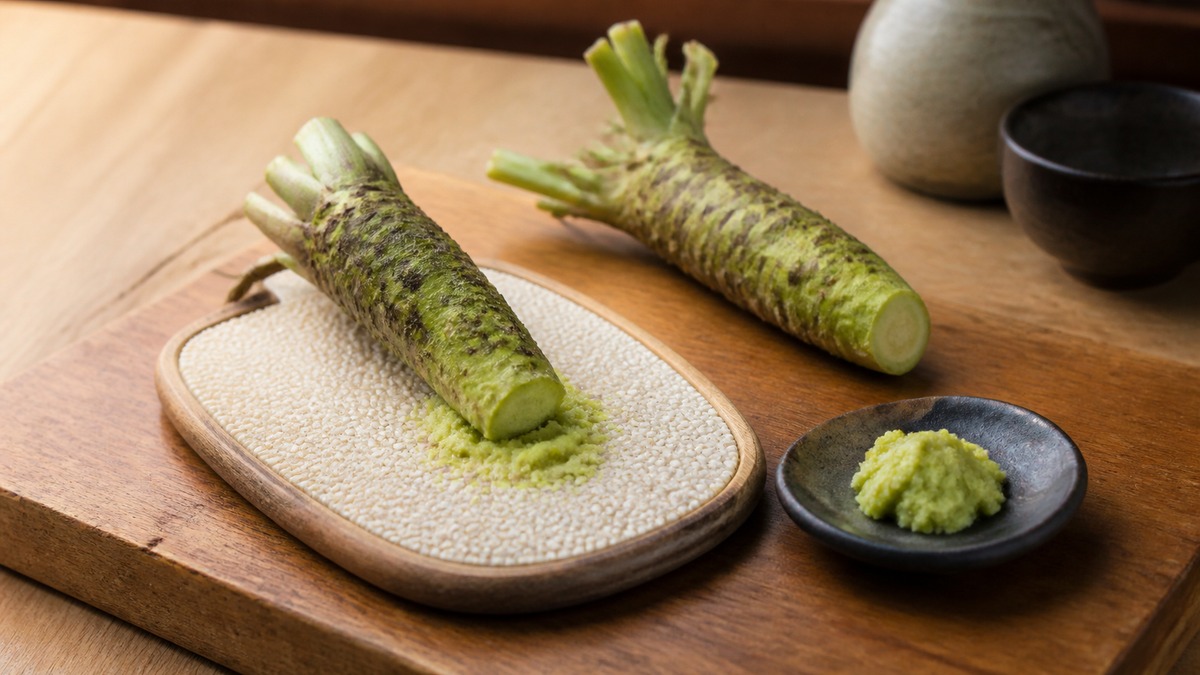
The part used for grated wasabi is often called a root. More accurately, it is an enlarged stem, or rhizome. The leaves, stalks, and flowers are also edible and may appear in pickles, salads, and regional dishes.
In Japan, hon wasabi means Japanese wasabi. The term helps distinguish the plant from products made largely with horseradish, although the ingredient list is still the most reliable guide.
What Is Wasabi Made Of?
Fresh wasabi is simply the grated rhizome of the Japanese wasabi plant. Once the plant tissue is grated, natural compounds react to create the familiar pungent aroma.
Prepared wasabi is a broader category. A tube or powder may contain Japanese wasabi, horseradish, mustard, starch, oil, salt, acid, coloring, or flavoring. Formulas vary, so the word “wasabi” on the front of a package does not prove that Japanese wasabi is the main ingredient.
Look for Japanese wasabi, hon wasabi, Eutrema japonicum, or Wasabia japonica in the ingredient list. Then note whether horseradish and mustard appear before or after it.
What Does Wasabi Taste Like?
Fresh wasabi tastes green, aromatic, gently sweet, and sharply pungent. Its heat rises through the nose and usually fades faster than the burn from chili peppers. Good fresh wasabi should add fragrance and clarity rather than only aggressive heat.
The wasabi taste changes with cultivar, growing conditions, freshness, and grating technique. After grating, volatile aroma compounds begin to weaken, so fresh wasabi is normally prepared shortly before serving.
Tube and powdered products often taste stronger, saltier, or more mustard-like. That difference does not automatically make them unsuitable; it simply means they should be judged as prepared condiments rather than as exact substitutes for freshly grated wasabi.
Wasabi vs. Horseradish
Wasabi and horseradish belong to the same plant family, but they are different plants. The confusing name “Japanese horseradish” is sometimes used for wasabi in English, yet real wasabi is not ordinary horseradish dyed green.
| Feature | Japanese wasabi | Horseradish |
|---|---|---|
| Plant | Eutrema japonicum | Armoracia rusticana |
| Natural color | Green | White or cream |
| Flavor | Herbal, layered, and briefly pungent | Direct, forceful, and sharply pungent |
| Common form | Fresh rhizome or prepared paste | Grated root or an ingredient in prepared wasabi |
| Price and availability | Usually more expensive and less widely available | More affordable and easier to source |
Many commercial wasabi products combine horseradish with mustard, green coloring, and a smaller amount of Japanese wasabi. These blends are affordable, stable, and familiar. The important point is not to label every blend as “fake,” but to understand what you are buying.
How Is Japanese Wasabi Grown?
Wasabi prefers cool, shaded, humid conditions. Traditional water-grown wasabi, called sawa wasabi, is cultivated in mountain fields supplied by clean, continuously flowing water. Field-grown hata wasabi is raised in soil under carefully managed conditions.
Shizuoka is especially famous for water-grown wasabi, and Nagano is another important production area. The plant grows slowly and requires close control of water, temperature, sunlight, and drainage. These demands help explain why fresh rhizomes cost more and are harder to find than prepared paste.
Fresh, Tube, and Powdered Wasabi
| Form | Main advantage | What to check |
|---|---|---|
| Fresh rhizome | Delicate aroma and freshly grated texture | Freshness, price, storage, and availability |
| Tube paste | Convenient and ready to use | Wasabi, horseradish, mustard, salt, and additives |
| Powder | Easy portioning and longer storage | Whether it contains wasabi, horseradish, mustard, or a blend |
Fresh rhizome is grated finely, traditionally on a sharkskin grater, although metal and ceramic graters are also used. Tube paste is practical for everyday meals. Powder is mixed with water and rested according to the package directions.
Why Is Wasabi Served with Sushi and Sashimi?
Wasabi adds aroma, contrast, and measured pungency. It can balance rich fish while complementing lean seafood with a fresh green note.
In nigiri, a chef may place a small amount between the topping and seasoned rice. The quantity can be adjusted to suit each fish, an aspect of the balance found in traditional Edomae sushi.
Wasabi does not define sushi. Sushi is characterized by seasoned rice, while sashimi is sliced food served without sushi rice. Our guide to Sushi vs. Sashimi explains the distinction.
How to Eat Wasabi
If nigiri has already been seasoned by the chef, taste it before adding more wasabi or Japanese soy sauce. At a sushi counter, the balance may already be intentional.
With sashimi, you can place a small amount of wasabi on the fish and then lightly touch the fish to soy sauce. Mixing wasabi into soy sauce is also common in casual dining, so the separate method should not be treated as an absolute rule.
Start with a small amount because prepared products vary greatly in strength. Our guide to how to eat sushi in Japan covers the broader etiquette.
Other Uses for Wasabi
Wasabi is also served with soba noodles, tofu, ochazuke, grilled meat, seafood rice bowls, and vegetables. A small amount can be added to dressings, mayonnaise, dipping sauces, and marinades.
The stems and leaves may be pickled or cooked. Shizuoka is known for wasabi-zuke, which combines chopped wasabi parts with sake lees. Because prolonged heat weakens fresh wasabi aroma, it is often added near the end of cooking or served separately.
How to Choose and Store Wasabi
Choose according to the dish, budget, and availability. For prepared wasabi, read the ingredient list rather than relying on color, price, or the front label. A horseradish-based blend may be perfectly useful when convenience and strong pungency matter.
Follow the package instructions after opening, including refrigeration and use-by guidance. Keep the cap clean and tightly closed. For a fresh rhizome, follow the seller’s storage advice, grate only what you need, and return the remainder to refrigeration promptly.
Frequently Asked Questions
Is wasabi horseradish?
No. Real Japanese wasabi and horseradish are related but different plants. However, many prepared wasabi products contain horseradish, so checking the ingredients is essential.
Is real wasabi naturally green?
Yes. The rhizome of Japanese wasabi is naturally green, although the shade varies. Bright color alone cannot confirm that a paste contains a high proportion of real wasabi.
Why does wasabi feel hot in the nose?
Grating wasabi produces volatile isothiocyanates. Their vapors reach the nasal passages and create a sharp but relatively brief sensation, unlike the longer-lasting capsaicin heat of chili peppers.
Does every sushi restaurant in Japan use fresh wasabi?
No. Fresh rhizomes are expensive and require careful handling. A restaurant may use fresh wasabi, prepared paste, or a blend depending on its style, price range, and the dish.
Final Thoughts
Real wasabi is the grated stem of Eutrema japonicum, a Japanese plant valued for its green aroma and short-lived pungency. It is not the same plant as horseradish, even though many prepared products combine the two.
Fresh, tube, and powdered wasabi each have practical uses. Read the ingredients, begin with a small amount, and treat wasabi as part of the dish’s balance rather than simply a test of heat.