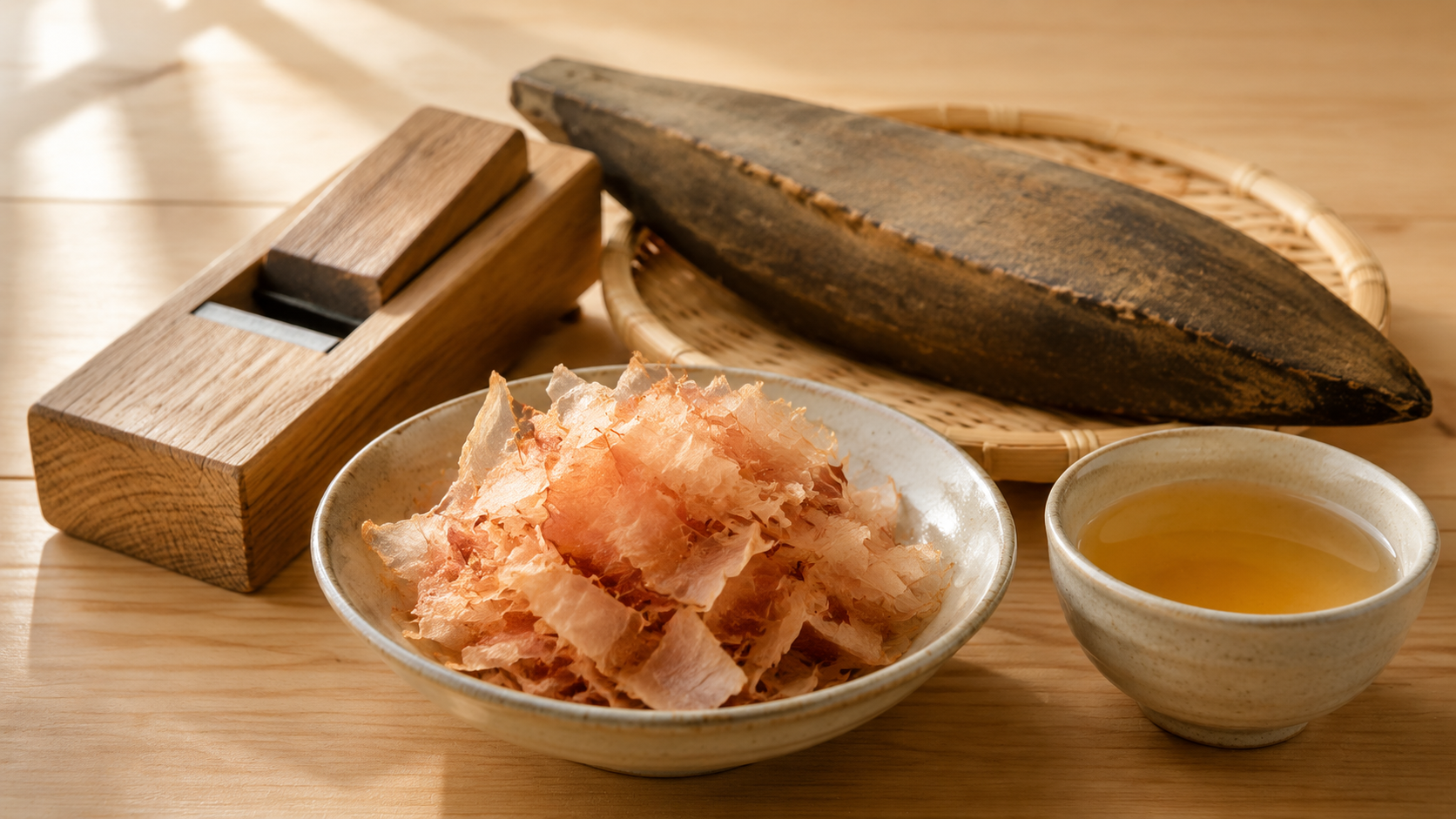
Katsuobushi is dried, smoked, and sometimes mold-matured fish shaved into the delicate pieces called bonito flakes. The flakes flavor Japanese dashi and are also eaten on tofu, rice, vegetables, noodles, and savory pancakes.
Similar-looking packages may contain smoky arabushi, refined karebushi, or mixed flakes made with other fish. Shaving thickness also changes how the product is used.
This guide explains how katsuobushi is made, what the main types taste like, and how to choose and use bonito flakes in Japanese cooking.
Understanding Katsuobushi
Katsuobushi is made from katsuo, known in English as skipjack tuna or bonito. The hard preserved block is shaved to make kezuribushi, or shaved flakes.
English packaging commonly says “bonito flakes,” but not every shaved-fish product is katsuobushi. Check the ingredients if you want skipjack rather than mackerel, herring, sardine, tuna, or a blend.
Katsuobushi is one of the concentrated sources of inosinate, a compound associated with umami. When its inosinate is combined with the glutamate in kombu, the two ingredients create the pronounced savory effect found in many forms of Japanese stock.
Katsuobushi Moves from Smoke to Savory Depth
Katsuobushi is savory, distinctly aromatic, and variably smoky. Arabushi is often bold, while mold-matured karebushi can be more refined and rounded. Character varies by processing, shaving, and freshness.
Paper-thin flakes almost melt on warm food. Thick shavings remain firm and release flavor gradually when simmered. The aroma should be pleasantly smoky, not stale or rancid.
How Is Katsuobushi Made?
Traditional production removes moisture through cooking, smoking, drying, and, in some styles, mold-assisted maturation.
- Skipjack tuna is cleaned and divided into back and belly sections.
- The pieces are simmered, cooled, and carefully deboned.
- The fillets are repeatedly smoke-dried to reduce moisture and develop aroma.
- The smoked blocks become arabushi.
- For karebushi, the surface is trimmed and beneficial mold is applied before further drying.
- Repeated mold application and drying can produce honkarebushi, a highly matured form.
The completed block is extremely hard. Households once shaved it with a traditional shaving box called a kezuriki; convenient pre-shaved flakes are now more common.
Main Types of Katsuobushi
Arabushi
Arabushi results from boiling and repeated smoke-drying. Its assertive smoky aroma suits everyday flakes and dashi. Its surface is trimmed before further mold maturation.
Karebushi
Karebushi undergoes mold application and additional drying. This removes more moisture and can soften the smoky character, making it suitable for elegant dashi.
Honkarebushi
Honkarebushi is repeatedly molded and dried. This labor-intensive product is valued for complex aroma and refined stock. A whole block requires a proper shaving tool.
| Type | Processing | General Character |
|---|---|---|
| Arabushi | Boiled and repeatedly smoke-dried | Direct, smoky, and full |
| Karebushi | Smoked, trimmed, molded, and dried | Refined and rounded |
| Honkarebushi | Repeated mold maturation and drying | Complex, elegant, and highly matured |
Types of Bonito Flakes
Hanakatsuo
Hanakatsuo consists of broad, flower-like flakes. Its large surface area quickly releases aroma for dashi or toppings such as okonomiyaki and chilled tofu.
Small Bonito Flake Packs
Individual packets contain small, thin flakes convenient for rice, vegetables, tofu, noodles, and packed lunches. They also reduce repeated exposure to air.
Thick-Cut Flakes
Thick shavings suit longer simmering and full-bodied noodle broth. Their firm texture makes them less suitable as a delicate topping.
Thread-Shaved Flakes
Fine, narrow shavings are mainly garnishes. Their soft texture suits salads, tofu, pickles, and carefully plated dishes.
| Shaving | Texture | Best Use |
|---|---|---|
| Thin, broad flakes | Light and delicate | Quick dashi and toppings |
| Small flakes | Soft and easy to mix | Rice, tofu, vegetables, and lunch boxes |
| Thick flakes | Firm and slow-extracting | Noodle broth and strong stock |
| Thread shavings | Fine and decorative | Garnishes and plated dishes |
Katsuobushi vs. Other Dried Fish Flakes
Japanese cooking also uses dried mackerel, herring, sardine, and tuna. Mackerel and sardine products often create stronger noodle stock, while tuna flakes can be lighter.
The front of a package may emphasize “dashi” without clearly stating the fish in English. Read the ingredient list rather than assuming all brown shavings are bonito. This is also important for anyone managing a fish allergy or avoiding a particular species.
How Katsuobushi Is Used in Japanese Cooking
Katsuobushi Dashi
Thin flakes release aroma and inosinate quickly in hot water. They may be used alone for katsuo dashi or combined with kombu for awase dashi. The flakes are strained from the liquid after a short extraction. Our guide to Japanese dashi explains the main stock styles in more detail.
Okaka
Okaka commonly means katsuobushi seasoned with soy sauce, sometimes with mirin or another seasoning. It is used as an onigiri filling, mixed into rice, or served as a simple accompaniment.
Toppings and Garnishes
Bonito flakes are scattered over okonomiyaki, takoyaki, yakisoba, chilled tofu, blanched greens, pickles, and rice. Warm food releases the flakes’ aroma. Very thin flakes may curl and move in rising steam, creating the familiar “dancing” effect.
Seasoning Everyday Dishes
A small amount can add savory flavor to vegetables, eggs, noodles, salads, and sauces. This flexible use reflects the broader role of dashi and restrained seasoning in Japanese cooking.
How to Choose Bonito Flakes
Thin flakes or hanakatsuo work for quick stock and toppings; small packets suit individual servings; thick flakes suit longer extraction. Choose karebushi or honkarebushi for a more refined product.
Check whether the ingredient is skipjack tuna only or a blend. Packages should be well sealed, with flakes that look dry and smell fresh after opening. A large economical bag is not a bargain if it loses its aroma before you can use it.
How to Store Katsuobushi
Shaving greatly increases the surface area, so aroma fades faster than it does in a whole block. Keep flakes tightly sealed away from heat, moisture, strong odors, and direct sunlight. Follow the package instructions regarding refrigeration after opening.
Use opened flakes promptly for the best aroma. Individual packets are useful for occasional cooking, while larger bags suit households that make stock regularly. Discard flakes that develop moisture, mold, or an unpleasant rancid odor.
Are bonito flakes raw?
No. The fish is heated and repeatedly smoke-dried during production. Karebushi and honkarebushi receive additional mold-assisted drying and maturation.
Can you eat bonito flakes without cooking them?
Yes. Packaged bonito flakes are commonly eaten directly as a topping or mixed with seasonings. Follow the storage and use instructions printed on the package.
Why do bonito flakes move on hot food?
Thin, dry flakes are extremely light. Rising steam and warm air make them curl and move; the flakes are not alive.
Are katsuobushi and bonito flakes the same?
Bonito flakes usually refers to shaved katsuobushi, but English labeling can be broad. Some shaved products contain other fish or blends, so the ingredient list provides the clearest answer.
Is katsuobushi vegetarian or vegan?
No. Katsuobushi is made from fish. For plant-based stock, use kombu, dried shiitake, or a product specifically labeled vegan.
Why Freshly Shaved Flakes Behave Differently
Katsuobushi is more than a topping that moves on hot food. Its long preservation process concentrates aroma and inosinate, allowing a small quantity to transform stock, rice, tofu, vegetables, and many everyday dishes.
For a first purchase, choose plain thin-cut bonito flakes in a well-sealed package. They are versatile enough for both quick dashi and toppings. Once you know the flavor, explore smoky arabushi, refined karebushi, thick shavings, and whole honkarebushi according to the cooking style you want.
If this guide gave you a clearer understanding of a Japanese ingredient, you can support Japan Food Compass on Ko-fi and help us continue sharing carefully researched guides and original kitchen stories.