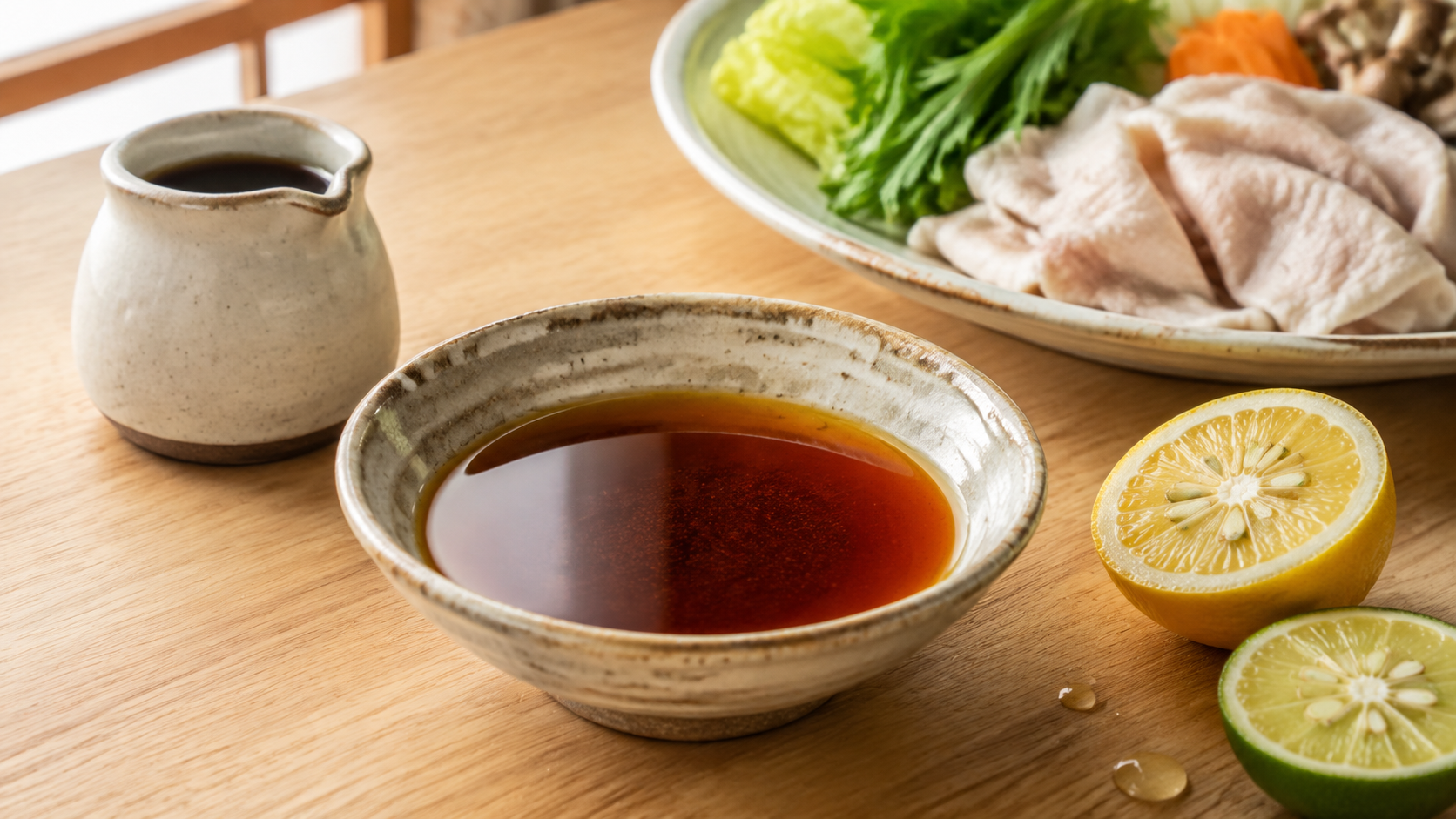
Ponzu is a Japanese citrus seasoning known for refreshing acidity and aroma. The version most commonly sold outside Japan is a dark, soy-based sauce used with hot pot, sashimi, dumplings, cold meat dishes, vegetables, and salads.
However, the word ponzu does not always describe exactly the same product. In a narrow sense, ponzu is a light citrus seasoning without soy sauce. The familiar brown sauce is more precisely called ponzu shoyu, or citrus-seasoned soy sauce.
This guide explains that distinction, what ponzu tastes like, which ingredients may be included, and how to choose and use it in Japanese cooking.
Understanding Japanese Ponzu
Traditional ponzu begins with the juice of aromatic citrus fruit. Yuzu, sudachi, kabosu, daidai, shikuwasa, and lemon may be used alone or blended. Their acidity adds freshness, while the peel-derived aroma gives the seasoning more character than plain sourness.
The name combines pon, often connected with an old European word for citrus juice, and the Japanese character for vinegar, su. Despite that character, citrus is the defining feature. Commercial products may also contain brewed vinegar.
Today, many people use “ponzu” as a convenient short name for ponzu shoyu. This broad usage is normal, but understanding the narrower meaning makes ingredient labels and Japanese recipes easier to interpret.
Ponzu vs. Ponzu Shoyu
Plain ponzu and ponzu shoyu share a citrus foundation, but soy sauce changes the color, saltiness, and culinary role.
| Seasoning | Typical Base | General Character | Common Use |
|---|---|---|---|
| Ponzu | Citrus juice, sometimes with vinegar | Light, aromatic, and sharply refreshing | Adding citrus acidity or building a sauce |
| Ponzu shoyu | Citrus plus soy sauce, often with vinegar and dashi | Salty, tangy, savory, and balanced | Dipping, dressing, pouring, and cooking |
If a restaurant offers “ponzu sauce” with sashimi or hot pot, it usually means ponzu shoyu. If a Japanese recipe treats ponzu as a citrus component before soy sauce is added, it may mean the lighter version. Context and the ingredient list provide the best answer.
Ponzu Should Finish Cleanly, Not Taste Like Soy Sauce Alone
Ponzu shoyu tastes tangy, salty, aromatic, and savory. Citrus gives it a lively top note, while soy sauce provides depth and structure. Vinegar can make the acidity firmer, and a small amount of sweetness may round the edges.
Products containing kombu, bonito, or mushroom stock have a fuller finish. The relationship between glutamate-rich ingredients and other savory compounds is explained further in our guide to umami.
The balance varies widely. A yuzu-forward bottle may be highly fragrant, while an economical table sauce may emphasize soy sauce, vinegar, sweetness, or salt. Ponzu should not be assumed to have one fixed recipe.
Common Ingredients in Ponzu Sauce
Citrus Juice
Yuzu has a floral and slightly bitter aroma. Sudachi and kabosu can feel greener and sharper, while lemon gives familiar clean acidity. Blends balance aroma and consistency.
Soy Sauce
Soy sauce supplies saltiness, color, fermented aroma, and savory depth. The type and proportion affect whether the finished sauce tastes delicate or assertive. Our guide to Japanese soy sauce explains the main styles and how they differ.
Vinegar
Brewed vinegar reinforces acidity and helps create a reliable flavor even when citrus harvests vary. Some products use rice vinegar, while others use grain, apple, or another vinegar. Ponzu is therefore not simply flavored rice vinegar; vinegar is only one possible component of a broader seasoning.
Dashi Ingredients
Kombu, katsuobushi, dried shiitake, fish extracts, or prepared stock may be added for body. These ingredients connect ponzu with Japanese dashi, but not every bottle contains fish or seaweed.
Sweeteners and Other Seasonings
Sugar, mirin, fruit concentrate, salt, or other seasonings may soften acidity. Flavored versions can include grated daikon, onion, sesame, chili, or shiso. Read the label when an ingredient or allergen matters.
How Ponzu Is Used in Japanese Cooking
Hot Pot and Shabu Shabu
Ponzu is a classic dipping sauce for nabe and shabu shabu. Its acidity refreshes the palate after bites of meat, tofu, mushrooms, and vegetables. Grated daikon, green onion, chili, or sesame may be added at the table.
Sashimi and Seafood
Ponzu offers a lighter alternative to plain soy sauce for sashimi, seared fish, oysters, and other seafood. It is especially useful when a clean citrus aroma suits the ingredient. Use it sparingly so the acidity does not overwhelm delicate fish.
Gyoza and Other Dumplings
Gyoza can be dipped directly in ponzu or in ponzu mixed with chili oil. The citrus cuts through the richness of pork and sesame oil without requiring a separate blend of soy sauce and vinegar.
Rei Shabu and Cold Dishes
Cold sliced pork, known as rei shabu, is often served with ponzu because the sauce adds flavor without heaviness. It also works with chilled tofu, steamed chicken, blanched greens, cucumber, and grated daikon.
Salads and Dressings
Ponzu can be poured directly over leafy salads, seaweed, tomatoes, or steamed vegetables. For a softer dressing, combine it with sesame oil, neutral oil, olive oil, tahini, or grated onion. Taste before adding salt because ponzu shoyu is already seasoned.
Grilled and Cooked Foods
Grilled meat, fish, mushrooms, tofu, and vegetables benefit from a small finishing splash. Ponzu can also season stir-fries or marinades, although prolonged high heat reduces its fresh citrus aroma. Adding part of it near the end preserves more fragrance.
How to Choose Ponzu
For an all-purpose dip, choose ponzu shoyu with soy sauce and citrus near the beginning of the ingredient list. For a pronounced Japanese citrus aroma, look for yuzu, sudachi, or kabosu.
Check whether the sauce contains dashi ingredients, sweeteners, and flavorings. A fish-based product will not suit a vegan diet, and ordinary soy sauce commonly contains wheat. People avoiding gluten should choose a product specifically labeled gluten-free rather than relying on the word ponzu.
A smaller bottle can retain its aroma better when ponzu is used only occasionally.
How to Store Ponzu
Follow the instructions on the bottle. Commercial ponzu is generally shelf-stable before opening but should be refrigerated after opening because it contains citrus juice and other perishable flavor components.
Keep the cap clean and tightly closed. Natural juice or dashi sediment may settle, so shake the bottle if the label directs you to do so. Discard sauce with mold, gas, an unusual odor, or another unexpected change.
Is ponzu the same as soy sauce?
No. Ponzu shoyu contains soy sauce, but citrus and often vinegar make it brighter and more acidic. Plain ponzu in the narrow sense may contain no soy sauce at all.
Does ponzu contain fish?
Some products contain bonito, other fish extracts, or dashi, while others do not. Check the ingredient list if you have a fish allergy or follow a vegetarian or vegan diet.
Is ponzu gluten-free?
Not always. Ponzu shoyu often uses soy sauce made with wheat. Choose a bottle specifically labeled gluten-free if strict avoidance is required.
Can ponzu be used as a salad dressing?
Yes. It can be used directly or blended with oil, sesame paste, grated onion, or another dressing ingredient. Reduce additional salt until you have tasted the mixture.
Can lemon or lime replace Japanese citrus?
They can provide useful acidity in homemade sauce, but the aroma will differ from yuzu, sudachi, or kabosu. Lemon is commonly used in commercial citrus blends; lime produces a greener, more distinctive variation.
Match Ponzu to Fat, Heat, and Texture
Ponzu is best understood as a family of citrus seasonings rather than one fixed formula. Plain ponzu highlights citrus acidity, while the widely used ponzu shoyu combines that freshness with soy sauce and often vinegar, dashi, or sweetness.
For a first bottle, choose a balanced ponzu shoyu for dipping and dressing. Once you know the flavor, explore yuzu-forward, kombu-based, spicy, grated-daikon, or lighter citrus styles according to the foods you cook most often.
If this guide gave you a clearer understanding of a Japanese ingredient, you can support Japan Food Compass on Ko-fi and help us continue sharing carefully researched guides and original kitchen stories.