Yuzu is a highly aromatic citrus fruit used throughout Japanese cooking. Its juice is sharply tart, while its peel has a floral fragrance that can transform a clear soup, grilled fish, sauce, dessert, or drink with only a small amount.
Unlike oranges and mandarins, fresh yuzu is rarely eaten by itself. The fruit contains relatively little juice, many seeds, and a thick, uneven peel. Its value lies primarily in its aroma, acidity, and ability to brighten other ingredients.
This guide explains what yuzu tastes like, how it differs from lemon and other Japanese citrus fruits, and how its juice and peel are used in both traditional and modern cooking.
Understanding Japanese Yuzu
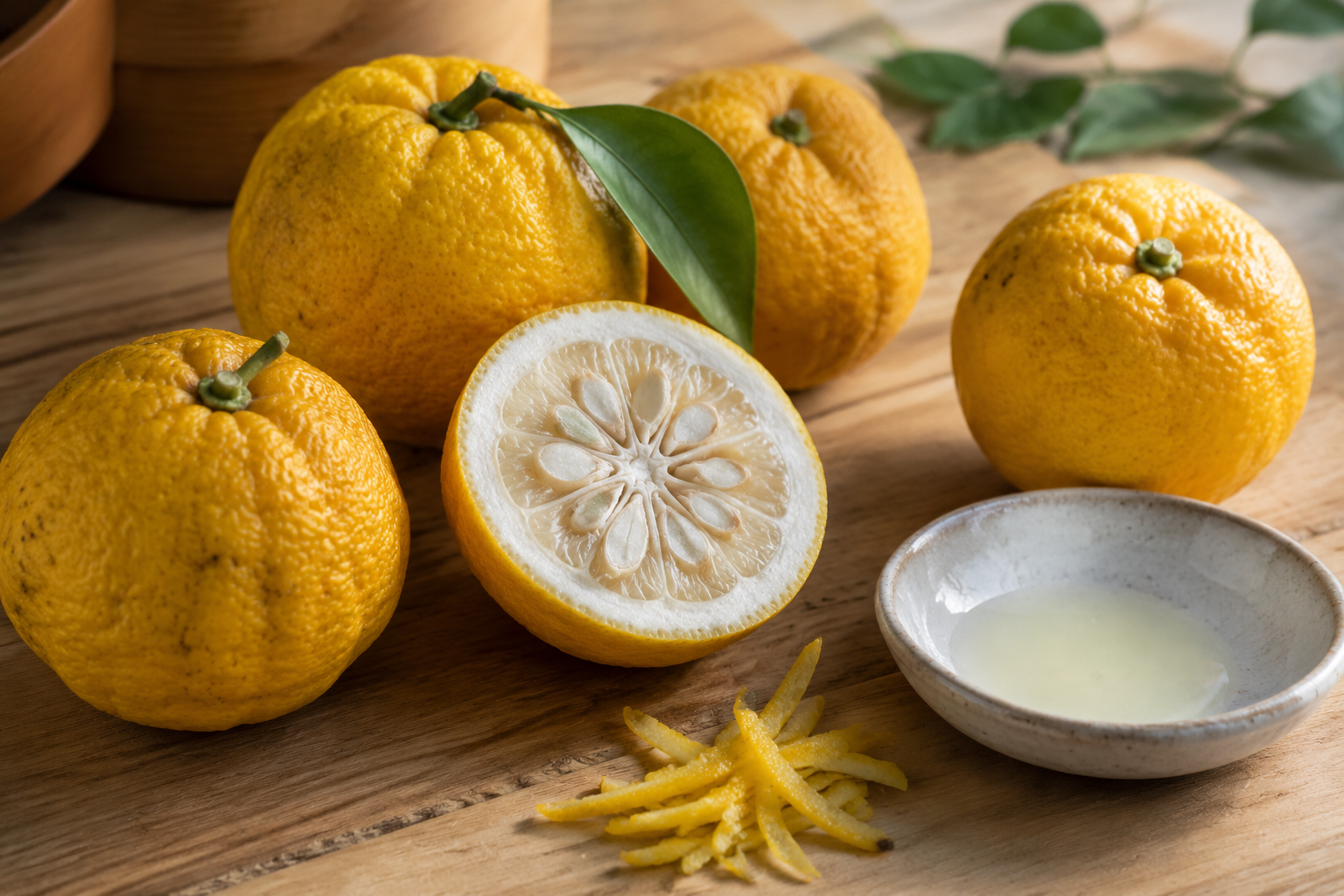
Yuzu is a citrus fruit with a thick, bumpy rind. Ripe fruit is usually yellow, while unripe green yuzu is harvested earlier for a greener, sharper aroma. Both forms are used as seasonings rather than ordinary table fruit.
Japan has cultivated yuzu for centuries, and it is particularly associated with western regions such as Kochi and Tokushima. The fruit appears in seasonal cooking, sauces, drinks, confectionery, and the winter tradition of floating whole fruit in a hot bath.
The peel, juice, and sometimes the hollowed rind can all be used. This makes yuzu unusually versatile even though each fruit yields less juice than a typical lemon.
Yuzu Is Fragrance Before It Is Sourness
Yuzu tastes intensely tart and aromatic, with a light bitterness in the peel. Its fragrance can suggest lemon, mandarin, and grapefruit, but it does not taste exactly like any one of them.
The juice provides clean acidity without much sweetness. The zest is more powerful: floral, slightly resinous, and distinctly citrusy. Because aroma is the main attraction, yuzu is often added near the end of cooking or used raw as a garnish.
Green yuzu generally feels sharper and more herbaceous. Ripe yellow yuzu has a rounder and sometimes more floral fragrance. The exact balance varies with variety, origin, maturity, and storage.
Yuzu vs. Lemon
Yuzu and lemon can serve similar culinary purposes, but they are not identical. Both add acidity and fresh citrus aroma, yet yuzu is usually more fragrant, more bitter in the peel, and less juicy.
| Citrus | General Character | Typical Use |
|---|---|---|
| Yuzu | Floral, tart, slightly bitter, and highly aromatic | Garnishes, ponzu, soups, sauces, sweets, and drinks |
| Lemon | Clean, bright, familiar acidity with more juice | General seasoning, baking, drinks, and dressings |
Lemon is the most practical substitute when fresh yuzu is unavailable, but the aroma will be simpler. A combination of lemon with a little mandarin or grapefruit zest can create a more layered citrus effect, although it still will not reproduce yuzu exactly.
Yuzu vs. Sudachi and Kabosu
Yuzu is only one of several aromatic citrus fruits used in Japan. Sudachi is small and usually green, with a focused sharpness often paired with grilled fish, mushrooms, and clear soups. Kabosu is larger and known for refreshing acidity with a gentler impression.
All three can appear in ponzu, but the finished aroma changes with the fruit or blend. Packaging may list yuzu, sudachi, kabosu, lemon, or several juices together.
How Yuzu Is Used in Japanese Cooking
Clear Soups and Chawanmushi
A fine strip of yuzu peel can be placed in a clear soup or on chawanmushi just before serving. The goal is not to make the dish sour. Instead, the warm steam carries the fragrance above the delicate flavor of the Japanese dashi.
Only the colored outer zest is normally used because the white pith can taste strongly bitter. A small piece is usually enough.
Grilled Fish, Seafood, and Vegetables
Fresh yuzu juice can be squeezed over grilled fish, shellfish, mushrooms, tofu, or vegetables. It provides the refreshing effect of lemon while giving the dish a more distinctly Japanese aroma.
Finely grated peel can also be used as a finishing garnish. Add it after cooking so the fragrance is not lost through prolonged heat.
Ponzu and Dressings
Yuzu juice is one of the classic citrus ingredients for ponzu. When combined with Japanese soy sauce, vinegar, and sometimes kombu or bonito stock, it creates the familiar brown dipping sauce commonly called ponzu shoyu.
Yuzu also works in salad dressings and marinades. It can provide the main acidity or be blended with rice vinegar for a steadier, less aromatic sourness.
Yuzu Kosho
Yuzu kosho is a concentrated condiment made from yuzu peel, chili peppers, and salt. Despite the English name “yuzu pepper,” the heat comes from chili rather than black pepper.
A small amount can season hot pot, grilled meat, chicken, sashimi, noodles, dumplings, or dipping sauces. Green yuzu kosho often tastes fresh and sharply herbal, while red versions may have a rounder chili character.
Sweets, Preserves, and Drinks
Yuzu is used in marmalade, candied peel, jelly, sorbet, cakes, chocolates, and wagashi. Its bitterness helps prevent sweet preparations from tasting flat.
The juice and peel also flavor tea, soda, cocktails, liqueurs, and warm honey drinks. Bottled juice and frozen zest make the flavor available outside the short fresh-fruit season.
How to Choose Yuzu Products
Choose the form according to how you plan to use it:
- Fresh yuzu: Best when both zest and juice are needed.
- Bottled yuzu juice: Convenient for ponzu, dressings, drinks, and sauces.
- Frozen or dried zest: Useful for soups, noodles, sweets, and garnishes.
- Yuzu kosho: A salty, spicy condiment rather than a substitute for plain juice.
- Yuzu extract or flavoring: Check the label because intensity and ingredients vary.
When buying bottled juice, read whether it is pure yuzu juice or a blended and seasoned product. Added salt, sweeteners, vinegar, or other citrus juices can change how it behaves in a recipe.
How to Store Yuzu
Fresh yuzu should be kept cool and protected from drying. Refrigerate it in a bag or wrapped container and follow the seller’s guidance. Use the zest while the fruit still smells fresh and the peel remains firm.
Cut fruit can be tightly wrapped and refrigerated for short-term use. Juice and grated zest can also be frozen in small portions. Bottled juice, preserves, and condiments should be stored according to their labels, especially after opening.
Can you eat yuzu raw?
Yuzu is edible, but it is rarely eaten like an orange because it is very tart, seedy, and relatively dry. The juice and aromatic outer peel are the parts most commonly used.
Is yuzu the same as lemon?
No. Both are citrus fruits, but yuzu has a more floral, complex aroma, a slightly bitter peel, and less juice. Lemon can substitute for acidity but does not produce the same fragrance.
Is yuzu spicy?
Yuzu itself is not spicy. Yuzu kosho is spicy because it combines yuzu peel with chili peppers and salt.
Can bottled yuzu juice replace fresh yuzu?
It can replace the juice in sauces, dressings, and drinks. It cannot fully replace fresh zest, which carries much of the fruit’s distinctive aroma. Check whether the bottled product contains salt, sugar, or other juices.
What can I use instead of yuzu?
Lemon is the easiest substitute. For a more complex aroma, combine lemon juice with a little mandarin or grapefruit zest. Use substitutions sparingly and adjust after tasting.
Use the Peel, Juice, and Timing Differently
Yuzu is valued less as a fruit to eat and more as an aromatic seasoning. Its tart juice adds freshness, while its fragrant peel brings a floral citrus note that ordinary lemon does not fully reproduce.
For a first purchase, bottled pure yuzu juice is practical for sauces and drinks, while fresh or frozen zest is better when aroma matters most. Yuzu kosho is a separate, spicy condiment and should be chosen when salt and chili are part of the intended flavor.
If this guide gave you a clearer understanding of a Japanese ingredient, you can support Japan Food Compass on Ko-fi and help us continue sharing carefully researched guides and original kitchen stories.