In Japan, the arrival of matsutake can make an autumn menu feel like a seasonal announcement. These brown-and-cream mushrooms may appear grilled, hidden beneath a light tempura coating, set into steamed egg custard, or served in a small clay teapot. In every case, the main attraction is not richness or volume. It is aroma.
That emphasis can surprise travelers who know mushrooms mainly as an everyday ingredient. Matsutake in Japan occupies a different cultural position: it is a brief pleasure associated with fall, and fine domestic specimens can be exceptionally expensive. Understanding why—and knowing how each preparation handles the fragrance—makes the experience far more rewarding.
An Autumn Aroma Before the First Bite
Matsutake has been connected with autumn in Japanese writing for centuries. Japan’s Ministry of Agriculture, Forestry and Fisheries notes that a poem in the eighth-century Man’yōshū refers to the scent of mushrooms in autumn. The modern experience is still led by the nose. A server may lift a lid at the table, or a cook may place a mushroom over hot charcoal so that its fragrance arrives before the first bite.
The Japanese name literally combines matsu, pine, and take, mushroom. Matsutake lives in a symbiotic relationship with the roots of certain trees, including pines. It is not simply a crop that growers can produce on a predictable indoor schedule. That relationship between forest, season, and aroma helps explain both its mystique and its scarcity.
Why Domestic Matsutake Commands Such High Prices
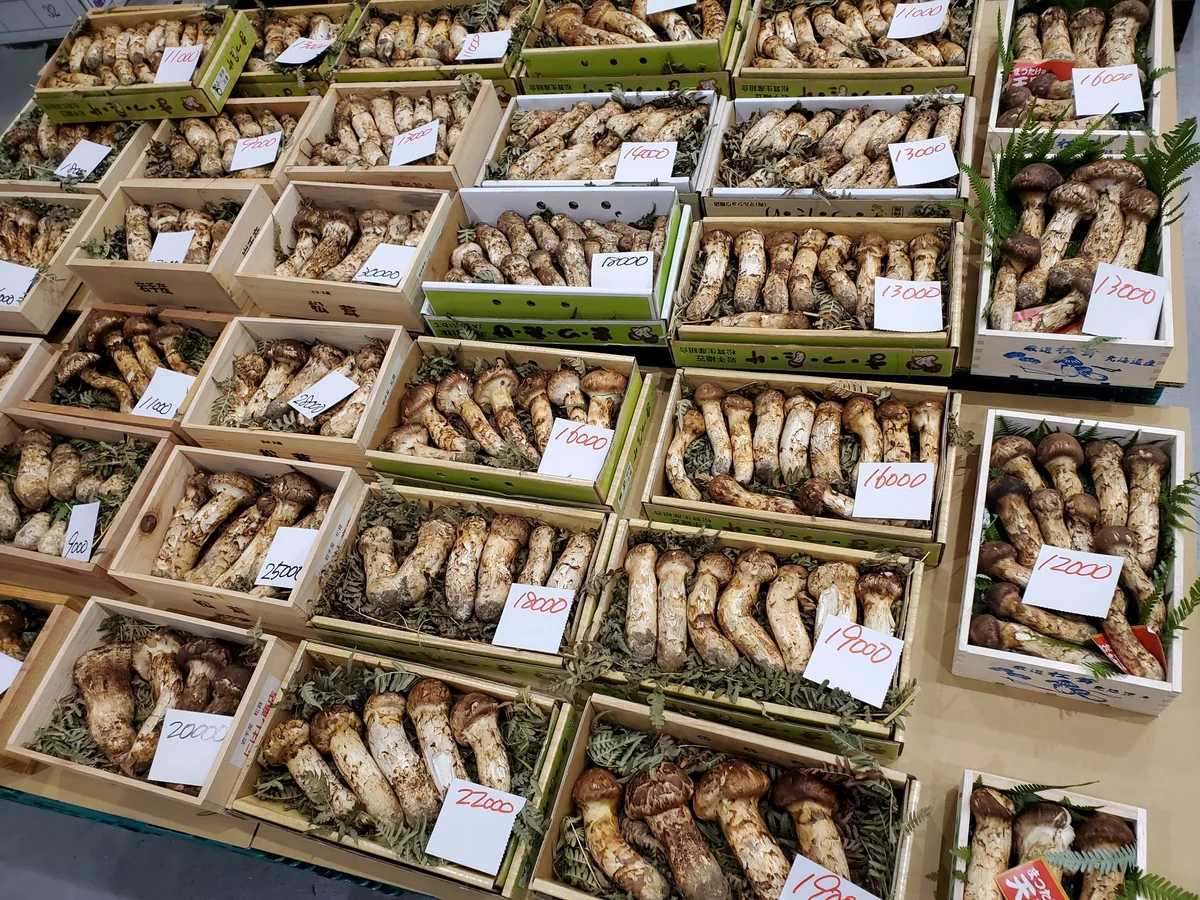
The price of Japanese matsutake begins with a difficult biological fact. The Forestry Agency explains that practical artificial cultivation has not been established; mushrooms that emerge naturally are collected and shipped. Forest conditions, weather, timing, and the skill required to find and handle the mushrooms all affect supply. A short and variable harvest meets strong seasonal demand.
Appearance also matters in the gift and restaurant markets. Size, freshness, shape, and whether the cap remains relatively closed can influence grading. Origin matters too. A market may sell both domestic and imported matsutake, and the handwritten amounts in a photograph apply only to those particular boxes at that moment. They should not be read as a nationwide price list—or as proof that every displayed mushroom was grown in Japan.
Imported matsutake can make the ingredient accessible at different price points. They should not be treated as a single inferior category: species or close relatives, growing environments, transit, freshness, and handling can all affect the final character. If origin is important to you, look for kokusan (domestically produced) or ask the restaurant rather than assuming from price alone.
What Matsutake Smells and Tastes Like
Matsutake is famous for a distinctive fragrance that people describe in different ways: woodsy, spicy, pine-like, or slightly sweet. Japanese agricultural guidance identifies matsutakeol and methyl cinnamate among its characteristic aromatic components. No short English comparison captures the experience perfectly, and sensitivity to the aroma varies from person to person.
The flesh is firm and pleasantly resistant rather than soft. That texture is important because it allows thick pieces to survive grilling, steaming, or frying without disappearing into the dish. Seasoning is usually controlled so that soy sauce, oil, citrus, egg, and dashi support the mushroom instead of covering it.
Four Preparations, Four Ways to Control the Aroma
Su-yaki: Direct Heat and the Mushroom Itself
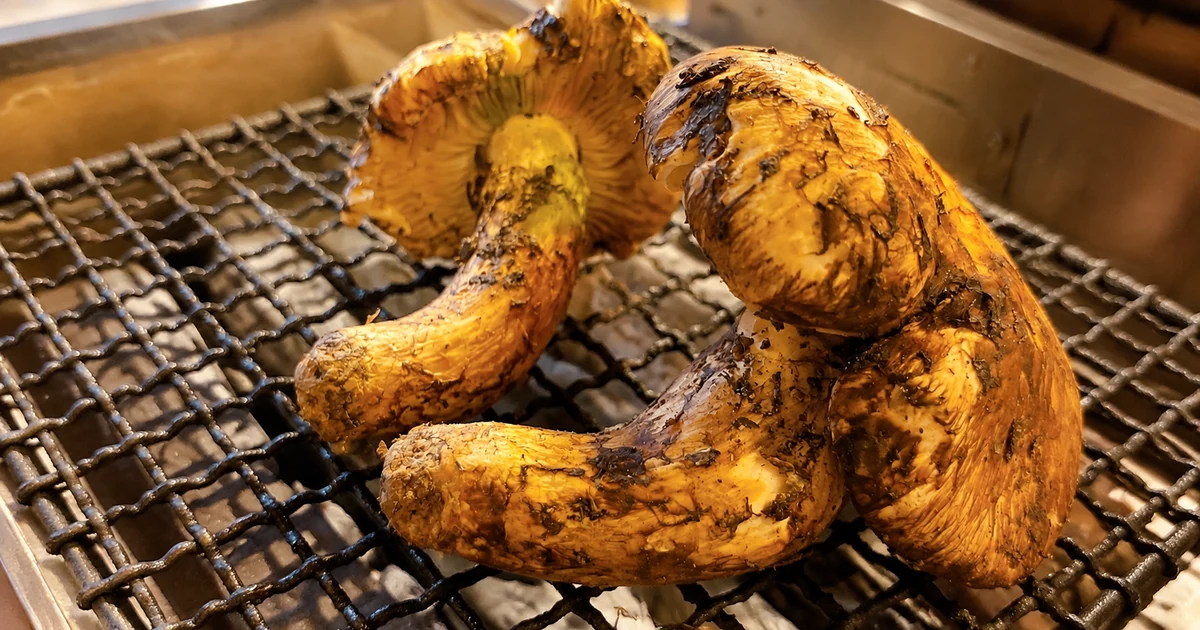
Su-yaki, or very simply grilled matsutake, offers the clearest introduction. The mushroom may be cooked whole or split into substantial pieces with minimal seasoning. Heat concentrates the smell, lightly browns the surface, and leaves the center juicy and firm. A squeeze of sudachi or another tart Japanese citrus can sharpen the finish without masking the forest-like fragrance.
This is the preparation for diners who want to judge the ingredient directly. Because the treatment is so restrained, the result depends heavily on the mushroom’s condition and the cook’s timing. It may appear as part of a seasonal course rather than under the exact English label “su-yaki.”
Tempura: Aroma Inside a Light Coating
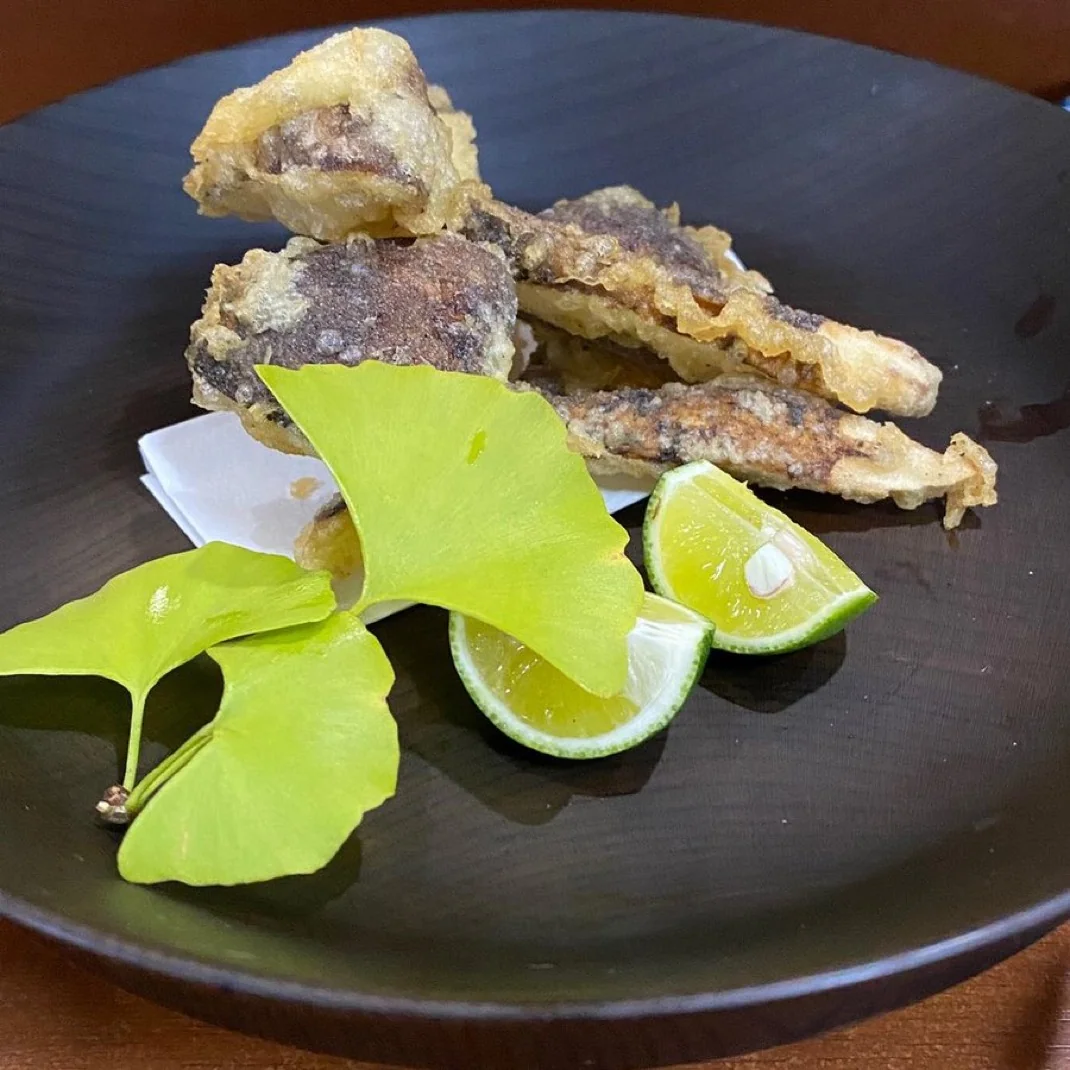
In tempura, a thin batter creates contrast: crisp outside, meaty inside. The coating briefly traps steam and fragrance, which become more noticeable when the piece is bitten. Salt is often a useful accompaniment because it seasons without adding much liquid; citrus can provide brightness. Good matsutake tempura should still taste like the mushroom, not merely like fried batter.
Chawanmushi: Fragrance in Warm Egg and Dashi
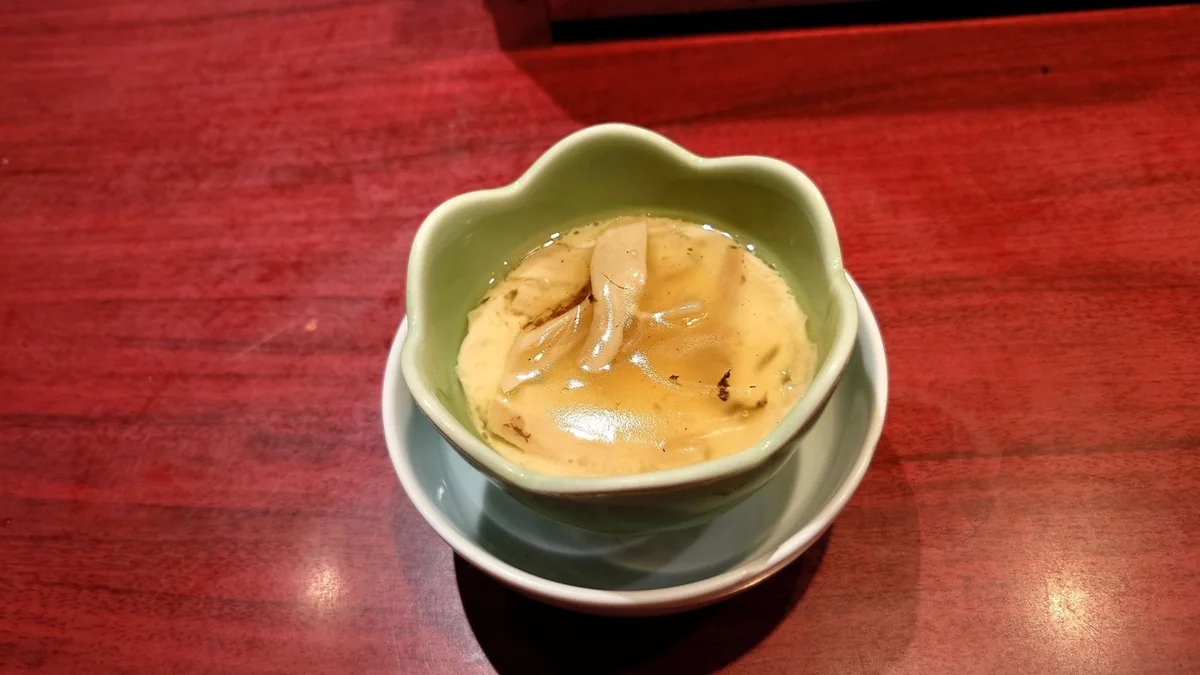
Chawanmushi is a savory steamed egg custard, not a dessert. Its warm, delicate mixture of egg and dashi gives matsutake a quiet background. Slices on or within the custard perfume each spoonful while retaining a firmer bite than the egg. Because chawanmushi may contain chicken, seafood, ginkgo nuts, or other seasonal ingredients, travelers with allergies or dietary restrictions should ask about the full contents.
Dobin Mushi: Aroma Released at the Table
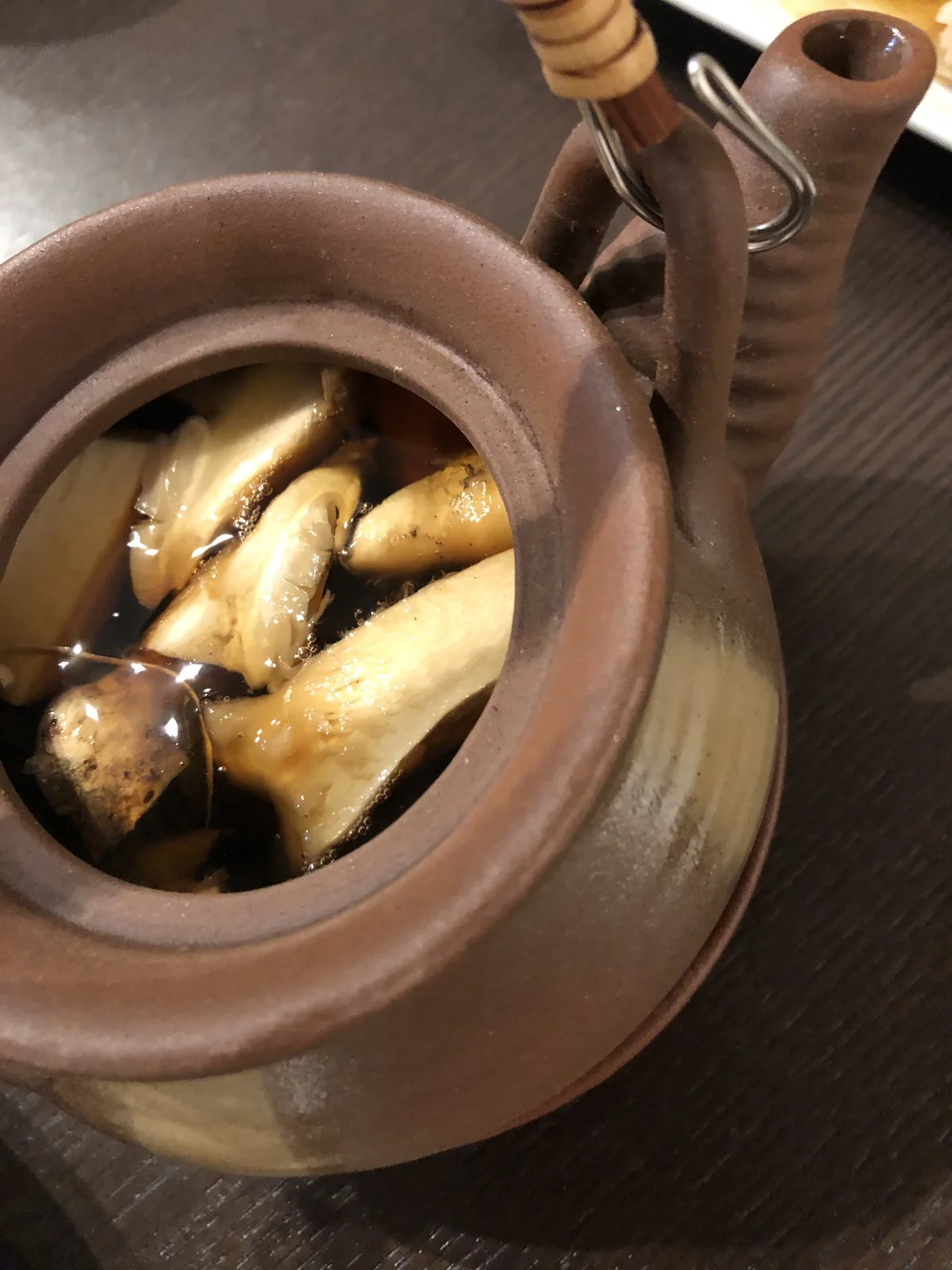
Dobin mushi may be the most theatrical expression of matsutake. The mushroom and other ingredients are steamed in clear broth inside a lidded earthenware teapot. The narrow opening and lid hold the fragrance until service. Diners usually pour broth into the small cup first, taste it, then eat the ingredients with chopsticks. Sudachi may be squeezed into the cup or pot gradually, according to taste.
The broth is central, not a side effect. It combines the aroma of matsutake with dashi and the flavors of whatever else the kitchen has included. Those additions vary, so do not assume the dish is vegetarian or free of shellfish. In a multi-course kaiseki meal, opening the vessel can be one of the clearest sensory signals that autumn has arrived.
What Travelers Should Check
Matsutake season is limited and varies with place and weather, so availability cannot be guaranteed simply because the calendar says autumn. Seasonal restaurants, ryokan, department-store food halls, and produce markets are useful places to look. A menu may list matsutake gohan (rice cooked with matsutake), dobin mushi, tenpura, or yakimatsutake.
Before ordering a high-priced dish, check whether matsutake is the main ingredient or one element of a course, whether the stated price is per serving, and whether the mushroom is domestic or imported. “Market price” means the amount may change. At a restaurant, asking about the preparation is often more useful than chasing the largest specimen: a modest portion in well-made broth can communicate the aroma beautifully.
Matsutake Is Valued for Restraint
The appeal of matsutake in Japan is easiest to understand as a meeting of season, scarcity, and cooking restraint. Grilling makes the mushroom direct and smoky. Tempura encloses it for a crisp moment. Chawanmushi softens its presence within warm egg and dashi. Dobin mushi turns the lifting of a lid into part of the meal.
You do not need to buy the most expensive box to appreciate the culture around it. Notice how the restaurant manages heat, steam, broth, and citrus—and how quickly the aroma changes after the dish is opened. Matsutake is not only something Japan eats in autumn. It is one of the ways autumn is recognized at the table.