Miso is a fermented seasoning, but the most useful way to understand it is as a cooking decision: which miso fits the dish in front of you? Color names such as white and red are convenient, yet they do not tell the whole story. Grain, fermentation time, salt, region, and the producer’s method all shape the result.
Instead of moving through the usual definition–types–uses template, this guide starts at the kitchen. It shows how to choose a paste, when to add it, and how it connects with dashi, rice, vegetables, fish, and meat.
Choose Miso by the Dish, Not by Color Alone
| Cooking goal | A useful starting point | Why it works |
|---|---|---|
| Light soup with delicate vegetables | Sweet or mild kome miso | Gentle aroma and rounded sweetness |
| Everyday miso soup | Medium-bodied kome or awase miso | Balanced salt, aroma, and versatility |
| Rich stew, braise, or glaze | Red or longer-aged miso | Deeper fermentation character stands up to heat |
| Earthy vegetable dishes | Mugi miso | Barley aroma complements roots and rustic flavors |
| Strong regional dishes | Mame miso | Dense soybean flavor and lasting finish |
This table is a starting point, not a rigid rule. Producers use overlapping color terms, and two “red miso” products can taste very different. Taste a small amount diluted in warm water before committing it to a full pot.
First Read the Grain: Kome, Mugi, or Mame
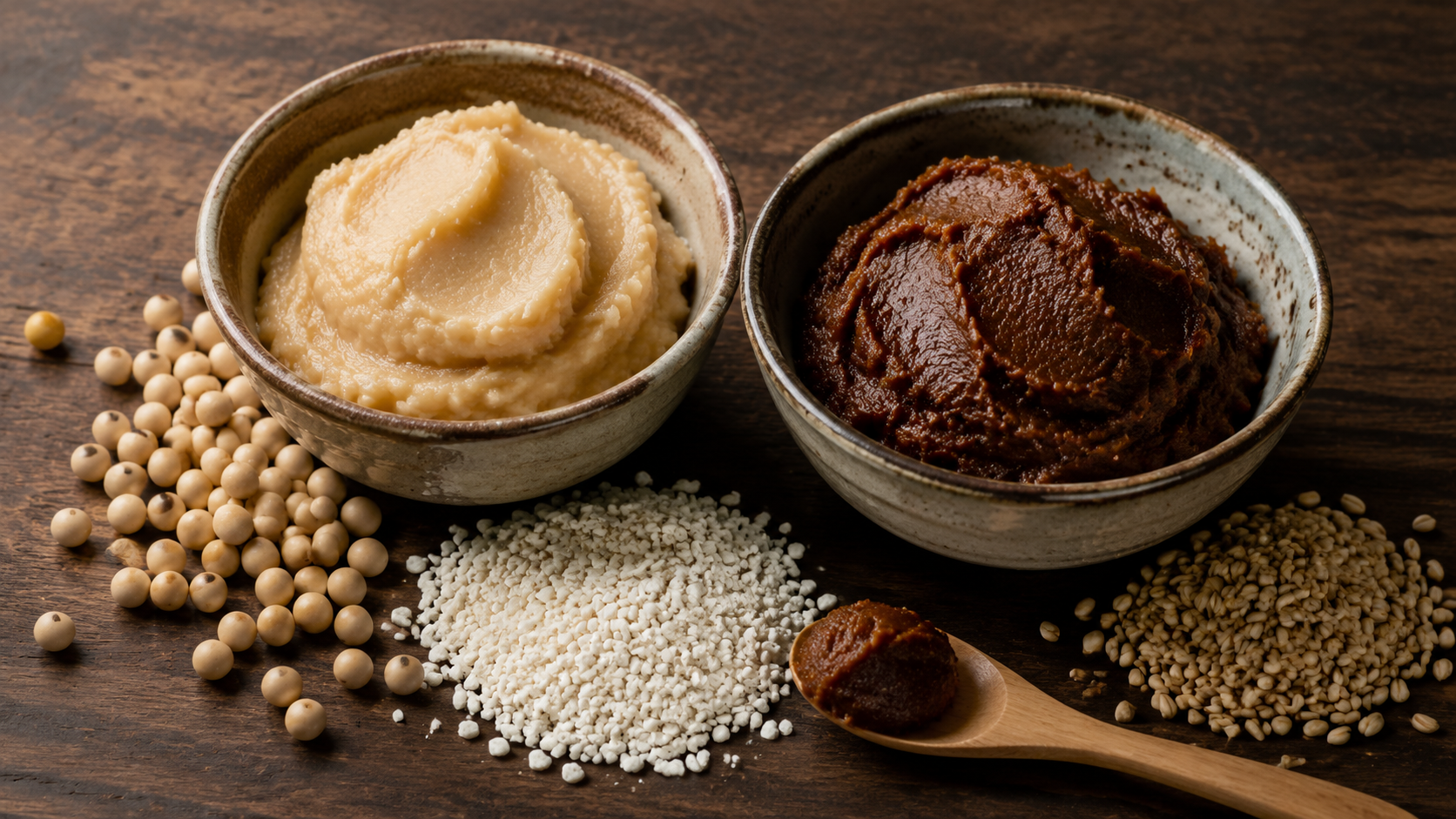
Miso is generally made by fermenting soybeans with salt and koji. The ingredient used for the koji gives the major families their names.
Kome miso: rice koji
Kome miso uses rice koji and accounts for a large share of miso found across Japan. It ranges from sweet and pale to salty, dark, and long-aged, so the word kome identifies the grain rather than one flavor.
Mugi miso: barley koji
Mugi miso uses barley koji and is associated especially with parts of Kyushu, Shikoku, and western Japan. It can have a warm, grain-like aroma and works naturally with vegetables and hearty soups.
Mame miso: soybean koji
Mame miso uses soybean koji and is closely associated with the Tokai region. It is often dark, concentrated, and persistent in flavor. Hatcho miso is a well-known style within this broader family, not a synonym for every dark miso.
Awase miso: blending as a tool
Awase means blended. A producer or cook may combine miso types to balance sweetness, salt, aroma, and body. Blending is not a lower-grade shortcut; it is one of the easiest ways to tune miso to a particular soup or season.
Blending Miso: A Kitchen Adjustment, Not a Fixed Formula
In a professional kitchen, using two misos is common because a blend can separate roles: one paste supplies body and fermented depth, while another provides brighter aroma, sweetness, or salt. But “chefs never use one miso alone” is too absolute. A distinctive regional miso may be served by itself when that character is exactly the point.
A ratio such as two parts soybean miso to one part pale Shinshu-style miso can be a useful starting experiment, not a universal golden rule. I first dilute a small spoonful of each paste in warm dashi and taste the mixture at serving strength. Judging concentrated paste directly can exaggerate salt and hide the aroma that appears after dilution.
- Need more depth? Add a smaller portion of long-aged red or soybean miso.
- Need a lighter finish? Increase a fragrant pale rice miso or a mellow barley miso.
- Serving oily fish or pork? Choose enough fermented intensity to stand beside the fat, then adjust the dashi before simply adding more salt.
- Serving delicate tofu, clams, or greens? Keep the blend restrained so the ingredient and stock remain legible.
Then Judge Age, Salt, Color, and Aroma
Longer fermentation often deepens color and produces a more complex, robust aroma, but time is only one variable. Temperature, koji proportion, salt level, soybean treatment, and storage also matter. Pale miso is often mild or sweet, while red miso is often stronger, yet neither statement is universal.
Labels such as shiro (white), aka (red), and shinshu describe useful style cues. They do not replace the ingredient list or tasting. Reduced-sodium products also need to be evaluated as complete seasonings rather than compared by color alone.
How Koji Turns Ingredients Into Miso Flavor
Koji is grain or soybeans cultivated with Aspergillus oryzae. Its enzymes help break proteins and starches into smaller compounds during fermentation. That process contributes sweetness, savoriness, aroma, and the ability of miso to make a small amount of seasoning feel substantial.
Our guide to koji and Japanese fermentation explains the culture’s role beyond miso. The savory depth it develops also connects with umami, which is present in many fermented and dashi-based foods.
Two Kitchen Mistakes That Teach More Than a Recipe
The Miso Soup I Let Boil
One of the first mistakes many cooks make is dissolving the miso, turning away, and returning to a pot at a rolling boil. I learned the lesson in the kitchen: the soup had reduced, the balance felt blunt, and the fresh fermented aroma that should have risen from the bowl had faded. The instruction I remembered was niebana—watch for the moment the edge of the pot begins to move and serve while the aroma is opening.
Boiling does not magically destroy every flavor molecule, and miso soup does not become unsafe because it simmered. The practical problem is prolonged, aggressive heat: volatile aromas escape, water evaporates, salt concentration rises, and delicate ingredients continue cooking. A brief return to heat after dissolving miso is normal; leaving it unattended is the mistake.
The Saikyo-Yaki That Blackened Before the Fish Cooked
Sweet white miso contains components that brown quickly. If a thick coating remains on a piece of sawara or black cod, the outside can turn bitter and black before heat reaches the center. The solution is not to remove every trace of flavor, but to wipe the marinade carefully, use controlled indirect or moderate heat, and watch the surface continuously. A thin residue develops an amber glaze; a heavy clump becomes a burnt shell.
Skin-side-first is useful in some setups, but grill type, fish thickness, and distance from the heat all change the sequence. “Low heat only” is not a universal rule. The chef moves the fish, protects the sweet surface, and finishes cooking safely rather than following a slogan.
When Miso Enters the Pot Changes the Result
For miso soup, dissolve the paste in a ladle with some hot broth, then return it to the pot. Avoid prolonged aggressive boiling after adding miso if you want to preserve its freshest aroma. A brief return to heat is common; the point is controlled heating rather than treating boiling as an absolute taboo.
In braises, glazes, and marinades, earlier addition may be desirable because the seasoning needs time to penetrate, reduce, or caramelize. Miso contains sugars and proteins that can brown quickly, so watch direct heat carefully. For grilled food, wipe off excess marinade to reduce scorching.
Build Flavor Around Dashi, Rice, and Seasonal Ingredients
Miso does not replace stock. In a classic soup, it seasons dashi, while the dashi supplies its own aroma and umami. Kombu, katsuobushi, niboshi, or shiitake each changes which miso feels balanced.
A bowl of soup also belongs to a meal. Mild miso can support delicate tofu and greens; stronger miso can stand beside oily fish, root vegetables, or meat. With Japanese rice, salty soup and plain grain balance one another rather than competing for intensity.
This relationship is part of the wider structure of washoku, where seasonality, multiple small dishes, and contrast often matter more than one dominant sauce.
How a Cook Matches Miso to the Dish
| Dish | Useful direction | Kitchen reasoning |
|---|---|---|
| Delicate miso soup | Pale or medium rice miso; optionally blended with a more aromatic paste | Keep the dashi and tender ingredients clear rather than chasing one fixed Sendai-to-Shinshu ratio |
| Arajiru or tonjiru | Barley, red, or blended miso with enough body | Meet fish bones, pork fat, and root vegetables without making the broth merely salty |
| Saikyo-yaki | Sweet Kyoto-style white miso with sake or mirin | Season and perfume the fish while controlling surface sugar during grilling |
| Nameko or shijimi soup | Red or soybean miso, sometimes softened with rice miso | Earthy mushrooms and shellfish can carry a deeper fermented finish |
| Sumiso dressing | Pale miso with vinegar, sugar, and mustard as needed | Acidity changes perceived salt and sweetness; adjust after the sauce rests |
A few drops of vinegar can brighten a dark miso soup or sauce, but it is an optional finishing adjustment—not a standard requirement for every bowl of red dashi. Add it only after tasting the complete stock, paste, and ingredients.
Beyond Soup: Four High-Value Uses
- Glaze: combine miso with mirin, sake, or sugar for fish, tofu, eggplant, or meat.
- Dressing: loosen miso with vinegar, citrus, sesame, or oil for vegetables.
- Marinade: use a thin coating and control time because salty miso can cure the surface.
- Finishing seasoning: stir a small amount into sauces or stews to add body without making the dish taste explicitly like miso soup.
When using mirin in a glaze, remember that true hon mirin contains alcohol. The distinctions in our guide to hon mirin and mirin-style seasonings affect sweetness, labeling, and cooking behavior.
Read Labels for Allergens and Dietary Needs
Soybeans are a major allergen in several labeling systems, so miso is not suitable for someone with a soy allergy. Mugi miso contains barley and may be unsuitable for people avoiding gluten. Cross-contact and added ingredients vary by manufacturer.
Plain miso is often compatible with vegetarian or vegan diets, but a prepared “miso soup base” may contain fish-derived dashi. Check the complete ingredient list rather than relying on the word miso.
Storage: Protect Aroma After Opening
Follow the package directions and refrigerate after opening unless the manufacturer says otherwise. Press plastic wrap against the exposed surface or use a tightly closed container to reduce drying and oxidation, and always use a clean utensil. Miso may darken through reactions between sugars and amino compounds; this does not automatically mean spoilage, but the flavor can become less fresh.
Freezer storage is a practical option for many commercial misos. Because of the salt and other dissolved components, miso often remains scoopable or only slightly firmer in a household freezer. Cold storage greatly slows fermentation, enzymatic activity, browning, and aroma loss, but “stops everything completely” is an unnecessarily absolute description. Keep the surface protected from air and freezer odors, and follow the label for the specific product.
Unexpected mold, a clearly abnormal odor, damaged packaging, or contamination from a dirty utensil requires caution. Natural darkening or a layer of flavorful tamari liquid can occur without indicating that the miso is immediately unsafe; when uncertain, follow the producer’s guidance rather than tasting a questionable product.
The Kitchen Shortcut to Remember
Choose miso in three steps: identify the grain, judge the intensity, and match it to the dish. Use mild miso when you want ingredients to remain delicate, stronger miso when the dish must stand up to fat or long cooking, and awase when one paste alone feels incomplete. That method is more dependable than assuming every white miso is sweet or every red miso is interchangeable.
If this guide gave you a clearer understanding of a Japanese ingredient, you can support Japan Food Compass on Ko-fi and help us continue sharing carefully researched guides and original kitchen stories.