Koji is rice, barley, or soybeans cultivated with a food-safe mold, most commonly Aspergillus oryzae. It is one of the foundations of Japanese fermentation and helps create miso, soy sauce, sake, mirin, amazake, and many other foods.
Koji is sometimes described as a fermentation starter, but it is more precise to think of it as an enzyme-rich ingredient. The mold growing on the grain or soybeans produces enzymes that break large molecules into smaller ones. Starches become sugars, while proteins release amino acids that contribute sweetness, aroma, and savory depth.
This guide explains what koji is, how it is made, how rice, barley, and soybean koji differ, and why it plays such an important role in Japanese cooking.
Koji: The Basic Meaning
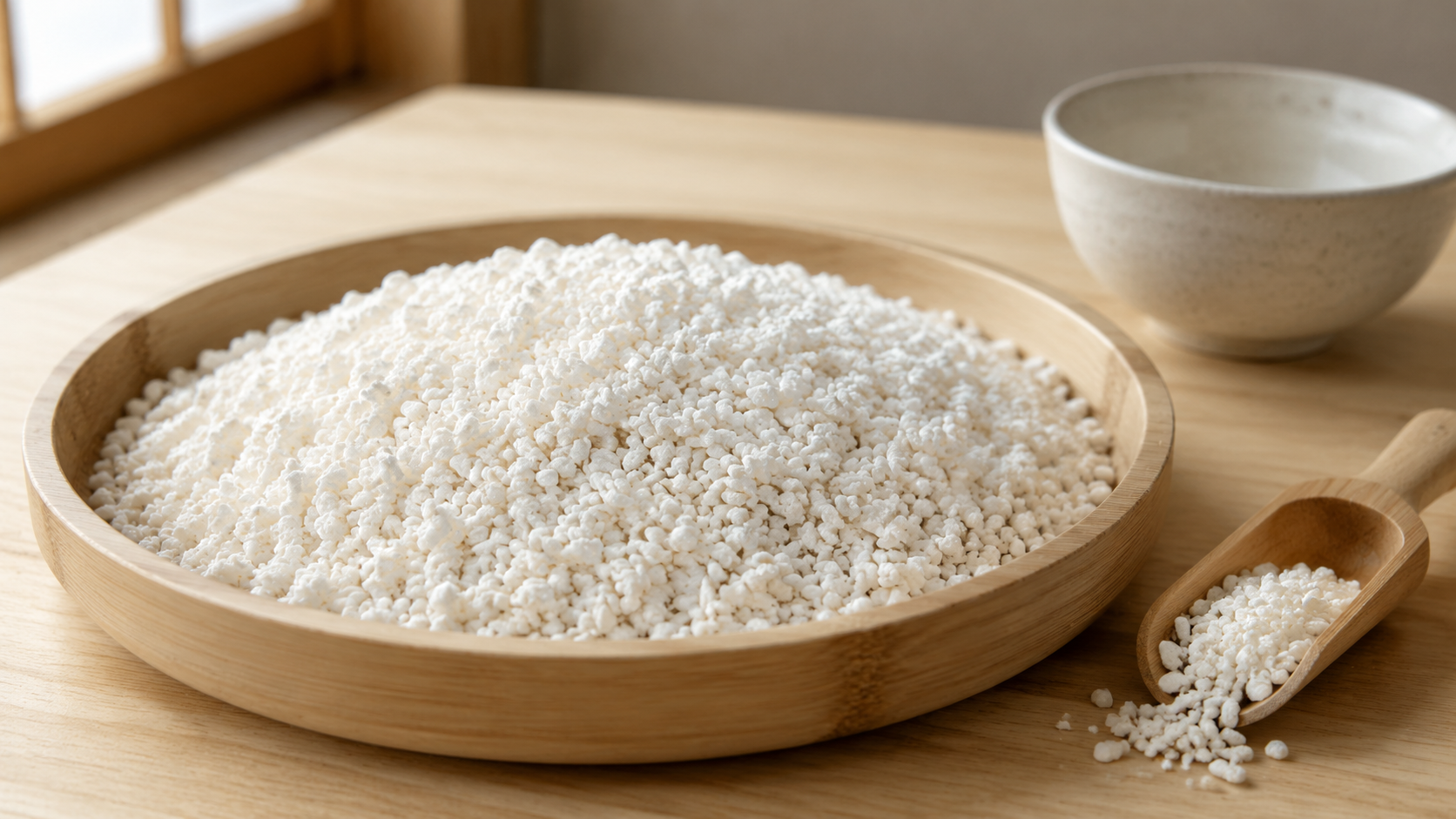
The word koji refers to a prepared ingredient on which koji mold has been deliberately cultivated. The pale grains commonly shown in photographs are usually rice koji, but koji can also be made with barley or soybeans.
This distinction is useful: koji mold is the microorganism, while koji is the finished grain or soybean culture used in food production. The spores used to begin cultivation are called tane-koji, meaning seed koji.
Koji is not itself miso, soy sauce, or sake. It supplies enzymes and other conditions that allow those foods to develop. Different microorganisms may then participate in the longer fermentation. In sake brewing, for example, koji releases sugars from rice starch so yeast can convert those sugars into alcohol.
What Does Koji Taste Like?
Plain rice koji can smell gently sweet, warm, and grain-like. Its flavor is usually mild, with subtle sweetness and a faint fermented or nutty character. The grains may be soft or slightly firm depending on whether the koji is fresh, dried, or used in another preparation.
Koji does not have one fixed taste. The substrate, mold strain, cultivation, storage, and later fermentation all influence the result. Barley koji can contribute a more noticeable cereal aroma, while soybean koji supports the concentrated character of certain dark miso styles.
The powerful flavors associated with mature miso or Japanese soy sauce do not come from koji alone. Salt, soybeans, wheat, water, fermentation time, temperature, yeast, bacteria, and production methods all help shape the finished food.
How Does Koji Work?
Koji mold grows across a cooked substrate and produces enzymes. Two groups are especially important:
- Amylases break starch into simpler sugars, contributing sweetness and giving yeast fermentable material.
- Proteases break proteins into peptides and amino acids, helping create savoriness and complexity.
These reactions help explain why koji is connected with both sweetness and umami. Rice-koji amazake can taste sweet even without added sugar because enzymes act on the rice starch. In miso and soy sauce, the transformation of soybean proteins helps build amino-acid-rich flavor over time.
Koji should not be confused with yeast. Koji is a mold culture valued largely for its enzymes; yeast is a different microorganism that can consume sugars and produce alcohol and carbon dioxide. Traditional fermentations may use both, but they perform different jobs.
How Is Koji Made?
Details vary by producer and intended use, but the basic process follows several stages:
- Rice, barley, or soybeans are washed, soaked when appropriate, and cooked.
- The prepared substrate is cooled to a suitable temperature.
- Food-grade koji spores are distributed over it.
- Temperature, humidity, airflow, and the thickness of the batch are carefully managed as the mold grows.
- The koji is used fresh, dried for storage, or transferred into the next stage of fermentation.
Koji cultivation demands control. Excess heat, uneven moisture, or contamination can damage the batch. Professional producers use established strains and hygienic methods rather than relying on mold that appears accidentally on food.
The appearance also varies. Rice koji is often white or cream-colored, with individual grains lightly covered and bound by fine growth. Koji made for some styles of shochu may use different koji molds and appear darker. The familiar white rice version is therefore only one part of a broader tradition.
The Main Types of Koji
Kome Koji: Rice Koji
Kome koji is made by cultivating koji mold on steamed rice. It is widely used for rice miso, sake, mirin, amazake, and fermented seasonings such as shio koji.
It is the most practical type for many home cooks because fresh and dried rice koji are sold for making amazake, miso, or simple marinades. However, “rice koji” does not mean that the final product contains only rice; ordinary rice miso, for example, normally combines rice koji with soybeans and salt.
Mugi Koji: Barley Koji
Mugi koji is cultivated on barley. It is associated especially with barley miso and with some shochu production. It can give fermented foods a mellow grain aroma and a character distinct from rice-based koji.
Because barley contains gluten, barley koji is not suitable for someone who must avoid gluten. The complete ingredient list and allergen information remain more reliable than a general product name.
Mame Koji: Soybean Koji
Mame koji is made on soybeans and is important in soybean miso traditions associated with central Japan. It supports dense, mature flavors and is used differently from the rice or barley koji added to cooked soybeans in other miso styles.
The three categories describe the material on which the mold is grown. They do not form a simple scale from mild to strong; the final taste depends on the full recipe and maturation process.
How Is Koji Used in Japanese Food?
Koji appears in many familiar Japanese ingredients and drinks:
- Miso: koji, soybeans, and salt ferment and mature into a thick seasoning paste.
- Soy sauce: soybean-and-wheat koji is mixed with brine to form moromi, which ferments before pressing.
- Sake: rice koji converts rice starch into sugars that yeast can ferment.
- Mirin: koji helps transform rice in the production of this sweet cooking seasoning.
- Amazake: rice koji enzymes create natural sweetness from cooked rice.
- Shio koji: rice koji is combined with salt and water to make a versatile fermented seasoning.
Koji is therefore not a single condiment with one use. It is part of a production system behind many ingredients that give washoku its balance of sweetness, aroma, salinity, acidity, and savory depth.
What Are Shio Koji and Shoyu Koji?
Shio koji is a prepared seasoning made from koji, salt, and water. It can be used in marinades, dressings, soups, and vegetable dishes. Its enzymes may alter the texture of protein-rich ingredients, while its salt and mild sweetness season the food.
Shoyu koji is made by combining koji with soy sauce. It has a thicker texture and a more concentrated fermented character than plain soy sauce, and it may be used as a table condiment or cooking seasoning.
In this section, shoyu koji refers to the prepared seasoning made with rice koji and soy sauce. In soy sauce production, the term may also refer to soybean-and-wheat koji before it is mixed with brine.
These products are not interchangeable with plain dried rice koji. They already contain salt or soy sauce, so recipe quantities should be adjusted accordingly. Their sodium level and added ingredients also vary by brand.
How I Use Koji Seasonings Without Overpowering Food
I treat shio koji as a seasoning, not as a guaranteed shortcut to better flavor. Salt concentration and texture vary by product, so replacing salt spoon for spoon can make a dish unexpectedly salty. I begin with a modest amount, consider the other seasonings, and adjust only after tasting.
Marinating time also depends on the ingredient. A thick piece of meat and a delicate piece of fish should not automatically receive the same treatment. Leaving a soft ingredient in a koji seasoning for too long can alter its surface more than intended, so the product directions are a starting point rather than permission to ignore texture.
Koji-seasoned food can brown quickly over strong heat. I remove heavy excess from the surface and watch the pan or grill carefully instead of waiting for the usual cooking time. Refrigeration, clean utensils, and the manufacturer’s storage guidance remain essential; fermentation does not make unsafe handling acceptable.
How to Choose and Store Koji
For home use, first decide what you intend to make. Plain rice koji is appropriate for recipes that call for kome koji, while bottled shio koji is a ready-made seasoning. Fresh rice koji contains more moisture and usually has a shorter storage period; dried koji is convenient to keep and portion.
Check the package for the substrate, added salt, alcohol, sweeteners, and allergens. A product labeled “koji seasoning” may be a prepared blend rather than plain koji.
Storage instructions differ, so follow the manufacturer’s label. Fresh koji commonly requires refrigeration or freezing, while unopened dried koji may be shelf-stable. Keep it sealed from moisture and contamination, and discard it if the producer’s directions or appearance indicate spoilage.
Common Questions About Koji
Is koji mold safe to eat?
Koji used for food is produced with selected food-grade strains under controlled conditions and has a long history in Japanese fermentation. This does not mean that an unidentified mold growing on food is safe. Home fermentation should use proper koji starter or commercially prepared koji and a reliable method.
Is koji gluten-free?
Rice koji and soybean koji do not inherently require gluten-containing grain, but barley koji contains gluten. Prepared products may also include wheat, soy sauce, or encounter cross-contact. Anyone with a medical need to avoid gluten should check the complete label and certification.
Does koji contain alcohol?
Plain koji is not an alcoholic drink. It is used to make alcoholic products such as sake and mirin, but alcohol is produced during later fermentation. Prepared koji seasonings may contain alcohol or develop small amounts during processing, so check the label when this matters.
Can you eat rice koji by itself?
Food-grade rice koji is edible, but it is normally used as an ingredient rather than eaten as a bowl of grain. Its best-known roles are supplying enzymes for fermentation and forming the base of preparations such as amazake and shio koji.
What to Remember When Cooking with Koji
Koji is grain or soybeans cultivated with a food-safe mold, most commonly Aspergillus oryzae. Its enzymes release sugars and amino acids, helping build the sweetness, aroma, and savory complexity found throughout Japanese fermentation.
Rice, barley, and soybean koji serve different traditions, and koji is only one part of the finished food. Understanding that distinction makes it easier to see the connection among miso, soy sauce, sake, amazake, and many other staples of Japanese cuisine.
If this guide gave you a clearer understanding of a Japanese ingredient, you can support Japan Food Compass on Ko-fi and help us continue sharing carefully researched guides and original kitchen stories.
Sources for This Koji Guide
- Ministry of Agriculture, Forestry and Fisheries: Soy Sauce, Miso, and Other Seasonings
- Government of Japan: Traditional Knowledge and Skills of Sake-Making Using Koji Mold
- National Research Institute of Brewing: What Is Sake?
- UNESCO: Traditional Knowledge and Skills of Sake-Making with Koji Mold in Japan