Seasonal food traditions in Japan make more sense when ingredients, cooking methods, and symbols are kept separate. One photograph in this article shows kabocha prepared as tempura, suage, and a simmered dish. Another shows a Halloween wagashi made with kabocha. A third shows the cucumber horse and eggplant cow displayed during Obon.
These scenes share a visual link through vegetables, but they do not belong to one custom. Kabocha is an everyday ingredient before it becomes a Halloween motif. The Obon figures symbolize transport for ancestral spirits. The differences show how similar materials can carry distinct meanings.
Seasonal Food Traditions in Japan Follow Different Calendars
Season can mean harvest time, an annual observance, or a short-lived design at a confectionery counter. Obon is a summer period of remembrance, although its timing and customs vary by region. Halloween comes later and offers makers a recognizable autumn image. Neither occasion determines when kabocha dishes are served.
| Example | Role of the vegetable | Key distinction |
|---|---|---|
| Kabocha tempura, suage, and simmered kabocha | An ingredient changed by three cooking methods | These are everyday preparations, not Halloween dishes |
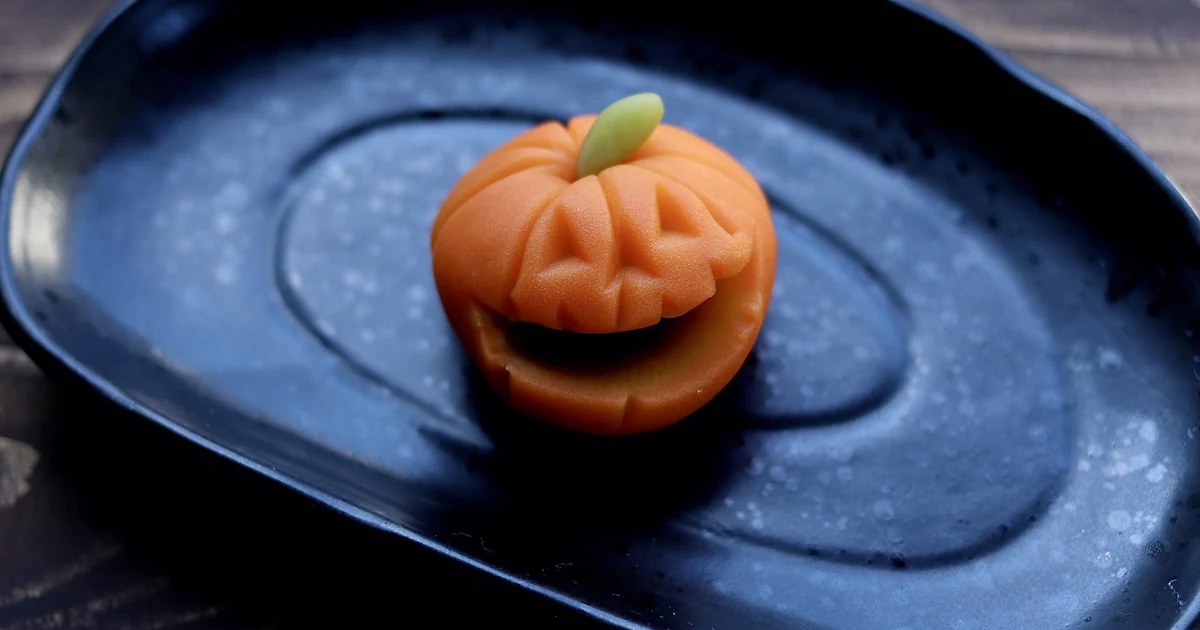
| Halloween wagashi made with kabocha | An edible ingredient shaped into a seasonal design | The ingredient is known, but the exact wagashi category is not |
| Obon cucumber horse and eggplant cow | Vegetables made into symbolic figures | They belong to an ancestral remembrance custom |
Food marks time throughout washoku, Japan’s traditional food culture. However, not every seasonal expression is ancient. A contemporary confection can join the calendar without becoming a traditional festival food.
Three Cooking Methods Show Kabocha’s Everyday Role
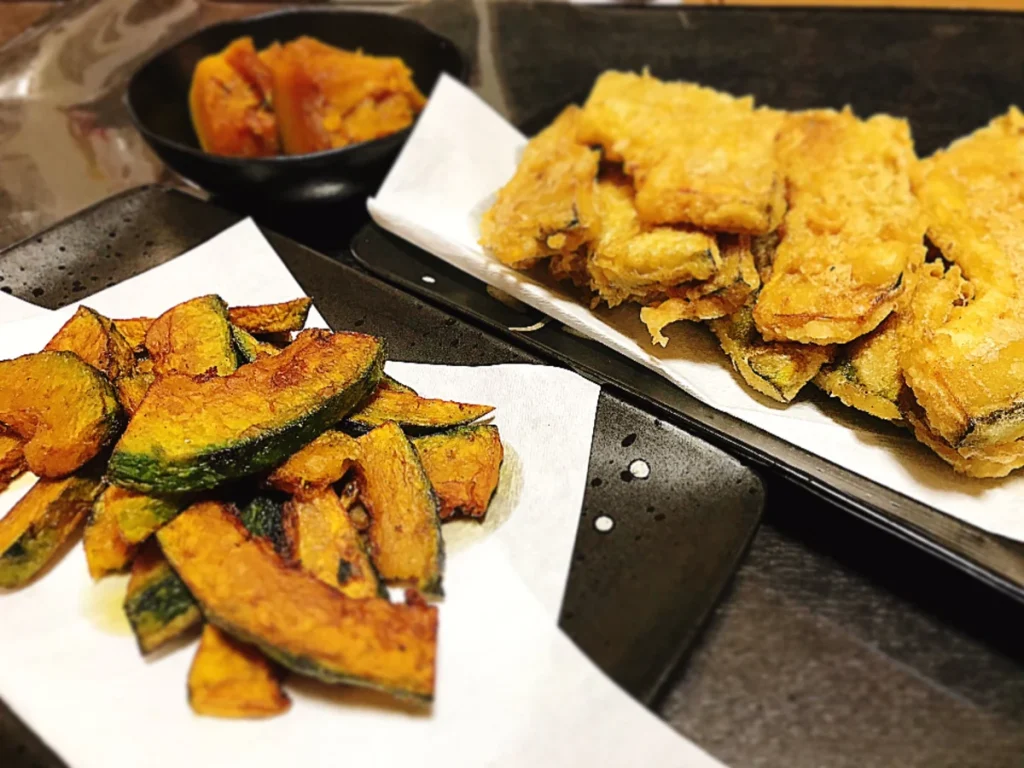
The kitchen photograph brings three kabocha preparations into one frame. For example, battered tempura sits on the tray to the right. By contrast, unbattered slices fried as suage fill the foreground. Meanwhile, a bowl at the back holds simmered kabocha. Because all three start with the same vegetable, the photograph makes the effect of technique unusually easy to see.
Tempura Builds a Light Outer Shell
Tempura surrounds each slice with batter. The coating becomes crisp while the dense orange flesh softens. Good timing cooks the kabocha through without making the batter dark or heavy. Slice thickness therefore matters as much as oil temperature.
Kabocha’s sweetness works well with dipping sauce or a little salt, yet the dish is not a dessert. Our guide to Japanese tempura explains how coating and frying temperature should reveal rather than hide the ingredient.
Suage Puts the Surface in Direct Contact With Oil
Suage means frying without batter or breading. The exposed kabocha in the foreground has browned edges and a drier-looking surface than the tempura. Direct contact with oil gives the surface a different color and texture.
Suage is a separate method, not tempura with its coating removed. Japan’s Agriculture and Livestock Industries Corporation lists both preparations as ways to enjoy kabocha’s sweetness.
Simmering Replaces Crispness With Moisture
The bowl at the back contains simmered kabocha. Seasoned liquid softens the vegetable instead of creating a crisp surface. As a result, the pieces can become moist and tender while keeping their shape. Because the photograph does not reveal the broth or seasoning, it cannot establish a specific recipe.
Batter, direct frying, and simmering produce different balances of sweetness, moisture, and texture. Together, they show why kabocha cannot be reduced to a Halloween ingredient.
Cooking Kabocha and Ornamental Pumpkins Are Not Interchangeable
Japan’s Ministry of Agriculture, Forestry and Fisheries groups cultivated kabocha into Japanese, Western, and pepo types. Western types, known for a starchy texture after heating, are now mainstream in Japan. Small ornamental pumpkins may belong to the pepo group. An edible kabocha and a decorative Halloween pumpkin are not necessarily the same variety.
How Wagashi Adapts the Halloween Pumpkin
The featured orange wagashi was made with kabocha. Grooves, a green stem, and a jack-o’-lantern face turn the ingredient into a clear Halloween design. Rather than representing an old Japanese tradition, it shows how wagashi can express a newer seasonal motif.
MAFF identifies seasonal representation as an important feature of wagashi. Color and shape can evoke scenery and annual events. A Halloween pumpkin extends that practice to a contemporary occasion.
The Ingredient Is Known, but the Wagashi Type Is Not
The supplied information confirms that the sweet contains kabocha. However, the photograph cannot show whether it is nerikiri, konashi, or another form of fresh wagashi. Nor does it reveal whether the kabocha is in the outer paste, filling, or both. A narrower technical name requires the recipe or maker’s description.
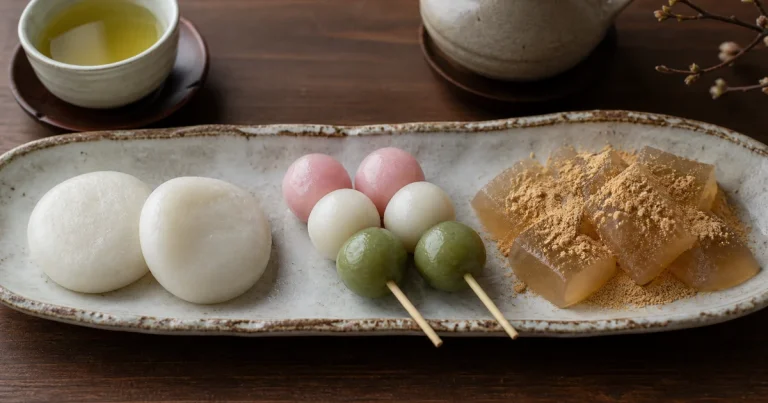
Wagashi is a broad family, not one recipe. The same care applies when comparing mochi, dango, and warabi mochi: appearance alone does not establish ingredients or method. Diners with allergies should ask about the complete recipe.
Obon Vegetables Carry a Separate Symbolic Meaning
The cucumber and eggplant in the second body photograph are shōryō-uma (精霊馬), often written shoryo-uma without macrons. Short sticks form legs, turning the cucumber into a horse and the eggplant into a cow. Some households display these figures during Obon, when families remember and welcome ancestral spirits.
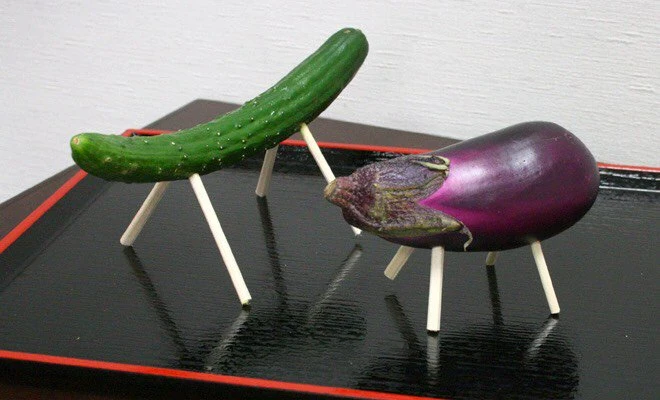
A common explanation says the horse helps the spirits arrive quickly, while the slower cow allows a gentle return. A review in the National Diet Library’s Collaborative Reference Database records other versions. In some, the cow carries luggage. Other communities use different vegetables or straw. The cucumber-horse and eggplant-cow explanation is common, but not universal.
Here, the vegetables are symbolic figures rather than a plated dish. That differs from the decorative work in our guide to Japanese cucumbers, where cutting changes both appearance and bite.
Obon and Halloween Do Not Share the Same Food Tradition
Obon and Halloween both produce memorable vegetable forms, but they do not share an origin or purpose. Obon centers on ancestors and remembrance. The Halloween wagashi uses kabocha in a playful contemporary design. A cucumber horse is not a Japanese jack-o’-lantern, and the sweet is not an Obon offering.
The comparison remains useful when its limits are clear. Cooking changes kabocha’s texture. Confectionery turns it into a character. Sticks transform cucumber and eggplant into symbolic vehicles. The techniques and meanings remain distinct.
Context is essential when reading these seasonal food traditions in Japan.
What Travelers Can Look For
On Japanese menus, かぼちゃ or カボチャ means kabocha. 天ぷら indicates tempura, 素揚げ means unbattered frying, and 煮物 refers broadly to simmered food. Details still depend on the restaurant. An autumn kabocha dish is not automatically Halloween food.
At confectionery shops, shape may communicate the season before flavor. Ask whether a pumpkin-shaped sweet contains kabocha and what kind of wagashi it is. During Obon, some households make shoryo-uma, although the custom is not universal.
One Vegetable Can Have More Than One Seasonal Role
These seasonal food traditions in Japan become clearer through three questions: What is it made from? How was it prepared? What occasion gives it meaning? The first photograph moves from batter to direct frying to simmering. Meanwhile, the wagashi combines kabocha with a Halloween face. The Obon display gives cucumber and eggplant a symbolic task.
Context changes interpretation. A familiar vegetable can become an everyday dish, an edible seasonal design, or a temporary vehicle for ancestral spirits. The materials overlap, but the traditions remain distinct.
Editorial Sources
- Ministry of Agriculture, Forestry and Fisheries: Japanese Sweets, Seasonal Representation, and Production Methods
- Ministry of Agriculture, Forestry and Fisheries: Pumpkin and Squash Types Cultivated in Japan
- Agriculture and Livestock Industries Corporation: Kabocha Uses, Including Simmering, Tempura, and Suage
- National Diet Library Collaborative Reference Database: Explanations and Variations of Obon Shoryo-uma