Dashi Explained: Ingredients, Techniques, and Umami
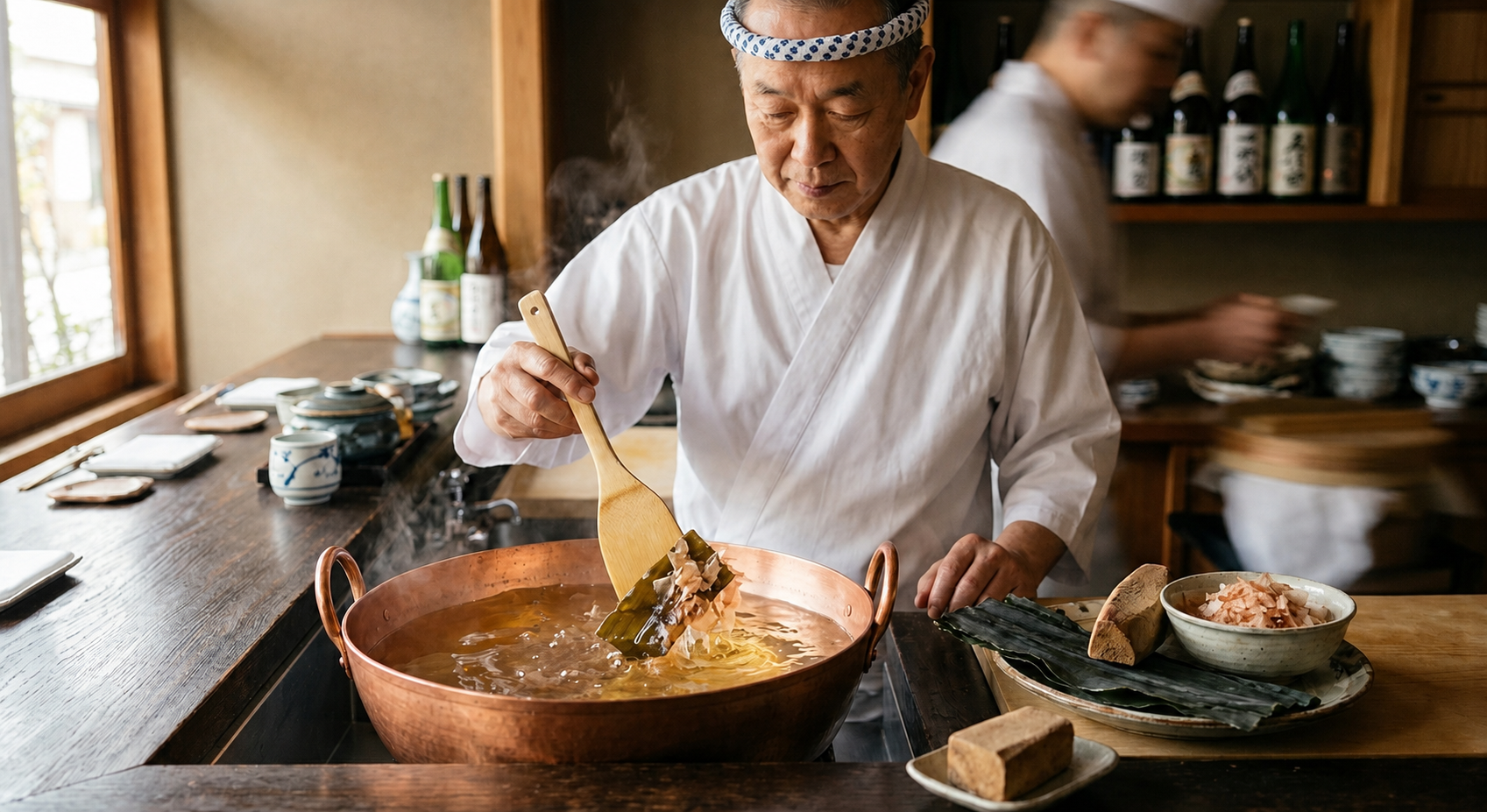
Traditional Japanese dashi soup stock made with kombu kelp and katsuobushi bonito flakes

Dashi is a light, umami-rich stock that forms the flavor base of many Japanese dishes. It can be made from kombu kelp, katsuobushi bonito flakes, dried small fish, dried shiitake mushrooms, or a combination of ingredients. Unlike a heavy broth designed to become the dominant flavor, dashi often works quietly. It gives soup, noodles, simmered … Read more
Sushi Culture in Japan: History, Traditions, and Craftsmanship

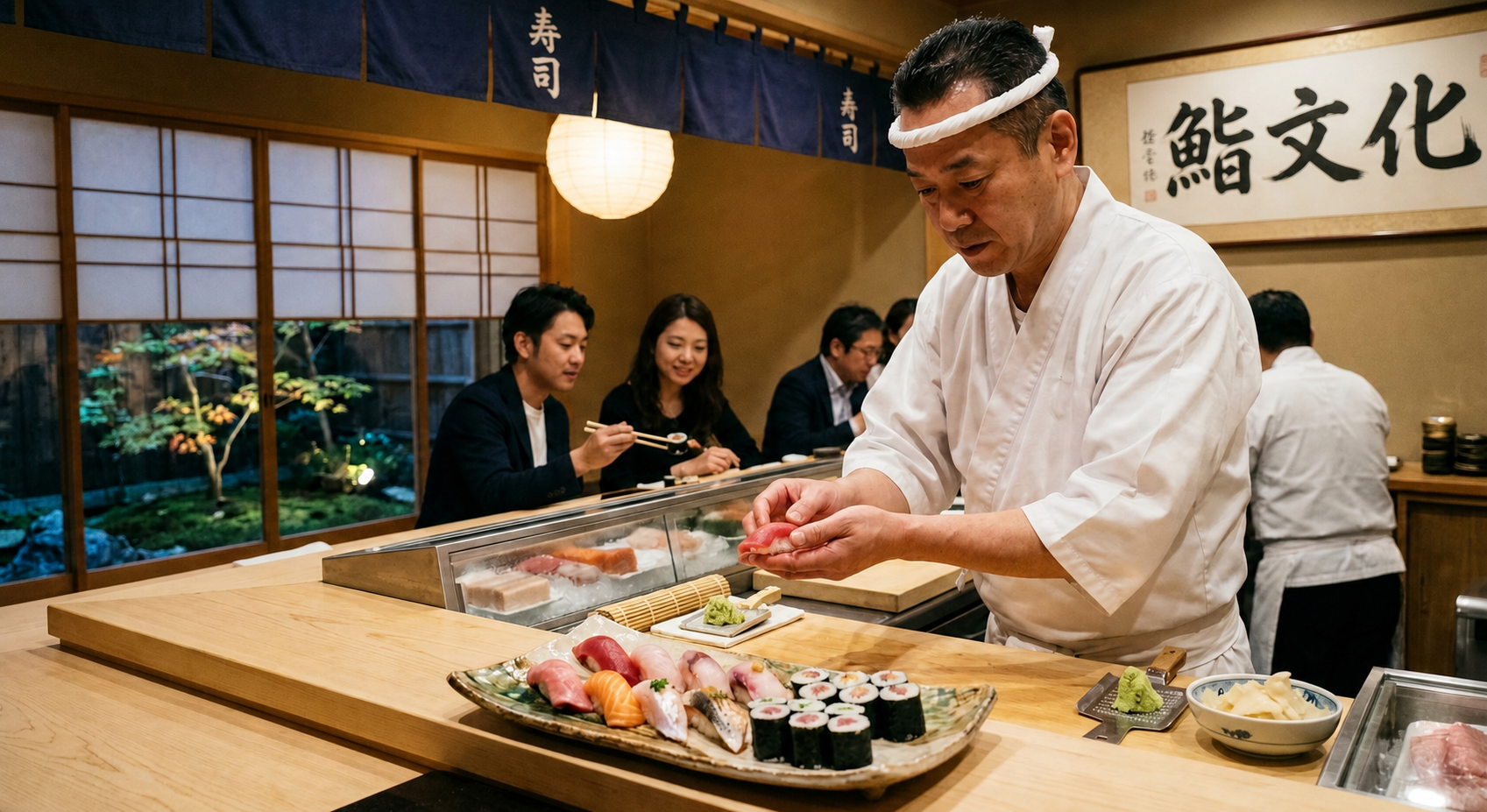
Japanese sushi chef preparing traditional sushi in Japan

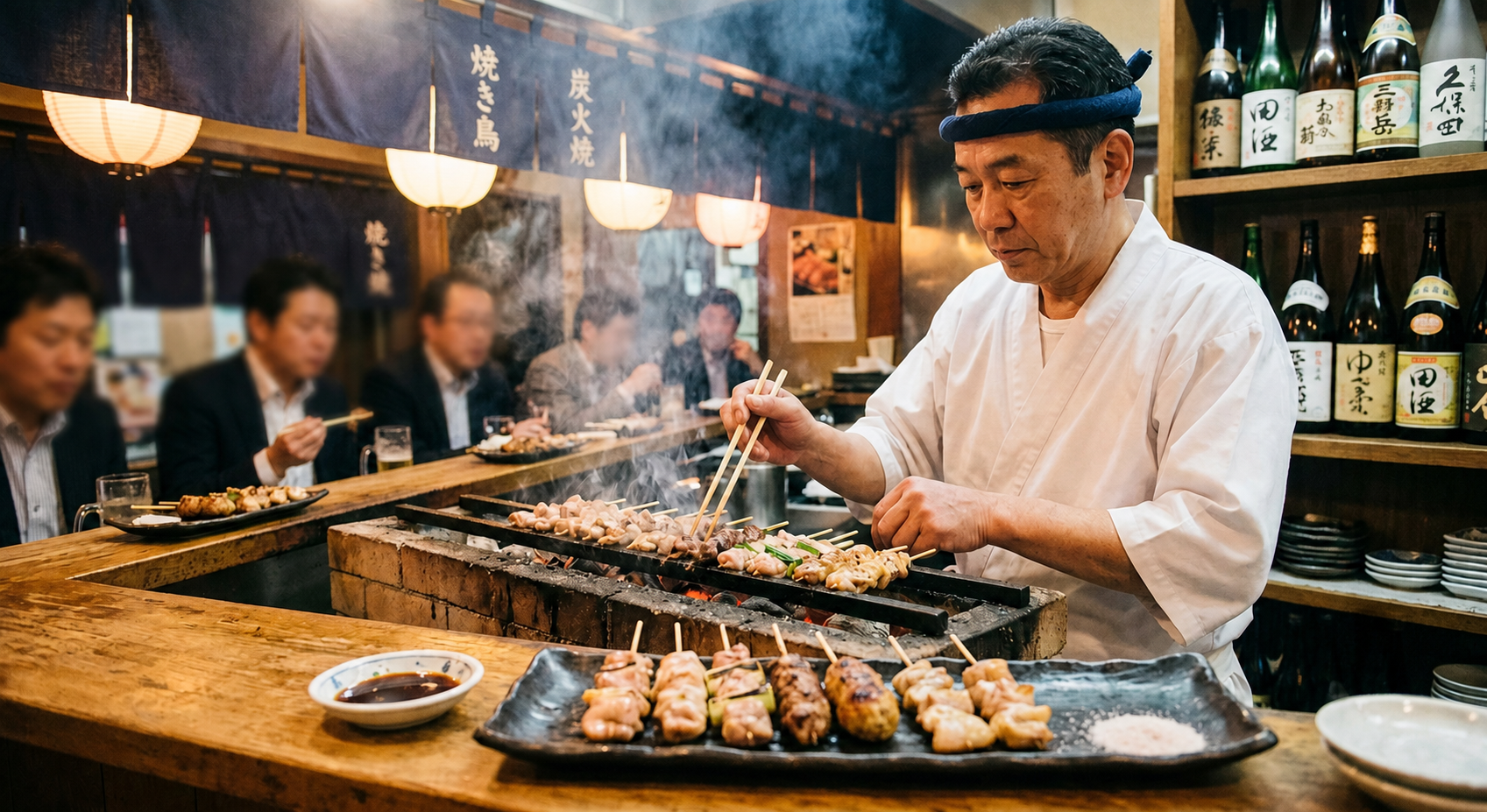
Sushi culture in Japan is not defined by raw fish alone. It grew from preservation, regional ingredients, urban food stalls, specialized craft, and everyday ways of sharing a meal. Modern nigiri is one important expression, but fermented sushi, pressed sushi, rolls, boxed meals, neighborhood shops, and celebratory dishes all belong to the wider story. Understanding … Read more

Kaiseki Dining in Japan: Course Order, Prices, and Etiquette

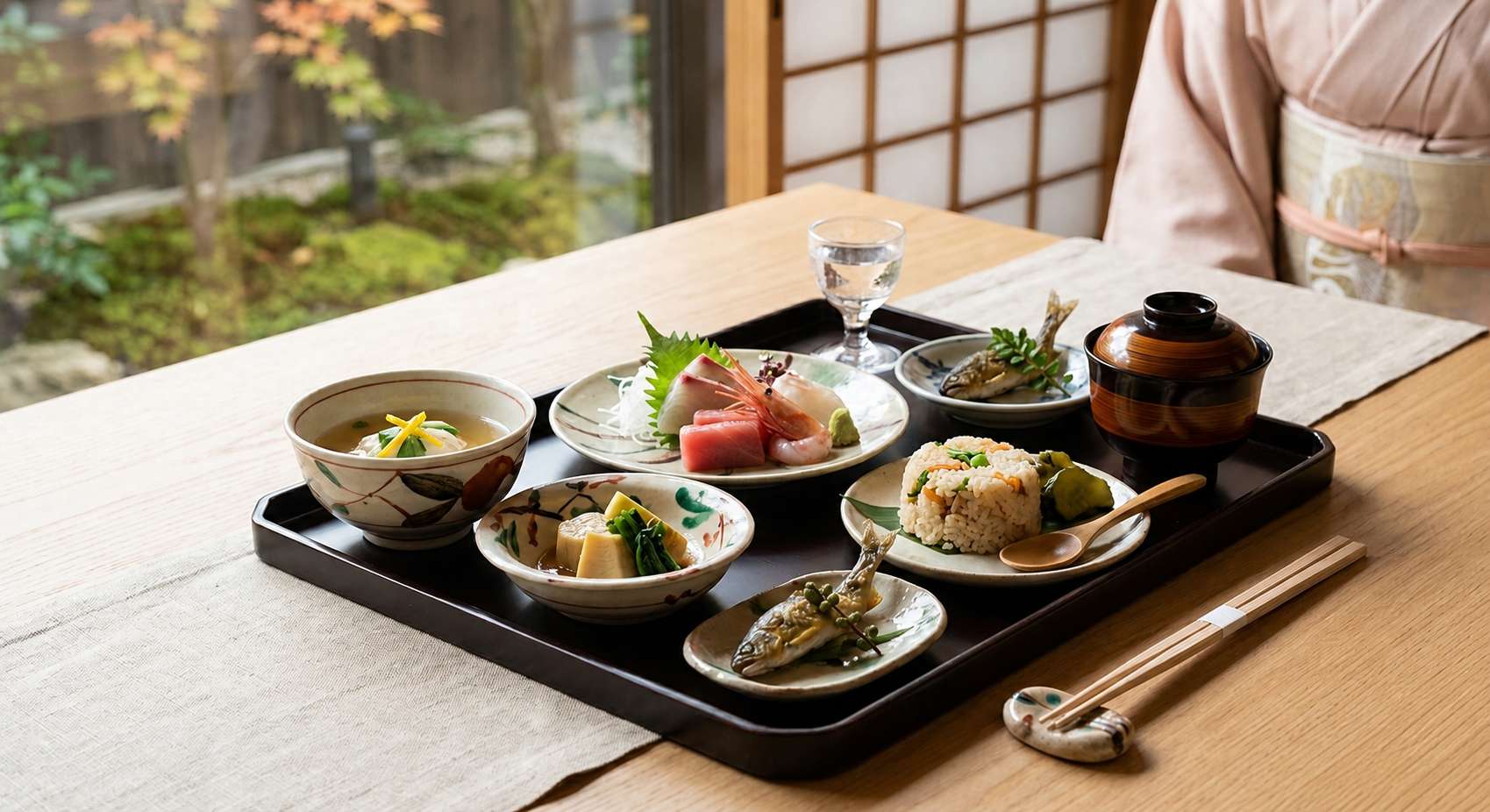
Traditional Japanese kaiseki meal with seasonal dishes served at a restaurant

Kaiseki is a Japanese multi-course dining style that expresses season, place, and the chef’s judgment through a sequence of small dishes. It is often translated as Japanese haute cuisine, but that label does not fully explain the experience: tableware, temperature, aroma, negative space, and the rhythm between courses are considered alongside flavor. There is no … Read more

Japanese Tempura: History, Ingredients, and Traditional Techniques

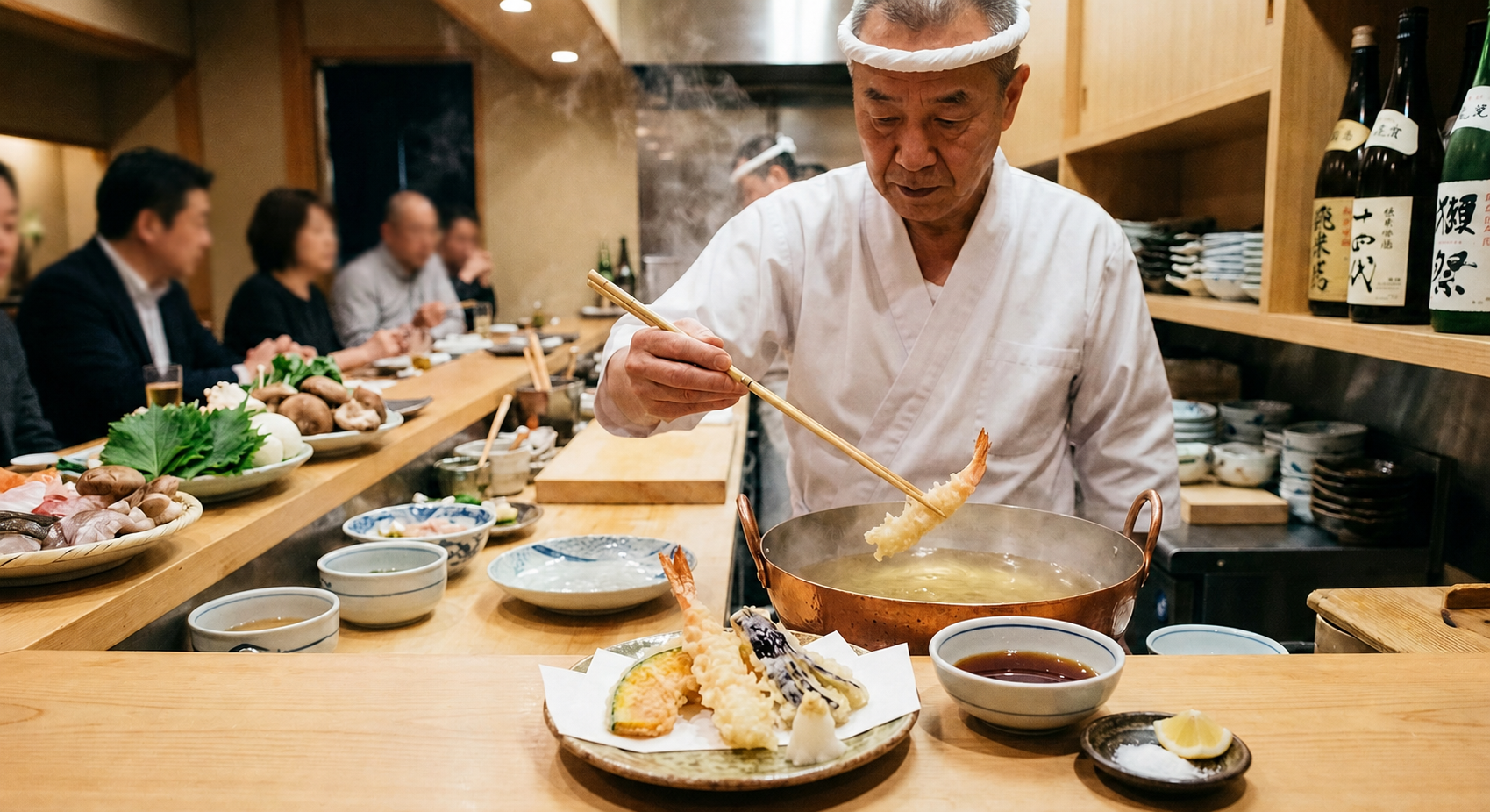
Japanese tempura chef preparing traditional tempura at a restaurant

Tempura is seafood, vegetables, or other ingredients coated in a light batter and fried so the exterior becomes crisp while the inside retains its own moisture and character. The technique looks simple, but the result depends on ingredient preparation, batter temperature, oil control, timing, and immediate service. It is therefore misleading to define tempura as … Read more

Sashimi in Japan: Cuts, Fish, Safety, and Etiquette

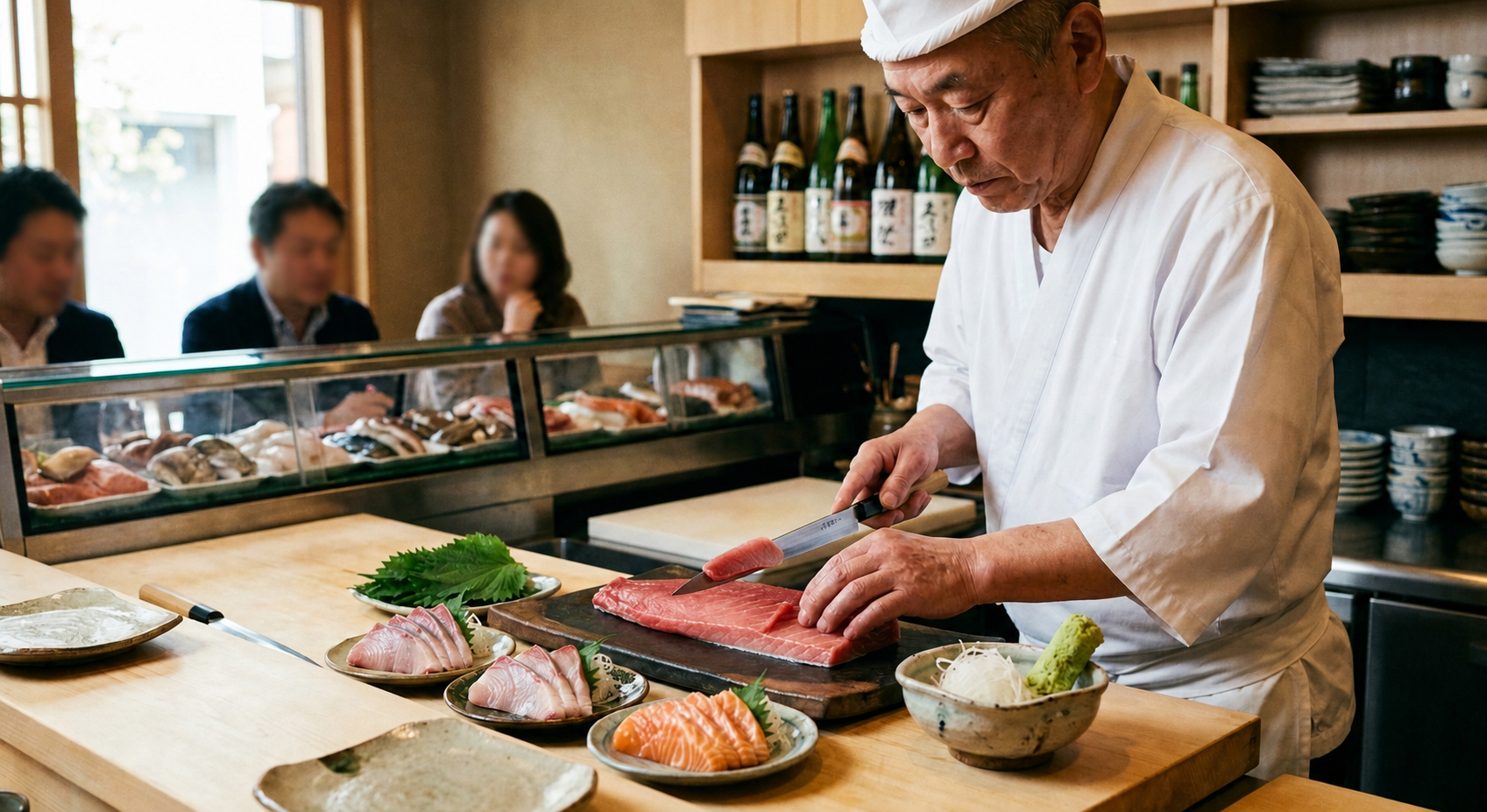
Japanese sashimi served at a traditional restaurant

Sashimi is one of Japan’s best-known foods, but it is often misunderstood as simply “raw fish.” In Japanese cuisine, sashimi is a prepared dish in which carefully selected seafood or another ingredient is sliced and served without vinegared rice. The quality of the ingredient matters, but so do the cut, temperature, arrangement, and accompaniments. This … Read more

What Is Washoku? The Principles Behind Japanese Cuisine

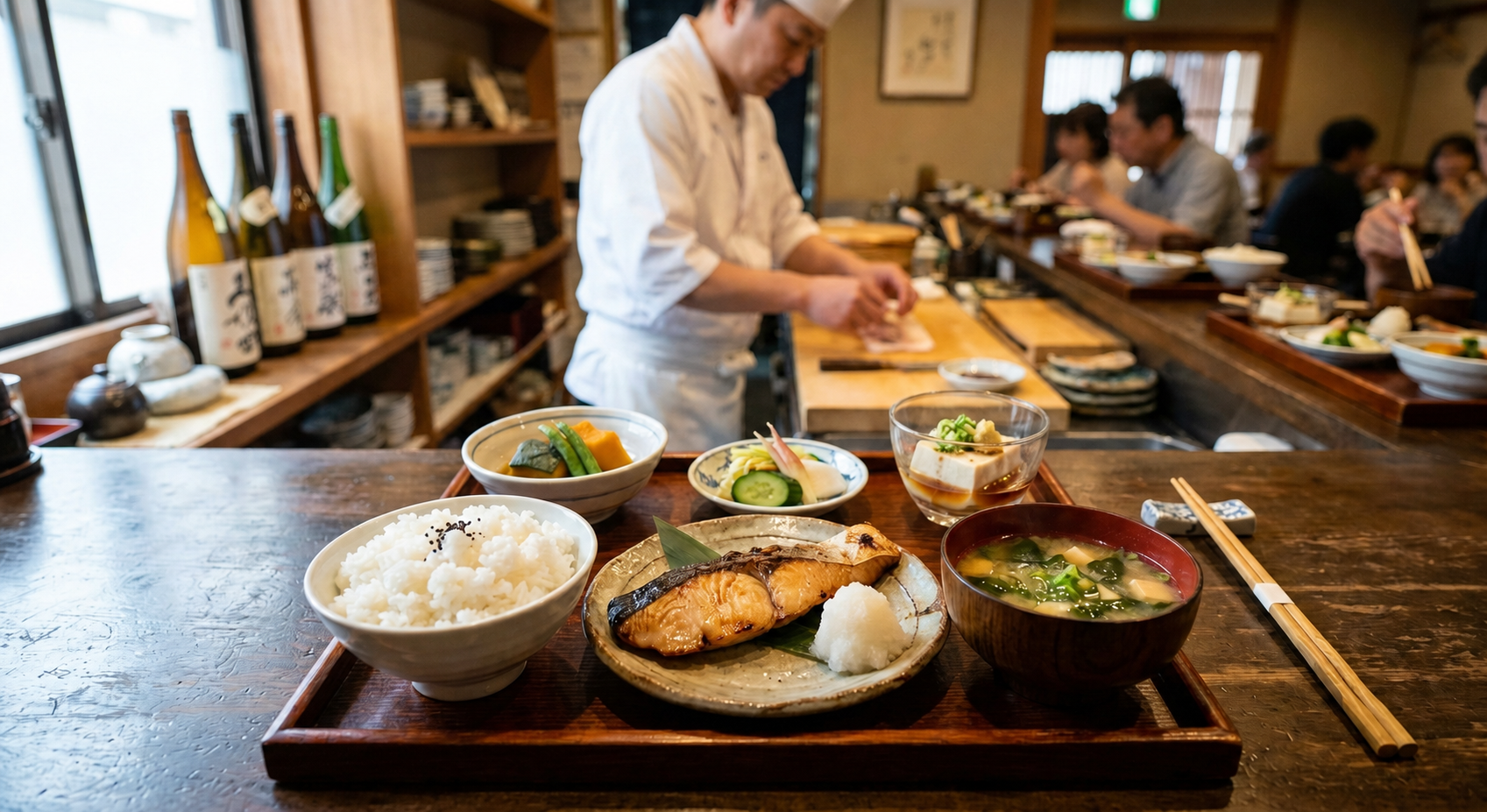
traditional Japanese washoku meal with seasonal dishes

Washoku is not the name of one recipe or a promise that every Japanese meal follows the same rules. It is a broad food culture built from knowledge, skills, customs, ingredients, and ways of sharing meals. Everyday rice and soup, regional preserved foods, New Year dishes, and refined restaurant cooking can all sit within that … Read more

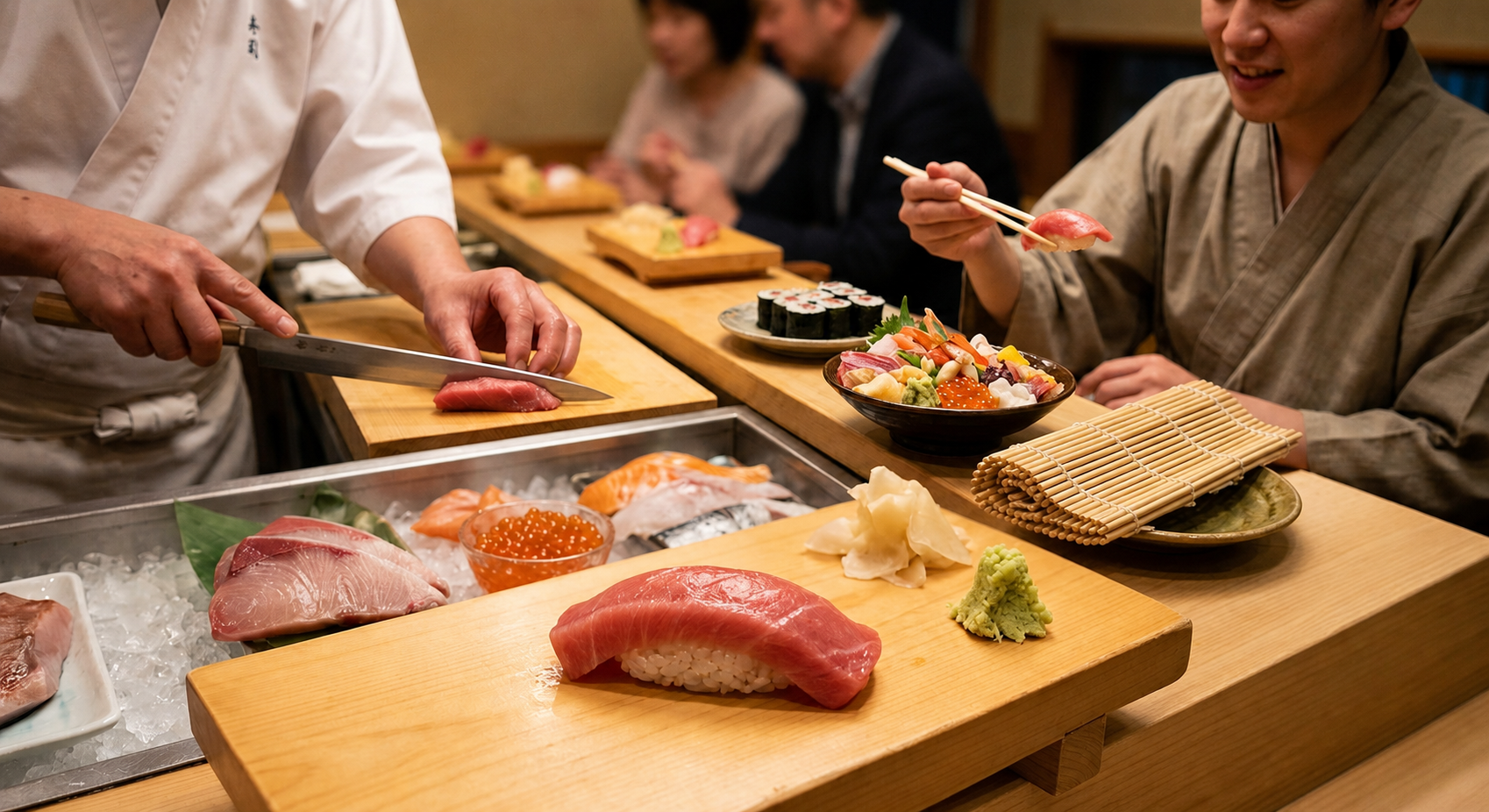
Sushi Explained: Styles, Rice, Craft, and Etiquette

Sushi chef preparing nigiri at a Japanese sushi counter

Sushi is one of Japan’s best-known foods, but it is also one of the most misunderstood. Many people think sushi simply means raw fish. In reality, the defining element of sushi is the vinegared sushi rice. Sushi is made by combining vinegared sushi rice with seafood, vegetables, egg, seaweed, or other ingredients. Some sushi contains … Read more