A bento is a portable meal packed in a box or other compact container. In Japan, it may be prepared at home, sold at a convenience store, made by a specialist shop, served by a restaurant, or purchased at a railway station for a journey.
Rice and side dishes are common, but there is no required menu. Bento can contain fish, meat, vegetables such as Japanese sweet potatoes and gobo, noodles, sandwiches, or regional specialties. The meal is bento; bento-bako is the box that holds it.
Bento is practical and cultural. Portioning, color, seasonality, portability, and the relationship between staple food and side dishes shape the meal.
A Bento Is a Meal Designed for Its Container
| Feature | What to expect |
|---|---|
| Basic meaning | A meal packed for one person or a small group |
| Common staple | Rice, onigiri, noodles, or bread |
| Side dishes | Vegetables, fish, meat, pickles, and prepared foods |
| Where sold | Stations, convenience stores, supermarkets, department stores, and bento shops |
| Usual temperature | Often designed to be eaten cool or at room temperature; follow the label |
| Main advantage | A complete meal that is easy to carry |
What Does Bento Mean?
Bento is written 弁当. English speakers often say “bento box” for both the container and the food, but in Japanese, bento usually means the meal itself. The container can be a simple disposable tray, a plastic lunch box, lacquerware, wood, metal, or another food-safe material.
Portable meals in Japan have a long history, including preserved rice and onigiri carried for travel or work. Edo-period boxes became associated with excursions and theater, while Meiji-period railways helped establish ekiben.
What Goes Inside a Japanese Bento?
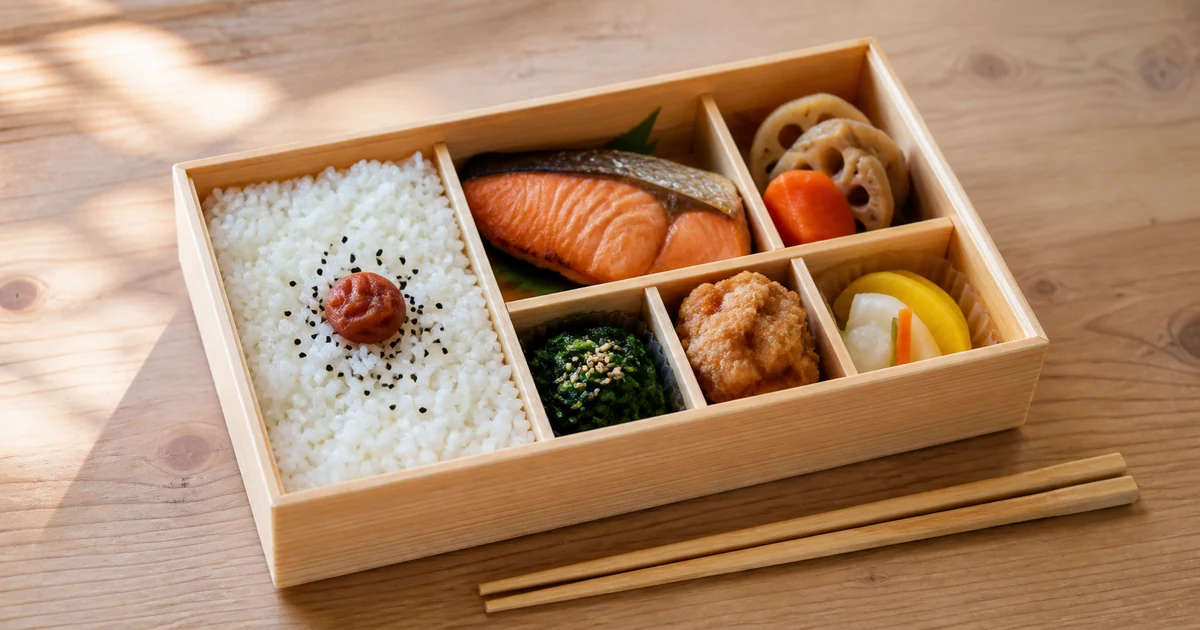
Many bento follow a familiar Japanese meal pattern in compact form:
- Staple: steamed rice, seasoned rice, onigiri, noodles, or bread
- Main item: grilled fish, chicken, pork, tofu, a croquette, or another substantial dish
- Small sides: cooked vegetables, salad, beans, seaweed, or pickles
- Accent: sesame, furikake, pickled plum, or a small garnish
Rice is strongly associated with bento, but it is not compulsory. A sandwich bento or noodle-based meal still fits the format. When rice is included, its cohesive texture makes it easy to portion and eat with chopsticks. Our guide to Japanese rice explains why the grains hold together without becoming a paste.
Not every bento is balanced, handmade, or decorative. The format accommodates everyday lunches, travel meals, celebrations, and regional foods.
Main Types of Bento
Homemade Bento
A homemade bento may be packed for work, a field trip, sports day, or picnic. It can be decorative or a practical combination of rice and leftovers.
Convenience Store and Supermarket Bento
Ready-made bento range from inexpensive meals to seasonal or premium selections. Supermarkets may discount remaining food later in the day. Follow printed storage and consumption instructions.
Ekiben
Ekiben combines eki, meaning station, with ben from bento. These railway meals often highlight local ingredients, specialties, or distinctive containers. They are sold at many major stations and are closely associated with long-distance train travel.
Makunouchi Bento
Makunouchi bento combines rice with assorted small dishes. Its name is linked to theater intermissions, and modern versions emphasize variety rather than one large main item.
Shokado Bento
Shokado bento uses a compartmentalized box, classically divided into four sections. Restaurants use it for a refined presentation of rice and side dishes.
Kyaraben
Kyaraben arranges food to resemble animals or characters. It is a creative style, not the standard for all homemade lunches.
Bento vs. Teishoku
Bento and teishoku may contain similar foods, but their formats are different. A bento is packed into a portable container and may be eaten later. A teishoku set meal is normally served at a restaurant on a tray, with rice, soup, a main dish, and sides in separate bowls and plates.
Soup is common with teishoku but less practical inside an ordinary bento. Bento also places greater emphasis on compact arrangement, foods that travel well, and managing moisture or temperature during storage.
Where Can You Buy Bento in Japan?
- Convenience stores: familiar everyday selections, usually with labels and heating guidance
- Supermarkets: broad local choices, from simple lunches to sushi and cooked dishes
- Department-store food halls: specialist shops and more elaborate prepared meals
- Bento shops: meals assembled around a particular main dish or regional style
- Railway stations: ekiben for long-distance journeys
Chopsticks, a wet towel, or condiments may be included or offered separately. Decline extras you do not need.
Where Is It Appropriate to Eat Bento?
Parks, designated rest areas, offices, hotel rooms, and long-distance trains are common settings where food is permitted. Eating ekiben on the Shinkansen and limited express trains is accepted. Avoid full meals on local trains and subways.
Follow venue rules; some sites restrict eating or designate an area. Carry the empty container until you find an appropriate disposal point.
Before eating, you may hear itadakimasu, an expression connected with gratitude for the meal. Our guide to itadakimasu and gochisousama explains when these phrases are used.
Food Safety and Storage
Bento often contains perishable cooked food. A product sold unrefrigerated is not automatically safe to keep indefinitely at room temperature. Follow the package’s storage instructions and use-by time, and refrigerate promptly when the label requires it. Do not buy packaging that is open, leaking, swollen, or damaged.
For a homemade packed lunch, cool cooked components appropriately before sealing, keep raw and cooked foods separate during preparation, and use an insulated bag with cold packs for food that must remain chilled. USDA guidance advises that perishable food should not remain at room temperature for more than two hours, or more than one hour above 90°F (32°C).
Reheating does not reliably correct every problem caused by poor storage. If a meal has been held outside its stated conditions or you are unsure how long it has been warm, the lower-risk choice is not to eat it.
Dietary Restrictions and Allergies
Visible compartments do not reveal every ingredient. Soy sauce may contain wheat; cooked vegetables may use fish-based dashi; and fried items may share oil or equipment. Packaged bento should have ingredient and allergen information, but travelers may need help reading Japanese labels.
For serious allergies, confirm the product or restaurant information rather than relying on pictures or removing one item. Recipes and cross-contact controls differ by producer.
Buying and Eating Bento While Traveling
Is bento always served cold?
No. Many are designed to taste good cool or at room temperature, while some packaged meals include microwave instructions or self-heating systems. Follow the specific product directions.
Does bento have to contain rice?
No. Rice is traditional and common, but bread, noodles, and other staples can form the base of a bento.
Can you eat ekiben on any train?
Long-distance trains such as the Shinkansen and limited express services are appropriate. Avoid eating a complete meal on local commuter trains and subways.
Reading the Occasion Through the Lunch Box
Bento is a packed meal, not one fixed recipe or one style of decorative box. It can be homemade, inexpensive and commercial, tied to railway travel, or presented as a refined seasonal meal. What connects these versions is a compact format designed to make a complete meal portable.
When buying bento in Japan, check what is included, follow the storage and heating directions, and choose an appropriate place to eat it. Those practical details are as important to understanding bento as its colorful arrangement.