Japanese egg dishes range from sweet rolled omelets and silky steamed custard to raw egg rice and soft eggs served over noodles. Eggs appear at breakfast, in lunch boxes, at sushi counters, in hot-pot meals, and as inexpensive toppings in everyday restaurants.
The Japanese word for egg is tamago. It appears in names such as tamagoyaki, tamago kake gohan, and tamago sushi, but those dishes have very different textures and uses. This guide compares eight common examples so you can recognize them and choose one that suits your preferences.
Eight Dishes, Eight Different Roles for the Egg
| Dish | Style | Typical texture | Often found at |
|---|---|---|---|
| Tamagoyaki | Rolled omelet | Layered and tender | Breakfast, bento, sushi shops |
| Chawanmushi | Steamed dashi custard | Silky and very soft | Set meals, sushi restaurants, formal meals |
| Onsen tamago | Gently heated egg | Soft white and creamy yolk | Rice bowls, noodles, breakfast |
| Ajitama | Seasoned boiled egg | Firm white and jammy yolk | Ramen shops |
| Oyakodon | Chicken-and-egg rice bowl | Soft-set egg over rice | Donburi and noodle restaurants |
| Tamago kake gohan | Raw egg mixed with rice | Creamy and loose | Home and Japanese breakfast |
| Sukiyaki dipping egg | Raw beaten egg | Cool and silky | Sukiyaki restaurants |
| Tamago sushi | Omelet over sushi rice | Firm, moist, sometimes fluffy | Sushi restaurants |
1. Tamagoyaki: Japanese Rolled Omelet
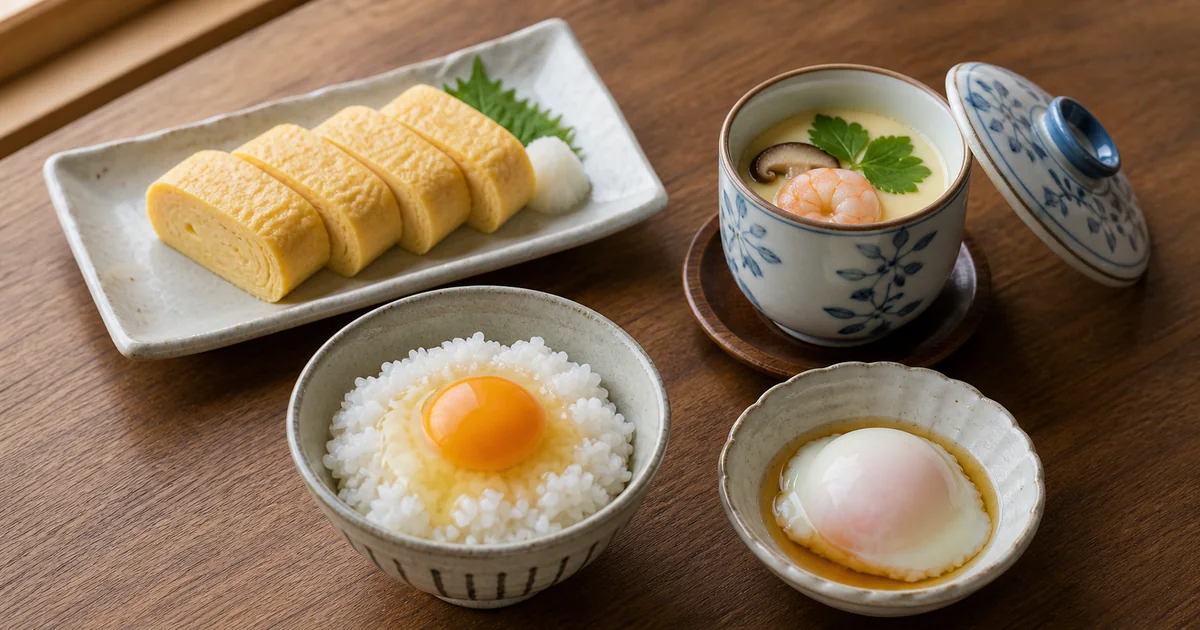
Tamagoyaki is made by cooking thin layers of seasoned egg and rolling them together into a compact loaf. The roll is cut crosswise to reveal its layers. It may be mildly salty, noticeably sweet, or flavored with dashi depending on the cook and regional style.
It is common at breakfast and in bento boxes because it is easy to portion and pleasant at room temperature. Sushi shops may prepare a denser or more elaborate version. The rectangular cookware used to shape it is explained in our guide to choosing a tamagoyaki pan.
2. Chawanmushi: Savory Steamed Egg Custard
Chawanmushi combines egg with seasoned dashi and steams the mixture in a small lidded cup. Chicken, shrimp, shiitake, fish cake, ginkgo nut, and seasonal vegetables may be hidden beneath its smooth surface.
It resembles custard but is savory rather than sweet. The ideal texture is silky and barely set, not spongy. It is eaten warm with a spoon as an appetizer or small course. See our complete guide to what chawanmushi is for ingredients, allergens, and dining guidance.
3. Onsen Tamago: A Gently Cooked Egg
Onsen tamago means hot-spring egg. The name reflects a traditional method of using naturally hot water, although modern kitchens use controlled warm water. Unlike a conventional soft-boiled egg, an onsen egg often has a delicate, softly coagulated white surrounding a creamy yolk.
It may be served in a small bowl with light dashi sauce or placed on rice bowls, curry, noodles, salads, and meat dishes. Breaking the yolk creates a rich sauce that softens strong seasoning.
4. Ajitama: Seasoned Ramen Egg
Ajitama is short for ajitsuke tamago, meaning seasoned egg. A peeled boiled egg is marinated in a mixture that may contain soy sauce, mirin, sake, sugar, or stock. The outside becomes brown and savory while the center may remain jammy.
Ajitama is closely associated with ramen, but it can also accompany rice or other meals. It is not the same as onsen tamago: the white is more firmly set, and the seasoning penetrates from the outside during marination.
5. Oyakodon: Chicken and Egg Rice Bowl
Oyakodon simmers chicken and onion in a sweet-savory mixture of dashi, soy sauce, and sugar or mirin. Beaten egg is added near the end, then the mixture is served over rice. The name means “parent-and-child bowl,” referring to chicken and egg in one dish.
The egg is commonly soft-set so it binds the chicken, onion, sauce, and rice. Doneness varies by restaurant and home recipe. This is one of the most approachable Japanese egg dishes for diners who want a complete, comforting meal rather than a small side.
6. Tamago Kake Gohan: Raw Egg Rice
Tamago kake gohan, or TKG, is a raw egg mixed with hot steamed rice, usually with soy sauce. The egg coats the grains and creates a creamy texture without the heaviness of butter or cheese. Our guide to Japanese rice explains why short-grain rice works well in bowls like this.
TKG is simple, but raw egg requires correct labeling, refrigeration, an intact shell, clean handling, and attention to the printed date. Our dedicated guide explains the precautions for eating raw eggs in Japan.
7. Raw Egg with Sukiyaki
In a traditional sukiyaki meal, thin slices of beef, tofu, vegetables, and noodles cook in a sweet-savory sauce at the table. Diners may dip each cooked piece into an individual bowl of lightly beaten raw egg before eating it.
The cool egg lowers the temperature and softens the sauce’s strong sweetness and saltiness. The dipping egg is usually optional. Travelers who avoid raw egg can eat the cooked sukiyaki directly, though it may taste more intensely seasoned.
8. Tamago Sushi
Tamago sushi places a slice of prepared omelet over vinegared sushi rice, sometimes secured with a narrow strip of nori. The egg may be sweet and firm or more tender and dashi-forward. At specialist counters, recipes can involve fish or shrimp paste and require considerable technique.
This is generally cooked egg, making it a familiar starting choice for diners who do not eat raw fish. However, the defining element of sushi is the seasoned rice, not whether the topping is raw.
How Eggs Function in Japanese Cooking
These dishes show how one ingredient can create contrast throughout a meal. Egg may add sweetness to bento, soften the saltiness of sukiyaki, enrich a rice bowl, carry the aroma of dashi, or provide a mild sushi topping.
Texture is equally important. Japanese egg preparations range from raw and flowing to silky, jammy, layered, and firmly cooked. The preferred degree of doneness depends on the dish rather than one national rule.
Dietary and Allergy Considerations
All eight dishes contain egg. Other possible allergens include wheat and soy in soy sauce, fish in dashi, shellfish in chawanmushi or sushi omelets, and sesame in some modern toppings. Ask about stock and seasonings as well as visible ingredients.
Raw or partly cooked eggs are not appropriate for everyone. Young children, older adults, pregnant people, and people with weakened immune systems are generally advised to choose thoroughly cooked eggs. Diners can also request cooked alternatives when the sourcing or storage conditions are uncertain.
Egg Dishes Travelers Commonly Confuse
Are Japanese egg dishes usually sweet?
No. Tamagoyaki and oyakodon may contain sugar or mirin, but chawanmushi, onsen tamago, and ajitama are primarily savory. Recipes vary by region, restaurant, and household.
Which Japanese egg dish is best for beginners?
Oyakodon is a filling, familiar rice bowl, while tamagoyaki is easy to recognize and fully cooked. Chawanmushi suits diners interested in delicate dashi flavor. Choose according to texture as much as taste.
Does tamago always mean tamagoyaki?
No. Tamago simply means egg. On a sushi menu, “tamago” often refers to the omelet topping, but the word can describe eggs more generally in other settings.
Eggs Move Easily from Breakfast to Bar Food
Japanese egg dishes are not one category with one flavor. Tamagoyaki is layered, chawanmushi is custard-soft, ajitama is marinated, oyakodon binds a rice bowl, and raw egg changes the texture of TKG and sukiyaki.
For a first taste, choose tamagoyaki or oyakodon if you prefer cooked, familiar textures. Try chawanmushi for subtle dashi flavor, or onsen tamago if you enjoy a soft yolk. Understanding the preparation makes each dish easier to order and appreciate.