“Choose an electric rice cooker for convenience and a hagama for quality” sounds useful until you have to buy one. It ignores the gas line, batch size, voltage, cleaning, keep-warm time, and the kind of rice texture you actually enjoy. It also assumes that a vessel determines the result by itself.
After cooking rice in working kitchens, my conclusion is less dramatic but more useful: electric, gas, and hagama systems offer different kinds of control. A good electric cooker can outperform a badly managed traditional pot. A gas cooker can rescue a lunch service, but only when its capacity, fuel, and installation are correct. A hagama can make rice service memorable, but it will not forgive an impatient cook.
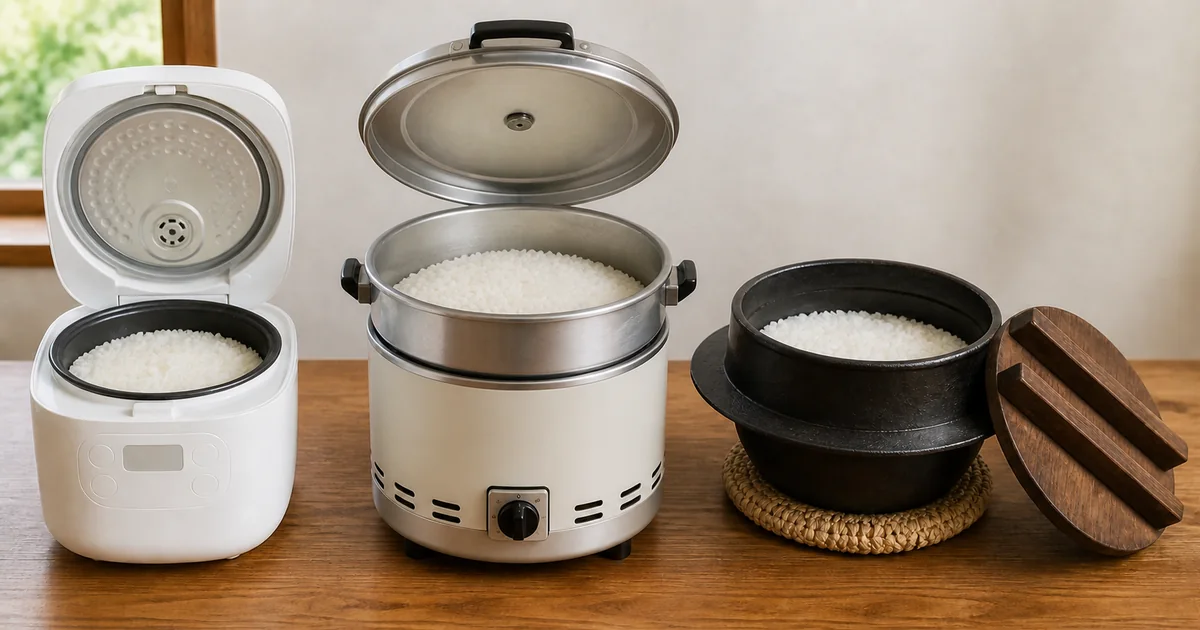
This comparison looks at what each tool asks from you and what it can return: automation, speed, batch strength, manual adjustment, texture, and the experience of serving rice straight from the vessel.
The Most Important Difference Is Who Controls the Heat
All three methods must heat water, gelatinize rice starch, manage steam, and let moisture equalize through the grains. The difference is how those stages are controlled.
| Method | Who controls the cycle? | Practical strength | Main compromise |
|---|---|---|---|
| Electric rice cooker | Built-in sensor and programmed logic | Consistency, timers, small batches, keep-warm functions | Longer cycles on some settings; multiple parts; model-dependent texture |
| Gas rice cooker | Automatic gas mechanism or operator, depending on model | High output and efficient repeated batches | Approved fuel connection, ventilation, installation, and stated batch range |
| Hagama | The cook and the external heat source | Direct manual adjustment, table presence, optional okoge | Attention, practice, no automatic keep-warm, and more variable results |
Cooking time cannot be compared honestly without defining what is included. An electric cooker may include soaking and resting in the displayed cycle. A quoted 15–20-minute gas time may describe only active heating and exclude washing, absorption, and rest. Hagama timing changes with material, lid, batch, burner, and whether the rice was soaked beforehand.
Electric: Automation Is the Advantage, Not One Guaranteed Texture
Electric rice cookers range from basic thermostat models to microcomputer, induction-heating, and pressure-IH machines. They should not be discussed as if they all cook the same way. Current models may offer settings for firm rice, soft rice, sushi rice, mixed rice, brown rice, quick cooking, and extended keep warm.
Pressure and programmed heating can produce plump, cohesive rice, but “electric” does not automatically mean the sweetest or stickiest result. The selected program, rice variety, water line, batch size, and user calibration matter. Nor is reproducibility literally 100 percent: inaccurate measuring, a worn seal, residue on a sensor, or using the wrong menu can change the batch.
The real advantage is that the machine manages transitions without a cook standing beside it. A delay timer helps households coordinate breakfast or dinner. Keep warm can be valuable, but it is not indefinite preservation. Zojirushi, for example, tells users to follow the limit in the specific manual; many models recommend a maximum around 12 hours for regular keep warm, with menu-dependent exceptions.
Choose electric when: you need unattended cooking, predictable small-to-medium batches, a timer, or controlled holding. It is also the simplest choice for renters who lack an approved gas connection.
Gas: Strong Batch Performance Depends on the Appliance, Not a Myth
A commercial or domestic gas rice cooker applies heat through a dedicated burner beneath its pot. Higher output and straightforward operation can make it valuable in restaurants that need repeated batches. It may produce rice with a firm surface and clear grain definition, but this is a tendency a kitchen can pursue, not a texture guaranteed by the word “gas.”
Sushi and set-meal kitchens may value gas because it can combine speed, capacity, and a familiar workflow. Yet many serious restaurants use electric or other systems, and excellent sushi rice depends on rice selection, water, firmness, vinegar mixing, and service temperature as much as the heat source.
A countertop gas appliance is not interchangeable with an ordinary pot on a portable burner. The exact cooker must match the gas type and pressure shown on its rating plate. Rinnai’s U.S. installation manual requires conformity with local codes and distinguishes natural-gas from LP-gas versions. A connector, jet, or regulator should never be improvised from an online tutorial.
Choose gas when: you regularly cook larger or repeated batches, have an approved installation, and value a relatively direct, fast workflow more than timers or long holding.
Hagama: Manual Control Makes Both the Reward and the Risk Visible
A traditional hagama is a metal rice pot with a wide flange that historically sat in a kamado opening. The familiar rounded body and heavy lid can support vigorous boiling and retained heat, but modern hagama vary in metal, thickness, lid material, capacity, and compatible heat source.
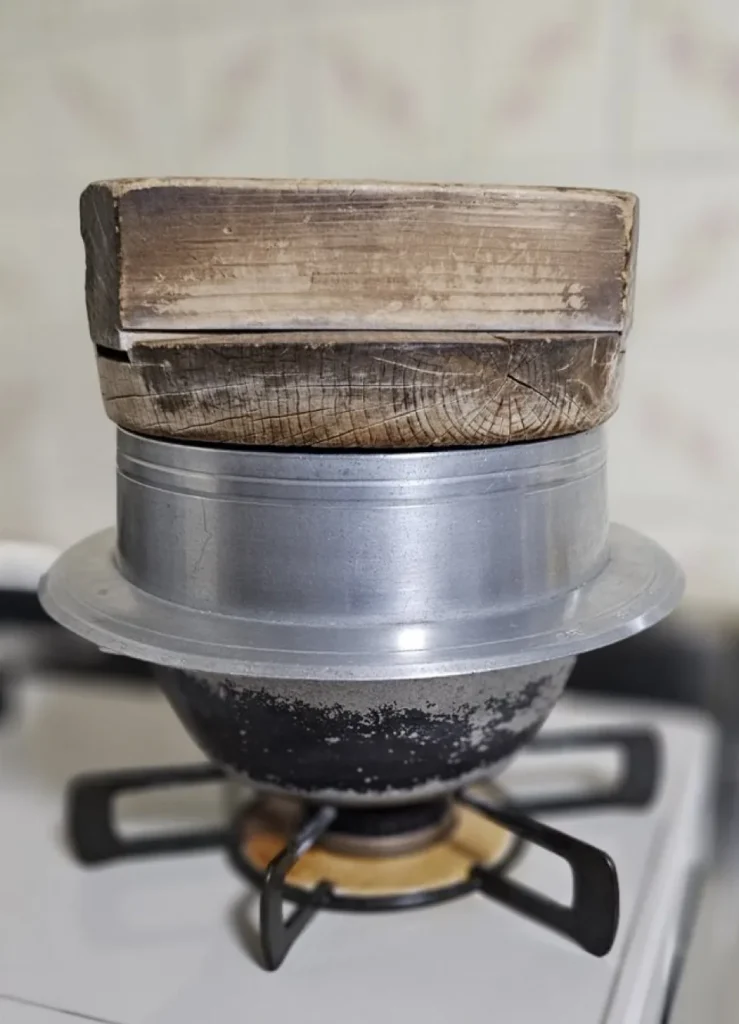
A wooden lid adds weight and can buffer some condensation, but it does not guarantee a perfectly dry upper surface. It also requires complete drying and careful storage. A neglected lid can warp, crack, or develop odors. Modern hagama may instead use metal or composite lids, and wood aroma should not be treated as a required flavor.
The appeal is sensory and practical. The cook reads sound, steam, aroma, and the transition from active boiling to retained heat. A controlled finish can form golden okoge. But the pot does not automatically create perfect convection or uniform hydration. A mismatched burner, excessive heat, an overfilled batch, or an ill-fitting lid can produce uneven rice.
Choose hagama when: you want hands-on control and the serving experience matters as much as automation. It suits someone willing to repeat batches, record adjustments, and accept that the learning process is part of the purchase.
What Texture Can You Reasonably Expect?
Instead of assigning one permanent texture to each appliance, think in ranges.
- Electric: the widest programmable range. Depending on model and menu, it can emphasize softness, firmness, stickiness, or a sushi-oriented texture.
- Gas: often chosen for decisive heating and repeated service batches. Kitchens can pursue firm, well-defined grains, but water and batch control remain decisive.
- Hagama: offers the cook direct influence over boiling, reduction, rest, and browning. It can produce both excellent separation and disastrous unevenness.
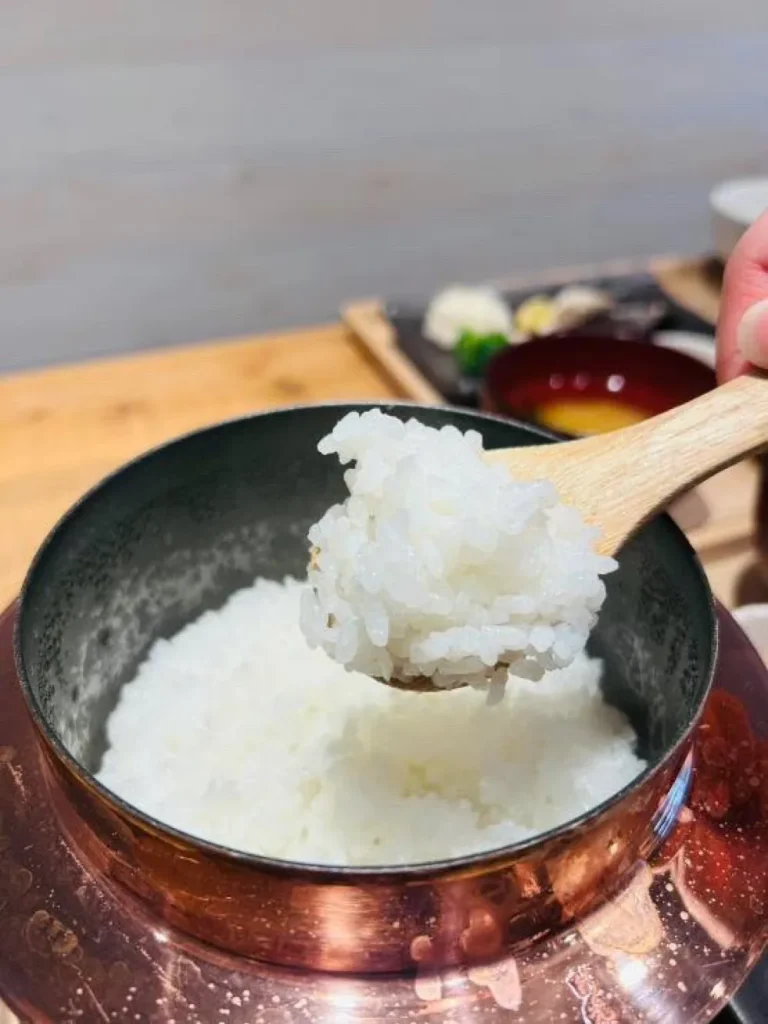
Taste from more than the surface. Rice near the bottom may be drier or browned, while the top may retain more moisture. Fluffing after the required rest distributes moisture and releases excess steam. The guide to Japanese rice varieties and preparation explains why the grain itself can change the result as much as the cooker.
The Lunch Rush When Hagama Failed and Gas Bought Us Time
At a restaurant where hagama rice was part of the menu’s identity, an unexpectedly busy lunch pushed us close to running out. I tried to shorten the next batch by keeping the flame at maximum instead of following the normal heat sequence.
Steam forced its way around the wooden lid, and I mistook activity for progress. When I opened the pot, the smell was not toasted rice. The base had blackened while grains near the top still held hard centers. I had accelerated evaporation and scorching, not cooked the batch evenly.
We switched to the commercial gas rice cooker kept for backup. Its active cycle finished quickly and its familiar capacity allowed us to resume service. I remember it as roughly eighteen minutes, but that figure should not be copied as a consumer promise: it referred to that machine, that batch, and the heated portion of the process, not washing, soaking, resting, installation, or every gas model.
The rescue did not prove that gas rice is always better. It proved that during service, repeatability and throughput may be more valuable than manual control. The right tool depends on the problem you need it to solve.
A Buying Decision Based on Your Week, Not an Idealized Sunday
For scheduled meals and minimal supervision
Start with an electric model. Choose capacity from the amount you actually cook, then compare timer behavior, cleaning parts, rice menus, voltage, warranty, and the manual’s keep-warm limits. Pressure IH is an option, not an automatic requirement for good rice.
Browse pressure-IH and IH rice cookers on Amazon.
For repeated batches and an approved gas setup
Compare stated minimum and maximum batch sizes, fuel type, certification, ventilation, clearances, installation requirements, and availability of service parts. Do not buy a domestic Japanese gas appliance for another country based only on its plug or price.
Browse gas rice cookers on Amazon. Confirm local certification and fuel compatibility before purchasing.
For hands-on cooking and table presentation
Choose hagama by capacity, material, lid, filled weight, permitted heat source, and the clarity of its instructions. Confirm that the base sits securely on your burner. A beautiful pot that wobbles on the grate or cannot be used on your cooktop is not a practical purchase.
Browse hagama-style rice cookers on Amazon.
Disclosure: As an Amazon Associate, Japan Food Compass earns from qualifying purchases.
Before Buying, Check These Eight Items
- Your normal uncooked rice quantity, not the largest holiday batch.
- Whether you need a timer or automatic keep warm.
- Permitted voltage, frequency, gas type, pressure, and local certification.
- Minimum and maximum cooking capacity.
- Every removable part that must be washed after one batch.
- Storage space, cord or hose placement, filled weight, and burner stability.
- Availability of inner pots, lids, seals, and qualified servicing.
- Whether you want consistent automation or genuinely enjoy managing heat.
For most households, electric is the strongest default because it fits ordinary schedules. Gas becomes compelling when approved installation and repeated batches justify it. Hagama is the deliberate choice for a cook who wants direct participation rather than simply a more traditional-looking appliance.
No method owns “professional taste.” A professional result comes from matching rice, water, batch depth, heat, rest, and service to the intended meal. The related donabe guide shows how the same principle applies to clay cookware, while the overview of Japanese kitchen tools for beginners helps decide whether a specialized rice pot should be an early purchase at all.
Sources for Rice Cooker Features, Gas Safety, and Rice Handling
- Zojirushi: Current Electric Rice Cooker Types, Capacities, and Features
- Zojirushi: Pressure-IH Rice Cooker Manual and Keep-Warm Limits
- Rinnai: Gas Rice Cooker Installation and Fuel Requirements
- Ministry of Agriculture, Forestry and Fisheries: Cooking, Resting, and Fluffing Japanese Rice
- Ministry of Agriculture, Forestry and Fisheries: Traditional Hagama Rice Cooking