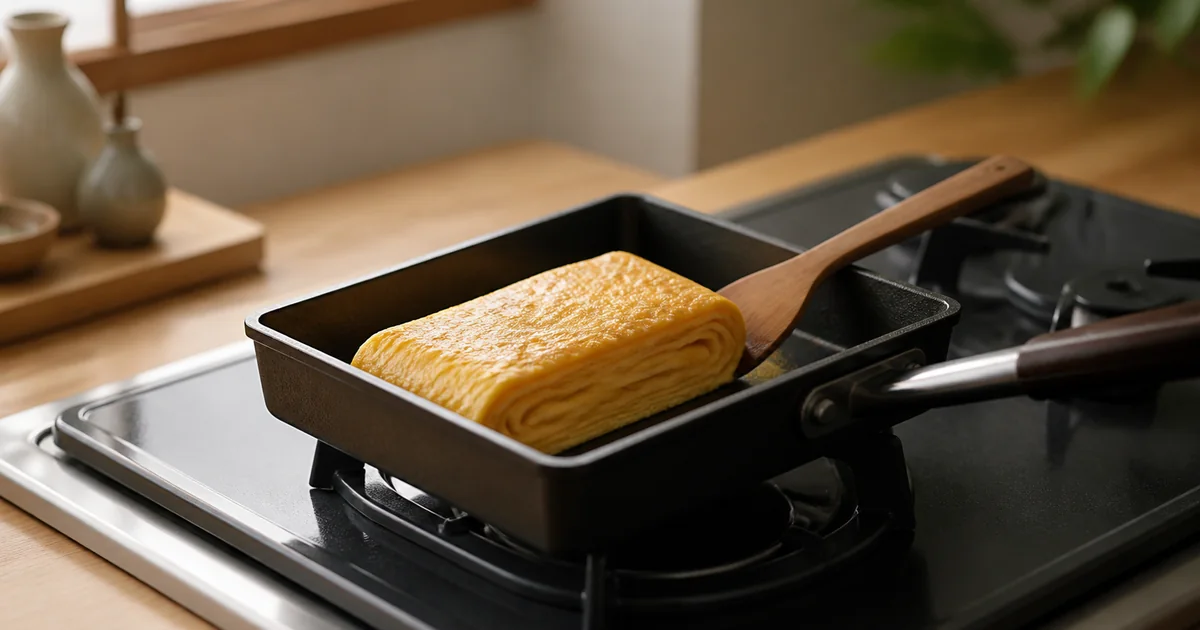
A tamagoyaki pan is a square or rectangular frying pan designed for making Japanese rolled omelets. Its straight sides help create even layers and a neat bar-shaped omelet more easily than a round pan. In Japanese, the tool may also be called a tamagoyakiki or makiyakinabe.
The best pan depends on how often you make tamagoyaki, the number of eggs you use, and your cooktop. Copper offers quick, even heat but requires care. Iron is durable and can develop a seasoned surface. A coated aluminum pan is usually the easiest choice for beginners.
Why Is a Tamagoyaki Pan Rectangular?
Tamagoyaki is made by cooking a thin layer of seasoned egg, rolling it to one end, adding another layer, and rolling again. Repeating the process builds many layers into one compact omelet. Straight corners keep those layers close to a consistent width.
A round frying pan can still make a rolled omelet, especially for occasional home cooking. However, the curved sides create thin edges that may need folding inward. A rectangular pan reduces that extra shaping and makes the finished roll easier to portion for breakfast, bento, or sushi.
Kanto vs. Kansai Tamagoyaki Pan Shapes
Traditional tamagoyaki pans are often grouped into Kanto and Kansai shapes. The Kanto type is relatively square, while the Kansai type is narrower and more rectangular. A third shape may be sold as Nagoya style, depending on the maker.
| Shape | Typical profile | Common association | Practical effect |
|---|---|---|---|
| Kanto | Square or nearly square | Thicker, often sweeter omelets | Creates a broad roll and larger portions |
| Kansai | Narrow rectangle | Dashimaki-style omelets | Supports repeated rolling in a compact channel |
These names describe regional traditions, not rules that modern cooks must follow. Both shapes can make sweet tamagoyaki or broth-seasoned dashimaki. Pan dimensions, egg quantity, and technique have more influence on home results than the regional label alone.
Dashimaki contains broth, which makes the egg mixture softer and more delicate to roll. Our guide to what dashi is explains the stock behind this style. Some recipes also use mirin for mild sweetness and gloss.
Copper Tamagoyaki Pans
Copper conducts heat quickly and distributes it efficiently across the pan. In experienced hands, that responsiveness helps egg set rapidly without prolonged cooking. Traditional professional pans are often copper lined with tin.
The same responsiveness can challenge beginners. Copper reacts quickly when the burner changes, so overheating or inadequate oil can cause sticking. Many copper pans are not induction-compatible, and a tin lining can be damaged by empty heating, abrasive cleaners, or metal tools. Follow the maker’s heat and care instructions exactly.
Choose copper if tamagoyaki is a frequent dish and you are willing to control heat carefully, oil the surface, hand-wash it, and maintain the lining. It is not necessary for learning the rolling technique.
Iron and Carbon-Steel Tamagoyaki Pans
Iron or carbon-steel pans are durable and can build a seasoned cooking surface through repeated use. They tolerate regular cooking better than delicate coatings and can offer responsive heat once properly preheated. Compatibility with induction varies by construction and base design, so check the product rather than assuming.
New iron pans may require initial seasoning. They also need prompt drying and, depending on the finish, a thin coating of oil to discourage rust. Acidic or salty egg mixture should not be stored in the pan. Iron is a good middle option for cooks who prefer long-lasting cookware and accept more maintenance than nonstick.
Nonstick Tamagoyaki Pans
A coated aluminum pan is usually the easiest starting point. Egg releases more readily, the pan is light enough to tilt during rolling, and maintenance is simple. It is a practical choice for occasional breakfasts or bento.
The coating is also the wear point. Avoid excessive heat, metal utensils, abrasive scrubbers, and stacking that scratches the cooking surface. Replace a pan if its coating is peeling or significantly damaged. Induction-compatible versions need a suitable magnetic base and may be heavier than basic aluminum models.
How to Choose the Right Size
Match the cooking area to your normal egg quantity. A small rectangular pan is manageable for one or two eggs, while a wider model accommodates a larger batch. Manufacturer recommendations are more reliable than a universal size chart because depth and proportions affect capacity.
A pan that is too large spreads a small egg mixture into an extremely thin layer that cooks quickly and tears easily. A pan that is too small becomes crowded and produces a bulky roll. Also check the pan’s weight, handle angle, burner size, and storage space.
Cooktop Compatibility
Gas works with many traditional tamagoyaki pans and lets the cook move the pan across the flame. Standard copper and aluminum are not inherently induction-compatible. An IH-ready pan needs magnetic material in its body or base.
Small rectangular cookware can sometimes sit awkwardly on a large grate or fail to activate an induction zone with a minimum pan-size requirement. Before buying, compare the pan’s base dimensions with the cooktop manual. A compatibility label is more useful than the pan material alone.
How the Pan Is Used
- Preheat the pan at the heat level appropriate for its material.
- Apply a thin, even film of oil, including the corners.
- Pour in a small portion of egg mixture and spread it across the base.
- When mostly set but still flexible, roll the egg toward one end.
- Oil the exposed area, move the roll, and add another thin layer.
- Let the new egg flow beneath the existing roll, then roll again.
The egg should set without becoming dry before each roll. Broth-rich mixtures require gentler handling. The Ministry of Agriculture, Forestry and Fisheries’ method similarly builds the omelet in repeated layers and shapes it after cooking.
Common Beginner Mistakes
- Buying an oversized pan: match it to the egg quantity you actually cook.
- Using high heat throughout: the correct setting depends on copper, iron, or coated aluminum.
- Skipping oil in the corners: straight sides need coverage as well as the base.
- Waiting until the egg is completely dry: a dry layer is more likely to crack while rolling.
- Ignoring cooktop requirements: not every pan works on induction.
- Using metal tools on a coating or tin lining: select utensils appropriate for the surface.
A tamagoyaki pan is a specialized purchase, not an essential first pan. Our broader guide to Japanese kitchen tools for beginners explains when it deserves space in a home kitchen.
Practical Buying Links
Material, pan shape, size, and cooktop compatibility matter more than appearance alone.
Disclosure: As an Amazon Associate, Japan Food Compass earns from qualifying purchases.
- Traditional responsive option: compare copper tamagoyaki pans on Amazon.
- Durable seasoned option: compare carbon-steel tamagoyaki pans on Amazon.
- Beginner-friendly option: compare nonstick tamagoyaki pans on Amazon.
Practical Questions Before Buying a Tamagoyaki Pan
Do you need a special pan for tamagoyaki?
No. A small round pan can produce a rolled omelet, but the rectangular shape makes uniform layers and straight edges easier. Buy the specialized pan if you plan to make the dish regularly.
Is copper better than nonstick?
Copper offers faster heat response and is favored by experienced cooks, while nonstick is more forgiving and easier to maintain. The better material depends on skill, cooktop, budget, and willingness to perform maintenance.
Can a tamagoyaki pan be used for other foods?
Yes. Depending on its material and coating, it can cook small pancakes, toast sandwiches, or prepare compact portions. Avoid methods the manufacturer does not approve, especially empty heating or very high heat.
The Best Pan Is the One You Can Control
A tamagoyaki pan helps form the straight, layered shape of a Japanese rolled omelet. Beginners will usually find a small coated pan easiest. Iron suits cooks who value durability and accept seasoning, while copper rewards careful heat control and maintenance.
Choose the material only after confirming size and cooktop compatibility. A modest pan matched to two or three eggs is more useful than an expensive professional model that is too large, too heavy, or unsuitable for the burner.