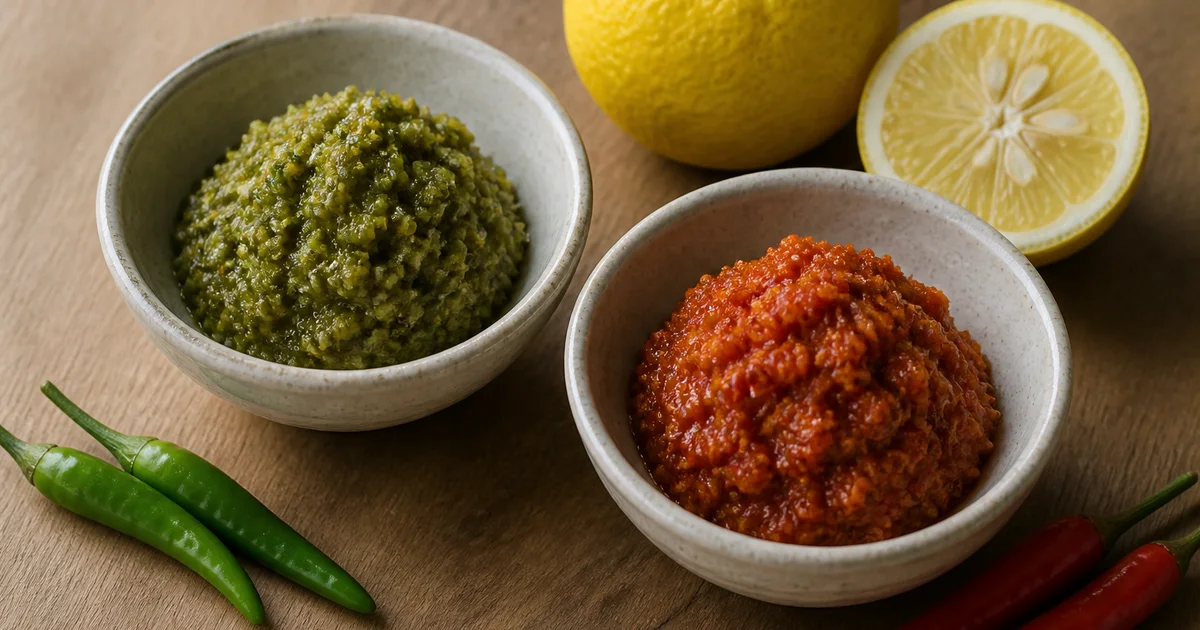
Yuzu kosho is a Japanese condiment made primarily from yuzu citrus peel, chili peppers, and salt. It tastes intensely aromatic, salty, and spicy, with a fresh citrus fragrance and a slight bitterness from the peel. A very small amount can brighten grilled meat, fish, hot pot, noodles, soup, and dipping sauces.
Despite its name, traditional yuzu kosho does not contain black pepper. In parts of Kyushu, kosho is a regional word for chili pepper, while ordinary black pepper may be distinguished as Western pepper.
Heat Begins with the Chili, but Aroma Comes from the Peel
| Feature | What to expect |
|---|---|
| Main ingredients | Yuzu peel, chili pepper, and salt |
| Taste | Citrusy, salty, hot, aromatic, and slightly bitter |
| Texture | Moist paste, from finely ground to visibly coarse |
| Main varieties | Green and red yuzu kosho |
| Regional association | Kyushu, especially Oita and Fukuoka |
| How much to use | Begin with a tiny amount; it is salty and concentrated |
What Is Yuzu Kosho Made Of?
The simplest yuzu kosho contains grated or finely chopped yuzu peel, fresh chili peppers, and salt. The mixture is ground into a paste and may be rested so its flavors blend. Recipes differ in their ratios, texture, and maturation time.
Yuzu is an aromatic East Asian citrus with a thick, uneven peel. Its fragrance can suggest lemon, mandarin, and grapefruit without matching any of them. The aroma-rich peel allows yuzu kosho to smell vividly citrusy even with little juice.
The condiment is strongly associated with Kyushu. MAFF notes several origin stories, including a tradition around Mount Hiko in Fukuoka, while Oita also treats it as a local specialty. It is better to avoid assigning one uncontested birthplace.
What Does Yuzu Kosho Taste Like?
The first impression is often yuzu fragrance, followed by chili heat and salt. Its citrus character is bright rather than sweet, while the zest can add pleasant bitterness. Unlike a juice-based citrus sauce, it is a concentrated paste.
Heat levels vary widely with chili variety, ripeness, seeds, and the ratio of yuzu to pepper. Saltiness also differs, so equal portions from two products may not taste equally strong.
Yuzu kosho does not provide much umami by itself. Its aroma, salt, bitterness, and heat instead sharpen savory foods without turning them into a heavy sauce.
Green vs. Red Yuzu Kosho
| Green yuzu kosho | Red yuzu kosho | |
|---|---|---|
| Typical ingredients | Green yuzu peel and green chilies | Ripe yellow yuzu peel and red chilies |
| General character | Fresh, grassy, sharp, and often hotter | Rounder, deeper, and often more aromatic |
| Color | Bright to olive green | Orange-red to deep red |
| Useful starting point | Hot pot, chicken, white fish, noodles | Grilled meat, richer fish, sauces, stews |
These are tendencies rather than rules. MAFF describes green versions as generally hotter and red versions as having stronger aroma, but the actual result depends on the chili, yuzu, salt, and maker. Color alone cannot tell you the exact heat level.
Is Yuzu Kosho Fermented?
Not always. Some makers rest or mature the salted paste, and some products may undergo fermentation, but fermentation is not a universal requirement behind everything labeled yuzu kosho. Official Japanese descriptions define the basic condiment through yuzu, chili, and salt rather than one standardized fermentation process.
If fermentation matters to you, check the producer’s explanation instead of assuming it from the name. “Aged,” “matured,” and “fermented” are not automatically interchangeable.
How to Use Yuzu Kosho
Hot Pot and Soup
Hot pot is one of its classic uses. Place a tiny amount in your individual bowl and dissolve it gradually into broth or dipping sauce. Adding it to the entire pot can make the dish too salty or hot for everyone. It also works in miso soup and clear dashi-based soup, preferably added near serving so that its aroma remains noticeable.
Udon, Soba, and Ramen
Stir a small dab into noodle broth, or mix it into a dipping sauce for cold noodles. It works best as an accent rather than the main flavor. Taste before adding more because the broth may already contain substantial salt.
Yakitori and Grilled Meat
A little yuzu kosho pairs especially well with chicken, pork, and beef. Serve it beside simply salted yakitori, then touch each bite to the paste. The citrus aroma cuts through fat while the chili reinforces the heat of the grill.
Fish and Seafood
Use a thin smear with grilled fish, seared scallops, sashimi, or steamed seafood. Mild ingredients need very little. Mixing yuzu kosho with Japanese soy sauce can create a quick dipping sauce, but both ingredients contain salt, so keep the proportions restrained.
Dressings and Everyday Sauces
Blend a small amount into mayonnaise, vinaigrette, yogurt sauce, or softened butter. These bases spread the heat and make it easier to control. It can also season roasted vegetables, tofu, eggs, or pasta as a modern application.
How I Add Yuzu Kosho Without Losing Its Aroma
When I use yuzu kosho, I account for salt before adding heat. A large spoonful can make a dish salty before it becomes pleasantly aromatic, and the strength varies by brand. I start with a small amount, taste the completed seasoning, and add more only if the citrus and chile still need to come forward.
For soups and sauces, dissolving a little in a spoonful of broth helps distribute it evenly. For grilled fish, chicken, or sashimi-style preparations, a tiny amount placed directly beside the food creates a more concentrated contrast. These two methods give different results even when the quantity is similar.
Long cooking can soften the fresh yuzu aroma, so I often add it near the end or serve it as a condiment. It should support the ingredient rather than make every bite taste identical. Tasting the food first is the best way to decide whether yuzu kosho is needed at all.
How Much Yuzu Kosho Should You Use?
Start with less than you think you need. For an individual bowl or serving, a small dab on the tip of a chopstick may be enough. Mix, taste, and add more only if necessary.
Using too much does more than increase chili heat: it also adds salt and bitterness. When incorporating it into a recipe, reduce other salty seasonings first, then adjust after the yuzu kosho is fully dispersed.
Yuzu Kosho vs. Wasabi and Sansho
| Condiment | Main character | How it differs |
|---|---|---|
| Yuzu kosho | Citrus, chili heat, and salt | Moist paste made with yuzu peel and chilies |
| Wasabi | Sharp, nasal pungency | No chili heat or yuzu in traditional wasabi |
| Sansho | Citrusy aroma and tingling sensation | Japanese prickly ash, often sold as powder or berries |
They are not direct substitutes. Each creates a different kind of heat, and yuzu kosho adds substantial salt that the others may not.
How to Choose and Store Yuzu Kosho
Check whether the product is green or red and read the ingredients. A simple version may list only chili, yuzu, and salt, while commercial products can include juice, acidity regulators, preservatives, or other seasonings. Traditional ingredients are plant-based and gluten-free, but the label is what matters for allergies or dietary restrictions.
Follow the package instructions and refrigerate after opening when directed. Use a clean utensil and close the container promptly to protect the aroma. Green paste may darken as it is exposed to air; a color change alone is not always spoilage, but discard the product if it develops mold, an unusual odor, or other signs that conflict with the label’s guidance.
Using Yuzu Kosho Without Overpowering the Dish
Is Yuzu Kosho Very Spicy?
It can be. Heat varies by chili and recipe, but even mild versions are concentrated and salty. Start with a small dab.
Does Yuzu Kosho Contain Black Pepper?
Traditional yuzu kosho does not. In Kyushu usage, kosho can mean chili pepper. Commercial labels should still be checked for additional ingredients.
Is Red Yuzu Kosho Less Spicy Than Green?
Often, but not always. Green versions are commonly sharper and hotter, while red versions can be rounder and more aromatic. The maker and chili variety matter more than color alone.
Is Yuzu Kosho the Same as Yuzu Sauce?
No. Yuzu kosho is a salty chili-and-citrus paste. “Yuzu sauce” may refer to ponzu, dressing, glaze, or another product with different ingredients and consistency.
A Small Amount Should Change the Whole Dish
Yuzu kosho is a concentrated Kyushu condiment made mainly from aromatic yuzu peel, chili peppers, and salt—not black pepper. Green versions tend to taste fresh and sharp, while red versions are often rounder and more aromatic, although recipes vary. Use a tiny amount with hot pot, noodles, grilled meat, seafood, soup, or dressings. Because it contributes both heat and salt, add it gradually and taste before using more.
Sources for This Yuzu Kosho Guide
- Ministry of Agriculture, Forestry and Fisheries: Yuzu Gosho (Yuzu Citrus Pepper)
- Japan National Tourism Organization: Oita Local Specialties — Yuzukosho
- Taste of Japan / JETRO: Yakumi — Japanese Condiments
- Japan External Trade Organization: Highlighted Japanese Ingredient — Yuzu
- Ministry of Education, Culture, Sports, Science and Technology: Notes on Foods — Yuzu Kosho