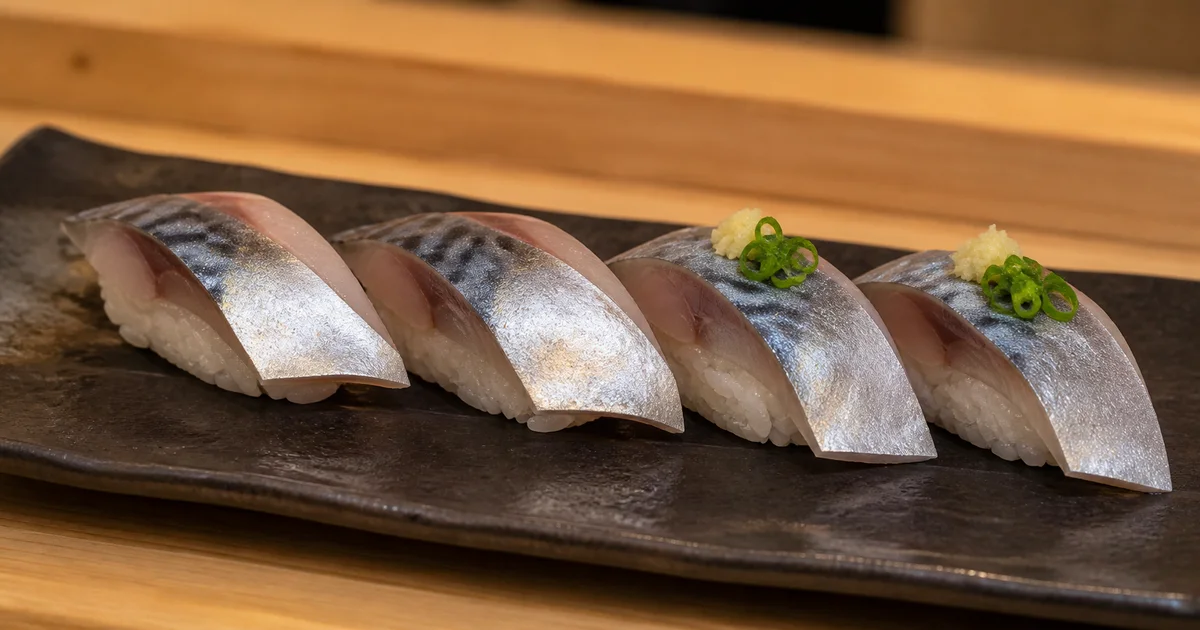
Saba sushi is sushi made with mackerel. At sushi restaurants, the fish is often salted and marinated in vinegar as shime saba before being placed over seasoned rice. It tastes richer and more distinctly fish-like than many white-fish toppings, with savory oiliness, gentle acidity, and a firm but tender texture.
Although vinegar curing changes the flavor and texture, it does not heat-cook the fish. Saba may therefore be described as cured rather than cooked, and diners avoiding raw or undercooked seafood should ask the restaurant how it was prepared.
Mackerel Must Be Judged Before It Is Cured
| Feature | What to expect |
|---|---|
| Main ingredient | Mackerel |
| Common preparation | Salted and vinegar-cured as shime saba |
| Taste | Rich, savory, oily, tangy, and mildly salty |
| Texture | Firm, moist, and tender |
| Appearance | Shiny silver skin with dark blue-gray markings |
| Important point | Vinegar curing is not the same as cooking |
What Does Saba Mean?
Saba (鯖) is the Japanese word used broadly for mackerel, not one guaranteed species. Japanese chub mackerel, blue or spotted mackerel, and imported Atlantic mackerel can all appear on menus.
A menu that says only saba identifies the fish category rather than its scientific identity. For most diners, the more useful distinction is whether it was cured, grilled, seared, or pressed with rice.
Acidity, Fat, and the Aroma of the Skin
Saba has pronounced umami and tastes richer than lean white fish. Its flavor is distinctly marine but should still taste clean. In shime saba, salt and vinegar add a bright tang that balances the oil. Acidity varies with the chef and curing time.
The flesh is tender yet compact because salting and vinegar draw out moisture and change its structure. The thin silver skin is normally left on and eaten. Scoring can make it easier to bite.
Grated ginger, sliced green onion, or a light brush of soy sauce may accompany saba. These fresh accents balance its richness.
What Is Shime Saba?
Shime saba is mackerel that has been cured with salt and vinegar. Shimeru can carry the sense of firming or tightening, which describes the change in the fish as it loses some moisture. The process seasons the flesh, moderates its oily character, and gives it a firmer bite.
Methods differ among chefs. Salt, time in vinegar, fish size, and fat content influence the result. A light cure can remain soft and fish-forward; a longer cure may taste firmer and more acidic.
Professional preparation also depends on suitable fish, rapid chilling, careful trimming, parasite controls, and hygienic handling. Vinegar is not a home shortcut for making ordinary mackerel safe to eat without cooking.
Is Saba Sushi Raw or Cooked?
Traditional shime saba is cured but not heat-cooked. Acid changes its texture, but that differs from raising fish to a safe cooking temperature. Someone avoiding raw or undercooked seafood should treat it as not fully cooked.
Other saba sushi may be cooked. Some restaurants sear or torch the surface, while regional preparations may use grilled mackerel. Light searing affects mainly the outside and does not necessarily cook the center. Ask whether the fish is fully cooked if that distinction matters.
This is also why sushi and sashimi are not defined by rawness. Sushi is identified by its seasoned rice; cured or cooked mackerel can still be sushi when paired with that rice.
Common Ways Saba Sushi Is Served
Saba Nigiri
For nigiri, a slice of shime saba is placed over sushi rice and may receive ginger, green onion, or sauce. This form highlights the contrast between tangy fish and lightly acidic rice. Our guide to what sushi is explains why the rice is central to the bite.
Saba Bo-zushi
Bo-zushi, or stick sushi, places a larger mackerel fillet over a long block of vinegared rice before shaping and slicing. MAFF connects this regional tradition with routes that carried salted mackerel from Wakasa Bay toward Kyoto.
This style provides a broader layer of mackerel than nigiri. Some versions use bamboo wrapping or kombu, but recipes differ by region.
Pressed Mackerel Sushi
Mackerel is also used in pressed sushi, including styles called battera. Fish and rice are shaped together and cut into compact rectangular pieces.
Seared or Grilled Saba Sushi
Surface-seared saba develops a roasted aroma while retaining much of the fish’s richness. Fully grilled mackerel sushi has a flaky texture and is a clearer choice for diners seeking cooked fish, although sauces and garnishes vary.
Why Is Saba Called Hikarimono?
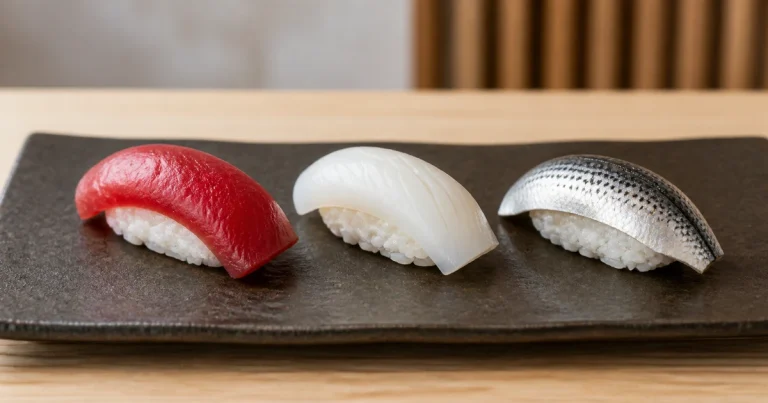
Sushi chefs group silver-skinned fish such as saba, aji, sardine, and kohada under hikarimono, meaning “shining things.” The name refers to reflective skin, not one species.
Hikarimono often have assertive flavor and require careful handling, salting, or curing. In traditional Edomae sushi, this preparation demonstrates that sushi craftsmanship involves much more than placing untreated raw fish on rice.
Saba Sushi and Food Safety
Mackerel requires careful temperature control. The U.S. Food and Drug Administration explains that time and temperature abuse can allow histamine to accumulate in mackerel and related fish. Once formed, that histamine is not reliably removed by cooking, freezing, smoking, or curing. Proper chilling from catch through service is therefore essential.
Raw and undercooked mackerel can also carry Anisakis parasites. Japan’s Ministry of Agriculture, Forestry and Fisheries specifically warns that vinegar, salt, soy sauce, and wasabi do not kill Anisakis. Appropriate freezing or thorough cooking is used as a control, together with professional handling and inspection.
Choose a reputable restaurant or commercially prepared product and refrigerate packaged saba according to its label. Home cooks should use seafood supplied for the intended preparation and follow authoritative freezing or cooking guidance. People at higher risk from foodborne illness should seek medical guidance about raw seafood.
How to Order and Eat Saba Sushi
You can order it by saying saba o kudasai (“saba, please”) or asking for shime saba. If you need cooked fish, ask whether it is fully cooked rather than assuming that “cured” or “seared” means cooked through.
Try the piece as served before adding soy sauce, because cured saba may already be salty and the chef may have brushed it with sauce. Hands or chopsticks are both acceptable for nigiri. More general guidance is available in our article on how to eat sushi in Japan.
Is Saba the Same as Mackerel?
Yes. Saba is the broad Japanese term for mackerel, although the exact species can vary.
Is Shime Saba Cooked?
No. Standard shime saba is salted and vinegar-cured but not heat-cooked. A restaurant may additionally sear or grill it, so check the preparation.
Does Vinegar Kill Parasites in Mackerel?
No. Vinegar curing alone does not kill Anisakis. Safe service depends on suitable sourcing, temperature control, inspection, and appropriate freezing or cooking procedures.
Can You Eat the Silver Skin?
Yes. The thin, shiny skin is normally part of saba sushi. It may be scored or peeled selectively depending on the chef’s preparation.
The Cure Is a Daily Decision, Not a Fixed Recipe
Saba sushi combines richly flavored mackerel with seasoned rice. The familiar shime saba version is salted and vinegar-cured, producing a savory, oily, tangy taste and a firm, tender texture. It remains cured rather than heat-cooked, and vinegar alone does not control parasites. Saba may appear as nigiri, pressed sushi, regional bo-zushi, or a grilled preparation. For beginners, the key is to check whether it is cured or fully cooked and to taste the chef’s seasoning before adding extra soy sauce.
Editorial Sources
- Ministry of Agriculture, Forestry and Fisheries: Saba-zushi (Mackerel Sushi)
- Ministry of Agriculture, Forestry and Fisheries: Processed Mackerel
- Ministry of Agriculture, Forestry and Fisheries: Preventing Anisakis Food Poisoning
- U.S. Centers for Disease Control and Prevention: About Anisakiasis
- U.S. Food and Drug Administration: Scombrotoxin Poisoning and Decomposition