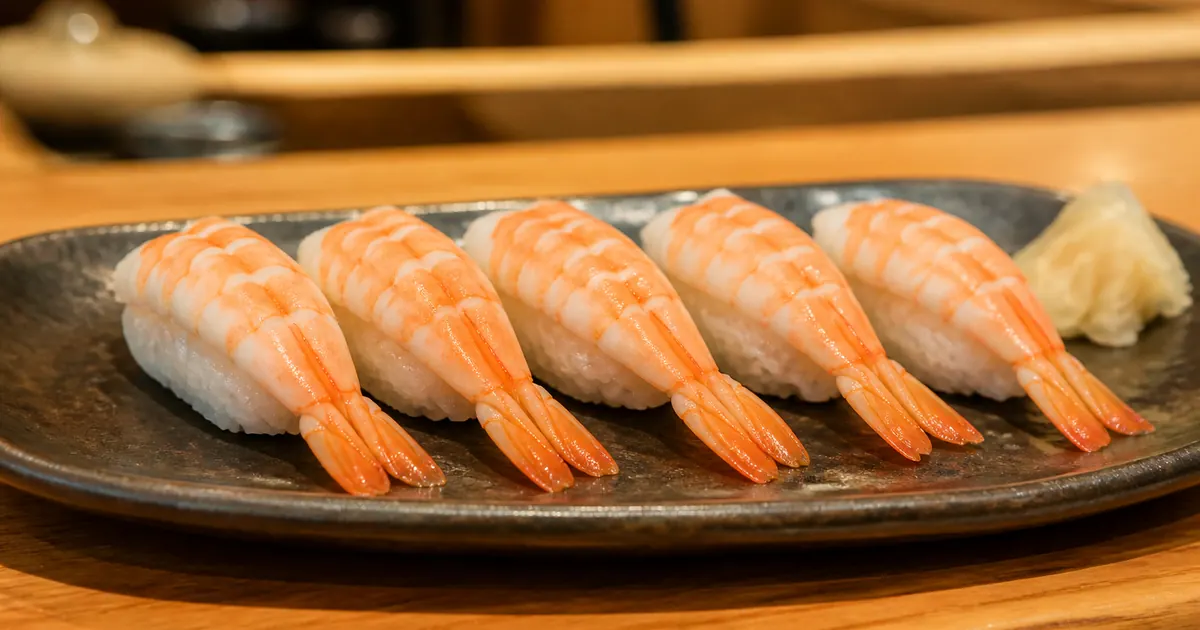
Ebi sushi is sushi made with shrimp. On many sushi menus, plain ebi means a cooked shrimp that has been peeled, opened, and placed over seasoned rice as nigiri. Its flavor is mild and gently sweet, with a firm, springy texture that makes it approachable for beginners.
However, ebi is also the general Japanese word for shrimp or prawn, so it does not guarantee one species or preparation. Names such as amaebi and botan ebi commonly identify raw shrimp. Checking the complete menu name is more reliable than assuming all ebi sushi is cooked.
One Menu Name Covers Several Shrimp Styles
| Feature | What to expect |
|---|---|
| Main ingredient | Shrimp or prawn |
| Common preparation | Cooked, peeled, and butterflied for nigiri |
| Taste | Mild, clean, savory, and slightly sweet |
| Texture | Firm, tender, and springy when cooked |
| Important distinction | Amaebi and botan ebi are commonly served raw |
What Does Ebi Mean?
Ebi (えび or 海老) is a broad Japanese culinary term for shrimp and prawns. It describes the ingredient rather than a single sushi style. Ebi may appear as nigiri, inside a roll, in tempura, in a rice bowl, or as part of another dish.
For nigiri, the defining sushi element is still the vinegared rice. Our guide to what sushi is explains why raw seafood by itself is not sushi and why cooked toppings still qualify.
Is Ebi Sushi Cooked or Raw?
Plain ebi nigiri is commonly cooked. The shrimp is often gently boiled, cooled, peeled while leaving the tail attached, and split along the underside so that it lies neatly over the rice. Restaurant methods differ, and some chefs season or marinate it after cooking.
A cooked shrimp topping is usually opaque, with white flesh and pink or orange markings. It should feel firm and tender rather than creamy. Color alone is not a perfect test, however, because shrimp species naturally vary and presentation can change the appearance.
Raw shrimp is normally identified more specifically. Amaebi, meaning sweet shrimp, and botan ebi are familiar examples. If avoiding raw seafood matters, ask whether the topping is cooked rather than relying only on the word ebi.
Texture Changes with Species and Cooking
Cooked ebi has a clean, mild sweetness and less richness than fatty tuna or eel. Its savory flavor is gentle, allowing the acidity and temperature of the sushi rice to remain noticeable. A small amount of wasabi or a light brush of soy sauce may add contrast without hiding the shrimp.
The texture is one of its main attractions. Properly cooked shrimp has a light snap followed by a tender bite. If it is cooked too long, it can become tight or rubbery; careful preparation keeps it moist and resilient.
Common Types of Ebi on Sushi Menus
Standard Ebi
Unqualified ebi on a casual sushi menu usually refers to a cooked shrimp topping. The exact species may not be stated. This is often the easiest choice for someone who prefers cooked seafood and a familiar flavor.
Amaebi
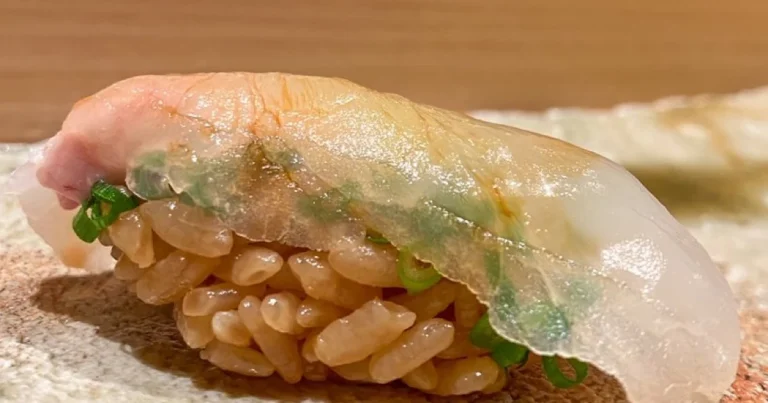
Amaebi means “sweet shrimp.” It is generally served raw and has a soft, slightly sticky or creamy texture with pronounced sweetness. It looks more translucent than standard cooked ebi. Japan’s northern waters, including Hokkaido and Fukui, are particularly associated with sweet shrimp.
Botan Ebi
Botan ebi is a larger shrimp commonly served raw at sushi restaurants. It is plump, rich, and sweet, with a softer texture than cooked ebi. The head may sometimes be served separately, but practices vary by restaurant.
Kuruma Ebi
Kuruma ebi, often called Japanese tiger prawn in English, is a valued traditional sushi ingredient. In Edomae-style preparation it is commonly cooked with close attention to timing, then peeled and shaped for nigiri. Some chefs serve it slightly warm to match freshly prepared rice. Our guide to Edomae sushi explains the broader tradition of preparing toppings rather than simply serving everything raw.
Shiroebi and Sakura Ebi
Shiroebi are tiny white shrimp associated with Toyama Bay, while sakura ebi are small pink shrimp strongly associated with Suruga Bay in Shizuoka. Because they are small, they may be grouped on rice, placed in gunkan, served raw when appropriate, dried, or used in other regional dishes. They are not simply miniature versions of standard ebi nigiri.
Ebi vs. Amaebi: What Is the Difference?
| Ebi | Amaebi | |
|---|---|---|
| Typical preparation | Cooked | Raw |
| Appearance | Opaque white with pink or orange bands | Translucent pink or reddish |
| Texture | Firm and springy | Soft and creamy |
| Flavor | Mild and lightly sweet | More distinctly sweet |
These are useful menu expectations, not universal guarantees. Species, season, handling, and chef preparation can change the result. The difference between sushi and seafood served without rice is covered in our sushi vs. sashimi comparison.
Does Ebi Mean Shrimp or Prawn?
Both translations appear. American English usually favors “shrimp,” while “prawn” is more common for some species or larger animals in British and other varieties of English. Common names are used inconsistently, so size alone does not create a dependable universal distinction.
For a beginner reading a Japanese menu, the practical approach is to treat ebi as the broad category and pay attention to the specific name, such as amaebi or kuruma ebi.
How to Order and Eat Ebi Sushi
At a restaurant, you can say ebi o kudasai (“ebi, please”). If you want to confirm the preparation, ask kore wa nama desu ka? (“Is this raw?”) or kore wa yudete arimasu ka? (“Is this boiled?”).
Ebi nigiri can be eaten with your hands or chopsticks. Eat it in one bite when comfortable, or follow the restaurant’s presentation if the piece is unusually large. Use soy sauce lightly; soaking the rice can overpower the shrimp and make the nigiri fall apart. For broader counter etiquette, see how to eat sushi in Japan.
Allergies and Food Safety
Shrimp is a crustacean shellfish and a major food allergen under U.S. labeling rules. Anyone with a shellfish allergy should not assume that choosing another topping removes the risk, because sushi counters may share gloves, knives, boards, sauces, or preparation surfaces. Ask the restaurant directly about ingredients and cross-contact.
Cooked ebi is a useful option for diners avoiding raw seafood, but confirm that the shrimp is fully cooked. The U.S. Food and Drug Administration advises that cooking seafood thoroughly is the safest approach and that people at higher risk of foodborne illness should avoid raw or undercooked seafood.
Is Ebi Sushi Always Cooked?
No. Plain ebi nigiri is commonly cooked, but ebi is a broad word. Amaebi and botan ebi are usually raw, so check the complete name or ask the restaurant.
Does Ebi Sushi Contain Raw Fish?
Standard cooked ebi nigiri does not contain raw fish; shrimp is shellfish, not fish. However, it still contains a crustacean allergen and may be prepared near raw seafood.
Is the Tail Meant to Be Eaten?
The tail shell is often left attached for appearance and as a small handle. It is generally fine to leave the hard tail portion on the plate.
Is Ebi Sushi Good for Beginners?
Yes. Cooked ebi is mild, slightly sweet, and firm, making it one of the more approachable traditional nigiri toppings. Confirm “cooked ebi” if you are specifically avoiding raw seafood.
How Heat Turns Shrimp into Sushi
Ebi sushi uses shrimp or prawn, most commonly as cooked nigiri with a mild sweetness and firm, springy texture. The word ebi is broad, so specific names matter: amaebi and botan ebi are commonly raw, while kuruma ebi is often carefully cooked for traditional nigiri. Check the menu or ask about preparation when avoiding raw seafood, and remember that shrimp remains a major crustacean allergen even when fully cooked.
Editorial Sources
- Japan National Tourism Organization (JNTO): Sushi in Japan Guide
- Japan National Tourism Organization (JNTO): Sushi — Definitive Seasonal Calendar
- Japan National Tourism Organization (JNTO): Shizuoka’s Gourmet Specialties — Sakura Ebi
- NOAA Fisheries: How Prawns and Shrimp Differ
- U.S. Food and Drug Administration: Selecting and Serving Fresh and Frozen Seafood Safely
- U.S. Food and Drug Administration: What Is a Major Food Allergen?