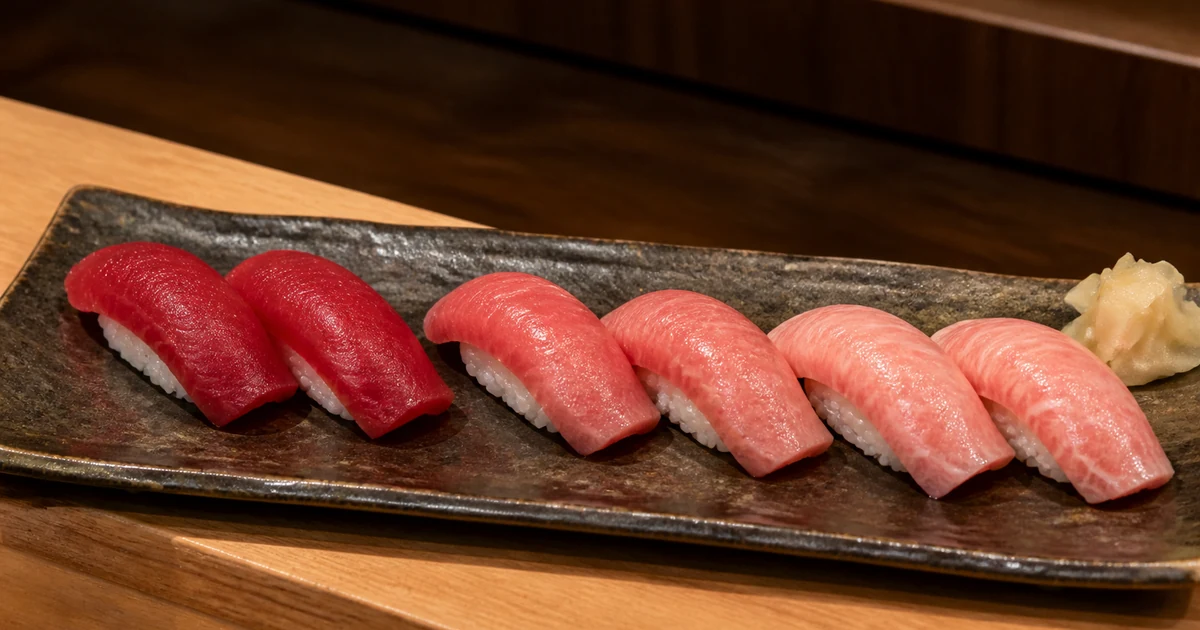
Maguro means tuna, and maguro sushi ranges from lean, deep-red akami to moderately fatty chutoro and richly marbled otoro. Akami has the firmest texture and cleanest tuna flavor. Chutoro balances red meat with fat, while otoro is the softest, richest, and usually most expensive.
These names describe different levels and locations of fat within the fish rather than three separate tuna species. This guide focuses on how they taste, how they appear on Japanese menus, and which one a beginner should order. For the basic role of rice, toppings, and common formats, start with our guide to what sushi is.
Akami, Chutoro, and Otoro Form a Continuum
| Type | Fat level | Typical texture | Flavor | Good for |
|---|---|---|---|---|
| Akami | Lean | Firm and smooth | Clean, savory, distinctly tuna-like | Diners who prefer lean fish |
| Chutoro | Medium | Tender with light marbling | Balanced, rich, gently sweet | Most first-time toro orders |
| Otoro | Highest | Very soft and melting | Full, buttery, intensely rich | Diners who enjoy fatty fish |
The boundaries are not perfectly fixed. Species, season, the fish’s condition, and the restaurant’s cutting and grading all affect what is sold under each name.
What Does Maguro Mean?
Maguro is the general Japanese word used for tuna. It does not automatically mean bluefin tuna. Japanese markets and restaurants use several tuna species, and menus may identify them more precisely.
- Hon-maguro or kuro-maguro: Pacific bluefin tuna
- Minami-maguro: southern bluefin tuna
- Mebachi-maguro: bigeye tuna
- Kihada-maguro: yellowfin tuna
- Bincho-maguro: albacore tuna
Bluefin is especially associated with premium toro because large fish can develop substantial belly fat, but other tuna also appear in sushi and sashimi. A menu that says only maguro may not identify the species, so ask if that detail matters to you.
Akami: Lean Tuna with a Clean Flavor
Akami literally refers to red meat. It comes from leaner parts of the tuna and usually has a deep red appearance, a smooth but relatively firm texture, and a direct savory flavor. Compared with toro, it feels lighter and leaves less fat on the palate.
Akami is not an inferior leftover after the fatty portions are removed. At serious sushi restaurants, its aroma, acidity, umami, and compatibility with the rice are highly valued. It may be served plain or prepared as zuke, meaning the tuna has been briefly marinated in a soy-based seasoning. Zuke is closely connected with the preparation techniques described in our guide to Edomae sushi.
Chutoro: The Balance Between Lean and Fatty
Chutoro means medium-fatty tuna. It is generally cut from areas where lean red meat meets fattier tissue, often around the belly or side of the fish. The flesh usually shows some pale marbling while retaining more structure than otoro.
For many diners, chutoro offers the easiest balance: softer and richer than akami but less overwhelming than otoro. It can taste gently sweet, savory, and creamy while still delivering a recognizable tuna flavor. If you want to try only one type of toro, chutoro is usually the most approachable starting point.
Otoro: The Richest Fatty Tuna
Otoro is the fattiest grade of tuna commonly found at sushi restaurants. It comes from especially fatty belly areas, with prized portions often located toward the front of the fish. Its flesh is pale pink with visible fat and a very soft texture.
Otoro is known for a melting sensation as the fat warms in the mouth. The flavor is rich and lingering, so one piece may feel more substantial than several pieces of lean fish. It is usually scarce relative to akami and therefore tends to command a higher price. Some chefs score or lightly sear it to adjust the texture and release aroma.
What Is Toro, and Is It the Same as Otoro?
Toro is the broad term for fatty tuna. Chutoro and otoro are both types of toro, but toro does not always mean otoro. When a menu lists only “toro,” the exact fat level may depend on the restaurant.
Negitoro is chopped or minced tuna commonly paired with green onion and used in rolls, gunkan sushi, or rice bowls. Its texture and fat level vary, and it should not be treated as another fixed grade alongside akami, chutoro, and otoro.
How Maguro Is Served in Sushi and Sashimi
Maguro is commonly served as nigiri over seasoned sushi rice, as sashimi without rice, or inside rolls. The distinction matters: sushi and sashimi are not the same dish, even when both use the same tuna cut.
A chef may serve tuna untreated, marinated, aged, chopped, or lightly seared. Temperature and knife work also change the experience. Akami benefits from a clean slice and close balance with the rice, while fattier toro may be cut or scored to make its richness easier to eat.
Which Tuna Sushi Should a Beginner Order?
If possible, order one piece each of akami, chutoro, and otoro. Taste them from leanest to fattiest so the richness of otoro does not overwhelm the more delicate akami first.
- Choose akami if you prefer lean fish and a firmer bite.
- Choose chutoro if you want richness without the heaviest fat.
- Choose otoro if you enjoy soft, buttery textures.
At an omakase restaurant, simply follow the chef’s serving order. At a casual restaurant, a tuna tasting set may offer an easy comparison. Avoid soaking the rice in soy sauce; taste the sushi as served before adding more seasoning. Our guide to eating sushi in Japan explains the practical etiquette.
Price and Quality: Common Misunderstandings
Otoro is usually more expensive than chutoro, and chutoro is commonly more expensive than akami. That does not make the fattiest option universally “best.” Quality also depends on the tuna species, handling, freezing, storage, aging, knife work, and how the fish matches the rice.
Color alone is not a reliable measure of freshness or quality. Akami is naturally darker than toro, and different species have different colors. The U.S. Food and Drug Administration also notes that diet, environment, and processing can affect seafood color.
Raw Tuna Safety
Maguro sushi and sashimi are commonly served raw, although zuke and seared preparations also exist. Raw seafood always carries some foodborne-illness risk. Choose a reputable restaurant that handles seafood appropriately, and do not rely on appearance alone to judge safety.
The FDA advises that cooking seafood thoroughly is the safest option. Pregnant people, young children, older adults, and people with weakened immune systems may be advised to avoid raw or undercooked seafood. Individual health needs and local guidance should take priority.
Tuna Names You Will See at the Counter
Is maguro the same as bluefin tuna?
No. Maguro is a general word for tuna. Bluefin is one important type, but bigeye, yellowfin, albacore, and other tuna may also be served.
Is akami lower quality than toro?
No. Akami is leaner and usually less expensive, but high-quality akami is valued for its clean flavor, aroma, and balance with sushi rice.
Which is better, chutoro or otoro?
It depends on your preference. Chutoro balances meatiness and fat, while otoro is softer and much richer. Many beginners find chutoro easier to appreciate.
Why is otoro so expensive?
Only a limited portion of a tuna has the very high fat level associated with otoro. Species, supply, grade, source, and restaurant pricing also influence the cost.
Choose Tuna by Balance, Not Prestige
Maguro sushi is not one uniform piece of tuna. Akami is lean, firm, and savory; chutoro offers a middle level of fat and tenderness; and otoro is the richest and softest. None is automatically the best choice. Ordering one of each, then tasting from lean to fatty, is the clearest way to understand how different parts of the same fish create very different sushi experiences.