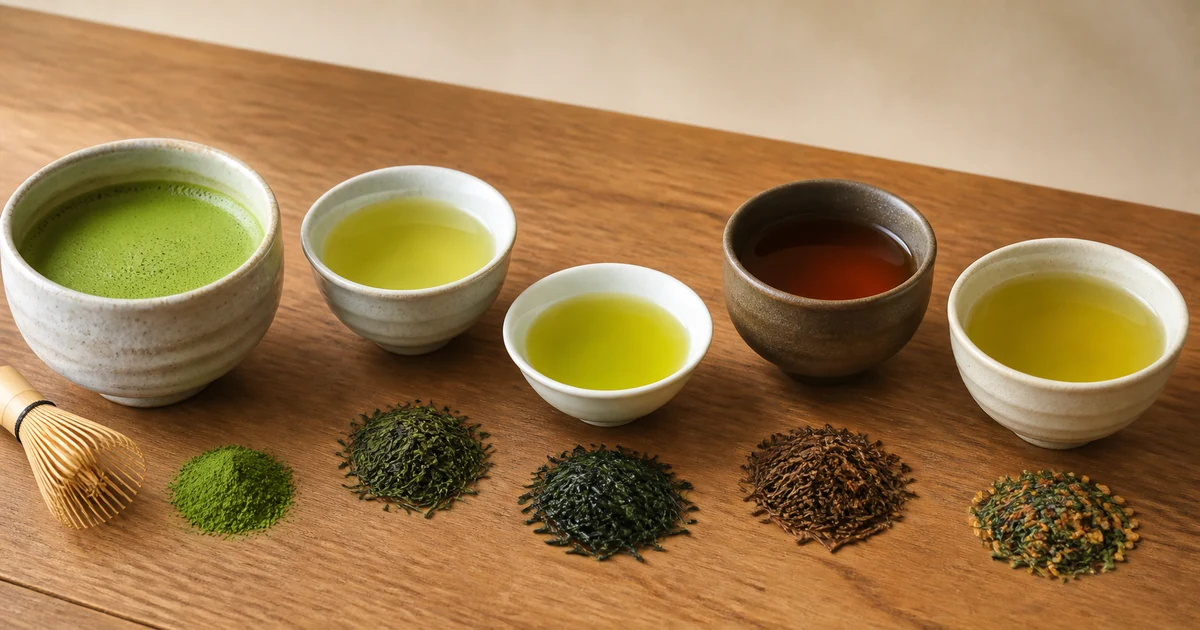
Japanese tea types include sencha, matcha, gyokuro, hojicha, genmaicha, bancha, kukicha, and several regional or processing-based styles. Most are green teas made from the same tea plant, Camellia sinensis. Their differences come from how the plants are grown and how the leaves are steamed, rolled, dried, roasted, blended, or ground. The Japanese teapot guide explains which vessels suit different leaf teas and brewing styles.
Green tea is therefore a category, while matcha and sencha are specific products within it. This guide compares the major styles by flavor, appearance, preparation, and typical use.
Tea Style Begins Before the Leaves Reach the Cup
| Tea | How it differs | Typical flavor | Preparation |
|---|---|---|---|
| Sencha | Steamed, rolled leaf tea, usually grown in open sunlight | Fresh, grassy, balanced umami and astringency | Steeped |
| Matcha | Shade-grown tencha ground into powder | Full, vegetal, creamy, bittersweet | Whisked into water |
| Gyokuro | Shade-grown leaves that are steamed and rolled | Deep umami, sweet, concentrated | Steeped cool in small amounts |
| Hojicha | Green tea leaves or stems that are roasted | Toasty, woody, gently sweet | Steeped hot |
| Genmaicha | Green tea blended with roasted rice | Nutty, roasted, refreshing | Steeped |
| Bancha | A broad everyday category often using more mature leaves | Light, brisk, sometimes rustic | Steeped hot |
| Kukicha | Made largely from stems and stalks | Light, sweet, clean | Steeped |
| Konacha | Fine leaf particles separated during tea processing | Strong and quick-extracting | Steeped briefly |
Flavor varies with cultivar, harvest, region, processing, storage, and brewing. The descriptions above are useful starting points rather than guarantees.
What Does Green Tea Mean in Japan?
Green tea is made by heating fresh leaves soon after harvest to limit enzymatic oxidation. Japanese production commonly uses steam. Black and oolong teas come from the same plant but undergo different processing.
Sencha, gyokuro, matcha, bancha, genmaicha, and hojicha can all sit within the broad Japanese green-tea family, even when their colors and aromas look very different. “Green tea” on a menu does not always identify the exact style.
Sencha: Japan’s Representative Leaf Tea
Sencha is the standard reference point for Japanese loose-leaf green tea. The leaves are generally grown without preharvest shading, then steamed, rolled, and dried. Finished leaves often have a narrow, needle-like appearance.
A well-brewed sencha can combine fresh vegetation, gentle sweetness, savory depth, and clean astringency. Cooler water emphasizes sweetness and umami; hotter water generally draws out more bitterness and astringency.
Fukamushi sencha is steamed longer than standard sencha. The leaves become finer and the infusion often looks cloudier and deeper green, with a fuller but relatively soft impression.
Matcha: Powdered Tea Made From Tencha
Matcha is not simply any green tea ground into powder. Its raw material is tencha: shaded leaves that are steamed and dried without the rolling used for sencha. Stems and veins are removed before the leaf material is finely ground.
Because the powder is whisked into water and consumed rather than removed after steeping, matcha has a concentrated texture and may taste vegetal, savory, creamy, sweet, and bitter.
Powdered sencha and other ground teas exist, but JETRO notes that powdered tea made from material other than tencha is not defined as matcha in the same way. Read the product description rather than relying only on bright green color.
Gyokuro: Shade-Grown Leaf Tea
Gyokuro is grown under cover before harvest, reducing direct sunlight. The picked leaves are steamed, rolled, and dried, so the finished product remains a leaf tea rather than a powder.
Shading supports a deep green color, distinctive aroma, and pronounced savory-sweet character. Gyokuro is typically brewed with cooler water, more leaf relative to water, and a longer first steep than sencha.
Gyokuro and matcha both begin with shaded leaves, but their processing and drinking methods differ. Gyokuro leaves are infused and removed; matcha powder is suspended in the bowl.
Hojicha: Roasted Green Tea
Hojicha is made by roasting processed green tea leaves or stems. The heat changes their color from green to brown and creates a warm aroma that may suggest toasted grain, wood, or caramel.
It is commonly brewed with hotter water than sencha or gyokuro to emphasize its fragrance. Hojicha is served with meals, after food, and in sweets or lattes. The word describes the roasting style, not one fixed grade or leaf source.
Genmaicha: Green Tea With Roasted Rice
Genmaicha blends green tea with roasted rice. Bancha or sencha is common, but formulas differ. The rice brings a nutty, popcorn-like aroma, while the tea contributes freshness and astringency.
Despite the English name “brown rice tea,” the roasted grains in traditional production are not necessarily raw brown rice. Japan’s Ministry of Agriculture explains that cooked white rice may be roasted and called genmai in this context.
Bancha, Kukicha, and Konacha
Bancha is a broad term that varies by region. It often refers to everyday tea made from mature leaves and stems or later harvests. Regional styles may be processed differently.
Kukicha consists mainly of stems and stalks separated during production. It is usually light and sweet. Roasted stem tea may be sold as kuki hojicha or bocha.
Konacha consists of small particles separated when teas such as sencha are sorted. It brews quickly and strongly. Konacha is associated with many sushi restaurants, but it is loose tea rather than instant powder.
Basic Brewing Guide
| Tea | Starting water temperature | Starting time |
|---|---|---|
| Sencha | About 175°F–180°F (80°C) | About 1 minute |
| Gyokuro | About 120°F–140°F (50°C–60°C) | About 2 minutes |
| Matcha | About 175°F–180°F (80°C) | Whisk; do not steep and remove |
| Hojicha | About 200°F (95°C) | 30 seconds to 3 minutes |
| Genmaicha | About 175°F–195°F (80°C–90°C) | About 2–3 minutes |
These are starting points, not universal rules. Leaf size, blend, quantity, and producer guidance matter. Lower temperatures generally emphasize sweetness and savory notes, while hotter water increases briskness and aroma.
Water also affects the result. Japan’s generally soft tap water is one reason tea can taste different when prepared abroad; our guide explains Japanese tap water and its culinary role.
How to Choose a Japanese Tea
- Choose sencha for a classic refreshing leaf tea.
- Choose matcha for a concentrated whisked drink or culinary use.
- Choose gyokuro for a slow, small serving centered on umami.
- Choose hojicha for a warm roasted aroma.
- Choose genmaicha for an approachable tea with toasted-rice character.
- Choose bancha or kukicha for lighter everyday drinking.
Tea is part of daily meals as well as formal hospitality. That range—from an ordinary cup to tea ceremony—fits within the wider traditions described in our introduction to washoku.
What About Caffeine?
Dark color does not mean more caffeine, and hojicha is not automatically caffeine-free. The amount varies with leaf material, quantity, temperature, time, and serving size. Matcha differs because the powder itself is consumed.
Check product information and consult an appropriate health professional if caffeine intake is medically important.
Brewing Questions That Change the Cup
Are Matcha and Green Tea the Same?
Matcha is a type of green tea, but green tea is the larger category. Sencha, gyokuro, hojicha, and genmaicha are also Japanese green-tea styles.
Is Hojicha Really Green Tea?
Yes. It is generally produced by roasting processed green tea leaves or stems. Roasting turns them brown and changes the aroma.
Which Japanese Tea Is Best for Beginners?
Sencha is the clearest introduction to classic Japanese leaf tea. Genmaicha and hojicha are approachable alternatives for people who prefer roasted aromas.
Choose Tea by Brewing Style, Not Color Alone
Japanese tea is not one drink. Sencha is the everyday steamed leaf-tea reference; matcha is powdered tencha; gyokuro is shade-grown; hojicha is roasted; and genmaicha combines tea with roasted rice.
Start by choosing between fresh, umami-rich, roasted, or rice-like flavors. Then follow the producer’s directions and adjust temperature, time, leaf, and water to taste.