A good Japanese knife should not be replaced simply because it no longer glides through a tomato skin. In many cases, the missing piece is a flat water stone and a little practice. Sharpening restores the edge you paid for and turns maintenance into a quiet, repeatable kitchen skill.
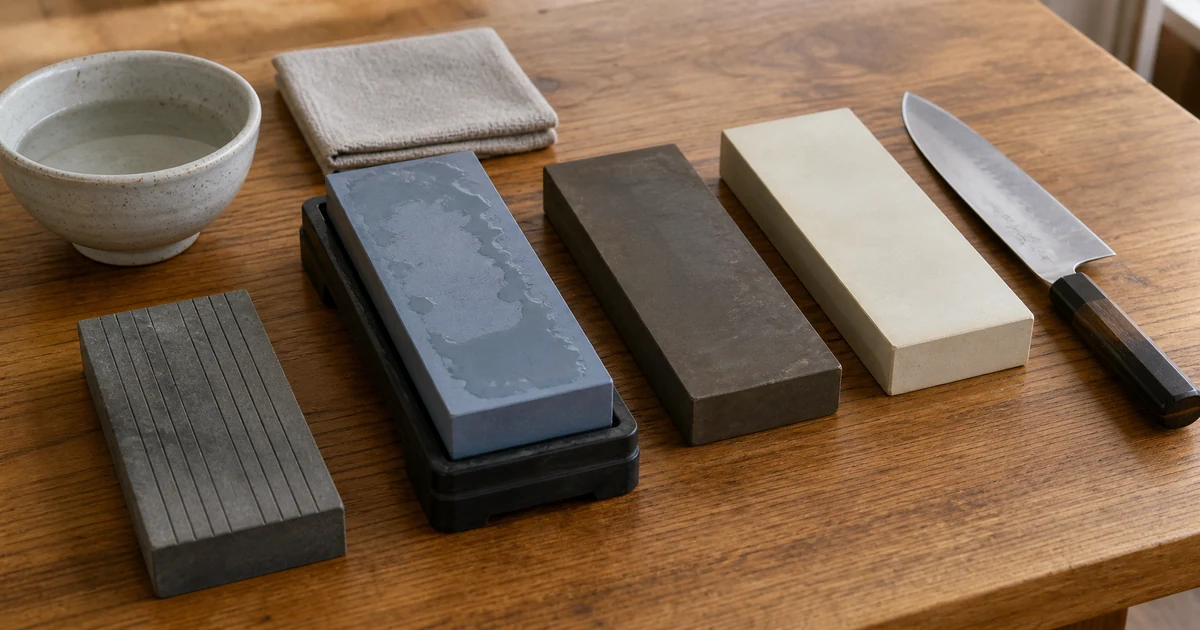
You do not need a shelf full of stones to begin. For an undamaged double-bevel kitchen knife, start with a full-size #800 or #1000 synthetic water stone. If you want sharpening and a smoother finish in one compact block, a #1000/#3000 combination stone is the sensible travel-friendly alternative.
The number matters, but it is not the whole purchase. Before choosing, check whether the stone must be soaked, whether it is large enough for your knife, how it will stay stable, and how you will keep its surface flat.
The One-Stone Answer for Most Home Cooks
A medium stone around #1000 removes enough steel to rebuild a tired working edge without the speed and risk of a very coarse repair stone. It is forgiving enough for learning angle control and useful enough to remain in your kit long after you improve.
| Your situation | Buy first | Why |
|---|---|---|
| The knife is dull but not chipped | #800–#1000 medium stone | Restores a practical working edge without building an excessive kit |
| You want one compact two-stage tool | #1000/#3000 combination stone | Sharpens on one side and refines on the other |
| The edge has small chips or needs reshaping | #220–#400 coarse stone | Removes steel quickly, but demands more control |
| You already form a clean edge and want refinement | #3000–#6000 fine stone | Smooths the scratch pattern and refines an established edge |
| You want mirror polishing or specialist finishing | #8000 and above | A specialized later purchase, not a shortcut to basic sharpness |
Grit labels are useful categories, not a perfect cross-brand standard. TOJIRO and Suehiro, for example, publish somewhat different ranges. Compare the manufacturer’s stated purpose and product line rather than assuming every stone marked #1000 will feel or cut exactly the same.
What the Grit Number Changes at the Edge
Lower numbers generally mean larger abrasive particles and faster steel removal. Higher numbers remove metal more slowly and leave a finer scratch pattern. That creates three distinct jobs:
- Repair: a coarse stone corrects chips, thinning, or major geometry work.
- Sharpen: a medium stone creates the working edge and is where most beginners should spend their time.
- Refine: a fine stone smooths an edge that has already been formed correctly.
A polished edge is not automatically a sharp edge. A fine stone can make poor geometry shinier without fixing it. Conversely, a clean #1000 edge can be extremely effective for everyday vegetables, meat, and fish because it retains a useful amount of bite.
Single #1000 or #1000/#3000 Combination?
Choose the single #1000 stone if you want the simplest learning tool, generous working thickness, and the freedom to add a finishing stone later. It is the better long-term choice for someone who expects to sharpen regularly.
Choose the combination stone if luggage space, storage, or budget matters more. It gives you two useful stages in one block and makes an attractive companion purchase with a Japanese knife. The honest tradeoff is that each layer is thinner, and the two sides may have different water requirements. Follow the instructions for that exact product.
Soaking or Splash-and-Go Changes the Experience
This detail often determines whether a stone becomes part of your routine or stays in a cupboard.
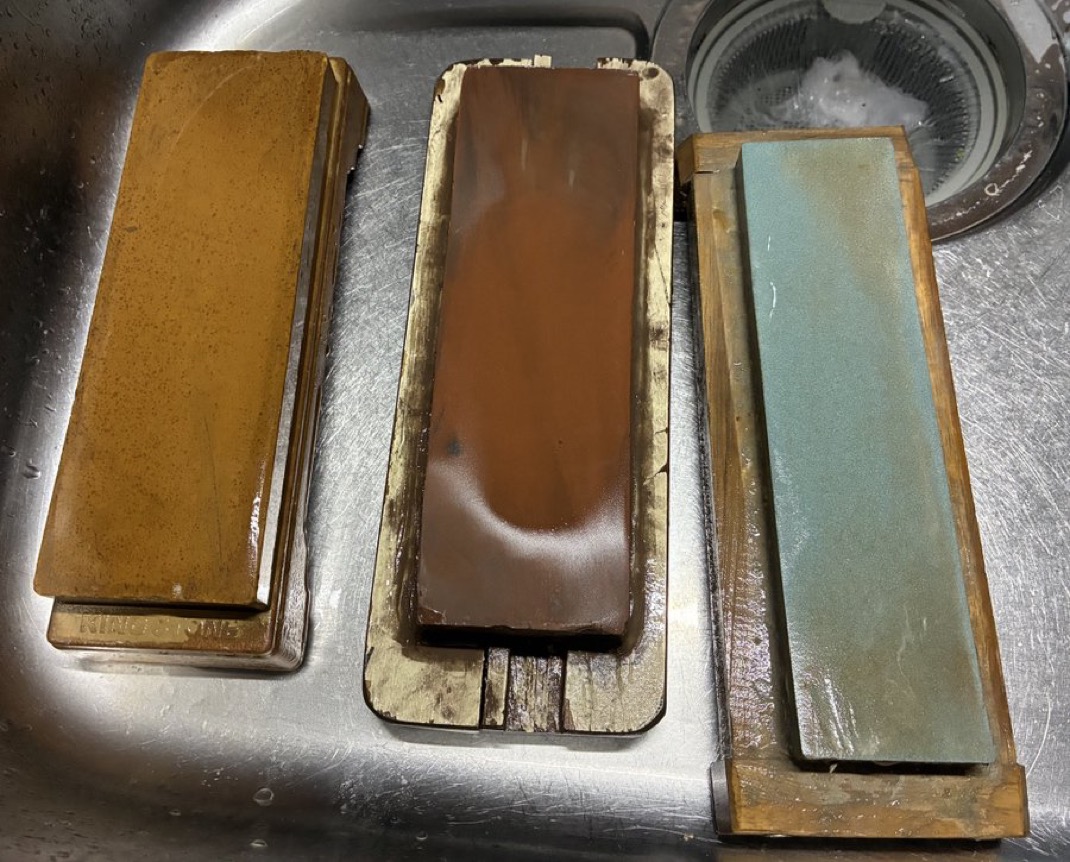
- Soaking stone: absorbs water and usually needs several minutes of preparation before use. It often offers a soft, tactile sharpening feel, but it asks you to plan ahead.
- Splash-and-go stone: works with water applied to the surface and little or no soaking. It suits busy kitchens and cooks who want to sharpen as soon as they notice a dull edge.
Do not classify a stone from appearance alone. Naniwa and Suehiro both sell lines with different water requirements. Some dense stones can be damaged or weakened by prolonged soaking, while absorbent stones need adequate time in water. The label for the exact model takes priority over general advice.
Japanese water stones normally use water, not honing oil. Oil can clog or permanently change a stone that was designed for water. Unless the manufacturer specifically states otherwise, keep oil away from it.
The Accessory That Protects the Investment
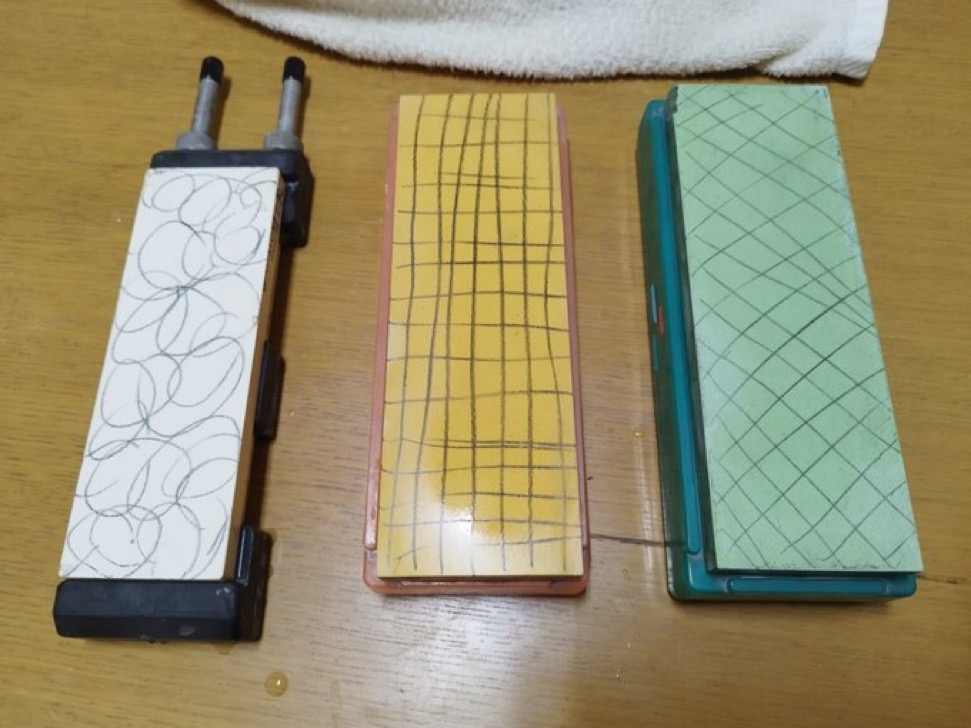
A water stone slowly wears into a shallow hollow where the knife travels most often. Once the surface is dished, the blade no longer meets the abrasive consistently. This is why a flattening stone or lapping plate is not an optional piece of professional-looking equipment; it is what keeps the main stone working as intended.
Mark a light pencil grid across the wet surface, then flatten according to the stone and plate manufacturers’ directions. When the grid disappears evenly, the surface gives you a clear visual check. Correct small changes regularly instead of waiting until the center is deeply hollow.
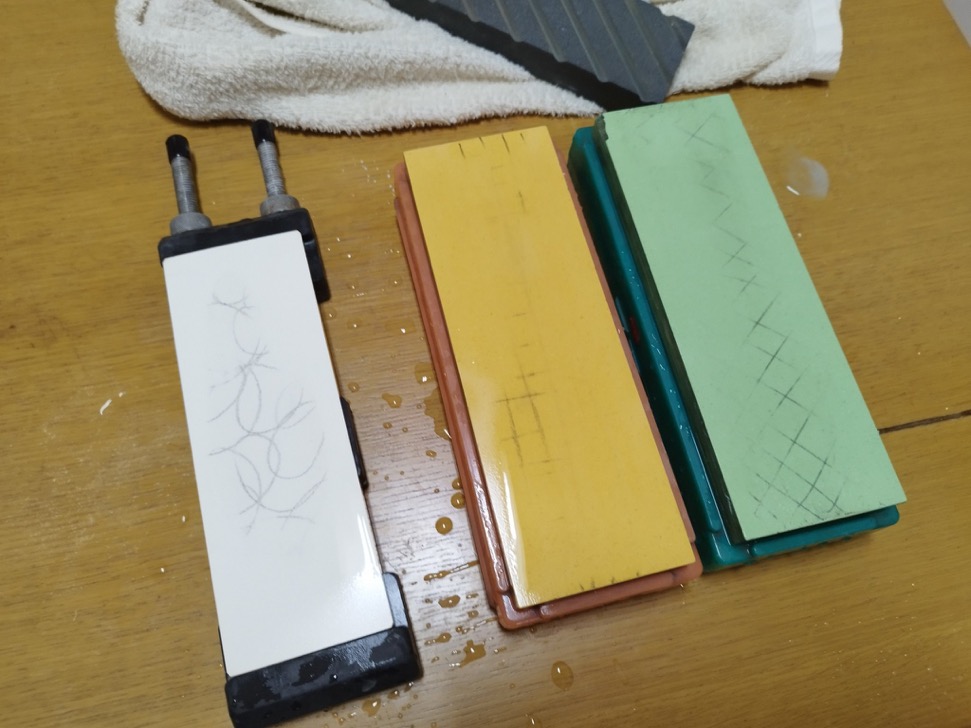
A nagura or cleaning stone may refresh a glazed surface and help manage slurry, but cleaning and flattening are not always the same job. Confirm what the accessory is designed to do.
What to Check Before It Goes in the Suitcase
For a traveler, a famous brand name is less useful than a stone that fits the knife and the kitchen at home. Pick up the box and check five practical details:
- Usable size: a longer, wider surface is easier to learn on with a gyuto or chef’s knife. Pocket stones save space but demand tighter movement.
- Weight and fragility: water stones are dense and can chip. Keep the retail box and ask the shop to cushion the stone for travel.
- Stable base: a stone that slides is frustrating and unsafe. A holder, rubber base, or secure non-slip setup is worth buying.
- Water instructions: photograph or keep the soaking and drying directions if the packaging is only in Japanese.
- Knife geometry: confirm whether you own a double-bevel Western-style knife or a traditional single-bevel blade.
Our overview of Japanese knife types explains why a double-bevel gyuto and a single-bevel yanagiba should not automatically be sharpened in the same way. Steel composition and heat treatment also affect sharpening speed, so check compatibility when the blade uses a highly wear-resistant steel.
Your First Sharpening Session Should Feel Controlled
Set the stone on a stable, water-resistant surface at a comfortable height. Wet it exactly as instructed. Work slowly, keep your fingertips clear of the edge, and concentrate on holding a repeatable angle rather than moving quickly.
On a double-bevel knife, the goal on the medium stone is to work consistently until the edge has been formed, then remove the burr with controlled strokes. A finer stone can refine that result, but it cannot replace the medium-stone work. If the stone begins to dry, add water so loose abrasive and metal residue can move on the surface rather than cake onto it.
After sharpening, rinse away residue, wipe off excess water, and let the stone dry gradually in a ventilated place away from direct sun or strong heat. Do not use a dishwasher or force rapid drying. Store it only when it has dried as the manufacturer directs.
When the Better Decision Is Professional Sharpening
A coarse stone can remove steel quickly, which is useful only when the person using it understands the geometry being changed. Deep chips, cracks, bent blades, valuable knives, and unfamiliar single-bevel grinds deserve manufacturer advice or a professional sharpener. Learning on routine dullness is far safer than making a damaged edge your first project.
Pull-through sharpeners are convenient, but their fixed abrasive arrangement may not match every edge angle or asymmetrical blade. TOJIRO describes simple sharpeners as temporary maintenance rather than a substitute for periodic whetstone work. They are particularly unsuitable as a universal answer for traditional single-bevel knives.
Build the Smallest Kit That Solves Your Problem
For routine sharpening with the best learning value: start with one stable, full-size medium stone. Compare #1000 Japanese whetstones on Amazon.
For a compact gift or travel-friendly two-stage setup: choose a combination model and check the water instructions for both sides. Compare #1000/#3000 combination whetstones on Amazon.
To keep either option performing correctly: add a compatible leveling tool rather than waiting for visible dishing. Compare whetstone flattening stones and plates on Amazon.
Disclosure: As an Amazon Associate, Japan Food Compass earns from qualifying purchases.
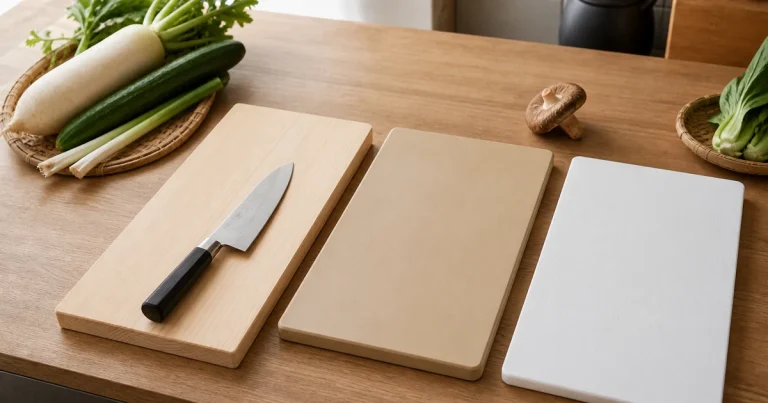
A sharp edge also lasts longer on a suitable work surface. Our Japanese cutting board guide compares hinoki, rubber, and synthetic boards. For a wider equipment plan, see the Japanese kitchen tools worth buying first.