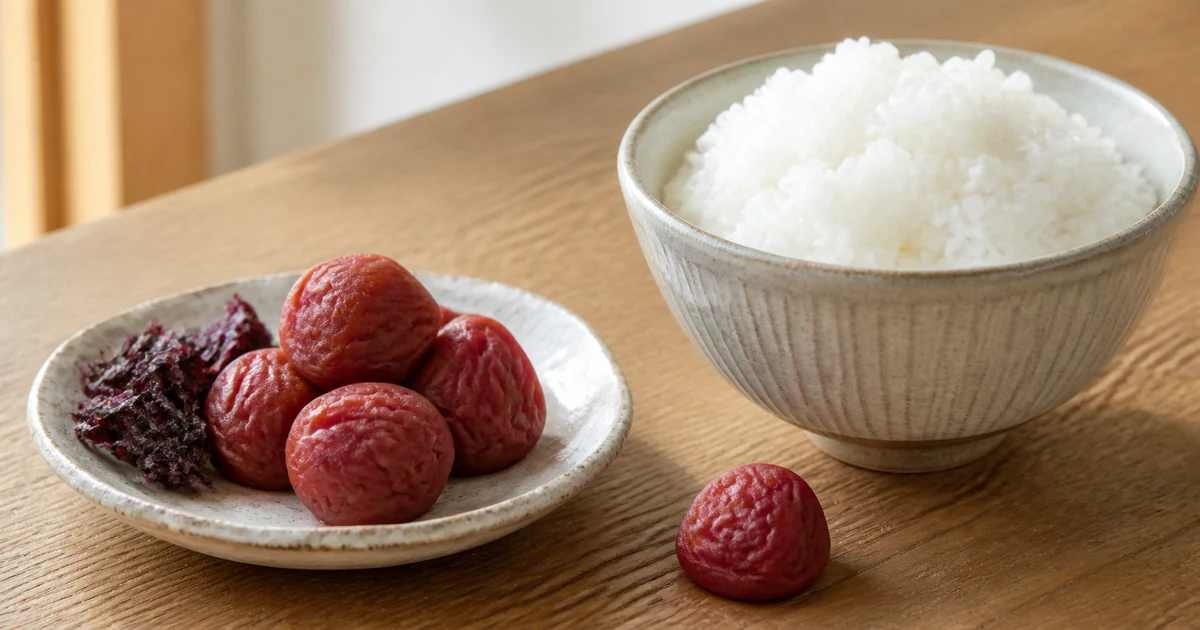
Umeboshi is Japanese ume fruit that has been preserved with salt and traditionally dried. It is often translated as “Japanese pickled plum,” although ume is botanically closer to an apricot than to the familiar European or American plum. One small piece can deliver an intense combination of tartness, saltiness, and fruit aroma.
In Japan, umeboshi is served with rice, tucked inside rice balls, or used in dressings and sauces. Products range from sharply salty traditional styles to softer versions seasoned with honey.
What Is Umeboshi?
The word combines ume, the fruit, with boshi, meaning dried. The fruit is generally identified as Prunus mume, called Japanese apricot in official English-language agricultural references. Calling it a plum is convenient, but it can create the wrong expectation: fresh ume is firm, aromatic, and extremely tart rather than sweet and juicy like a dessert plum.
Traditional umeboshi begins with ripe ume and salt. The fruit releases liquid during curing, creating a tart, salty brine called umezu. After curing, the ume is dried, often outdoors during a stretch of summer weather. Some producers return the dried fruit to liquid or season it before packaging.
Umeboshi is frequently grouped with Japanese pickles, or tsukemono. However, it should not automatically be described as fermented. Japan’s Ministry of Agriculture, Forestry and Fisheries lists umeboshi among pickles that can be produced without fermentation. The exact process depends on the product.
Salt, Acid, and Plum Aroma Arrive in Stages
The first impression is usually sour and salty. Behind that intensity is a floral, stone-fruit aroma that becomes clearer when umeboshi is mixed with neutral foods. Traditional high-salt versions can be assertive enough that a small amount seasons an entire bowl of rice.
Texture also varies. Ripe fruit can produce soft, fleshy umeboshi with delicate skin. Smaller ume may be firmer, while paste spreads easily into sauces or fillings.
Sweetened umeboshi does not taste like jam. Honey or another seasoning rounds off the sharp edges, but the product normally remains tart and noticeably salty.
How Traditional Umeboshi Is Made
Methods vary by region and producer, but the basic sequence is consistent:
- Selection: ripe, undamaged ume is sorted and cleaned.
- Salt curing: the fruit is layered with salt and weighted. Liquid gradually comes out of the ume and forms umezu.
- Optional shiso curing: prepared red shiso leaves may be added for color and aroma. Our guide to shiso explains how red shiso differs from the green leaves commonly used as a garnish.
- Drying: the cured fruit is removed and dried, traditionally in summer sun. Drying distinguishes umeboshi from umezuke, which remains pickled without this step.
- Finishing: the dried ume may be sold in a simple salt-cured form or soaked in a seasoned liquid.
This description explains the traditional framework, not a safe home-preservation formula. Salt concentration, sanitation, fruit condition, acidity, drying conditions, and storage all affect the result. Use a tested recipe from a reliable food-preservation authority rather than improvising the process.
Main Types of Umeboshi
Shiozuke or Shiraboshi Umeboshi
This straightforward salt-cured style is generally made with ume and salt and then dried. It offers a clear fruit aroma and strong salty-sour character. Read the ingredient list because labeling varies.
Shiso Umeboshi
Red shiso contributes a reddish-purple color and a herbal fragrance. It complements the fruit rather than making it taste like green shiso. Some products contain visible leaves; others are colored or flavored through the curing liquid.
Honey Umeboshi
Hachimitsu umeboshi is seasoned with honey or a honey-based liquid. It is usually milder and easier for newcomers, although sweetness, acidity, and sodium vary substantially by brand. Check the ingredients if you want a product sweetened specifically with honey.
Katsuo and Other Seasoned Styles
Katsuo umeboshi includes bonito flavor, often with additional seasonings. Other products may use kombu, vinegar, sweeteners, or flavor enhancers. These are useful when you want a ready-to-eat, balanced flavor, but they do not taste identical to simple salt-cured umeboshi.
How Umeboshi Is Eaten in Japan
The classic pairing is hot white rice. The rice softens the intensity, while a little umeboshi seasons several bites. See the guide to Japanese rice for more about the short-grain texture behind this pairing.
Umeboshi is also used in:
- Onigiri: a whole piece or pitted paste is placed inside a rice ball.
- Ochazuke: rice is topped with umeboshi before tea or dashi is poured over it.
- Bento: one piece may sit on rice as a strongly flavored accompaniment. The broader bento guide explains how rice and side dishes are arranged in Japanese lunch boxes.
- Noodles and vegetables: chopped flesh can add acidity and salt to cold noodles, cucumber, daikon, or leafy vegetables.
- Dressings and sauces: pitted umeboshi can be mashed with oil, vinegar, dashi, or other seasonings.
Remove the hard pit before chopping or blending the flesh. When serving a whole umeboshi, let diners know that the pit remains inside.
How to Choose Umeboshi
Start with the flavor you want. Choose a simple salt-cured product for the most traditional sharpness, shiso umeboshi for herbal aroma, or honey-seasoned umeboshi for a gentler introduction. Whole fruit works well with rice, while paste is convenient for dressings and marinades.
Then compare the ingredient lists and Nutrition Facts panels. Sodium and serving sizes vary. The U.S. Food and Drug Administration recommends using the sodium amount and percent Daily Value when comparing packaged foods. “Reduced salt” does not necessarily mean low in sodium.
Also consider fruit size, texture, added sweeteners, bonito or kombu, and whether the package contains whole fruit or broken pieces. Price alone does not guarantee a flavor you will prefer.
Storage and Handling
Follow the package directions because salt level, moisture, seasoning, and packaging affect storage. Some unopened products are shelf-stable, while others require refrigeration. After opening, use clean utensils, close the container securely, and refrigerate whenever the label instructs you to do so.
Do not assume that a low-salt or homemade product keeps like traditional high-salt umeboshi. Discard the product if the package is damaged or if you notice unexpected mold, gas, leakage, or an odor inconsistent with the product.
Is umeboshi the same as a pickled plum?
“Pickled plum” is the common English shorthand, but the fruit is ume, or Japanese apricot. Umeboshi specifically includes a drying step after salt curing. Umezuke is pickled ume that is not dried.
Is umeboshi the same as umeshu?
No. Umeboshi is preserved fruit eaten as food. Umeshu is an alcoholic drink made by steeping ume with alcohol and sugar. Their ingredients, production, flavor, and uses are different.
How much umeboshi should you use?
Begin with a small amount because the flavor is concentrated. For sauces, mash a little flesh and taste before adding more. If sodium is a concern, compare labels, observe the listed serving size, and follow advice from an appropriate health professional.
Umeboshi Is a Seasoning as Much as a Pickle
Umeboshi is salt-cured and traditionally dried ume with a powerful sour-salty flavor. Simple versions highlight the fruit and salt, while shiso, honey, bonito, and other seasonings create noticeably different results.
For a first purchase, choose according to flavor rather than appearance alone. A mild honey umeboshi is approachable, while a basic salt-cured version shows why this preserved fruit has such a distinctive place beside Japanese rice.