Matcha is made by shading tea plants before harvest, steaming and drying the leaves without rolling them, removing stems and veins, and grinding the resulting tencha into a fine powder. That process—not green color alone—is what separates matcha from ordinary powdered green tea.
The powder is whisked into water and consumed instead of being steeped and removed. As a result, small differences in cultivation, processing, freshness, water, and preparation are immediately noticeable. Following matcha from the field to the bowl makes it easier to understand both its price and its taste.
The Journey Begins Under Shade
Matcha starts with the same tea plant, Camellia sinensis, used for other Japanese tea types. The important difference begins before harvest. Tea fields intended for tencha are covered to reduce direct sunlight. Japan’s tea organizations describe shading periods of roughly 20 to 30 days, although methods vary by producer and region.
Shading changes how the leaves develop. It supports the deep green appearance and savory-sweet character associated with tencha and matcha. It does not guarantee that every finished powder will taste mild: cultivar, harvest timing, field conditions, blending, grinding, storage, and preparation still matter.
Fresh Leaves Become Tencha
After harvest, the leaves are steamed to limit enzymatic oxidation, then cooled and dried. Unlike sencha, they are not rolled into needle-shaped leaves. The dried material is refined by removing coarse stems and leaf veins. What remains is tencha, the raw material used for matcha.
Tencha is then milled into a very fine powder. Traditional stone mills are closely associated with high-quality production, while JETRO notes that equipment with other grinding methods may also be used. “Stone-ground” can describe a real production choice, but it should not be treated as the only sign of good flavor.
Matcha Is Not Just Ground Sencha
| Product | Leaf material | Processing | How it is used |
|---|---|---|---|
| Matcha | Shaded leaves made into tencha | Dried without rolling, refined, then finely milled | Whisked into water or used as an ingredient |
| Powdered sencha | Sencha or another leaf tea | Steamed, rolled, dried, then ground | Mixed into drinks or food |
| Konacha | Small particles separated during tea sorting | Not milled into matcha | Steeped and strained like loose tea |
These products can all be green and useful, but they are not interchangeable. Powdered sencha often has a brisker profile, while konacha produces an infusion rather than a suspension. A package that says only “green tea powder” does not necessarily contain matcha.
What Good Matcha Tastes Like
Good matcha should not be judged by one signal. A vivid natural green color is encouraging, but lighting, photography, cultivar, and harvest can affect appearance. Aroma should be fresh rather than stale or dusty. When prepared with water, the flavor may combine vegetation, sweetness, umami, gentle bitterness, and astringency.
Balance matters more than the complete absence of bitterness. Matcha intended for drinking with water should remain pleasant when there is no milk or sugar to hide it. Matcha for lattes or baking needs enough color and flavor to remain noticeable beside other ingredients. The best choice therefore depends on the job.
“Ceremonial Grade” Is Not the Final Answer
American shoppers frequently see “ceremonial,” “premium,” and “culinary” on matcha packages. These labels can communicate a seller’s intended use, but their meanings vary between sellers. Japan’s official and tea-industry explanations define matcha through its raw material and production method rather than a universal ceremonial-to-culinary grading ladder.
Instead of choosing by one marketing term, read the origin, ingredients, producer guidance, harvest information when supplied, recommended preparation, package size, and date information. Buy a smaller amount first. A sealed small tin that you finish while fresh can be a better purchase than a large bargain bag that loses its aroma.
Choose Matcha by How You Will Use It
- For water alone: look for a product the seller specifically recommends for usucha, with sweetness, aroma, and manageable bitterness.
- For koicha: choose a matcha explicitly recommended for thick tea. Koicha uses more powder and less water, so harshness becomes difficult to ignore.
- For a latte: choose enough body and bitterness to remain recognizable after milk. The most expensive option is not automatically the best balance.
- For sweets and baking: consider how the color and tea flavor perform after sugar, fat, flour, and heat are added.
Matcha as the Final Course After Omakase Sushi
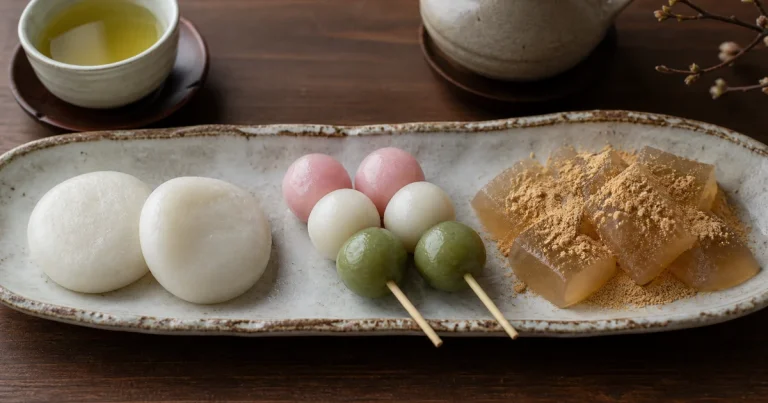
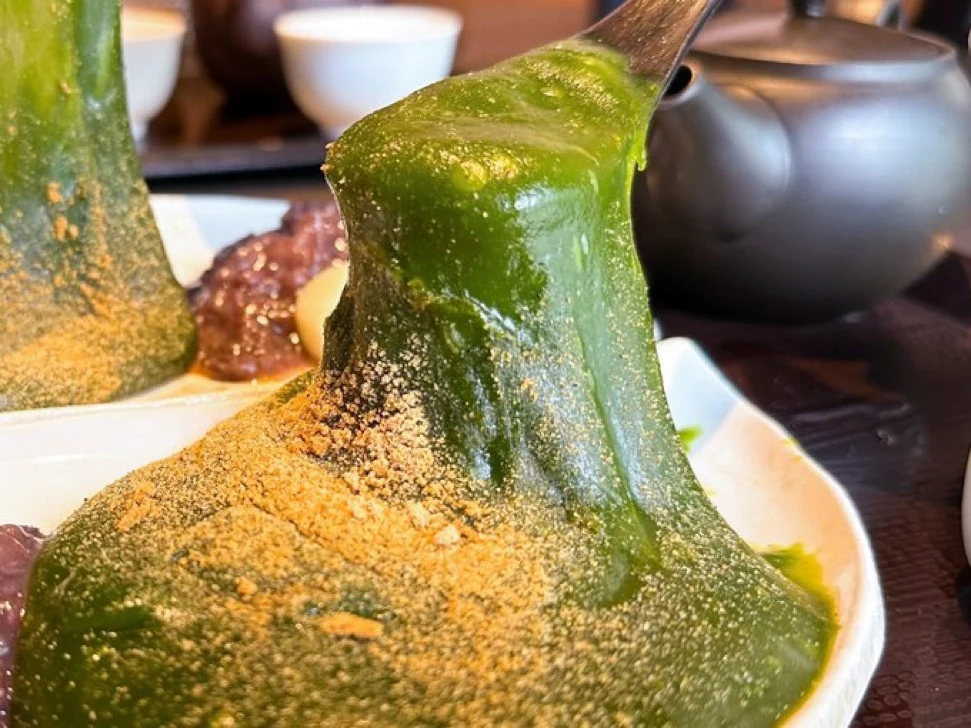
At the sushi restaurant behind these photos, matcha appears after omakase as dessert rather than a drink. Matcha ice cream and matcha warabi mochi provide a cool, lightly bitter finish after seasoned rice and fish. Their clean tea flavor works as a gentle palate refresher without making the final course feel heavy.
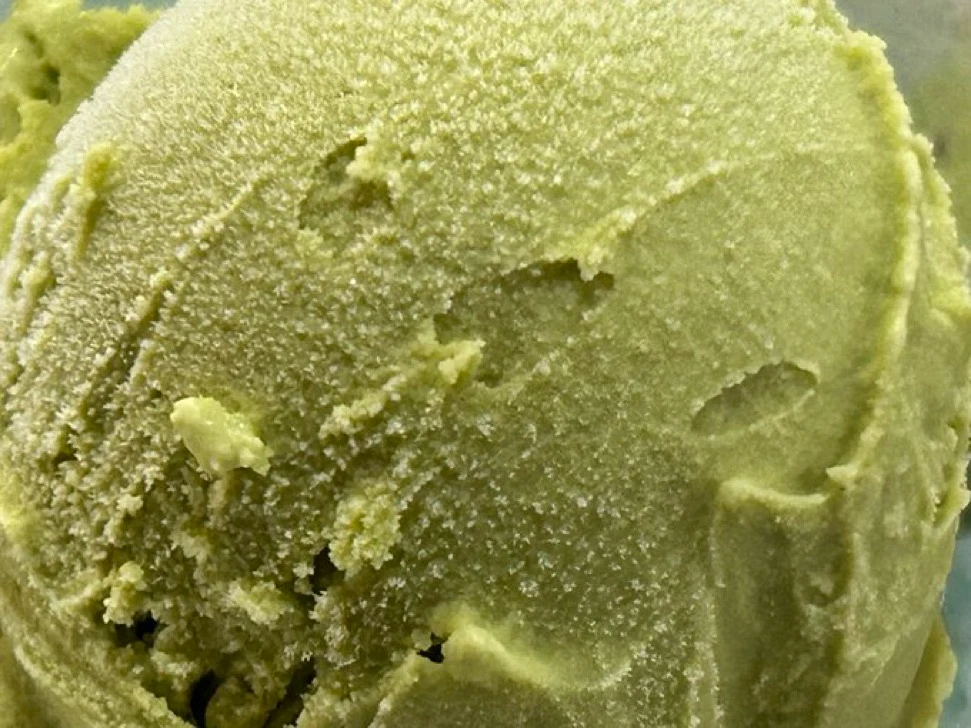
In the plated sweet, added kudzu starch creates pronounced elasticity and the dramatic stretch shown below. This is a restaurant-specific preparation, not a universal texture for every matcha or warabi-mochi recipe.
Whisk a Bowl Without Making It Needlessly Bitter
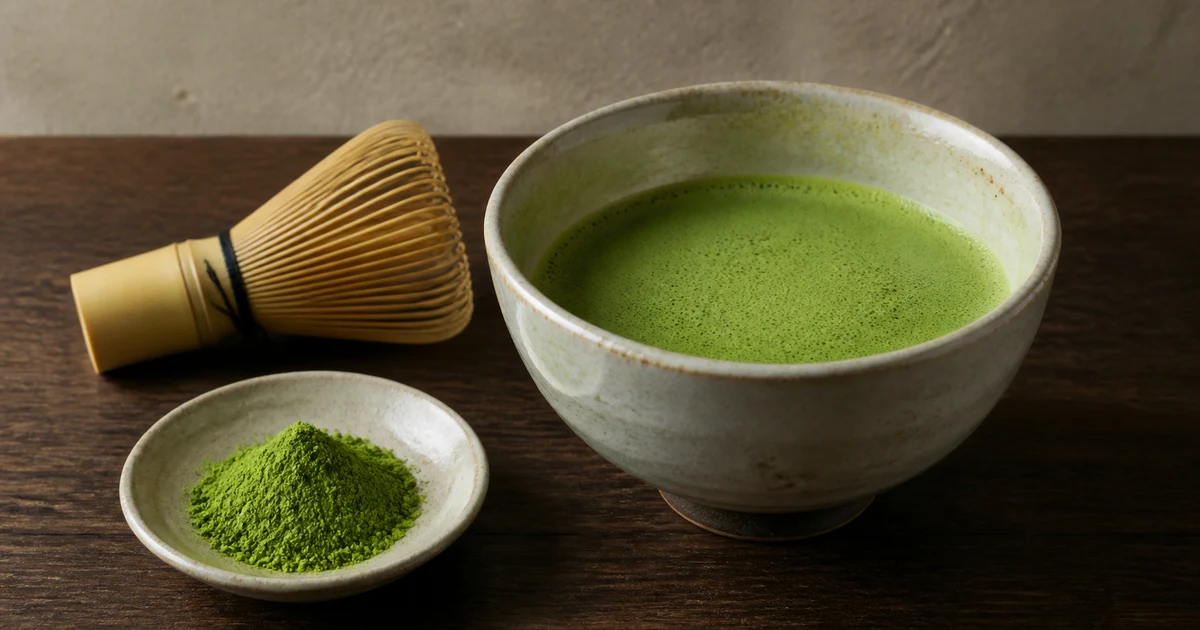
You need a bowl, a fine sieve, a measuring spoon, and a whisk. A bamboo chasen produces fine foam efficiently, but the first goal is a smooth suspension rather than a dramatic layer of bubbles.
- Warm the bowl with hot water, and briefly soften the bamboo whisk in it.
- Empty and dry the bowl completely.
- Sift about 2 grams of matcha into the bowl to break up compacted powder.
- Add about 2 ounces (60 milliliters) of water at approximately 175°F (80°C).
- Whisk quickly from the wrist for about 15 seconds, keeping the whisk away from hard contact with the bottom.
- Drink promptly, before the aroma fades and the suspended powder settles.
This is a practical starting point for usucha, not a substitute for formal tea-ceremony instruction. Producer directions should take priority. Water that is too hot can emphasize bitterness, while too much water makes the tea thin. Water composition also changes the result, as explained in our guide to Japanese tap water and dashi.
Common Matcha Mistakes
- Skipping the sieve: whisking harder does not reliably remove every dry lump.
- Using boiling water automatically: excessive heat can flatten aroma and increase bitterness.
- Scraping the bowl with the whisk: force can damage the fine bamboo tips.
- Buying by color in an edited photo: taste, aroma, freshness, and intended use matter too.
- Assuming every green powder is matcha: confirm that the product is made from tencha.
- Buying too much: matcha is especially exposed to air each time a package is opened.
Protect Matcha From Air, Moisture, Heat, and Light
Close the container immediately after measuring and keep it in a cool, dark, dry place. Follow the producer’s storage instructions, especially before opening. If refrigerated matcha is opened while still cold, condensation can introduce moisture, so allow a sealed container to approach room temperature first.
Freshness declines after opening even when the powder remains safe to use. A fading aroma, dull color, or flat taste is a reason to move an older matcha from drinking with water to a latte or recipe rather than expecting the same bowl.
From Tencha to the Bowl
Matcha is the result of a specific chain: shaded cultivation, steaming, drying without rolling, refining into tencha, and fine milling. That chain explains why matcha differs from powdered sencha and why careful storage and preparation matter.
Choose by intended use rather than relying on “ceremonial grade,” start with a small fresh package, sift the powder, and control the water temperature. Those steps reveal more about matcha than chasing the brightest color or the most expensive label.