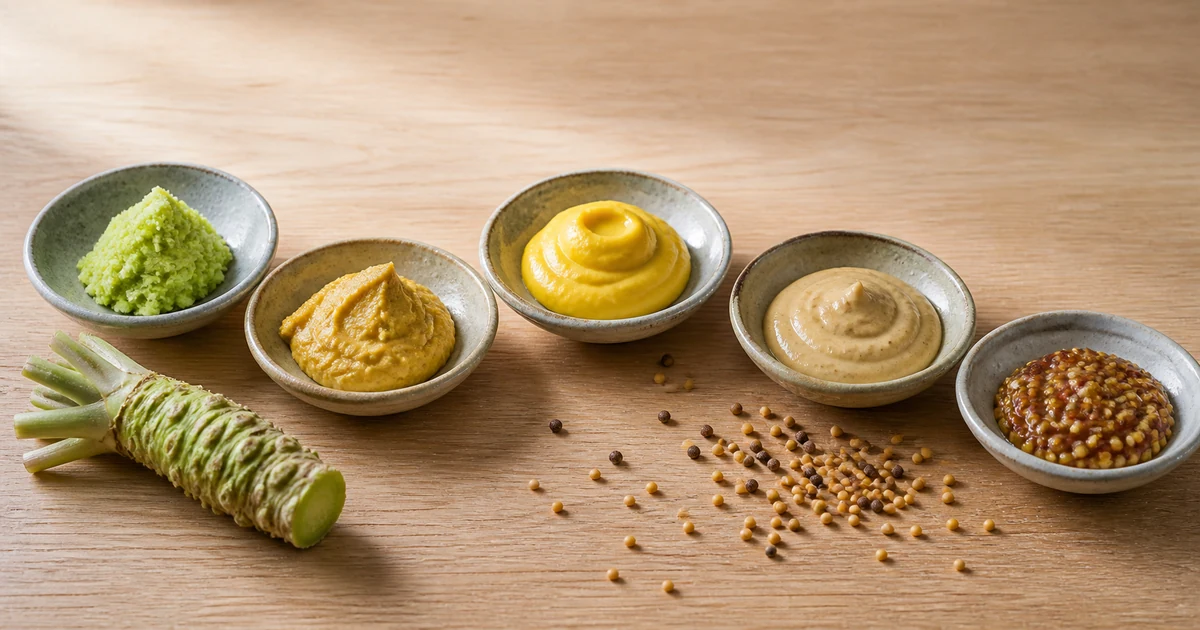
In a wasabi vs mustard comparison, the biggest difference is the source: wasabi is traditionally grated from a rhizome, while mustard condiments are made from seeds. Japanese karashi belongs to the mustard side of that divide. It is usually sharper and less tangy than familiar American yellow mustard, although recipes and packaged products vary.
All three can deliver a quick, nose-tingling sensation, but they are not interchangeable in flavor. Here is how wasabi, karashi, yellow mustard, Dijon, and whole-grain mustard compare.
Quick Comparison
| Condiment | Main source | Typical character | Common uses |
|---|---|---|---|
| Wasabi | Wasabi rhizome; prepared products vary | Green, fresh, herbal, and quickly pungent | Sushi, sashimi, soba, tofu |
| Karashi | Mustard seed | Direct, concentrated heat with relatively little sweetness | Oden, natto, shumai, pork dishes |
| Yellow mustard | Mustard seed in a prepared condiment | Mild, tangy, smooth, and often turmeric-yellow | Hot dogs, burgers, sandwiches |
| Dijon mustard | Mustard seed in a prepared condiment | Smooth, savory, tangy, and moderately sharp | Dressings, sauces, marinades |
| Whole-grain mustard | Whole or coarsely crushed mustard seed | Seeded texture; flavor varies from mellow to sharp | Sausages, roasted meat, dressings |
Recipes vary, so the style name alone does not guarantee one strength, color, or level of acidity.
What Is Wasabi?
True wasabi comes from Eutrema japonicum, a plant in the cabbage and mustard family. Its rhizome is finely grated to make a pale green condiment with a fresh aroma and heat that rises toward the nose.
Prepared wasabi sold in tubes or small packets may combine wasabi with horseradish, mustard, starch, oil, or coloring. The front label and green color alone do not reveal the formula, so check the ingredients when the distinction matters. Our guide to what wasabi is explains the plant, common product forms, and traditional uses in detail.
What Is Karashi?
Karashi (からし or 辛子) is Japanese mustard, sold as powder or prepared paste. Ground mustard seed develops a forceful aroma and clean, fast heat when mixed with water. The paste is generally yellow to ochre rather than green.
Karashi is often hotter and less acidic than American yellow mustard, but the name does not guarantee one recipe. S&B Foods explains that products labeled karashi can mix Japanese and Western mustard, while its wa-karashi emphasizes Japanese mustard and stronger pungency. Prepared tubes may also contain salt, starch, or oil.
In Japan, a small dab of karashi commonly accompanies oden, natto, shumai, and rich pork dishes. It can also be mixed with miso and vinegar for karashi sumiso, a sharp-sweet dressing used with vegetables or seafood. If that combination is unfamiliar, our separate guide explains miso and its major styles.
What Does “Mustard” Mean?
Mustard is a broad category, not a single Western condiment. Canadian grain standards distinguish yellow, brown, and oriental mustard seed classes. Producers combine selected seeds with liquids and seasonings to make different styles.
American Yellow Mustard
Yellow mustard is usually the mildest familiar option in the United States. It is smooth, pourable, and noticeably tangy. A current French’s ingredient list, as one brand example, includes vinegar, water, mustard seed, salt, turmeric, paprika, spices, and garlic powder. Turmeric helps explain why this style can look brighter than karashi.
Dijon Mustard
Dijon is usually smooth and more assertive than yellow mustard. Wine ingredients appear in some formulas, but recipes differ. Grey Poupon’s current U.S. Dijon, for example, lists vinegar, mustard seed, water, salt, and white wine.
Whole-Grain Mustard
Whole-grain mustard retains visible seeds and therefore has a coarse, popping texture. Its flavor depends on the seed blend and seasoning; “whole-grain” describes texture more reliably than heat. It adds contrast to sausages and roasted meat but does not mimic smooth karashi.
Why Do Wasabi and Mustard Feel Hot?
Wasabi and mustard are botanical relatives. When their plant tissue or seeds are broken and exposed to moisture, reactions create volatile pungent compounds, including isothiocyanates. These aromas can feel sharp in the nose and fade faster than the lingering heat associated with many chili peppers.
That shared sensation does not make the flavors identical. Wasabi brings a green aroma; karashi is seed-driven; prepared Western mustards often add vinegar, sweetness, wine, or spices. Yuzu kosho, by contrast, combines citrus peel, chili, and salt.
Can You Substitute One for Another?
- For karashi: a hot mustard or English-style mustard may be the closest practical substitute. Begin with a small amount because strength varies.
- For oden or natto: yellow mustard is usable if that is what you have, but it will usually taste milder, tangier, and more seasoned than karashi.
- For dressings: Dijon can replace prepared karashi functionally, but its extra acidity changes the balance. Reduce other acidic ingredients and adjust by taste.
- For wasabi: karashi supplies pungency but not wasabi’s green aroma. It is not a convincing direct replacement beside sushi or sashimi.
Substitution is easiest when mustard is one component of a sauce and hardest when a small dab is meant to provide a distinct aroma. Do not assume equal quantities: add gradually and follow package directions when preparing mustard powder.
How to Choose the Right Product
Choose by dish first: wasabi for sushi or soba, karashi for a concentrated Japanese accent, yellow mustard for sandwiches, Dijon for smooth sauces, and whole-grain mustard when seed texture is welcome.
Then read the full ingredient list. A prepared wasabi may contain mustard, a karashi paste may blend mustard types, and a yellow mustard may obtain part of its color from turmeric. Refrigeration and best-after-opening guidance also vary, so follow the label rather than applying one storage rule to every style.
Mustard Allergy Labels Differ by Country
Allergen labeling differs by market. Canada treats mustard as a priority allergen, and the United Kingdom includes it among 14 allergens food businesses must declare. It is not one of the FDA’s nine major U.S. food allergens, although it still has to appear when used as an ingredient.
Check the complete label and ask the manufacturer or restaurant when information is unclear. This is especially important because mustard can appear in prepared wasabi and in sauces where it may not be obvious from the dish name.
Reading the Heat Behind Each Condiment
Is Karashi the Same as Mustard?
Karashi is a type of Japanese mustard, but it is not identical to every condiment called mustard. It is generally hotter and less tangy than American yellow mustard.
Is Wasabi Made From Mustard?
No. True wasabi is grated from the rhizome of a separate plant, although wasabi and mustard belong to the same botanical family. Some prepared wasabi products do contain mustard, so read the ingredients.
Is Karashi Spicy?
Yes. Karashi can be intensely pungent even though it contains no chili. The heat depends on the mustard seed, preparation, freshness, and amount used.
Can I Use Yellow Mustard With Oden?
Yes, but expect a different result. Yellow mustard is commonly milder and more vinegary, while karashi gives oden a cleaner, sharper accent.
Choose the Condiment by Heat, Aroma, and Dish
Wasabi is a green, aromatic condiment traditionally grated from a rhizome. Karashi is Japanese mustard made from mustard seed and valued for concentrated, direct pungency. Yellow, Dijon, and whole-grain mustards use the same broad seed-based foundation but differ greatly in acidity, seasoning, texture, and heat.
Pair wasabi with sushi or soba, karashi with oden or natto, yellow mustard with sandwiches, Dijon with dressings, and whole-grain mustard with foods that benefit from seed texture. Always check the label because names do not disclose every ingredient.
Editorial Sources
- S&B Foods: Difference Between Karashi and Wa-Karashi
- Ministry of Agriculture, Forestry and Fisheries: Fu no Karashi Ae
- Canadian Grain Commission: Classes of Mustard Seed
- French’s: Classic Yellow Mustard Ingredients
- Grey Poupon: Dijon Mustard Ingredients
- Health Canada: Mustard as a Priority Food Allergen
- UK Food Standards Agency: Allergen Guidance
- U.S. Food and Drug Administration: Food Allergies