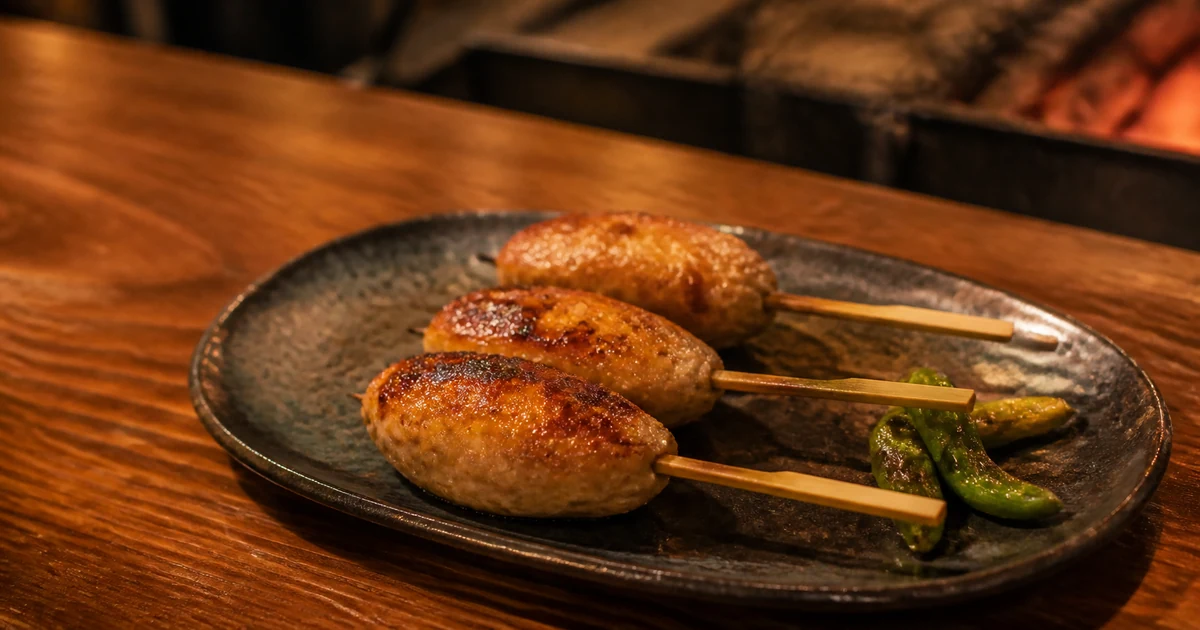
Tsukune is not simply ground chicken pressed onto a stick. It is a designed mixture whose grind, temperature, bind, seasoning, and contact with the skewer determine whether it becomes springy, fluffy, juicy—or drops into the charcoal before it can become any of them.
Because every shop chooses its own meat, fat, cartilage, aromatics, and texture, tsukune often functions as a restaurant’s signature. Unlike momo or sunagimo, it is not one anatomical cut. The recipe tells you how the cook thinks.
Stage One: Build Two Textures Before Mixing
I do not want every component ground to the same fineness. A fine portion of breast or other lean meat can create the cohesive base, while coarsely chopped thigh contributes a more obvious meat bite. Small pieces of skin bring fat and juiciness, and chopped yagen cartilage can add a deliberate crunch.
The exact combination varies by shop. Some cooks use only thigh, some combine breast and thigh, and some avoid cartilage completely. The useful principle is contrast: one part establishes the bind and another keeps the finished skewer from feeling like a uniform paste.
Stage Two: Create the Bind While the Meat Is Cold
In one common method, chilled meat is mixed first with salt. Salt helps extract muscle proteins that make the mixture sticky enough to hold water and cling to the skewer. A figure around one percent of the meat weight can be a practical starting point in some recipes, but it is not a universal formula; tare, other seasonings, and the desired salt level all change the calculation.
I watch for the mixture to become slightly pale, cohesive, and able to stretch in short strands. Eggs, starch, breadcrumbs, grated yam, or other binders may be added by different shops, but adding every ingredient at the beginning can make it harder to judge whether the meat itself has developed enough bind.
Temperature is crucial. Warm hands and long mixing soften the fat, allowing it to smear or separate. I work quickly and keep the bowl over ice when needed. Cold fat remains distributed through the mixture and renders during grilling instead of escaping before the structure has set.
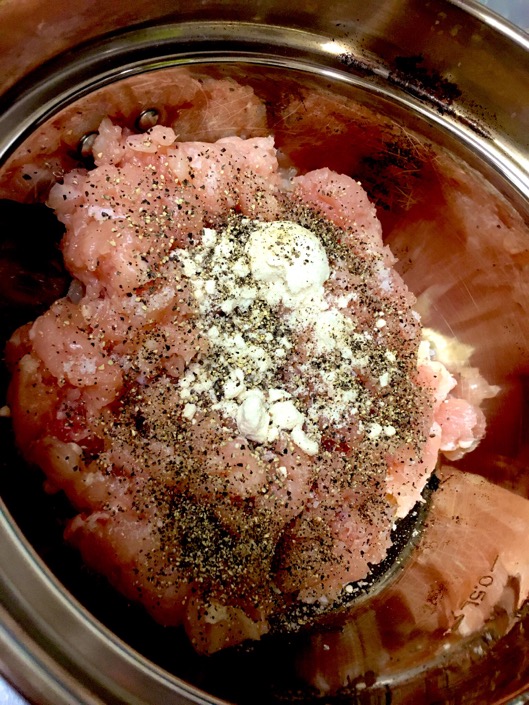
Stage Three: Add Coarse Pieces and Aromatics Last
Once the base holds together, I fold in the coarser thigh, skin, or cartilage. Ginger, shiso, scallion, and other aromatic ingredients go in late because chopped vegetables and herbs can release water and lose freshness during extended mixing.
Large hidden air pockets can expand and split a skewer, so I press or toss the mixture enough to remove them. “Remove all air,” however, should not be treated as a rule for every tsukune. Some cooks deliberately preserve a lighter structure. The aim is controlled texture without hollow gaps along the bamboo—not a dense, overworked mass.
Stage Four: Make the Meat Grip the Skewer
A flat bamboo skewer gives soft tsukune more surface to grip and reduces rotation compared with a thin round skewer. With hands lightly moistened or oiled, I press the mixture around the skewer from base toward tip, checking that there is no concealed channel between meat and bamboo.
Shape also affects cooking. A very thick center remains fragile and heats slowly, while thin tapered edges dry first. An even oval or cylinder is easier to turn and finish. Some restaurants briefly poach or steam the mixture before grilling; others place it over the fire raw. Precooking improves handling, while direct grilling can build a different roasted character. Both are legitimate house styles.
Stage Five: Set the Surface Before the Skewer Loses Its Hold
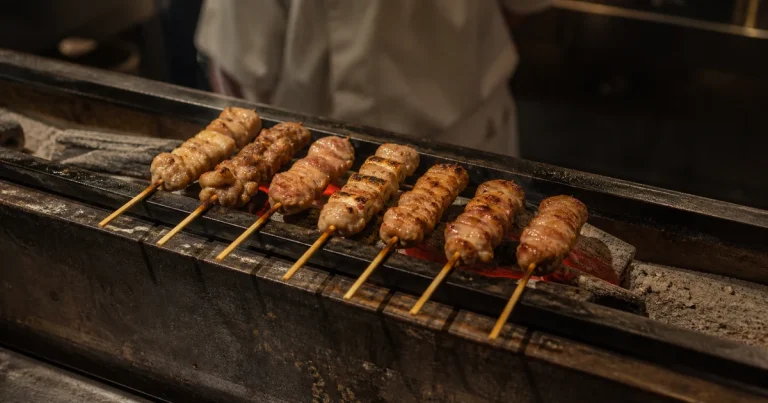
Raw tsukune is most vulnerable during its first minutes over the grill. Useful medium-to-strong heat firms the exterior proteins before melting fat opens a gap around the bamboo. The cook turns only when the first side can support itself; turning too early tears the surface, while waiting too long develops uneven color.
This does not “seal in” every drop of juice. Heat still drives moisture out. The practical goal is to establish enough structure quickly, then move through the grill’s hotter and gentler zones so the center cooks without drying the outside. Tare is often layered in later stages, after the skewer can survive brushing or dipping.
The Tsukune That Fell into the Charcoal
During training, I let a mixture warm while I worked, put it on a round skewer, and then tried to cook it slowly at the weak edge of the grill. The softened fat escaped, the meat shrank away from the bamboo, and the largest tsukune dropped straight into the coals.
The lesson was not one magic trick. Cold mixing, sufficient protein bind, a suitable skewer, close contact, balanced shape, and decisive early heat all support one another. Miss several of them and gravity finishes the job.
How the House Recipe Changes the Experience
Finely ground mixtures feel smooth and springy. Coarse thigh and cartilage create irregular bites. Skin adds richness, while shiso or ginger lifts the aroma. Shio leaves this internal structure exposed; tare adds sweetness, soy savoriness, and caramelized depth. Some shops serve tare tsukune with raw or softly cooked egg yolk for a richer coating.
Egg, wheat, soy, dairy, and other allergens may appear in the mixture or sauce. Ask the restaurant rather than assuming tsukune is only chicken. Raw or undercooked minced poultry carries additional risk because surface bacteria can be distributed through the mixture. Japan’s Ministry of Health, Labour and Welfare advises against eating raw or insufficiently cooked chicken. At home, cook the center thoroughly and use a reliable food thermometer.
Look for つくね or tsukune on the menu. It can be an excellent later skewer after lighter cuts because its seasoning and fat often make it more substantial. Explore the larger sequence in our yakitori guide, compare anatomical cuts in the yakitori cuts guide, and see practical phrases in how to order yakitori in Japan.