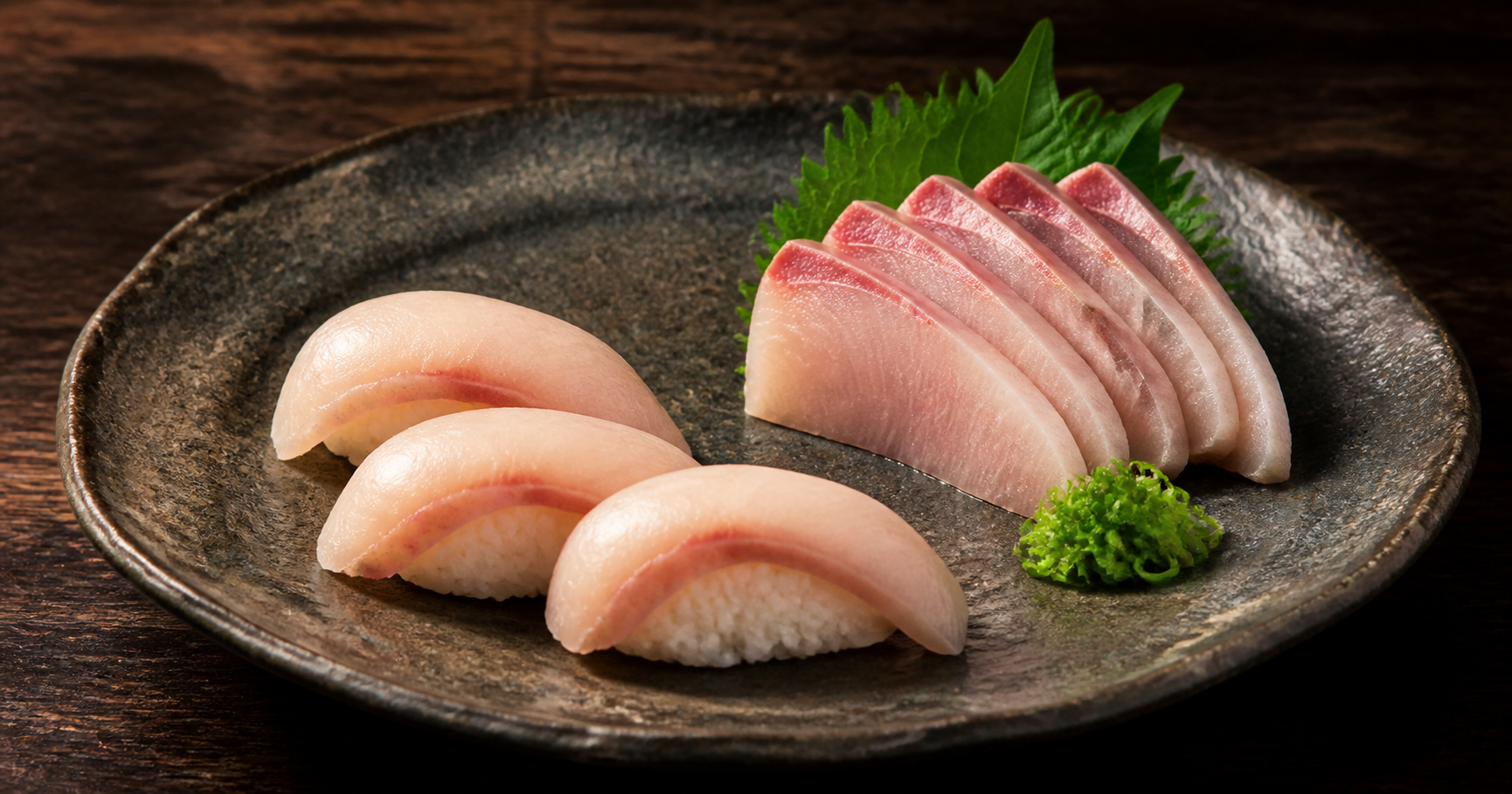
Hamachi is a Japanese name commonly used for Japanese amberjack, a fish often labeled “yellowtail” on English-language sushi menus. It has pale pink to light beige flesh, a smooth texture, and a mild, savory flavor with noticeable richness. Hamachi is frequently served as nigiri or sashimi.
The terminology can be confusing because hamachi and buri can refer to the same species at different stages or in different market contexts, while kanpachi is a related but different fish. Regional naming traditions and the distinction between wild and farmed fish make a simple one-word translation unreliable.
Three Yellowtail Names, Different Fish and Seasons
| Name | Basic identity | Typical character | Important point |
|---|---|---|---|
| Hamachi | Japanese amberjack, commonly a younger or farmed fish | Smooth, fatty, mild, and slightly sweet | Often called yellowtail on US sushi menus |
| Buri | Mature Japanese amberjack; also used more broadly for the species | Deeper and potentially richer, especially in winter | The same species as hamachi, not a completely different fish |
| Kanpachi | Greater amberjack, a different species in the same genus | Usually firmer and cleaner-tasting, with moderate richness | It should not automatically be translated as hamachi |
What Is Hamachi?
Hamachi is associated with Japanese amberjack, a member of the Seriola genus. In traditional Kansai naming, the name of this fish changes as it grows, with hamachi used before the mature buri stage. Names differ in other regions of Japan.
Modern market use adds another meaning. Farmed Japanese amberjack is often sold as hamachi even when size alone would not explain the label. This is why an American sushi menu may list “hamachi” or “yellowtail” without describing the fish’s age.
Is Hamachi the Same as Yellowtail?
On many sushi menus, yes: “yellowtail” is the English label used for hamachi. However, yellowtail is not always precise enough to identify one fish in every country or restaurant.
Several related Seriola fish may be described with similar English names. If a menu lists both hamachi and kanpachi, it is distinguishing two fish. If it lists only yellowtail, ask the restaurant when the exact identity matters. This resembles the naming confusion around salmon and trout on Japanese sushi menus.
Hamachi vs. Buri: What Is the Difference?
Hamachi and buri belong to the same Japanese amberjack species. The traditional distinction is connected to growth. Buri is a shusse-uo, or “promotion fish,” whose Japanese name changes as it becomes larger. The sequence of names varies by region, so there is no single size chart that works everywhere in Japan.
In Kansai, hamachi is one of the names used before the fish is called buri. Modern retail use also associates hamachi with farmed Japanese amberjack, while buri may mean mature fish or the species more generally.
Fatty wild fish caught during the cold months may be called kanburi, meaning winter buri. Farmed hamachi, by contrast, is widely available throughout the year and often has more consistent fat. Neither name automatically guarantees better quality.
Hamachi vs. Kanpachi
Kanpachi is not simply an older or younger hamachi. It is greater amberjack, a different species within the same Seriola genus.
Kanpachi flesh is often described as firmer and more elastic than hamachi. Its flavor can feel clean and gently sweet, with less of the soft, buttery impression commonly associated with fatty hamachi. These differences are tendencies rather than guarantees, because the cut and condition of each fish still matter.
Fat and Texture Change with Age and Water
Hamachi usually has a mild, savory taste with gentle sweetness and a clean finish. Its fat gives the flesh a smooth, almost buttery sensation, but good hamachi should not feel oily in an unpleasant way.
The back portion tends to be firmer and leaner than the belly. Belly meat may have more visible fat and a softer, richer texture. Thickness and knife work also change the experience: a thin sashimi slice feels more delicate, while a thicker piece emphasizes the fish’s springiness and fat.
How Hamachi Is Served in Sushi and Japanese Food
Hamachi Nigiri
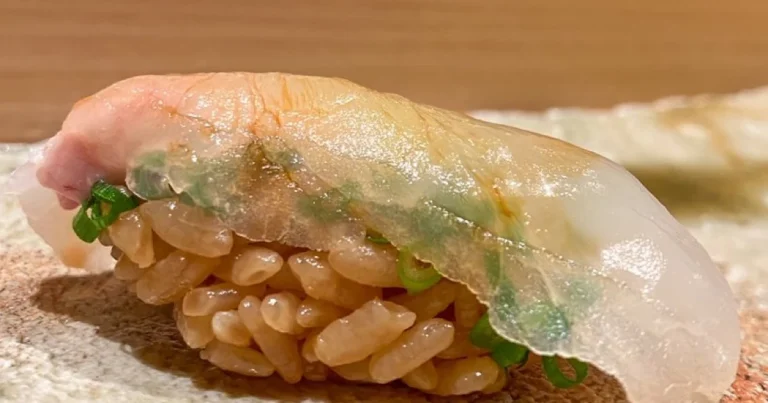
For nigiri, a slice of hamachi is placed over seasoned sushi rice, sometimes with a small amount of wasabi. The rice’s acidity helps balance the fish’s richness. Depending on the restaurant, the chef may add nikiri soy sauce, salt, citrus, grated ginger, or finely sliced green onion.
Hamachi Sashimi
Hamachi sashimi is served without sushi rice, allowing the texture and fat to stand out more clearly. If you are unsure how these preparations differ, see our guide to what sashimi is.
Rolls and Other Preparations
Outside Japan, yellowtail and green onion is a familiar roll combination. Hamachi may also appear in hand rolls, seared preparations, or dishes with citrus and ponzu. The collar, called hamachi kama, is normally grilled rather than served raw and has especially rich meat around the bone.
To understand where nigiri and rolls fit within the larger category, read our introduction to the main types of sushi.
How to Order Hamachi
Hamachi nigiri is a good choice when you want something richer than lean tuna but usually milder than mackerel. If hamachi and kanpachi are both available, order one of each and compare their firmness and richness. Taste chef-seasoned nigiri before adding more soy sauce; our guide to eating sushi in Japan explains soy sauce, wasabi, ginger, and counter etiquette.
Raw Fish Safety
Hamachi served as sushi or sashimi is often raw. Raw seafood can carry parasites or harmful microorganisms, and freezing does not eliminate every food-safety risk. Buy fish for raw consumption only from a reputable seller that specifically offers it for that purpose; an ordinary fresh-looking fillet should not automatically be treated as suitable for sushi.
The safest option is thoroughly cooked seafood. The US Food and Drug Administration advises people at higher risk of foodborne illness—including pregnant people, young children, older adults, and those with weakened immune systems—to avoid raw or undercooked fish. Personal medical advice should come from a qualified healthcare professional.
Is hamachi tuna?
No. Hamachi is Japanese amberjack, not a tuna species. It can be similarly rich, but its flavor, texture, and biological classification are different.
Are hamachi and buri the same fish?
They can refer to the same Japanese amberjack species. Traditionally, hamachi is a name used before the mature buri stage in parts of Japan. Modern usage also commonly associates hamachi with farmed fish.
Is kanpachi the same as hamachi?
No. Kanpachi is greater amberjack, a related but different species. It is often firmer and less buttery than hamachi.
Is hamachi always raw?
No. Nigiri and sashimi commonly use raw hamachi, but the fish can also be seared or cooked. Hamachi kama, the collar, is usually grilled.
Is hamachi a good choice for sushi beginners?
Yes. Its mild flavor and smooth texture make it approachable for many beginners, especially those who already enjoy salmon or richer tuna cuts.
How to Order the Yellowtail You Actually Want
Hamachi is Japanese amberjack commonly served as yellowtail sushi or sashimi. Hamachi and buri are names connected to the same species, although growth stage, region, farming, and market usage complicate the distinction. Kanpachi is a different amberjack species with a generally firmer character. Once you understand those labels, ordering yellowtail at a Japanese restaurant becomes much easier—and tasting the differences becomes part of the experience.
Editorial Sources
- Kikkoman Corporation: Yellowtail / Hamachi, Buri
- Ministry of Agriculture, Forestry and Fisheries: Japanese Amberjack Names and Production
- Japan External Trade Organization: Buri
- National Association of Marine Aquaculture: Kanpachi
- US Food and Drug Administration: Selecting and Serving Fresh and Frozen Seafood Safely