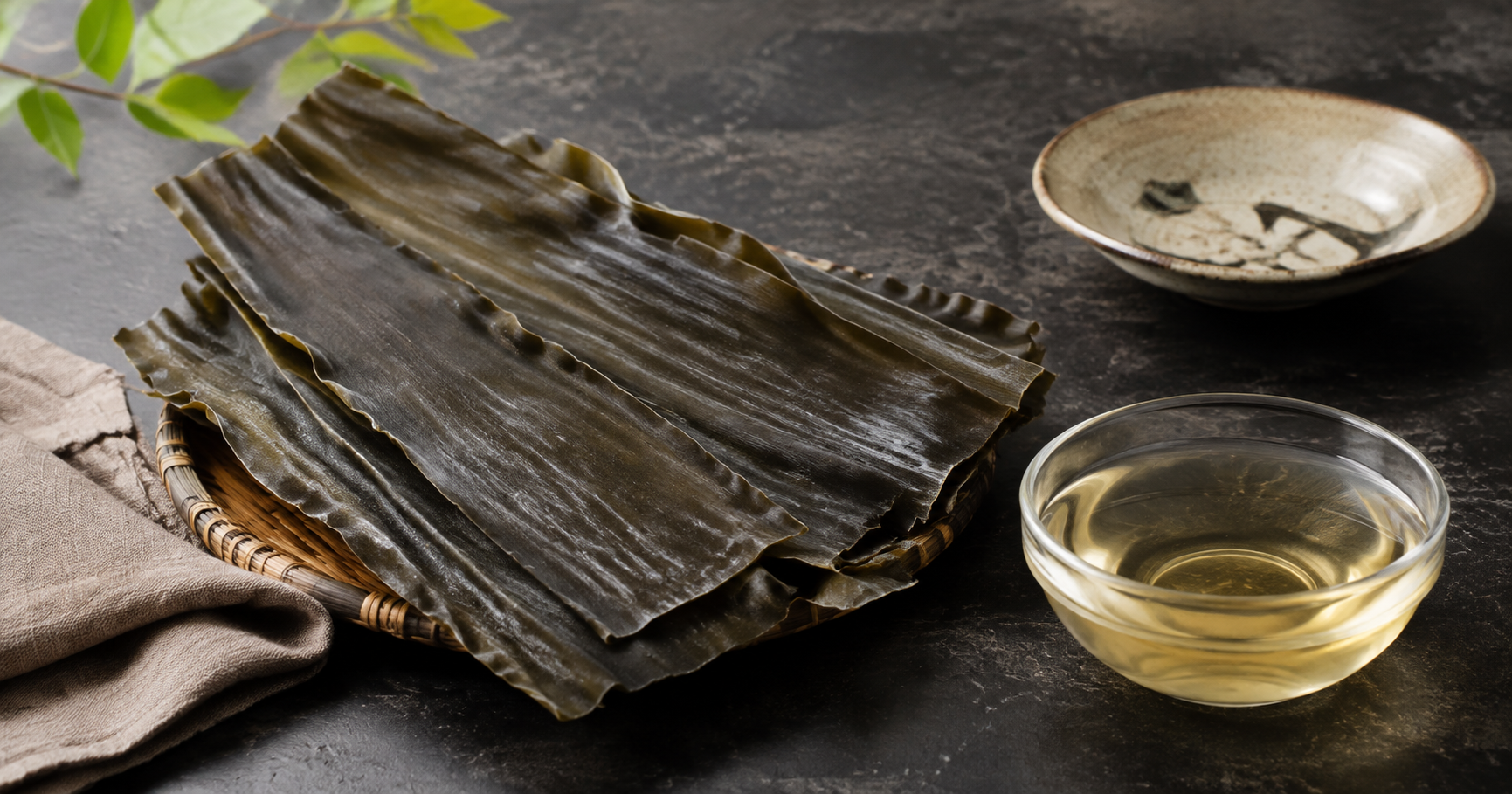
Kombu is the thick, dried kelp that gives many Japanese dishes a deep but unobtrusive savory flavor. It is best known as an ingredient in dashi, but it is also simmered, wrapped around fish, cut into fine shavings, and used to season rice and vegetables.
Major growing areas produce varieties with different thicknesses, textures, and flavors. Some are prized for clear stock, while softer types suit dishes in which the kombu itself is eaten. This guide explains how to choose, prepare, and use them.
Understanding Japanese Kombu
Kombu is an edible brown seaweed, often translated as kelp. Most Japanese kombu is harvested around Hokkaido, with some production in Tohoku, and dried into broad, firm sheets or strips.
Dried kombu is thicker and tougher than nori. It is also different from wakame, which has thin, tender leaves that are commonly rehydrated for soup and salad. Kombu is valued both for its natural glutamate—the compound closely associated with umami—and for the texture it develops when simmered.
The dried surface may have pale white patches. This is often naturally occurring material, including mannitol. Fuzzy growth, an unpleasant odor, or unexpected discoloration can indicate spoilage.
Kombu Builds Depth Without Announcing Itself
Kombu has a mild marine aroma, gentle sweetness, and a lingering savory quality. A well-made kombu stock should not taste aggressively fishy. Instead, it gives water more body and makes the flavors of vegetables, tofu, mushrooms, fish, and seasonings feel fuller.
The exact character depends on the variety and preparation. Some kombu produces clear, refined stock; another may create a darker, stronger broth. Simmered kombu develops a firm or slightly silky texture.
Main Types of Japanese Kombu
Ma Kombu
Ma kombu is associated with southern Hokkaido. Its broad, substantial fronds can produce an elegant stock with balanced sweetness and umami. It is widely used for dashi and in refined cooking.
Rishiri Kombu
Rishiri kombu comes from the far north of Hokkaido. Its stock is known for a clear appearance and clean flavor, making it useful with delicate ingredients.
Rausu Kombu
Rausu kombu is harvested around the Shiretoko Peninsula. Its broad, thin fronds readily produce stock that can be rich, aromatic, and darker than Rishiri stock.
Hidaka Kombu
Hidaka kombu, also called Mitsuishi kombu, is relatively soft and cooks more readily than many stock-focused varieties. It can be used for dashi, but it is especially practical for kombu rolls, simmered dishes, and other preparations in which the kelp is eaten.
| Type | General Character | Common Uses |
|---|---|---|
| Ma kombu | Balanced, refined, gently sweet | Dashi and refined cooking |
| Rishiri kombu | Clear, clean, and focused | Clear soups and delicate dashi |
| Rausu kombu | Rich, aromatic, and full | Flavorful dashi and hot pots |
| Hidaka kombu | Versatile and relatively tender | Dashi, simmering, and kombu rolls |
These descriptions are useful starting points, not rigid grades. Quality and flavor also vary by producer, harvest year, processing, and storage.
Kombu vs. Wakame vs. Nori
| Seaweed | Typical Form | Common Use |
|---|---|---|
| Kombu | Thick dried sheets or strips | Dashi, simmering, wrapping, and seasoning |
| Wakame | Thin dried or salted leaves | Soups, salads, and vinegared dishes |
| Nori | Thin dried or roasted sheets | Sushi, onigiri, snacks, and garnishes |
They are not direct substitutes. Wakame does not produce the same style of stock, while nori quickly softens and disperses in water. If a recipe specifically calls for kombu, use a product labeled kombu or dried kelp intended for Japanese cooking.
How Kombu Is Used in Japanese Cooking
Kombu Dashi
Kombu is soaked or gently heated in water to make a plant-based stock. It is normally removed before vigorous boiling. Kombu may be used alone or with dried bonito flakes or shiitake. See our guide to Japanese dashi for stock styles and preparation methods.
Kobujime
In kobujime, fish is placed between sheets of kombu. The kelp draws out moisture while transferring savory flavor. This technique is especially associated with Toyama.
Kobumaki
Kobumaki wraps kombu around fish or another filling and simmers it until tender. Herring and salmon are traditional fillings. Soft Hidaka kombu suits this New Year dish.
Tsukudani and Simmered Dishes
Kombu can be cut into small pieces and simmered with soy sauce, sugar, and other seasonings to make tsukudani. Tender kombu is also cooked with vegetables, beans, fish, or meat in everyday simmered dishes.
Oboro Kombu and Tororo Kombu
Skilled producers shave softened kombu into extremely thin sheets or fluffy strands. Oboro kombu is commonly shaved as broad, delicate layers, while tororo kombu has a fine, feathery texture. Both can be placed in soup, on rice, or around foods to add immediate savory flavor.
How to Choose Kombu
For stock, choose kombu sold as dashi kombu; Ma, Rishiri, and Rausu are common options. When the seaweed will be eaten, tender Hidaka kombu can be easier to cook.
Look for pieces that are dry, reasonably thick for their type, and free from an unpleasant odor. Broken pieces are not necessarily lower in flavor and can be economical for stock. Names such as “premium” are not always comparable across brands, so origin, intended use, package instructions, and freshness are more informative.
How to Prepare Kombu
Follow the package instructions. If the surface has sand or debris, gently wipe it with a barely damp cloth. Avoid aggressive scrubbing.
For stock, soaking the kombu before gentle heating helps extract flavor. The exact time and temperature depend on the variety and recipe. For simmered dishes, kombu may need a longer soak before it is cut, rolled, or cooked until tender.
How to Store Kombu
Keep dried kombu tightly sealed in a cool, dry, dark place. Moisture can soften it and encourage spoilage, while strong odors may be absorbed during storage. A resealable package or airtight container works well after opening.
Properly stored kombu can retain its quality for a long time, but the package date and manufacturer’s directions should take priority. Discard it if you see fuzzy growth, smell an unpleasant odor, or notice a change that does not resemble the normal pale surface bloom.
Can you eat kombu after making dashi?
Yes. Used kombu can be sliced and simmered for tsukudani, added to rice, or incorporated into another cooked dish. It will have less flavor than unused kombu, but it does not need to be discarded immediately.
Is the white powder on kombu mold?
Usually, a dry white coating is naturally occurring mannitol and other material that reaches the surface during drying. Do not confuse this with fuzzy growth, damp patches, or an unpleasant smell. When uncertain, follow the package guidance or discard the product.
Is kombu vegan?
Plain dried kombu is seaweed and is suitable for plant-based cooking. Seasoned or processed kombu products may contain fish stock or other added ingredients, so check the complete label.
Is kombu the same as kelp?
Kombu is a culinary name for particular edible kelps used in Japanese food. “Kelp” is a broader English term covering many brown seaweeds, not all of which are prepared or sold as Japanese kombu.
Can wakame replace kombu in dashi?
Not directly. Wakame is valued mainly for its tender texture in soups and salads, while kombu is selected for stock-making. Substituting wakame changes both the flavor and the behavior of the seaweed in the liquid.
The Best Extraction Stops Before the Broth Turns Heavy
Kombu is one of the ingredients that helps define the subtle flavor structure of Japanese cooking. It can enrich a clear stock without heaviness, become tender in a simmered dish, or transfer flavor through techniques such as kobujime.
For a first purchase, choose plain dried kombu labeled for dashi or general cooking. Once you understand its flavor, varieties such as Rishiri, Rausu, Ma, and Hidaka kombu make it possible to select more precisely for clarity, richness, or tenderness.
If this guide gave you a clearer understanding of a Japanese ingredient, you can support Japan Food Compass on Ko-fi and help us continue sharing carefully researched guides and original kitchen stories.